Tag Archives: soccer

Own Goal Murder: Andrés Escobar and the Dark Side of Soccer

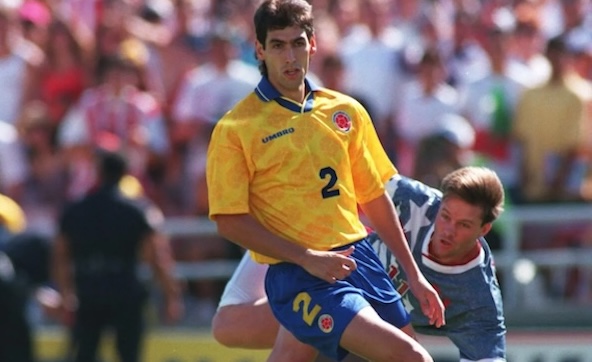
On a cold night in Pasadena, California, in June 1994, Colombia’s dream died with a single mistimed touch. Ten days later, one of its heroes was dead. The murder of Colombian defender Andrés Escobar remains one of the most shocking tragedies in sports history—not simply because a World Cup player was assassinated, but because his death exposed the deadly intersection of soccer, organized crime, gambling, politics, and national identity. Nearly three decades later, one question still lingers: Was Andrés Escobar killed over an own goal, or was he caught in a much larger war?

Colombia’s Golden Generation

By 1994, Colombia wasn’t simply participating in the World Cup—it was expected to challenge for the championship. Led by the eccentric coaching genius Francisco Maturana, Colombia had dazzled the world. The team had humiliated Argentina 5–0 in Buenos Aires during qualifying. Their attacking flair and technical precision prompted even Pelé to predict Colombia could win the tournament. The squad featured stars like Carlos Valderrama, Freddy Rincón, Faustino Asprilla and, anchoring the defense, Andrés Escobar. Nicknamed “The Gentleman,” Escobar was respected as much for his character as for his calm defending. Unlike many football celebrities, he avoided nightlife and scandal. Teammates described him as thoughtful, educated, and humble. He represented the Colombia many hoped their country could become.

A Nation Under Pressure

To understand Escobar’s death, it’s necessary to understand Colombia in the early 1990s. The country was emerging from one of its bloodiest periods. Drug cartels had accumulated enormous wealth and influence. While Pablo Escobar had been killed in December 1993, organized crime remained deeply intertwined with business—including professional soccer. Several Colombian clubs had long been suspected of receiving cartel money. For criminal organizations, soccer offered prestige, money laundering opportunities, and perhaps most importantly, enormous gambling stakes. The 1994 World Cup wasn’t just sport. Millions of dollars rode on every result.

Ninety Minutes That Changed Everything

On June 22, 1994, Colombia faced the United States in Pasadena. A victory was essential after an opening loss to Romania. In the 35th minute came the play that would define history. American midfielder John Harkes drove a dangerous ball across the penalty area. Escobar slid to intercept. Instead of clearing the pass, the ball deflected into his own net. The Americans won 2–1 and Colombia was effectively eliminated from the World Cup tournament. After the game, television cameras were fixed on Escobar’s devastated expression. After returning home, he wrote a newspaper column urging Colombians not to despair. His closing words would become haunting: “Life does not end here.”

The Final Night

Despite warnings to remain home, Escobar decided to go out with friends in Medellín on July 2, 1994. Near 3 a.m., an argument erupted in a parking lot outside a nightclub. Witnesses later testified several men confronted Escobar, mocking the own goal. According to multiple accounts, the words “Goal!” were shouted after each shot. Six bullets struck him and died shortly afterward at age 27. The murder stunned Colombia—and the sporting world. More than 120,000 mourners reportedly attended his funeral.

The Official Investigation

FSM Garage Sale on eBay is OPEN 24/7 !!!!! Check it out…

Authorities arrested Humberto Muñoz Castro, a bodyguard employed by brothers Pedro David Gallón Henao and Santiago Gallón Henao, wealthy businessmen alleged to have connections with organized crime. Prosecutors argued the killing followed a drunken confrontation. Muñoz Castro was convicted of murder in 1995. Originally sentenced to more than 40 years, the sentence was later reduced. He served approximately eleven years before being released for good behavior. For many Colombians, justice felt incomplete.

The Questions That Never Went Away

Officially, the case was solved. Unofficially, doubts remain. Investigators and journalists have long debated whether the shooting was merely a drunken altercation or something far more calculated. Among the enduring questions:

Was gambling involved? The enormous betting activity surrounding Colombia’s World Cup campaign fueled speculation that wealthy gamblers suffered catastrophic losses after the U.S. defeat. No court ever proved gambling directly motivated the murder.

Who truly ordered the killing? Although Muñoz Castro admitted shooting Escobar, theories persist that more powerful figures encouraged—or expected—violent retaliation. No definitive evidence has emerged.

Why was Escobar targeted? Those who knew him insist he was among the least controversial players on the national team. His clean reputation makes his death even more difficult to comprehend.

Check out Hobby Cards, Sports, & Movie collectibles at the FSM Garage Sale on eBay!!!!!!.

A Symbol Beyond Soccer

Escobar’s murder transformed him into more than an athlete. He became a symbol of a nation trying to escape violence and his death prompted soul-searching throughout Colombian football. Security increased. Players became more cautious. The relationship between criminal money and professional clubs came under greater scrutiny. In time, Colombian soccer rebuilt its international reputation. Future generations—including stars like James Rodríguez—would compete on the world stage without carrying quite the same shadow.

Final Whistle

The murder of Andrés Escobar is often summarized with a deceptively simple sentence:

A soccer player was killed because he scored an own goal.

The truth is both more complicated and more unsettling. His own goal may have triggered the confrontation, but the forces surrounding Colombian soccer—organized crime, enormous gambling losses, toxic machismo, and a culture accustomed to violence—created the conditions in which a tragic mistake on the field could become a death sentence off it. In that sense, Andrés Escobar was never simply the victim of one misplaced kick – he was the victim of an entire system.

And while Colombia has changed dramatically since 1994, his death remains one of the most chilling reminders that, in rare moments, the world’s most beloved game can reflect its darkest realities. Because can sport ever be fully separated from the society around it?

Today, murals bearing Andrés Escobar’s likeness appear throughout Medellín. His famous quote “Life does not end here” has become an emblem of resilience. Ironically, the own goal that came to define his life represents only a single moment in a distinguished career.
Why Is Soccer Called “The Beautiful Game”?

Every four years, millions of casual fans tune in to watch the FIFA World Cup. They may not follow club soccer throughout the year, but when the world’s biggest sporting event arrives, they find themselves captivated by dramatic goals, emotional celebrations, and unforgettable moments.

One phrase that often surfaces during the tournament is “The Beautiful Game.” But why is soccer called the beautiful game, and what makes it different from other sports?

The answer lies in a combination of artistry, simplicity, passion, and global connection.

The Origins of “The Beautiful Game”

The phrase is most closely associated with Brazilian soccer legend Pelé, who helped popularize the term during his playing career and afterward. While historians debate exactly who coined the phrase first, Pelé’s breathtaking style and Brazil’s flair-filled teams became the embodiment of what fans considered beautiful soccer.

The term reflects the idea that soccer can be both a sport and an art form. And it takes into consideration Beauty’s humble beginnings…

Beauty in Simplicity

The beautiful game possesses a remarkable simplicity. All you need is a ball, some open space, and a few players.

Whether it’s a beach in Brazil, a city street in England, a village in Africa, or a park in the United States, the game can be played almost anywhere.

SHOP COLLECTIBLES @ OUR eBay STORE!!!!!!!!!

Unlike sports requiring expensive equipment, soccer’s accessibility allows people from every economic and cultural background to participate. This universal appeal has helped make it the most popular sport on Earth.

Creativity Takes Center Stage

In soccer, players are encouraged to create. A midfielder can thread a perfect pass through defenders. A winger can dribble past multiple opponents. A striker can score a goal that leaves an entire stadium speechless. Moments such as the famous goals by Diego Maradona, Lionel Messi, and Cristiano Ronaldo are celebrated not just because they changed games, but because they showcased extraordinary creativity and skill. Fans often compare great soccer plays to works of art. SHOP COLLECTIBLES @ OUR eBay STORE!!!!!!!!!

The Drama of a Single Goal

Unlike basketball or football, scoring in soccer is relatively rare. A single goal can determine the outcome of an entire match. That scarcity creates enormous tension. Every attack matters. Every save feels monumental. Every shot has the potential to become part of sports history. During the World Cup, entire nations can erupt in celebration—or heartbreak—in a matter of seconds.

The World Cup Showcases Humanity

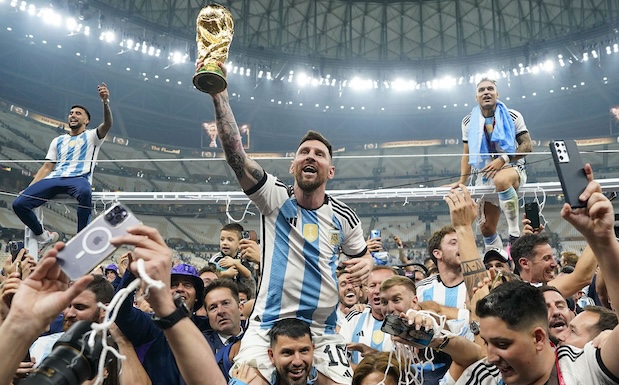
The FIFA World Cup is perhaps the greatest example of why soccer is called the beautiful game. For one month, people from nearly every corner of the globe gather around a shared passion.

https://images.openai.com/static-rsc-4/ME8Bx-YO30vbpMqN7KajrOO4DUe5eBMjdpTfAn7zE-x0nzLho4jhdQD1oi4fA-A_vGFDjLkrBpOnOcHAE5QUkkSViNH5-oyWnWRV2R7jghYvb42JYtzk-0TPbzm3zbcsnLn8FRWOFmRI0cjXex17zf-5fxTxfG34ssj2LED-Y4cDyrVq9BLJ-xkWlfDE8D9Q?purpose=fullsize

Different languages, cultures, religions, and political beliefs fade into the background as fans unite behind their national teams. Few sporting events create the same sense of global community. The World Cup reminds us that soccer is more than a game—it’s a common language spoken by billions.

Underdogs Can Become Legends

Another beautiful aspect of soccer is its unpredictability. Unlike some sports where the stronger team usually wins, soccer often leaves room for stunning upsets. A small nation can defeat a global powerhouse. An unknown player can become a household name overnight. A goalkeeper can transform into a national hero with a single save. World Cup history is filled with Cinderella stories that continue to inspire future generations.

Emotion Unlike Any Other Sport

Soccer produces some of the most emotional scenes in sports. Players cry tears of joy after victories. Fans sing together for ninety minutes. Entire countries stop to watch crucial matches. The emotional investment creates unforgettable moments that transcend the scoreboard.

https://images.openai.com/static-rsc-4/htHyUhrkq7rqTqxUhqvr21EolIozyyjrNZRXNob8BNPiYbrYCcut4JK3QIGRbXJdoB1n20y73QXkr8hKQK-mcD8ppu2Lwg22XcRsQleAkgFvYX2mX20eIRMv-Yj14YmMLos57wM9V9sIl64Z492M76dZ_-kJ6Q9N5JxAqikNhWkgHoEPj9vC6pgWWOBH9X2X?purpose=fullsize

The Lasting Meaning of “The Beautiful Game”

SHOP COLLECTIBLES @ OUR eBay STORE!!!!!!!!!

Soccer is called the beautiful game because it combines simplicity, artistry, emotion, and universal appeal in a way no other sport can.

It is beautiful when a child kicks a ball in a neighborhood park. It is beautiful when 80,000 fans sing in unison inside a stadium. And it is beautiful when the World Cup brings billions of people together to share moments of triumph, heartbreak, and wonder.

For casual World Cup fans, that’s the real secret behind the phrase: soccer isn’t just about winning and losing. It’s about the joy, creativity, and human connection that make the game beautiful.

A World Cup to Die For

Over 6,500 migrant workers have died in Qatar since 2010 as the death toll continues to rise, with many of those deaths occurring on FIFA World Cup related projects. The figure brings Qatar’s exploitative kafala labor system and lack of migrant worker’s rights to the fore. Change is needed, and FIFA must speak out.

Since making the controversial decision to award Qatar the right to host the 2022 FIFA World Cup, over 6,500 migrant workers from South Asia have died. The total number of migrant worker deaths is believed to be considerably greater. The 6,500-death toll does not include the vast number of workers from nations such as Kenya.

Migrant workers are tasked with bolstering Qatari infrastructure in preparation for the 2022 World Cup. Many of the dead are linked to World Cup related projects including stadium, airport, and hotel construction.  

Kafala system controls migrant workers

These workers are tied to the exploitative kafala system which grants employers control over employee passports. They are forced to remain in the Arab State and their pay is often withheld for months or not given at all. Under this system, workers must hand over their passports on arrival. They feel trapped and held like prisoners. Kept in inhumane conditions and overworked in soaring summer temperatures, many of those who died constructing the stadiums collapsed from exhaustion. There are several reported cases of suicide. The data released on causes of death points not to normal workplace accidents, but to widespread neglect and maltreatment.

The death toll is only one part of a wider problem. Those migrant workers living within the nation often pay over $1,000 simply to begin working.  They live in “pathetic” and “oppressive” conditions, as one Kenyan worker tells the BBC. The workday starts as early as 04:00 and lasts all day, with only warm drinking water available. The workers live in overcrowded camps or dorms and live with “filthy” sanitation. They have no air conditioning to help cope with the 45C summer heat. Talking to the BBC, a British worker who was working on a World Cup construction site as a supervisor describes the situation. He explains that health and safety regulations are “non-existent” and that he is “horrified at the risks taken every day on the site.”

Qatar too slow to change

The response by the Qatari government to the endemic mistreatment of migrant workers, something that they do not deny, continues to be limited. In 2018, Qatar set out a plan to reform its Kafala system. They are failing to uphold this promise. Since joining the International Covenant on Civil and Political Rights in May of 2018, Qatar insists on a list of formal reservations. They deprive migrant workers of some of the important protections that the treaty normally guarantees. Lama Fakih, deputy Middle East director at Human Rights Watch, states that “while Qatar has taken some important steps to protect human rights, there is still a long way to go before migrant workers are protected from abuse and exploitation.”

FIFA complacent in rising death toll

The situation in Qatar reveals more than the need for domestic reform. It makes clear that FIFA disregard human rights. The world’s leading football association, following the 2018 Russia World Cup, are once again showing their role in “sportswashing”. The term describes a nation – often one accused of human rights violations – using sport to rebrand itself. Sportswashing nations are hiding behind the façade of glamour and sport to cover up a negative image of the nation. Awarding the 2018 and 2022 World Cups to Russia and Qatar exposes widespread corruption within FIFA. The fact that these nations bought the right to host the event for this very purpose was clear.

FIFA, the organizers of the world’s most watched sports event which holds corporate partnerships with giants such as Coca-Cola, Visa, McDonald’s, and Adidas, have very little to say on the issue of migrant workers in Qatar. In direct contradiction with the testimonies of workers and observers, a spokesperson claimed:

“WITH THE VERY STRINGENT HEALTH AND SAFETY MEASURES ON SITE … THE FREQUENCY OF ACCIDENTS ON FIFA WORLD CUP CONSTRUCTION SITES HAS BEEN LOW WHEN COMPARED TO OTHER MAJOR CONSTRUCTION PROJECTS AROUND THE WORLD.”

This claim is not supported by any evidence. With inconsistency and poor collaboration between nations in recording the number of migrant worker deaths, it is difficult to know the true extent of the problem. What is clear is that change to the kafala system is essential and urgently needed. FIFA must confront the issue, or risk endorsing through silence the exploitation of migrants and disregard for human rights.

Written By Harry Markham

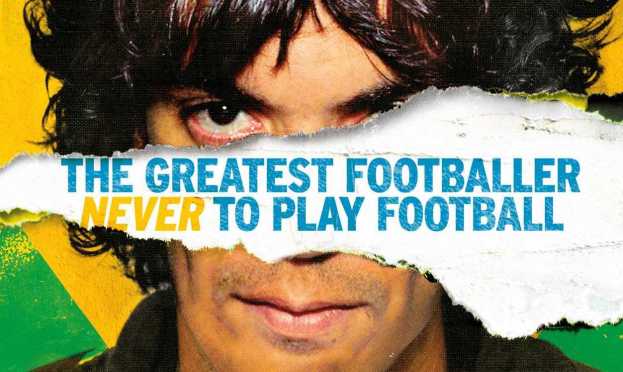
Kaiser! The Greatest Footballer Never to Play Football

Born in Rio Pardo, Brazil, Carlos Henrique Raposo had dreams of becoming a professional soccer (futbol) player. After a youth career at Botafogo and Flamengo, he had his sights set on the future. Whether given the nickname “Kaiser” due to his resemblance of superstar Franz Beckenbauer or a bottle of Kaiser beer, he used his new-found name to begin a career where he “wanted to be a footballer, but did not want to play football.”

Thus began a decade-plus career that spanned across Brazil (Botafogo, Flamengo, Bangu, Fluminense, Vasco da Gama, and America), Mexico (Puebla), France (Gazelec Ajaccio), and the United States (El Paso Sixshooters). Relying on his charm and friends in high places—from fellow footballers Carlos Alberto Torres, Ricardo Rocha, and Renato Gaucho, to reporters willing to write “stories” of his “career”— Carlos Kaiser used his skills of deception to have a storied career without ever stepping foot on the pitch.

Whether faking injuries, having friends lie for him, making up tall tales, or getting thrown out of a match just before taking the field, Kaiser! The Greatest Footballer Never to Play Football is an incredible story of the lengths one man went to have a professional soccer career without every playing a game.

Originally published in the UK, and with a worldrenowned documentary released on his lifeKaiser! shares the lengths taken by one man who wanted all the glitz and glory of being a professional athlete . . . without ever having to be an actual athlete. So whether you’re a fan of soccer, futbol, professional sports, or stories of cunning and deception, Kaiser! is the story you don’t want to miss!

FSM Movies: Escape to Victory

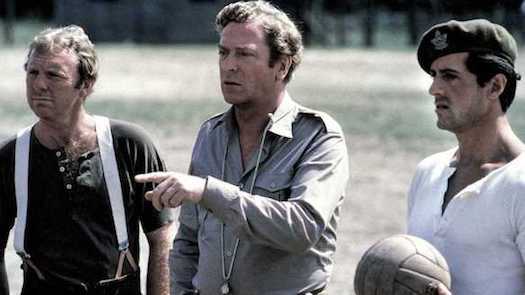
Sylvester Stallone is the gift that keeps on giving. Younger movie fans get the gift of discovering classic after classic as if each one was brand new. Older fans, who have the Rocky films memorized already, get the gift of quirky new projects and random appearances in things like the Marvel Universe. This review is more for the younger fans who may be aware that Stallone ended communism in Rocky IV but didn’t know he also helped end fascism by playing soccer in the movie Escape to Victory.

Headlined by the loveable Sir Michael Cane and directed by Hollywood legend John Huston, Victory was released to the masses in 1981. Since this film fell under the rare “War/Sport” genre, it made sense to cast Sylvester Stallone as he had recently played war hero John Rambo and boxing underdog Rocky Balboa.

In Victory, Stallone plays a World War II era prisoner-of-war named Captain Robert Hatch. He spends most days watching the cooler prisoners kick a soccer ball around before ending up as the team’s unlikely goalkeeper. These cooler prisoners were made up of actual soccer stars of the time such as Pelé, Bobby Moore, and Robin Turner.

For some strange reason in the film, a high-ranking Nazi officer played by Max von Sydow thinks it would be great for morale around the world to have these allied prisoners-of-war (who happen to be really really good at soccer) play an exhibition match against a German super team. Of course, the match is intended to be used as propaganda and perhaps a symbol of how Germany would crush the allies in war. Movie fans can probably guess that Stallone, Caine, and the rest of the allies put up a heck of a fight on the field. But a dilemma arises when the players have a chance to escape. This is when the movie gets especially enjoyable.

Victory is a pleasant ride from start to finish. The film presents many WW-II themes but with a lighter touch – something that’s perfect for a war movie about soccer! Additionally, the great chemistry of all cast members is evident from the opening few scenes. Stallone shines in a role that may have been written with him in mind. Pelé seems like a natural actor. The other professional footballers don’t try too hard (in a good way). And Michael Caine and Max von Sydow absolutely carry the movie. A younger Caine brings his spunky energy as the leader of the allies while von Sydow’s acting almost makes you feel bad for a Nazi.

While the subject matter and era are taken seriously, Victory feels like it could be the child of The Dirty Dozen and The Replacements. It’s not quite a war or sports movie and doesn’t necessarily try to inform the viewer of anything that’s not already known. But it’s a fun story you’ve probably never experienced before. Its ending is also one of the most underrated endings in sports movie history (no spoilers here except that Stallone is involved).

FSM Final Grade: B

Click here to purchase Victory today!