Author Archives: FSM Staff

FSM First Look: Jail Blazers

Kerry Eggers, who covered the Trail Blazers, goes back twenty years for the stories from the players, coaches, management, and those in Portland—during an era when the local NBA stars were in the headlines for both their play and their off-court behavior.

In the late ’90s and early 2000s, the Portland Trail Blazers were one of the hottest teams in the NBA. For almost a decade, they won 60 percent of their games while making it to the Western Conference Finals twice. However, what happened off-court was just as unforgettable as what they did on the court.

When someone asked Blazers general manager Bob Whitsitt about his team’s chemistry, he replied that he’d “never studied chemistry in college.” And with that, the “Jail Blazers” were born. Built in a similar fashion to a fantasy team, the team had skills, but their issues ended up being their undoing. In fact, many consider it the darkest period in franchise history.

While fans across the country were watching the skills of Damon Stoudamire, Rasheed Wallace, and Zach Randolph, those in Portland couldn’t have been more disappointed in the players’ off-court actions. This, many have mentioned, included a very racial element—which carried over to the players as well. As forward Rasheed Wallace said, “We’re not really going to worry about what the hell [the fans] think about us. They really don’t matter to us. They can boo us every day, but they’re still going to ask for our autographs if they see us on the street. That’s why they’re fans and we’re NBA players.”

While people think of the Detroit Pistons of the eighties as the elite “Bad Boys,” the “Jail Blazers” were actually bad. Author Kerry Eggers, who covered the Trail Blazers during this controversial era, goes back to share the stories from the players, coaches, management, and those in Portland when the players were in the headlines as much for their play as for their legal issues.

FSM Scouting Report: All-American Murder

Book/Movie Title: All-American Murder: The Rise and Fall of Aaron Hernandez

Total Pages/Duration: 375 (paperback version)

Author/Director: James Patterson w/ Alex Abramoivch & Mike Harvkey

Pace of Play: Short chapters and lack of descriptive, flowery language make for a quick read. Some will finish this in one sitting while most will take 2-3 days.

Strengths: The authors stick to the facts and provide many direct quotes from individuals involved in the case. Information is easy to follow as it’s presented in a straight line. There are some flashbacks when necessary but you’ll never get confused. The authors bring the reader up to speed rather quickly in regard to Hernandez’s home life and his days in high school and college.  

Weaknesses: The book relies on direct quotes a little too much at times (sometimes quotes go on for an entire page). It just comes off as lazy. Also, some of the rumors of Hernandez being gay or bisexual are briefly mentioned. I’m assuming there weren’t enough facts to back any of it up, but the authors could have at least tried to disprove some of the rumors by showing what evidence exists. After all, true or not, the rumors were a big part of the story. Again, it comes off a little lazy.

Unique Attributes: The authors maintain a matter-of-fact tone and avoid the use of SAT vocabulary words. Except for the description of Hernandez’s jail cell, don’t expect some of that descriptive writing James Patterson is known for.

All-American Murder contains some interesting side stories involving Tim Tebow, Urban Meyer, and the Pouncey twins. You’ll also read about the lesser-known double-murder that Hernandez allegedly committed.  

Scout’s Recommendations: At this point, the story of Aaron Hernandez has been told across many mediums and probably doesn’t deserve any more of our time. But how often does James Patterson write about sports stuff? That being said, I’m skeptical Patterson did anything more than supervise on this project. All-American-Murder is worthy of a pickup if you’re about to go on a long flight or plan on lounging by the pool on a cruise ship. Other than that, it should be used as a “first stop” for people getting into the Aaron Hernandez saga for the first time.

A World Cup to Die For

Over 6,500 migrant workers have died in Qatar since 2010 as the death toll continues to rise, with many of those deaths occurring on FIFA World Cup related projects. The figure brings Qatar’s exploitative kafala labor system and lack of migrant worker’s rights to the fore. Change is needed, and FIFA must speak out.

Since making the controversial decision to award Qatar the right to host the 2022 FIFA World Cup, over 6,500 migrant workers from South Asia have died. The total number of migrant worker deaths is believed to be considerably greater. The 6,500-death toll does not include the vast number of workers from nations such as Kenya.

Migrant workers are tasked with bolstering Qatari infrastructure in preparation for the 2022 World Cup. Many of the dead are linked to World Cup related projects including stadium, airport, and hotel construction.  

Kafala system controls migrant workers

These workers are tied to the exploitative kafala system which grants employers control over employee passports. They are forced to remain in the Arab State and their pay is often withheld for months or not given at all. Under this system, workers must hand over their passports on arrival. They feel trapped and held like prisoners. Kept in inhumane conditions and overworked in soaring summer temperatures, many of those who died constructing the stadiums collapsed from exhaustion. There are several reported cases of suicide. The data released on causes of death points not to normal workplace accidents, but to widespread neglect and maltreatment.

The death toll is only one part of a wider problem. Those migrant workers living within the nation often pay over $1,000 simply to begin working.  They live in “pathetic” and “oppressive” conditions, as one Kenyan worker tells the BBC. The workday starts as early as 04:00 and lasts all day, with only warm drinking water available. The workers live in overcrowded camps or dorms and live with “filthy” sanitation. They have no air conditioning to help cope with the 45C summer heat. Talking to the BBC, a British worker who was working on a World Cup construction site as a supervisor describes the situation. He explains that health and safety regulations are “non-existent” and that he is “horrified at the risks taken every day on the site.”

Qatar too slow to change

The response by the Qatari government to the endemic mistreatment of migrant workers, something that they do not deny, continues to be limited. In 2018, Qatar set out a plan to reform its Kafala system. They are failing to uphold this promise. Since joining the International Covenant on Civil and Political Rights in May of 2018, Qatar insists on a list of formal reservations. They deprive migrant workers of some of the important protections that the treaty normally guarantees. Lama Fakih, deputy Middle East director at Human Rights Watch, states that “while Qatar has taken some important steps to protect human rights, there is still a long way to go before migrant workers are protected from abuse and exploitation.”

FIFA complacent in rising death toll

The situation in Qatar reveals more than the need for domestic reform. It makes clear that FIFA disregard human rights. The world’s leading football association, following the 2018 Russia World Cup, are once again showing their role in “sportswashing”. The term describes a nation – often one accused of human rights violations – using sport to rebrand itself. Sportswashing nations are hiding behind the façade of glamour and sport to cover up a negative image of the nation. Awarding the 2018 and 2022 World Cups to Russia and Qatar exposes widespread corruption within FIFA. The fact that these nations bought the right to host the event for this very purpose was clear.

FIFA, the organizers of the world’s most watched sports event which holds corporate partnerships with giants such as Coca-Cola, Visa, McDonald’s, and Adidas, have very little to say on the issue of migrant workers in Qatar. In direct contradiction with the testimonies of workers and observers, a spokesperson claimed:

“WITH THE VERY STRINGENT HEALTH AND SAFETY MEASURES ON SITE … THE FREQUENCY OF ACCIDENTS ON FIFA WORLD CUP CONSTRUCTION SITES HAS BEEN LOW WHEN COMPARED TO OTHER MAJOR CONSTRUCTION PROJECTS AROUND THE WORLD.”

This claim is not supported by any evidence. With inconsistency and poor collaboration between nations in recording the number of migrant worker deaths, it is difficult to know the true extent of the problem. What is clear is that change to the kafala system is essential and urgently needed. FIFA must confront the issue, or risk endorsing through silence the exploitation of migrants and disregard for human rights.

Written By Harry Markham

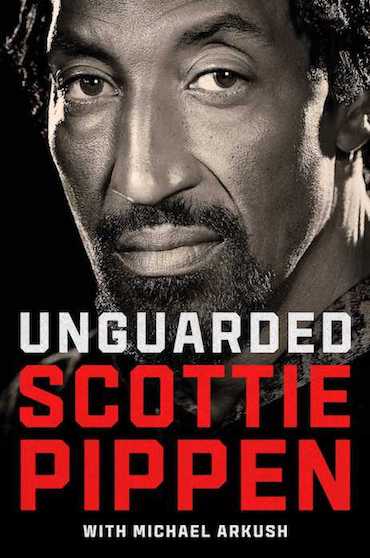
FSM First Look: Unguarded by Scottie Pippen

Scottie Pippen has been called one of the greatest NBA players for good reason.

Simply put, without Pippen, there are no championship banners—let alone six—hanging from the United Center rafters. There’s no Last Dance documentary. There’s no “Michael Jordan” as we know him. The 1990s Chicago Bulls teams would not exist as we know them.

So how did the youngest of twelve go from growing up poor in the small town of Hamburg, Arkansas, enduring two family tragedies along the way, to become a revered NBA legend? How did the scrawny teen, overlooked by every major collegiate basketball program, go on to become the fifth overall pick in the 1987 NBA Draft? And, perhaps most compelling, how did Pippen set aside his ego (and his own limitless professional ceiling) in order for the Bulls to become the most dominant basketball dynasty of the last half century?

In Unguarded, the six-time champion and two-time Olympic gold medalist finally opens up to offer pointed and transparent takes on Michael Jordan, Phil Jackson, and Dennis Rodman, among others. Pippen details how he cringed at being labeled Jordan’s sidekick, and discusses how he could have (and should have) received more respect from the Bulls’ management and the media.

Pippen reveals never-before-told stories about some of the most famous games in league history, including the 1994 playoff game against the New York Knicks when he took himself out with 1.8 seconds to go. He discusses what it was like dealing with Jordan on a day-to-day basis, while serving as the facilitator for the offense and the anchor for the defense.

On the 30th anniversary of the Bulls’ first championship, Pippen is finally giving millions of adoring basketball fans what they crave; a raw, unvarnished look into his life, and role within one of the greatest, most popular teams of all time.

There’s More To Shadow Boxing Than Warming Up For Your Boxing Training Workouts

Shadow boxing is often looked at as just a quick way to warm up before the actual boxing workout session. Shadow boxing no doubt serves to warm the body for the upcoming workout. More importantly though, shadow boxing helps you to groove the skills you have been taught by your boxing coach during your boxing training workouts. It also serves as a tool to hone your own unique fighting style. If you think it’s just throwing punches to break a sweat, you’re going about it the wrong way.

When you’re shadow boxing, It’s best to shadow box in front of a mirror where you can monitor the technique that has been taught to you. I often say…the mirror doesn’t lie. Once you know what to look for, it’s impossible to have bad technique in front of the mirror! Unless of course you just don’t care or aren’t really focusing and putting your all into it. Shadow boxing is when you can better groove the new skills your trainer has been teaching you. Skill retention is a lot better when you shadow box in front of the mirror, grooving good skill.

If you really focus on what you’re doing while shadow boxing, progression is heightened. Your boxing coach won’t have to yell at you so much to stop dropping your hands when you’re working the bags. He will be very pleased to see your fast progression due to your commitment to solid technique when shadow boxing. Boxers can say all they want that they have been putting in the extra work shadow boxing, but good technique will be the telling sign and truth to the coach that the fighter has indeed been putting in the work.

Great fighters will tell you that when they shadow box and move around they envision real situations that may come up in the ring. They think about another fighter being in front of them firing back and moving away. From offensive combos, to defensive tactics, all is covered. Boxers are continually focusing focusing on what an opponent can possibly do while shadow boxing. That is why some boxing coaches call shadow boxing shadow sparring. It actually looks like the boxer is sparring an invisible opponent.

Look at an experienced fighter’s body language and eyes when doing this. It shows they are in a different world. Indeed they are, a world where they see themselves dominating. You wonder why these fighters get so good? Because they see themselves doing it first. The mind can’t tell the difference from something it’s experiencing or imagining. That’s why this secret is so important to apply. Your boxing performance will improve very quickly when you practice shadow boxing in this manner.

Now think about that the next time you shadow box or shadow spar.

About the author: Rob Pilger is a Certified Strength and Conditioning Specialist and Level II USA Boxing Coach.

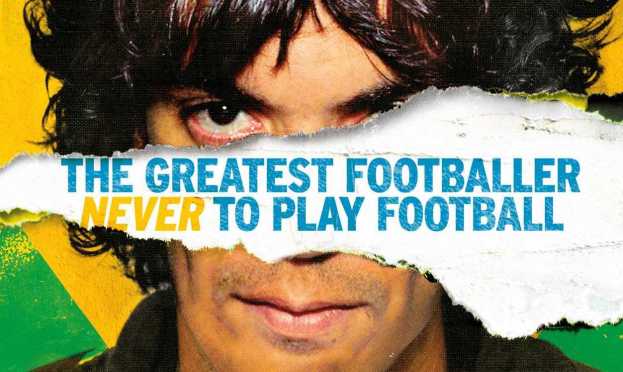
Kaiser! The Greatest Footballer Never to Play Football

Born in Rio Pardo, Brazil, Carlos Henrique Raposo had dreams of becoming a professional soccer (futbol) player. After a youth career at Botafogo and Flamengo, he had his sights set on the future. Whether given the nickname “Kaiser” due to his resemblance of superstar Franz Beckenbauer or a bottle of Kaiser beer, he used his new-found name to begin a career where he “wanted to be a footballer, but did not want to play football.”

Thus began a decade-plus career that spanned across Brazil (Botafogo, Flamengo, Bangu, Fluminense, Vasco da Gama, and America), Mexico (Puebla), France (Gazelec Ajaccio), and the United States (El Paso Sixshooters). Relying on his charm and friends in high places—from fellow footballers Carlos Alberto Torres, Ricardo Rocha, and Renato Gaucho, to reporters willing to write “stories” of his “career”— Carlos Kaiser used his skills of deception to have a storied career without ever stepping foot on the pitch.

Whether faking injuries, having friends lie for him, making up tall tales, or getting thrown out of a match just before taking the field, Kaiser! The Greatest Footballer Never to Play Football is an incredible story of the lengths one man went to have a professional soccer career without every playing a game.

Originally published in the UK, and with a worldrenowned documentary released on his lifeKaiser! shares the lengths taken by one man who wanted all the glitz and glory of being a professional athlete . . . without ever having to be an actual athlete. So whether you’re a fan of soccer, futbol, professional sports, or stories of cunning and deception, Kaiser! is the story you don’t want to miss!

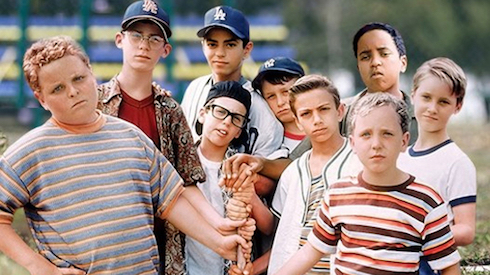
You’re Killing Me, Smalls! “The Sandlot” Movie Review

(spoilers)

Some movies find a place in a boy’s heart and just never let go. The Sandlot is one of those movies that still demands repeated viewings to this day because of the memorable quotes and unforgettable characters. Every boy remembers the hot, dry days of summer when time seemed to drag on, but it didn’t matter because he had his buddies. From being afraid of the neighborhood dog to having a crush on the unreachable girl, The Sandlot manages to touch on all of the great boyhood memories.

The movie begins with Scotty Smalls moving to a new town with his mother and stepfather, Bill. His mother has high hopes that he’ll make new friends, but Smalls doesn’t feel like he’s ever been good at anything, and that extends to his inability to fit in with kids his own age. He asks his new stepdad, who is touchingly portrayed by Denis Leary, to teach him to play catch, but Bill always seems to be too busy to make time. Anyone who has grown up with divorced parents will be sympathetic to the dynamic of this relationship.

Smalls eventually runs into a group of kids playing sandlot baseball. They are in need of a ninth player, so this is Small’s chance to be one of the guys. Unfortunately, his first outing doesn’t go so well. He has a chance to catch a fly ball, but the ball bounces off his head. He follows up that embarrassment by being unable to throw the ball to the correct player, and his chance to join a new group of friends is almost over before it began. Luckily for Smalls, Benny Rodriguez decides that he should be given another chance. There doesn’t seem to be any duplicity in Benny’s compassion, and that’s one of the great things about this movie-the boys just get along.

Since Benny is the best ball player on the lot, he takes Smalls under his wing and teaches him the basics. Things turn around when Benny gets an incredible hit, and Smalls makes an equally incredible catch and throw to the infield. The gang decides that Smalls is okay after all, and their summer of adventures begins. The main focus of the boys is baseball, and their secondary focus is dreaming of Wendy Peffercorn, the local lifeguard and frequent visitor in their daydreams. After one of the guys pulls off an elaborate hoax in order to steal a kiss from Wendy, the boys lose their pool privileges for the summer. It’s all too easy to remember the early days of noticing the opposite sex during these hilarious scenes.

After the boys are banned from the pool, they continue to devote their time to being the best baseball team around. This draws the attention of the Tigers-a real team with a real field-who live on the other side of town. The Tigers are embarrassed on their home field, and the sandlot boys feel like the kings of the world. This is another refreshing aspect of this movie. The game wasn’t the climax of the movie. This is not a typical “win at all costs” sports movie; it’s just a movie about a group of kids who had an unforgettable summer. Had they lost, it wouldn’t have changed the feeling of the movie at all.

One day, as the kids are playing ball, a powerful hit by Benny ruins the only ball they have. Smalls decides to borrow his stepdad’s prized, autographed baseball, but it soon gets hit over the fence. The biggest problem with that is that The Beast controls the area beyond the fence. The Beast is the biggest, meanest dog that anyone has ever seen, so the boys try a number of clever plans in order to retrieve the ball. Finally, Benny decides that he will retrieve the ball with his superior speed provided by his PF Flyers. Benny manages to get the ball, but a hilarious high-speed chase ensues between him and The Beast. This scene-and the whole movie-is over-the-top and perfectly filmed. Nothing is as big as the imagination of a group of boys, and the recollections in this movie are all handled in an exquisitely exaggerated manner.

Of course, the dog turns out to be friendly. Of course, the dog’s owner turns out to be an ex-baseball player who saves the day. A movie like “The Sandlot” is expected to have good news for everyone. That’s what makes it such an important movie in the memories of anyone who watched it as a kid.

When people think back to their childhoods, there is often a glowing filter around those memories. Nothing bad seemed to happen back then, and anything that was perceived to be devastating usually turned out okay. That’s the kind of warm feeling this movie imparts. The Sandlot just celebrated its twentieth anniversary in April, and it’s just as fun to watch today as it was back then.

By Zack Mandell

About the Author / Article Source: https://EzineArticles.com/expert/Zack_Mandell/1396543

How to Bet on NFL Props

The NFL regular season is often focused on totals and sides, but with every betting site offering different wagering types, NFL props are becoming the go-to bet every Sunday, Monday, Thursday, and some Saturdays. Rather making moneyline wager or a traditional point spread bet, why not try something a little more entertaining? Making NFL Prop Bets requires skill and a little handicapping, but no worries because we are here to kick start your betting journey.

An NFL prop bet is a wager that typically has nothing to do with a game outcome. NFL prop bets can be anything from how an individual player performs, how long the national anthem will be, which team will be winning the coin toss  and even how many penalties a team will get. A prop is short term for proposition and these are bets that are generally made for entertainment purposes. At your online betting site of choice, NFL prop bets for a specific type of player would be something like:

• How many touchdowns will he be throwing in the Saints’ game against the Falcons?

• How many passing yards will he be having in the first quarter of a game against the Panthers?

• Will he be throwing an interception against the Buccaneers?

How to read NFL Prop Bet odds

When visiting any online sportsbook, you will find prop odds. Depending on the type of NFL props bettors are looking to make, the NFL odds will look something like this:

Will Player A announce his retirement in the post-game interview?

Yes +400
No -900

In such scenario, let’s assume that a star player is turning 45 and isn’t moving as fast as he used to. There are rumors that he is going to retire at some point during the current NFL season. Oddsmakers hear the same buzz that we do and will create NFL props based on that information.

If you believe that Player A will announce his retirement after the game you’re betting on, you will choose Yes. Let’s say you lay down $25, and he does end his playing career. You would get a payout of $150 – your $25 comes back along with your winnings of $125.

On the other hand, a winning $25 No bet would get you $27.50 – your original amount is returned plus the $2.50 you won. In this case, the Yes would be a riskier bet with a higher payoff because of the plus sign (+). A No bet comes with less risk and a smaller win due to the minus sign (-). This is the same as a traditional moneyline bet where you have an underdog and a favorite In this case, there is no favorite (-) or dog (+), but the same symbols signify which bet is riskier for gamblers. As your online sports betting skill improves, you can make more advanced NFL prop bets. Since NFL props are considered the more entertaining bets you can make on any regular-season matchup, the better you get at betting, the easier it is to find value in other prop wagers.

Source: Free Articles from ArticlesFactory.com

Understanding the Benefit of Biomechanics in Golf

There is information available widely through the web, PGA courses and magazine articles that brings you up to date with the latest thinking in golf. They teach you the latest on how to swing each club correctly, how to putt, how to analyze your swing, how to get mentally ‘tough’, how to improve flexibility and how to get fitter and stronger for golf.

Today there is a plethora of information being offered about golf. Some of it correct, all of it interesting, but how much of it is relevant to you? And how do you know which of these generic exercise tips is going to help you? Even if you trained using each one for 6 weeks and then took the results onto the course and tried them – how do you then know whether your performance is ‘that exercise’ or that you just had a good day?

Even video/digital analysis, although interesting from all points of view measure the movement discrepancies in a golfer’s swing, it doesn’t tell us why you are performing these movement aberrations. Knowing what you’re doing wrong, but not knowing why you’re doing it is sometimes worse than not knowing what you’re doing wrong!

Golfers and Coaches need a simple system of analysis that they can use in conjunction with their coaching techniques to find out why golfers perform their particular swing. Although there are fundamental similarities to all good swings, each swing is like a finger-print and unique to that individual. Why is it unique? It’s because we are all biomechanically different, and unless you understand what those differences are, how can you identify whether your swing is due to poor technique or something that has to done to compensate for a mechanical problem? You can’t. The variety of golf swings that exist represent the many ways that the human body can compensate for its biomechanical problems.

For example, let’s take a typical handicapper’s slice. You know the typical causes of a slice and the things you would normally work on, bearing in mind the individual you are helping and what you see. At the same time we also know that these ways don’t always work. There may be a number of reasons for this: they may not be practicing, it may take some time to work out which is the best method for them, or quite simply it may be that the person doesn’t have it in them to do what you’re teaching. Alternatively, it is likely that they can’t physically do it. If that pupil has a longer right leg (assuming they’re a right handed golfer), then they will have a tendency towards a more upright back swing. We know this because of the way the spine and pelvis work biomechanically. A longer right leg compresses the joints in the spine on that side and so the person can’t rotate easily. They therefore have to side bend to gap the joints and initiate movement, which causes an upright backswing. We also know that this then leads to a more out-to-in downswing and therefore a slice (depending upon grip and ball position of course). So you could work all day on preventing this upright backswing, which you know is leading to a slice, but it will not change until you’ve addressed the leg length discrepancy.

Invariably these leg length discrepancies are caused by a rotated pelvis and often they don’t cause symptoms so you won’t even know they exist. If this is the case, then doing some simple exercises can help re-align the pelvis, reduce the leg length discrepancy and allow you to flatten that back swing.

There are many more of these examples. As well as leg length discrepancies, other biomechanical issues can include, poor motor programming strategy (the way the muscles link together in movement patterns), poor control between the pelvis and shoulders, nerve adhesions or stiffness, faulty core muscle control, immobility around the hips, pelvis and spine, and simple lack of flexibility. Some of these issues sound quite technical and complex, but they’re actually very simple to test and eradicate.

Biomechanics works ‘hand in glove’ with your teaching; it is crucial Pro’s understand and embrace this as its going to be the next big thing in golf.

There is a system that exists that can help others learn about and address these issues. It comes in 3 forms. First, there is a software package that takes you through some simple biomechanical tests. This expert system takes you through a series of exercises to eradicate biomechanical problems. Second, there are courses, which are endorsed by the PGA, which teach PGA professionals how to assess their own pupils and administer the exercises themselves. Lastly, experts can come to your club and assess your pupils individually and make recommendations based upon a detailed assessment of their biomechanics. Following a discussion with these experts, a decision can be made as to the best program for them to follow.

A Rowdy Guy Who Made Pro Wrestling Fans Smile

In 2015 the world of sports and entertainment lost a legend who passed away far too young. “Rowdy” Roddy Piper died of a heart attack at just 61 years of age. Born as Roderick George Toombs in Saskatoon, Saskatchewan, Canada in 1954, Piper was a professional wrestling superstar whose “Piper’s Pit” interviews were as legendary as his antics in and out of the ring. He was able to morph his career into many areas of entertainment including acting. He appeared in a number of on-screen roles and did cartoon voices, but Roddy is probably best known for playing John Nada in They Live, the John Carpenter science fiction classic that has developed a cult following over the years. Never one to remain in one persona very long Roddy began as a villain wrestler, but often crossed over to being a bit of a hero or good guy of sorts. He also performed as a comedian as late as 2014 and had an impressive following as a podcast show host.

Roddy was primarily of Scottish decent and proud of it as evidenced by the garb he wore into the ring. Although he became expertly adept at playing the Bagpipes at a young age, Piper says he cannot recall how that came about. Roddy does recall how he got his wrestling name. Early in his pro career he walked into the ring wearing a kilt and playing bagpipes. When the announcer forgot the last name he was using, he simply introduced the wrestler as “Roddy the Piper” and the name stuck. Piper’s life was always filled with controversy which began when he was unceremoniously kicked out of Junior High School. He later left home as a young teen after a number of arguments with his father. His dad was a member of the Royal Canadian Mounted Police and always concerned about the family’s reputation. A natural athlete who worked out regularly, Piper managed to find work in any number of gyms which gave him the cash to live in Hostels.

Roddy had a very competitive spirit and began his athletic career as an amateur wrestler, boxer and judo competitor. He eventually won the prestigious Golden Gloves Championship and received a black belt in Judo from American pro wrestler, judo expert and champion Gene LeBell. By the time Piper was just 15 years of age he was ready to turn pro and joined the American Wrestling Association where he gained a reputation as a “bad guy” wrestler. He moved on to the more affluent National Wrestling Alliance in 1975. This organization was huge at that time and produced a number of super stars which included Buddy Rogers, Killer Kowalski, Bobo Brazil, Gene Kiniski, Dory Funk, Dory Funk Jr., Harley Race, Jack Brisco, Dusty Rhodes, Great Malenko, Buddy Colt, Eddie Graham, Sting and Bobby Shane to name just a few.

In the late 1970s to 1983 Piper moved through various pro wrestling territories and went up against top stars like Ric Flair, Jack Brisco, Chavo Guerrero and many others. He was often compared to Freddie Blassie and the two actually met in Madison Square Garden when Piper was given a match in the WWF by Vince McMahon. Blassie stuffed toilet paper in Roddy’s Bagpipes so that he could not play them for the crowd. In 1984 “Rowdy” Roddy Piper moved to McMahon’s Worldwide Wrestling Federal and instantly became a pro wrestling super star due to all the TV coverage the WWF garnered. One would think he was at the top of his career, but this was just the beginning. Piper became so popular and adept at interview skills that he was given his own TV segment called “Piper’s Pit” which became a favorite of WWF fans.

Piper was involved in all sorts of orchestrated mayhem which included feuds that involved WWF stars Captain Lou Albano, Hulk Hogan, Bruno Sammartino Greg Valentine and even Cyndi Lauper. Lauper was allegedly kicked in the head by Piper during an interview and that lead to a major row with Hulk Hogan and Lou Albano (who appeared in Lauper’s “Girls Just Want To Have Fun” music video). That blew up into a major grudge match at WrestleMania. Piper also somehow managed to get into a dispute with Mr. T (from the “A Team” TV Show and the “Rocky 3” film). The two eventually settled their differences by facing off during WrestleMania II. Piper lost after being disqualified for an illegal move. Like many pro wrestling super stars, Roddy Piper was beginning to feel the pain of a few too many injuries and took a year off from the WWF. He returned in 1986 with a revenge when he discovered that his “Piper’s Pit” had been replaced by a show hosted by Adrian Adonis called “The Flower Shop”. Piper appeared on the show, destroyed the set and all this lead to several very popular grudge matches that WWF fans really enjoyed.

By 1989 Roddy was more popular than ever and even hosted a live “Piper’s Pit” during WrestleMania V. An appearance on the show by once popular TV host Morton Downey Jr. turned into a big mess when Piper pointed a fire extinguisher at the always smoking Downey and sprayed him down. As Piper’s popularity continued to grow he began co-hosting Prime Time Wrestling along side pro wrestling legend Gorilla Monsoon. After replacing Bobby Heenan as co-host for the Prime Time show, Roddy and Heenan became fast enemies. Heenan enlisted “Ravishing” Rick Rude and Brother Love to get revenge and several entertaining encounters between the four followed. Brother Love (pro wrestler Bruce Pritchard, manager of The Undertake). Love wore a while suit and had a wrestling character based on some of the more outrageous tele-evangelists of the day. Love took over the TV spot once occupied by “Piper’s Pit” which angered Roddy so much that when he appeared on the show he told Brother Love that he smelled and had bad breath. Piper threw mouthwash and toothpaste in his face.

Although he began scaling back his actual pro wrestling matches, Roddy Piper managed to stay in the thick of things by getting involved in more feuds with competitors like Ted DiBiase (the Million Dollar Man), Jerry “The King” Lawler and Brett Hart. Piper was a regular at the WrestleMania events from 1989 to 1996 and even served as a celebrity referee. Roddy moved to the World Championship Wrestling organization in 1996 and joined in the much watched “Halloween Havoc” and “Starrcade” shows with the likes of Hulk Hogan, Randy Savage and Brett Hart. Roddy later served briefly as the WCW Commissioner. During that reign he had major disputes with Rick Flair, Sid Vicious and Scott Hall. After peaking with the declining WCW, Piper found himself back with the WWF which in 2003 became Worldwide Wrestling Entertainment. That stint included a popular match with Hulk Hogan who, even after he was attacked with a steel pipe by Roddy, won the event.

During an extremely controversial appearance on HBO’s “Real Sports with Bryant Gumbel” Piper admitted that he had taken drugs to remain in the ring over the past twenty years of his career. He also intimated that all or most other pro wrestling stars did the same so that they could continue competing given the injuries they all sustained and pain they felt. This got Roddy fired from Worldwide Wrestling Entertainment. The TAW (Total Action Wrestling) group which included NWA stars, grabbed him up in 2003 despite all the controversy. The move quickly proved to be a good deal for both Piper and the TAW. So much so that Vince McMahon could not ignore Roddy’s new found popularity and soon brought him back to the now huge and still growing Worldwide Wrestling Entertainment in 2005. During that time Piper hosted yet another “Piper’s Pit” live show at WrestleMania 21. That same year he was also inducted into the Worldwide Wrestling Entertainment Wrestling Hall Of Fame. Piper often appeared on the much watched “RAW!” and “SMACKDOWN” Worldwide Wrestling Entertainment TV shows which brought his talent and craziness to the attention of a whole new generation of pro wrestling fans.

From 2003 to 2014 Piper continued to build his popularity with more “Piper’s Pit” shows and various matches and feuds with Ricky Steamboat, Zac Rider, The Miz, Dolph Ziggler and many others. Roddy had a few rough patches during this time which included some injuries he sustained from an auto accident in 2005 and a diagnosis of Hodgkin’s lymphoma in 2007. He recovered from the accident injuries and was said to have been in remission from the lymphoma in 2008 after receiving treatment for nearly a year. As his appearances on the major pro wrestling TV shows wained, Piper still appeared at a number of popular independent pro wrestling events like WrestleReunion joining other famous veterans like Bob Orton Jr. and Terry Funk. Popular MMA and UFC female star competitor Rhonda “Rowdy” Rousey (12 wins, 0 losses as of this writing) met Piper and told him she was a huge fan. She asked if she could use his “Rowdy” moniker and he happily gave her his blessing. She recently dedicated her match against Bethe Correia at UFC 190 to Piper after hearing about his death. She won the match in 34 seconds.

Piper’s final years were spent appearing on various TV shows including “Celebrity Wife Swap” while doing voice overs for popular cartoons, making comedy club appearances and taking on a few more acting gigs along with his pro wrestling duties. He never faded from from public view and even appeared on “Celebrity Ghost Stories”. During that episode he admitted having seen the ghost of his friend and fellow pro competitor Adrian Adonis in 2013. Roddy most recently lived in Portland, Oregon, with his wife Kitty. He had four children: Three daughters and a son. Piper became a Grandfather after his daughter Anastacia recently gave birth. “Rowdy” Roddy Piper passed away as a result of a heart attack on July 31, 2015. This is a common cause of death among former pro wrestling stars. After a lifetime of pushing their bodies to the limit I suppose that their hearts just eventually give out. Regardless of the cause of his death, Piper will be missed by the millions of fans who thoroughly enjoyed his skills and rowdiness in and out of the ring.

Article Source: http://EzineArticles.com/9121260

About the Author: https://ezinearticles.com/expert/William_A._Edwards/1222533