Tag Archives: nba

Hakuna Matata: The True Crime Story of Bison Dele in Four Short Chapters

The story of Bison Dele’s death reads like the final chapter of a noir thriller—sun-soaked paradise masking dark secrets, a charismatic ex-athlete yearning for peace, and someone whose jealousy would turn deadly. It’s a story of fame, escape, and the ultimate betrayal, set not in the cold alleys of a city but on the endless blue of the South Pacific.

Chapter 1: The Disappearing Star

Bison Dele wasn’t just another basketball player. Born Brian Carson Williams in 1969, he was a gifted, soulful giant who seemed both drawn to and haunted by fame. After stints with the Orlando Magic, Denver Nuggets, Los Angeles Clippers, and Chicago Bulls—where he won an NBA championship in 1997—Dele walked away at just 30 years old. He turned down millions, choosing freedom over fortune. He traveled the world, learned to play saxophone, and sailed from port to port, often unreachable, as if trying to erase the celebrity that had once defined him.

By 2002, Dele had settled into a quiet life aboard his beloved catamaran, the Hakuna Matata, named for the Swahili phrase meaning “no worries.” He sailed with his girlfriend, Serena Karlan, and occasionally with his older brother, Miles Dabord. Where Bison was introspective and gentle, his brother Miles could be restless, jealous, and increasingly unstable at times.

Chapter 2: Setting Sail

In early July 2002, Dele, Karlan, and Miles departed from Tahiti with their captain, Bertrand Saldo. It was supposed to be a short voyage—just a few days of island hopping. But when the Hakuna Matata failed to return, family and friends began to worry. No distress signals were sent. No sightings were reported. The ocean had seemingly swallowed four people whole.

Then, days later, the Hakuna Matata reappeared—mysteriously docked in Tahiti, piloted by a single man. He called himself “Arlando”—but fingerprints told a darker truth. It was Miles Dabord, alone.

Chapter 3: The Impostor

Dabord told conflicting stories to anyone who would listen. He said the others were “in Tahiti,” and that there had been an “accident.” But his behavior told another story. He forged his brother’s signature to withdraw money from Dele’s accounts. He bought gold. He changed his identity. And when investigators pressed him, his tangled web began to unravel.

Authorities pieced together a chilling narrative: somewhere in the remote waters between Tahiti and Honolulu, Miles had snapped. An argument escalated—possibly over money or control of the boat. In a fit of rage, he struck Serena. When the captain intervened, he was killed too. Finally, Bison—who had always tried to protect those around him—was murdered as well.

Miles, left alone with the aftermath, allegedly weighted their bodies and cast them into the sea, letting the Pacific become their grave.

Chapter 4: The Final Act

By September 2002, the truth was closing in. U.S. authorities tracked Dabord to a hotel in Tijuana, Mexico. He was found unconscious after an apparent insulin overdose—an act of apparent suicide. He never regained consciousness. When he died, so too did any chance of recovering the full truth.

The bodies of Bison Dele, Serena Karlan, and Bertrand Saldo were never found.

Epilogue: The Dream That Sank

In life, Bison Dele sought peace—a life far from the noise of arenas and headlines. He chased freedom across continents, only to be betrayed by a person he trusted to share the journey.

His death remains one of sport’s most haunting mysteries—a story of blood and brotherhood on the high seas, where jealousy drowned love, and paradise turned to nightmare.

The Pacific still rolls on, indifferent and endless. Somewhere beneath it, the echoes of Bison Dele’s final voyage drift with the tides—a reminder that even in paradise, darkness can find its way aboard.

Rick Fox: From Hardwood to Hollywood

Rick Fox, a name synonymous with basketball during the 1990s and early 2000s, successfully transitioned from a standout NBA career to a noteworthy presence in the entertainment industry.

Born on July 24, 1969, in Toronto, Canada, Fox rose to prominence as a versatile forward for the Boston Celtics and later the Los Angeles Lakers, where he won three NBA championships. Yet, what sets Rick Fox apart from many of his athletic peers is not just his talent on the court, but his remarkable second act as a working actor in film and television.

Fox’s foray into acting began even before his retirement from basketball. He made his film debut in 1994 with a role in Blue Chips, a sports drama that also featured fellow NBA stars like Shaquille O’Neal and Penny Hardaway. This early appearance was a natural extension of his basketball fame, but it signaled the start of something deeper: a genuine interest in performing arts.

Following his retirement from the NBA in 2004, Fox increasingly devoted time to acting. He built an eclectic filmography that spanned drama, comedy, and even holiday fare. Notable roles include Chick Deagan in He Got Game (1998), directed by Spike Lee, and Clyde “Sweet Feet” Livingston in the popular family film Holes (2003). He also played Harry Belton in Tyler Perry’s Meet the Browns (2008), a role that further cemented his credibility among movie-going audiences and helped broaden his appeal beyond sports fans.

One of the most distinctive elements of Fox’s acting career is his willingness to take on diverse and sometimes unexpected roles. In the cult indie film Mini’s First Time (2006), he played a suave character named Fabrizio, showcasing his comedic timing and range. In the action-horror Navy Seals vs. Zombies (2015), he played the Vice President of the United States—a role far removed from the world of sports, reflecting his growing versatility as an actor.

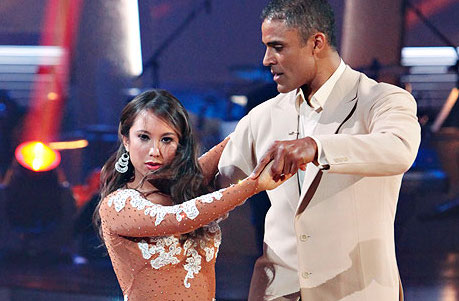
In addition to feature films, Fox has made significant appearances on television. He starred in the HBO prison drama Oz as Jackson Vahue, a storyline that tackled the challenges faced by professional athletes who fall from grace. Later, he played recurring roles on hit series like Ugly Betty and participated in reality shows such as Dancing with the Stars, which broadened his visibility and helped him reach a new generation of viewers.

Fox’s most enduring television role in recent years has been as Detective Ian Jackson in the Morning Show Mysteries series on Hallmark Movies & Mysteries, a franchise that blends suspense with lighthearted charm. His character’s consistent presence has made him a familiar face for mystery movie fans, and the role has become one of his most recognized post-NBA personas.

Rick Fox exemplifies how a career in professional sports can serve as a springboard into a second life in the arts. His journey from Lakers legend to actor is not merely a tale of celebrity crossover but a genuine narrative of reinvention. With over a dozen film roles, numerous television credits, and a steady presence in pop culture, Rick Fox stands as a rare example of a multi-talented performer who has thrived in two intensely competitive worlds.

A Quick History of the First Slam Dunk Contest(s)

Did you know there were two “first-ever” slam dunk contests in the history of professional basketball?

The first first-ever NBA Slam Dunk Contest took place during the 1976 ABA All-Star Game, not in the NBA itself. It was held in Denver, Colorado, as a way to showcase the flashier style of play that the ABA was known for before it merged with the NBA. The NBA then officially introduced their first-ever contest in 1984 during All-Star Weekend, also in the city in Denver. Both contests played a huge role in making dunking an essential part of basketball culture.

Julius “Dr. J” Erving’s free-throw line dunk in the 1976 ABA Slam Dunk Contest is one of the most iconic and influential dunks in basketball history. It was a defining moment that cemented dunking as an art form and set the stage for future high-flyers like Michael Jordan, Vince Carter, and Zach LaVine. For that reason alone, the ABA’s first-ever dunk contest is more significant than the NBA’s first effort (even though a 34-year-old Dr. J performed the same dunk in that one as well). However, it’s unquestionable that once Michael Jordan started participating, the NBA took dunk contests to a whole other level.  

Key Moments of the 1976 ABA Slam Dunk Contest:

  • Julius “Dr. J” Erving won the contest with his iconic free-throw line dunk, which later inspired future dunkers like Michael Jordan.
  • Other participants included David Thompson, Artis Gilmore, George Gervin, and Larry Kenon.
  • The contest was not a head-to-head elimination format, but rather a point-based system where each player attempted five dunks.
  • Dr. J’s free-throw line dunk was the highlight, as it was the first time a player had attempted such a dunk in a major event.

Key Moments of the NBA Slam Dunk Contest (1984)

  • Larry Nance won, defeating Julius Erving in the final round.
  • Nance introduced the two-ball dunk, where he dunked two basketballs in one leap.
  • The contest was structured as a head-to-head elimination tournament.

Now, go forth and conquer (slam dunk videos on YouTube.com we mean).

FREE STICKERS

The Real-Life Flint Tropics and the Greatest Deal in TV History

The Flint Tropics basketball team from Will Ferrell’s sports comedy classic Semi-Pro is based on an amalgamation of all the teams from the eccentric American Basketball Association (ABA). However, it’s hard to deny that there is one ABA team in particular that seems to make up most of the Tropics’ DNA. While only existing for 2 years, the Spirits of St. Louis made a splash on the sports world during their brief time and somehow ended up with a broadcast television deal that still pays out to this day (more on that later).

Based in St. Louis, Missouri, and playing their home games at the St. Louis Arena, the Spirits existed in the ABA from 1974 to 1976. They were actually one of the last teams to join the ABA. The team’s name was a nod to the Gateway Arch and the city’s aviation history, referencing Charles Lindbergh’s famous plane, the Spirit of St. Louis.

The Spirit team became notable for its colorful players and high-scoring games, consistent with the ABA’s flashy style. The organization’s more entertaining personalities included great player but troubled human, Marvin “Bad News” Barnes and the energetic fledgling (sometimes annoying) announcer Bob Costas. Future hall of famer Moses Malone even logged some minutes with the team.

And if basketball wasn’t your thing, games often featured events for attendees like disco concerts at halftime, Ladies’ Night, or “shooting for cash”. Undoubtedly, a St. Louis version of Dukes from Semi-Pro attempted a half-court shot for cash at some point between 1974 and 1976.

The Tropics’ storyline about struggling to survive the merger with the National Basketball Association (NBA) echoes the real-life challenges faced by ABA teams in 1976. Only four ABA teams were absorbed into the NBA (the Denver Nuggets, Indiana Pacers, New York Nets, and San Antonio Spurs), leaving others to fold or relocate. The Spirits were not among the four teams absorbed. The left-out teams had to either fold or negotiate buyouts.

The owners of the Spirits, Ozzie and Daniel Silna, refused to be bought out and, we’d like to think in the style of Jackie Moon, negotiated a remarkable deal: instead of a lump sum buyout, they retained perpetual rights to a share of future TV revenues from the ABA teams that joined the NBA. The deal entitled the Silnas’ to 1/7th of the TV revenue share received by each of the four former ABA teams that joined the NBA. This worked out to approximately 2% of the NBA’s overall TV revenue.

This seemed like a bold move at the time since TV contracts were very modest and not worth much money. The Silna brothers understood the potential of future television revenue though and resisted that one-time buyout. The ABA agreed to the deal because they thought that 2% would not amount to much cash anyway and they had a merger to complete.

With the arrival of Magic Johnson, Larry Bird, and Michael Jordan, the NBA’s popularity soared and TV contracts exploded in subsequent decades. The Silnas began earning millions annually for a basketball team that no longer even existed.

The NBA naturally had been trying to get out of this deal for a while. In 2014, their wish was granted but at another great cost. A settlement was reached with the Silna brothers to end the perpetual payments. The Silnas reportedly received a lump sum of $500 million while retaining a reduced share of some revenues. It is believed they have earned close to $800 million since the original arrangement was made all those years ago.

The Silna brothers’ deal is a testament to foresight and negotiation skills, as they leveraged a long-term vision over short-term gain. The deal, often called “the greatest deal in sports,” has become a legendary example of how understanding the future potential of a growing industry can result in extraordinary financial returns. The Spirits of St. Louis may have had a short lifespan as a team, but this deal ensured their lasting legacy in sports history.

FSM Picks the Greatest Christmas Day NBA Game

Sports on Christmas Day have become a beloved tradition, featuring marquee games across various leagues such as the NFL, NHL, and NBA. Christmas Day games provide a communal and festive experience, often drawing multi-generational viewership. Professional athletes often embrace holiday-themed celebrations during these games, enhancing the festive atmosphere.

The National Basketball Association (NBA) is the most notable sports league with a Christmas Day tradition. The league schedules matchups featuring its biggest stars and teams. These games often draw massive TV audiences as fans gather live and in front of their televisions during the holiday to watch some hoops. Christmas Day matchups highlight iconic rivalries like the Los Angeles Lakers vs. Boston Celtics amongst others.

The best NBA Christmas game is often a matter of personal preference, but FreeSportsMagazine.com considers one in particular the greatest of all time…

Miami Heat vs. Los Angeles Lakers 2004

The key storyline for this game adds to its legendary status. This matchup marked Shaquille O’Neal’s first return to Los Angeles as a member of the Miami Heat after his dramatic split from Kobe Bryant and the Lakers earlier that year. In other words, it was the first time Shaq and Kobe would be opponents.

Star Power abounded in this game with Miami being led by Shaq and a young Dwyane Wade and the Lakers anchored by Kobe Bryant in his prime. A thrilling overtime battle saw the Heat narrowly defeat the Lakers, 104–102. Both Shaq and Kobe had standout performances, highlighting their individual greatness and fueling the narrative of their rivalry.

This game was watched by millions, with intense media coverage leading up to and after the game. It perfectly encapsulates the drama, competitiveness, and star power that make NBA Christmas games special.

FSM Scouting Report: Lord of the Rings

Book/Movie Title: Phil Jackson Lord of the Rings

Total Pages/Duration: 341 pages (paperback)

Author/Director: Peter Richmond

Pace of Play: This book is a page-turner in spurts. It starts a bit slow (bios generally do as you have to get past the early years) then picks up some steam before coming to a pleasant, but slower conclusion. The pace of this book can be described as moderate.

Strengths: It is clear from the onset that the reader will go on more of a historical journey than some of the other Lakers/Phil books. However, this ends up being a strength as you will likely read multiple stories that provide new info about Jackson and his rise. It was actually surprising to see all the tidbits that had never been discussed in the mainstream over the years. The stories are not salacious in nature but would have just been fun to discuss. Additionally, the author does not linger on any period of time for too long saving the reader from a long slog through history (the Pistol Pete book was brutal in this regard). The way information is presented, Phil Jackson’s early years as a coach ends up being some of the most interesting material in the entire book.

Weaknesses: A major weakness of this book is the excessive quoting of others as the story goes on. At times, it is difficult to remember who is speaking or being quoted or why the quote was even being presented in the first place. The use of so many quotes is a bit understandable given that much of the book is just a presentation of facts and secondhand stories. Lastly, there are a large number of obscure jokes and references throughout the book. This may be good or bad depending on if you know what the heck the author is talking about. The jokes and comments do have a Family Guy feel at times.

Unique Attributes: This book will pique your interest on a few random topics we have always known were associated with Phil Jackson but that we may not necessarily have known about. These include (but are not limited to) Native American history and LSD. The author also has a special talent for throwing in intermittent zingers and one-liners that will make you literally LOL. More of the these would have been preferable to the random jokes mentioned in the previous section.

Scout’s Recommendations: This book probably would not do much for the die-hard hoops fan (Lakers and Bulls fans excluded) but it is certainly recommended for everyone else. The first third of this book in particular should appeal to fans of Phil Jackson and 1960’s and 70’s era sports. Be prepared though, the book does end on an optimistic note with Phil Jackson taking on the role of general manager of the New York Knicks.

Magic Johnson’s Fast Break Turns 35

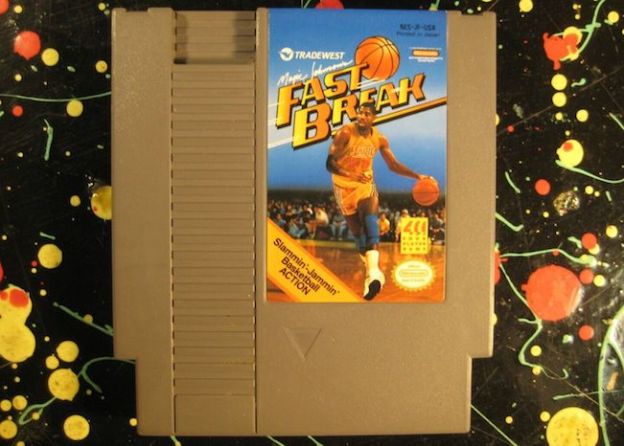
Magic Johnson’s Fast Break is a basketball video game released for the Nintendo Entertainment System (NES) in 1988. The game was developed and published by Tradewest, and it features basketball legend Magic Johnson as its namesake and cover star. Now 35 years old, FSM explores of if the game stands the test of time…

The game itself received mixed reviews from players and critics, which may have impacted its commercial success. Some praised it for its fast-paced gameplay and action, while others criticized it for its lack of depth and limited gameplay mechanics. The graphics and sound were considered decent for the NES era, but weren’t groundbreaking in terms of presentation.

However, the basketball game does offer a unique and fast-paced interpretation of the sport. While the game is played scrolling from side-to-side, similar to other classic basketball games of its time, the gameplay significantly differs as gamers are playing 2 on 2 instead of the traditional 5 on 5. Of course, 2 on 2 makes it easier to have Fast Breaks (and earn more money in the game) and makes for a different gaming experience. There is also the big Pepsi banner at half court which hardcore fans always seem to remember.

Overall, Magic Johnson’s Fast Break aimed to provide action-packed basketball, focusing on quick decision-making and high-scoring gameplay. While it did not have the complexity and realism of modern basketball games, it offered an enjoyable and engaging experience for players during its time on the NES platform.

The game did not end up being as successful for Nintendo compared to some of the more popular sports games released for the NES around that time. While it had a unique concept and featured a well-known sports personality like Magic Johnson (but no other NBA players), it didn’t achieve the same level of recognition as games such as Double Dribble and Tecmo NBA Basketball which became more established and had broader appeal. Fast Break didn’t become a standout title for the NES and is often not as well-remembered as the iconic games mentioned above. Ultimately, the game’s success can be considered modest but not on the level of major NES hits.

In the end, whether someone considers Magic Johnson’s Fast Break to be good or not depends on personal preferences and nostalgia for retro gaming. If you’re a fan of basketball and enjoy classic NES games, it might be worth trying out to see if it appeals to you. However, keep in mind that video game standards and expectations have evolved significantly since the NES era, so it may not hold up to modern gaming experiences.

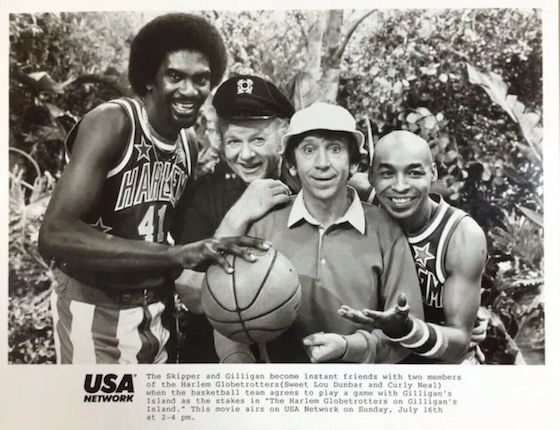
That Time the Harlem Globetrotters Got Stuck On Gilligan’s Island

The iconic Gilligan’s Island made a return in 1978 with a made-for-television movie called “Rescue from Gilligan’s Island.” The movie served as a sequel to the original series and brought back the original cast members, including Bob Denver as Gilligan, Alan Hale Jr. as the Skipper, Jim Backus as Thurston Howell III, Natalie Schafer as Lovey Howell, Russell Johnson as the Professor, Dawn Wells as Mary Ann, and Tina Louise as Ginger.

The storyline of “Rescue from Gilligan’s Island” revolves around the castaways finally being rescued after many years. However, upon their return to civilization, they face a variety of challenges and comedic situations. The movie was well-received by fans of the original series and provided closure to the story of Gilligan’s Island. Or did it?

The success of “Rescue from Gilligan’s Island” led to three subsequent made-for-television movies featuring the castaways which expanded on the original series and continued the adventures of the beloved characters. One of these forgotten gems may be of some interest to sports fans around the Globe.

In a two-part episode titled “The Harlem Globetrotters on Gilligan’s Island,” which aired in 1981, the Harlem Globetrotters made a guest appearance on the television show. This crossover episode was a fun collaboration between the popular comedy series and the legendary basketball team. While the Globetrotters still exist today, the squad that took the court on the island in 1981 was a who’s who of iconic street ballers including Meadowlark Lemon and Curly Neal. It was perhaps the team’s most distinguished lineup from over the years.

The Globetrotters’ presence on the island is a result of this unexpected turn of events. In the storyline of “The Harlem Globetrotters on Gilligan’s Island,” it is explained that the Harlem Globetrotters were on a cruise ship named the S.S. Minnow II, which was named after the ill-fated original S.S. Minnow from the Gilligan’s Island series. The ship gets caught in a storm and ends up stranded on the same deserted island where the main characters of Gilligan’s Island have been marooned. The Globetrotters and the castaways of Gilligan’s Island end up having to work together to solve a series of challenges and conflicts on the island. Naturally, many shenanigans ensue.

Mainly, both parties discover that a band of Russian spies, led by a character named Vasily Kandinsky, is also on the island engaging in nefarious activities. Throughout the episodes, the Harlem Globetrotters display their basketball skills while getting involved in comedic adventures with the castaways. They face challenges such as building a raft, searching for treasure, and of course outsmarting the spies. Their unique talents and comedic interactions contribute to the lighthearted and entertaining atmosphere of the show.

Ultimately, with the combined efforts of the Globetrotters and the castaways, they manage to thwart the spies’ plans and create a plan to escape the island. The episodes conclude with a fun and lively basketball game between the Globetrotters and the castaways, adding a final touch of humor and entertainment to the story. You’ll have to watch the episode to see which team won!

Athletes that Deserve a Movie, and the Actors that Should Portray Them

(PointSpreads.com) – Not all heroes wear capes. Many of them wear football pads, cleats, sneakers, and skates, and some even carry a bat or a stick. We’re talking about transcendent athletes who can make the jump from the field of battle to the silver screen.

With the release of Air – a movie inspired by Michael Jordan – PointSpreads.com, known for its reporting on the latest sports betting news (and the latest point spreads, of course), has compiled a shortlist of athletes whose larger-than-life personas, accomplishments or backstory would be worthy of the big screen – as well as the best actor to portray each one.   Which athlete will be the subject of the next Hollywood megahit?

“That sounded like a fun bet, so we decided to put some odds to it,” says Robert Jones, a former bookmaker at a major sportsbook and senior contributor at PointSpreads. 

Tom Brady

Now that he’s retired, Brady is the glamor boy who showed the world he was much more than a pretty face. Brady had a career spanning two decades, rarely got injured, and has more records than Motown.

A handsome face and an ‘aw-shucks’ demeanor is what is needed to play the seven-time Super Bowl champ. So, who is the perfect fit? We believe Arnold Schwarzenegger’s son, Patrick, would be the man to do justice to the role, according to PointSpreads.com.

“We think Brady has great odds of a Hollywood portrayal of his life and career.  The man is a legend.  The consensus around our office would be +300, or 3-to-1 odds, just behind Kobe Bryant,” Jones says.

Kobe Bryant

The Black Mamba needs to be memorialized in film, and not just any movie, but one that will stand the test of time. An all-time classic with superb directing and cinematography worthy of capturing one of the most electrifying ball players ever to grace the hardcourt.

His tragic death, made even more heart-wrenching when his 13-year-old daughter, Gianna, and seven other souls lost their lives in a plane crash on that fateful day in January of 2020, will have the audience misty-eyed and searching for Kleenex. PointSpreads.com’s pick to play Kobe is Michael B. Jordan. 

“There must be a Kobe film coming. I’d give it +150 odds,” Jones says.

Conor McGregor

Another celebrity that is no stranger to the pages of PointSpreads.com is Conor McGregor. Love him or hate him, it’s impossible to ignore him. The Irish MMA superstar exploded onto the scene with outrageous trash-talking and a unique fighting style that seamlessly blended a hammer-fisted boxing approach with the nuanced techniques of capoeira, an Afro-Brazilian martial art rarely seen within the confines of the Octagon.

McGregor is a natural southpaw but can switch to orthodox at the drop of a dime and his Billionaire Strut, fashioned after WWE founder Vince McMahon’s imperious swagger, is cinematic gold. Tom Hardy, an acclaimed martial arts practitioner himself, gets the gig with no audition required.

“McGregor’s personality, backstory and Irish heritage appeal to a big demographic and there must be a producer in Hollywood wanting to make this happen.  I’d give it a solid +450,” Jones says.

Simone Biles

Considered to be the greatest gymnast in the history of the sport, Simone Biles is a 4’8” pixie mounted on a pair of hydraulic lifts and a body of twisted steel that allows her to do what few others have been able to do.

Seven Olympic and 25 World Championship medals comprise her gymnastics resume but the Presidential Medal of Freedom awarded to her by Joe Biden in 2022 reflects how truly transcendent and entrenched in the fabric of American culture she has become. Marsai Martin has our full support to recreate the wonder that is Simone Biles on the big screen.

“Simone captured our hearts and attention and any movie about her would most certainly be well received.  I’d give it 6-to-1, or +600 odds that we’ll be seeing a trailer with her likeness in the near future,” Jones says.   

Image credit: Brian BAHR / AFP (PointSpreads.com)

Leo Ferris: The Man Who Saved The NBA

The early days of basketball often seen slow fan-unfriendly low scoring matches that often left spectators bored. Games often only got into the 40’s and many of the best players averaged less than 15 points a game. Many early basketball games looked more like a glorified version of the children’s game of keep-away than an action packed professional sport. This style of play culminated in a game between Minneapolis and Fort Wayne, where the Pistons of Fort Wayne held the ball most of the second half nursing a 1 point lead over the Lakers. The Pistons would win 19-18 in the lowest scoring game in NBA history. Prior to that the fewest points ever score 33 points, just 4 fewer than both teams scored, and that game was one the opening night of the NBA, or BAA as it was called back then.

This pace bored fans, many of whom were promised an action packed fun experience and attendance and interest in the new league had begun to dip. The NBA needed a solution and needed it fast. The solution was an ingenious one and one that would revolutionize the game as we know it. A simple clock, with just 24 seconds on it would forever change the game.

The clock was the brain child of Syracuse Nationals general manager Leo Ferris, a man that the NBA has long forgotten in one of the biggest travesties in the games history. Ferris, is as important to the early days of the NBA as anyone and one could argue that without Ferris there would be no NBA today; and there definitely would be no Atlanta Hawks, or Philadelphia 76ers. The NBA would look much different today without Ferris’s input all those years ago.

Ferris got his start with basketball not in the NBA but in the NBL when in 1946 he helped found the Buffalo Bisons. The Bisons were pretty much a failure in upstate New York and after only 13 games the Bisons picked up and left the shores of Lake Erie and heated to the American Heartland in Molina, Illinois. Technically, the team played in Molina and Rock Island, Illinois and Davenport, Iowa but most of their games were played in Molina. The team was called the Tri-Cities Blackhawks and while they struggled the foundation of one of the longest tenured NBA teams was laid. The Blackhawks would eventually move to Milwaukee, where they took on the moniker Hawks, and than move to St Louis and finally to Atlanta.

Shortly after the team moved to Tri-Cities Ferris would go on to make one of his first major shake ups of the basketball world when he signed Pop Gates for the all-black New York Ren’s to a contract. African-American players had played in the NBL before, but only during the early 1940s when World War II had taken a lot of the white players from the NBL. Gates was the first black player signed to a contract when there was not a necessity for them, and the first one signed because of his skill and talent and not because the league needed players. Gates would re-join the Rens when they joined the NBL as the Dayton Rens two years later.

After only a season with the Blackhawks, Ferris returned to his native upstate New York and began as the general manager of the NBL’s Syracuse Nationals. As manager of the Nationals he scored a huge coup for the Nationals and the NBL when he lured highly coveted big man Dolph Schayes away from the New York Knicks of the upstart BAA.

The BAA and NBL rivalry only got worse, with the BAA stealing away most of the best players from the NBL and starting in 1948 the BAA started taking the best teams as well. In 1947 the Minneapolis Lakers, Rochester Royals and Indianapolis Kautskies left the NBL for the BAA. The Nationals were now in an uncertain league and they and the NBL desperately needed to find a solution, and Leo Ferris would find that solution.

Starting in the spring of 1949 Ferris started meeting with executives of the BAA, at first it was an attempt to possible get the Nationals into the growing league, but would soon expand to merging the two leagues. The talks ended in August of 1949 when an agreement was reached to merge the NBL and BAA and form the NBA. The BAA only wanted to absorb two teams; the Nationals, and the upstart Indianapolis Olympians; who would replace the Jets. Ferris managed to talk the BAA into accepting both of those teams, as well as the Denver Nuggets, Sheboygan Redskins, Anderson Packers and the Blackhawks. He originally wanted the merger to include Oshkosh, Hammond and Dayton, but financial backing ruined Oshkosh’s attempt to relocate to Milwaukee and Hammond was thought too close to Chicago where the BAA already had a team. The Rens of Dayton were not allowed to join because their players consisted of black players. In addition to the Rens not being allowed to join, black players on Syracuse also had to be let go.

The merge proved successful as the 17 team NBA seen initial success, but the old NBL teams had given up too much power in the merger and despite Ferris’s best efforts the league kicked out 5 of the former NBL teams the next season.

The 1950 season saw the Lakers continue their dominance and the Pistons thought the only way to stop them was to hold on to a one point lead and the ball. This was the event that usurer in Leo Ferris’s clock or more commonly known as the shot clock. Ferris had always liked math and had been good at it, and he used math to come up with the 24 second clock. He took the number of seconds in a 48-minute game (2,880) and divided that by the average number of shots in a game (120) to get to 24 seconds.

It took 4 more years for the league to implement the shot clocks and when they did the league seen a jump in scoring by nearly 20 points a game and gone were the days of games ending up in the 40s. In fact, since the introduction of the shot clock there has been only 20 regular season games were a team has scored less than 60 points, and only one were a team scored less than 50 and only one playoff game were a team scored less then 60 points.

The introduction of the shot clock caused the game to enter into an era of frenzied paces, with teams scoring what were once thought of as impossible number of points. In 1954-55 Neil Johnston lead the NBA in scoring with 22 points a game, seven years later Wilt Chamberlain would set the NBA record by averaging 50 points a game.

Ferris would only stick around the NBA for one season after his clock was introduced before permanently leaving the league and the game to develop real-estate. It was a shockingly short career for someone who would have such a profound impact on the game.

Despite all that he accomplished, Ferris has yet to be introduced into the Naismith Hall-of-Fame. He has been a finalist multiple times but never made it to the enshrinement portion. This is likely due to the utter and complete disregard and disdain that the NBA has often shown towards the NBL and its former players and staff.

Excluding Ferris has been one of the worst tragedies that the NBA has done in its 70 plus years of existence. Many people are in the Hall-of-Fame who have lesser resumes than Ferris and yet Ferris gets overlooked time and again. Maybe, hopefully, 2018 will be the year for the man who may have saved the NBA.

Resources and references come from http://nbahoopsonline.com/

Article Source: http://EzineArticles.com/9883795

Photo Credit: John Lent/AP