Tag Archives: free

There’s More To Shadow Boxing Than Warming Up For Your Boxing Training Workouts

Shadow boxing is often looked at as just a quick way to warm up before the actual boxing workout session. Shadow boxing no doubt serves to warm the body for the upcoming workout. More importantly though, shadow boxing helps you to groove the skills you have been taught by your boxing coach during your boxing training workouts. It also serves as a tool to hone your own unique fighting style. If you think it’s just throwing punches to break a sweat, you’re going about it the wrong way.

When you’re shadow boxing, It’s best to shadow box in front of a mirror where you can monitor the technique that has been taught to you. I often say…the mirror doesn’t lie. Once you know what to look for, it’s impossible to have bad technique in front of the mirror! Unless of course you just don’t care or aren’t really focusing and putting your all into it. Shadow boxing is when you can better groove the new skills your trainer has been teaching you. Skill retention is a lot better when you shadow box in front of the mirror, grooving good skill.

If you really focus on what you’re doing while shadow boxing, progression is heightened. Your boxing coach won’t have to yell at you so much to stop dropping your hands when you’re working the bags. He will be very pleased to see your fast progression due to your commitment to solid technique when shadow boxing. Boxers can say all they want that they have been putting in the extra work shadow boxing, but good technique will be the telling sign and truth to the coach that the fighter has indeed been putting in the work.

Great fighters will tell you that when they shadow box and move around they envision real situations that may come up in the ring. They think about another fighter being in front of them firing back and moving away. From offensive combos, to defensive tactics, all is covered. Boxers are continually focusing focusing on what an opponent can possibly do while shadow boxing. That is why some boxing coaches call shadow boxing shadow sparring. It actually looks like the boxer is sparring an invisible opponent.

Look at an experienced fighter’s body language and eyes when doing this. It shows they are in a different world. Indeed they are, a world where they see themselves dominating. You wonder why these fighters get so good? Because they see themselves doing it first. The mind can’t tell the difference from something it’s experiencing or imagining. That’s why this secret is so important to apply. Your boxing performance will improve very quickly when you practice shadow boxing in this manner.

Now think about that the next time you shadow box or shadow spar.

About the author: Rob Pilger is a Certified Strength and Conditioning Specialist and Level II USA Boxing Coach.
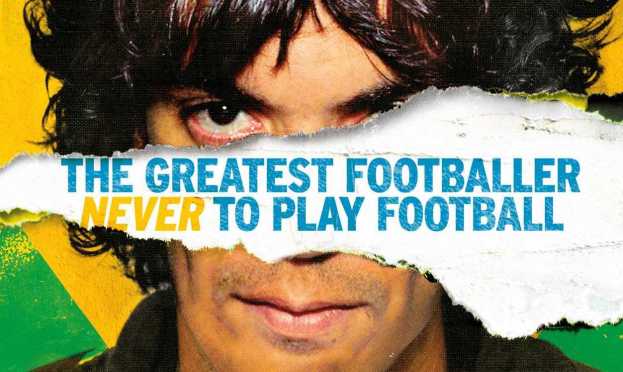

Kaiser! The Greatest Footballer Never to Play Football

Born in Rio Pardo, Brazil, Carlos Henrique Raposo had dreams of becoming a professional soccer (futbol) player. After a youth career at Botafogo and Flamengo, he had his sights set on the future. Whether given the nickname “Kaiser” due to his resemblance of superstar Franz Beckenbauer or a bottle of Kaiser beer, he used his new-found name to begin a career where he “wanted to be a footballer, but did not want to play football.”

Thus began a decade-plus career that spanned across Brazil (Botafogo, Flamengo, Bangu, Fluminense, Vasco da Gama, and America), Mexico (Puebla), France (Gazelec Ajaccio), and the United States (El Paso Sixshooters). Relying on his charm and friends in high places—from fellow footballers Carlos Alberto Torres, Ricardo Rocha, and Renato Gaucho, to reporters willing to write “stories” of his “career”— Carlos Kaiser used his skills of deception to have a storied career without ever stepping foot on the pitch.

Whether faking injuries, having friends lie for him, making up tall tales, or getting thrown out of a match just before taking the field, Kaiser! The Greatest Footballer Never to Play Football is an incredible story of the lengths one man went to have a professional soccer career without every playing a game.

Originally published in the UK, and with a worldrenowned documentary released on his lifeKaiser! shares the lengths taken by one man who wanted all the glitz and glory of being a professional athlete . . . without ever having to be an actual athlete. So whether you’re a fan of soccer, futbol, professional sports, or stories of cunning and deception, Kaiser! is the story you don’t want to miss!

Understanding the Benefit of Biomechanics in Golf

There is information available widely through the web, PGA courses and magazine articles that brings you up to date with the latest thinking in golf. They teach you the latest on how to swing each club correctly, how to putt, how to analyze your swing, how to get mentally ‘tough’, how to improve flexibility and how to get fitter and stronger for golf.

Today there is a plethora of information being offered about golf. Some of it correct, all of it interesting, but how much of it is relevant to you? And how do you know which of these generic exercise tips is going to help you? Even if you trained using each one for 6 weeks and then took the results onto the course and tried them – how do you then know whether your performance is ‘that exercise’ or that you just had a good day?

Even video/digital analysis, although interesting from all points of view measure the movement discrepancies in a golfer’s swing, it doesn’t tell us why you are performing these movement aberrations. Knowing what you’re doing wrong, but not knowing why you’re doing it is sometimes worse than not knowing what you’re doing wrong!

Golfers and Coaches need a simple system of analysis that they can use in conjunction with their coaching techniques to find out why golfers perform their particular swing. Although there are fundamental similarities to all good swings, each swing is like a finger-print and unique to that individual. Why is it unique? It’s because we are all biomechanically different, and unless you understand what those differences are, how can you identify whether your swing is due to poor technique or something that has to done to compensate for a mechanical problem? You can’t. The variety of golf swings that exist represent the many ways that the human body can compensate for its biomechanical problems.

For example, let’s take a typical handicapper’s slice. You know the typical causes of a slice and the things you would normally work on, bearing in mind the individual you are helping and what you see. At the same time we also know that these ways don’t always work. There may be a number of reasons for this: they may not be practicing, it may take some time to work out which is the best method for them, or quite simply it may be that the person doesn’t have it in them to do what you’re teaching. Alternatively, it is likely that they can’t physically do it. If that pupil has a longer right leg (assuming they’re a right handed golfer), then they will have a tendency towards a more upright back swing. We know this because of the way the spine and pelvis work biomechanically. A longer right leg compresses the joints in the spine on that side and so the person can’t rotate easily. They therefore have to side bend to gap the joints and initiate movement, which causes an upright backswing. We also know that this then leads to a more out-to-in downswing and therefore a slice (depending upon grip and ball position of course). So you could work all day on preventing this upright backswing, which you know is leading to a slice, but it will not change until you’ve addressed the leg length discrepancy.

Invariably these leg length discrepancies are caused by a rotated pelvis and often they don’t cause symptoms so you won’t even know they exist. If this is the case, then doing some simple exercises can help re-align the pelvis, reduce the leg length discrepancy and allow you to flatten that back swing.

There are many more of these examples. As well as leg length discrepancies, other biomechanical issues can include, poor motor programming strategy (the way the muscles link together in movement patterns), poor control between the pelvis and shoulders, nerve adhesions or stiffness, faulty core muscle control, immobility around the hips, pelvis and spine, and simple lack of flexibility. Some of these issues sound quite technical and complex, but they’re actually very simple to test and eradicate.

Biomechanics works ‘hand in glove’ with your teaching; it is crucial Pro’s understand and embrace this as its going to be the next big thing in golf.

There is a system that exists that can help others learn about and address these issues. It comes in 3 forms. First, there is a software package that takes you through some simple biomechanical tests. This expert system takes you through a series of exercises to eradicate biomechanical problems. Second, there are courses, which are endorsed by the PGA, which teach PGA professionals how to assess their own pupils and administer the exercises themselves. Lastly, experts can come to your club and assess your pupils individually and make recommendations based upon a detailed assessment of their biomechanics. Following a discussion with these experts, a decision can be made as to the best program for them to follow.

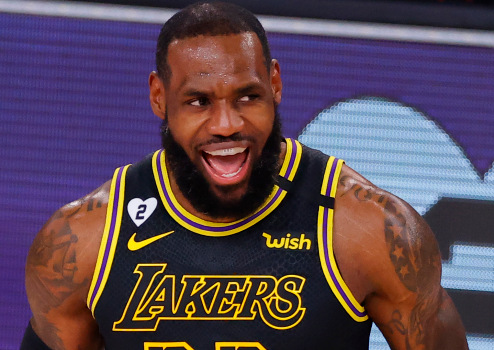
FSM Editorial: Top 5 Reasons LeBron Ain’t Trump

Sports shock jock (and professional LeBron hater) Jason Whitlock made a big fuss about King James recently, comparing him to the president and calling him “Black Trump”. Whitlock pointed to a few similarities between Lebron and the Donald (mostly the incoherent curse-filled tweeting) but presented a pretty weak case overall. Keep in mind, Whitlock recently left Fox Sports because they wouldn’t pay him so he may just be trying to be extra provocative to generate buzz for himself (insert sarcastic shocked face emoji here).

Here is a taste of Jason Whitlock’s comments:

“LeBron fashions himself as a dignified statesman, role model, political activist and champion of racial equality. He is every bit as crude, undignified and inarticulate as our sitting president.”

To read the full editorial originally posted on OutKick, click here.

Now then, being the sports junkies that we are, we thought we’d do a little counter punching on the King’s behalf. Free Sports Mag is not a political publication in any sense so please read the following Top 5 Reasons LeBron Ain’t Trump as if you were reading The Onion or MAD Magazine.

5. Lebron James has 3 children with the same woman

4. Blaze Pizza > Trump Steaks

3. Lebron James has never been bankrupt

2. I Promise School > Trump University

1. Lebron James is a billionaire   

FSM Books: Shoe Dog

To steal an adjective often used by good ole’ Jim Ross (of WWE and AEW fame), Nike creator Phil Knight’s recent memoir Shoe Dog is a “slobberknocker” of an experience. One would have never expected Nike to overcome its somewhat humble beginnings, growing pains, and its lies – oh the many, many lies!

The beginning of Knight’s memoir finds him as a recent graduate of the Stanford School of Business. Unsure of what direction to go in life, he thinks about an assignment he completed in which he came up with his own business concept. He did well on the assignment and, since he is feeling a sense of urgency to figure things out in life (as many people do in their 20s), he decides to turn that assignment into a pursuit. His concept at Stanford was to import and export high quality running shoes. While this doesn’t appear to be a groundbreaking idea in 2020, Knight makes the reader aware just how ridiculous this seemed to others when he started his quest in 1962.

The “whatever it takes” approach is perhaps the most captivating reoccurring theme in Shoe Dog. It’s what sucks the reader in and keeps the pages turning at a somewhat phrenetic pace (don’t be surprised if you finish this book in 3 days or less). Phil Knight writes in a way that makes the reader feel they are a part of his unbelievable journey. By the end of his tale, the reader has jumped every hurdle, navigated every roadblock, and ultimately gets to celebrate the success of Nike alongside Phil Knight and friends. Of course, the reader’s experience comes from a distance and many years after the fact, but the feeling of being present at all times speaks to how well Shoe Dog is written.

Being present at all times means the reader is treated to some of these “whatever it takes” moments. Be prepared to battle a little anxiety as Phil Knight wiggles out of various sticky situations. These moments mostly occur during Nike’s infancy and often involve big fibs told by Knight. The ethics of Knight’s behavior during these situations are definitely up for debate. However, it must be noted that there was never malice in Knight’s actions. In fact, FSM would bet dollars to doughnuts that many entrepreneurs have told the same fibs. Without spoiling too much, get ready to join Phil Knight as he lies or stretches the truth when dealing with banks, suppliers, and manufacturers. Observe him as he travels overseas and secures a shoe contract for his company that doesn’t exist yet.

Sports fans may be surprised that athletes such as Michael Jordan are scarcely discussed in Shoe Dog. We started the memoir thinking a large portion of the story would include Nike’s major athletes and their impact on the company over the years. Aside from begrudgingly admitting these athletes were needed for purposes of advertising, Knight rarely deviates from talking about his own journey and his significance to the creation of Nike. By the end of Shoe Dog, it’s clear that Knight’s self-critical nature and baffling insecurity kept pushing Nike forward amidst seemingly insurmountable odds at times.

For those reading this memoir for guidance about business and/or life, you definitely won’t leave empty handed. Knight’s guidance is not delivered explicitly but found in his actions and self-reflection. For those reading for the purposes of entertainment, lace up your running shoes, take a deep breath, and prepare for the run of your life!

FSM Final Grade: A+


Purchase Shoe Dog Today!

Purchase the Shoe Dog Kids Version

FSM Editorial: The Collectors Are Restless

Since this is an editorial piece, we have the freedom to vent and go on tangents at times. This article will be more of a polite vent. With COVID-19 shutting life down since March 2020, collectors have been itching to buy, sell, and trade in person. The card flippers are in paradise though, inflating card prices before selling them online to us desperate shut-ins.  

Do we sound bitter? Maybe a little. The flippers are taking advantage of events in the environment. It’s capitalism 101. We live in the USA. So, we aren’t full bitter. But bitter, yes.

Perhaps the most frustrating part of being a collector of memorabilia (or dare we say a “picker”) these days is that we cannot see, feel, and hold these valuable collectibles as we consider purchasing them. How does it make you feel to pull that Fleer Michael Jordan Rookie card in and out of your desk drawer? Is that feeling worth $3,000 or a lower PSA grade? Is the card you’re holding obviously a fake?

But even more heartbreaking to the FSM staff than not being able to walk into their local hobby shops is the disappearance of garage sales. It’s quite a felling to find a rare gem, collectible, or piece of memorabilia on a sunny Saturday morning. If you’re really lucky, you’ll get a cool story about the item to take with you as well. Garage sales are also one of the last places where people can actually negotiate a fair price for the things they want.

We recently came across a story in which someone found a lot of Patrick Mahomes rookie cards at a local thrift shop. The story was encouraging because it’s indicative that stores are opening and collectors are venturing out to search for treasure. We’ll end on that positive note. The collectors are restless – but not for much longer.

P.S. If the title of this editorial is familiar it’s because it was inspired by this Far Side collection.

FSM Editorial: COVID & Angels

With COVID-19 forcing people to social distance, our country’s beloved national parks have received a much-needed boost in foot traffic. One of these parks offers a healthy dose of danger and excitement and is more accessible than you might think…

Angels Landing located at Zion National Park in Utah is perhaps the most semi-famous hike in the United States. Many hikers I’ve encountered during my travels have “kind of” heard of it. Common responses are, “That’s the one with the big walls right?” or “The one where people always fall off and die?” My answer to these and similar questions is usually, “Well…kinda.”

Anyone in half decent shape shouldn’t have trouble completing this hike. There is nothing overly strenuous about this trail. The switchbacks leading up to the final leg of the trail are steep but they are also paved which is extremely helpful (not to mention a rarity on this kind of trek).  This section is affectionately known as Walton’s Wiggles. As you hike up the wiggles, you will have solid canyon wall to your left.  To your right, you will have a sliver of a view of the bigger canyon you find yourself in. Depending on the time of day, you will see a different mix of orange, red, and maroon in the rocks with random greenery sprinkled throughout. An avid hiker would probably spend no more than 60 minutes completing this trail through the end of Walton’s Wiggles.

The WW switchbacks lead to a narrow trail that eventually ascends like a staircase to the point of the trail known as Scout’s Lookout. This is where first timers will have an initial glimpse of the behemoth they are about to take on. This is also where people usually start thinking about turning back. I mentioned earlier that this hike is not strenuous which is true. The emotional component to completing this hike cannot be understated however. When you are standing on Scout’s Lookout, gazing at the thin strip of trail that leads up to Angel’s Landing, looking at the thousands of feet of drop-off on each side, there is a good chance your nerves will make the decision of quitting or going on for you. Don’t make a hasty decision though. Use the random outhouse at the lookout if you need a second to compose yourself. Take reassurance knowing that the number of people who have died trying to reach the top is not even in double digits. My point is that’s an extremely low number.

Admittedly, there are a few spots on the way to the top of Angels Landing that could use some chains. But the final portion of trail is well constructed and safe overall. Hold on to the chains whenever available, watch where you step, and resist the urge to take in the scenery until you summit. Once you make it to the top, there is plenty of space to relax safely and admire the beautiful views: giant walls of multi colored rock on both sides with a river curving its way through the canyon floor.

Don’t let any initial fears at Scout’s Lookout prevent you from completing this hike. If you exercise caution and respect your environment, you should be fine. The payoff for crossing the finish line is twofold. You get treated to unimaginable views that few will ever see form that vantage point and you gain the satisfaction of completing what most consider a daunting task. The trail is properly named. If a landing strip for angels really exists in Utah, there is good chance this is it.

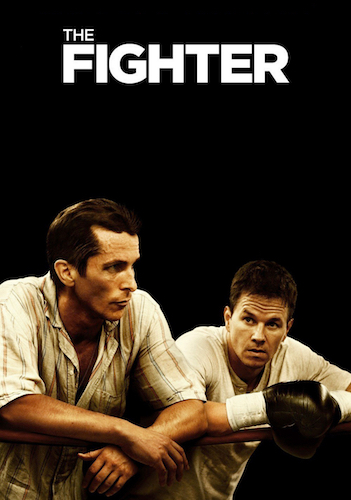
FSM Movies: The Fighter Turns 10

FSM revisits this Bostonian boxing saga nearly a decade after its release. This review was originally published on freesportsmagazine.com in December 2010.

Based on the life of boxing favorite “Irish” Mickey Ward, The Fighter fails to deliver the knockout blow which could have made it an instant classic with moviegoers this holiday season. Much like Ward’s professional career, The Fighter flirts with greatness but falls just a hair short when all is said and done.

The timeline and some of the events presented in this tale are inaccurate but nothing that is too atypical for a movie “based on a true story.” Overall, The Fighter gets the point across and the viewer leaves the theater with a good Cliff’s Notes version of the Mickey Ward story.

For a movie about a fast paced sport like boxing, this film trudges along at a snail’s pace. The fighting scenes are spectacularly exhilarating though they are few and far between and when they do pop up, they are short lived. The bulk of this film is a series of surreal interactions between Mickey Ward , his family, and of course the obligatory love interest.

This is definitely not the first boxing movie that is not about boxing. The original Rocky film did an excellent job of telling a love story using the darker side of the sport as a backdrop. The Fighter attempts to employ the same strategy but there is simply too much going on in the movie. Is this film about a dysfunctional family? A drug addict brother? A man who has lost the belief in himself? By trying to go in so many different directions, the movie spreads itself thin and ends up lacking in substance.

In terms of acting, there are a few strong performances, most notably Christian Bale as Dickie Ekland, the half-brother of Mickey Ward who is battling crack addiction. Melissa Leo (of Homicide: Life on the Street fame) also delivers as Ward’s mother who is both loveable and annoying to the viewer, often time simultaneously. And Mark Wahlberg is his typical, average, muscular self.  He does well during the tough guy scenes and fails miserably when trying to invoke that sense of drama which really would have made this flick reach the next level.

Despite all the hype and Golden Globe nominations (it seems like the only prerequisite these days to get nominated is that a film is released in December), The Fighter is a movie you can wait to see in the comfort of your own home for a fraction of the price.

FreeSportsMag gives The Fighter a grade of C+

FSM Editorial: How Much is Enough for Roy Jones Jr.?

This article was originally published in March 2011. With Roy Jones Jr. set to fight Mike Tyson by the end of 2020, the folks at FSM thought it was appropriate to share this editorial once again. Enjoy!

Here we go again – again. The announcement was made this month that fading boxing star Roy Jones Jr. will lace up the gloves for yet another questionable fight.

Exactly how much is enough punishment for a man to take in the ring? Unfortunately this is not a question a boxing fan can answer. Well I guess they could answer but it wouldn’t make much difference to Roy Jones Jr. who will travel to Russia on April 22 to face hot prospect Denis Lebedev (21-1, 16 KOs).

Lebedev is bigger, stronger, and 11 years younger. His only loss was a controversial decision in an opponent’s backyard. There should be no doubt that Roy Jones Jr. is being used as a stepping stone.  Check any Las Vegas sports book if you think the Russian guy is the underdog this time (yes that was a Rocky IV reference).

Roy Jones Jr. has lost two fights in a row. One of them was an embarrassing first round knockout to an Aussie journeyman and the other was a beating at the hands of Bernard Hopkins. Even before these two bouts, concerned citizens in the boxing community were pleading for Jones to stop fighting. His diminished skills were apparent in the fight against B-Hop. When fighting a younger contender like Lebedev, there will be potential for serious harm. I wouldn’t be surprised if we see Jones get knocked out in the style of the Glenn “Road Warrior” Johnson fight.

So back to my original question – how much is enough punishment for Jones Jr. to take? When a question like this is asked it usually means the person has already taken enough.

The truth is that it doesn’t matter what you or I think. And as much as I hate to see former greats blocking punches with their face, I’m not going to be the one to tell Roy Jones Jr. that he needs to quit boxing. I would loathe it if someone told me I had to stop doing something I love, especially if I was the best in the world at doing it at one point in my life.