Tag Archives: free

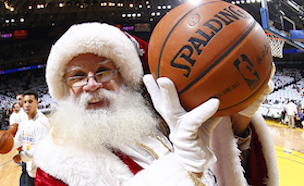
FSM Picks the Greatest Christmas Day NBA Game

Sports on Christmas Day have become a beloved tradition, featuring marquee games across various leagues such as the NFL, NHL, and NBA. Christmas Day games provide a communal and festive experience, often drawing multi-generational viewership. Professional athletes often embrace holiday-themed celebrations during these games, enhancing the festive atmosphere.

The National Basketball Association (NBA) is the most notable sports league with a Christmas Day tradition. The league schedules matchups featuring its biggest stars and teams. These games often draw massive TV audiences as fans gather live and in front of their televisions during the holiday to watch some hoops. Christmas Day matchups highlight iconic rivalries like the Los Angeles Lakers vs. Boston Celtics amongst others.

The best NBA Christmas game is often a matter of personal preference, but FreeSportsMagazine.com considers one in particular the greatest of all time…

Miami Heat vs. Los Angeles Lakers 2004

The key storyline for this game adds to its legendary status. This matchup marked Shaquille O’Neal’s first return to Los Angeles as a member of the Miami Heat after his dramatic split from Kobe Bryant and the Lakers earlier that year. In other words, it was the first time Shaq and Kobe would be opponents.

Star Power abounded in this game with Miami being led by Shaq and a young Dwyane Wade and the Lakers anchored by Kobe Bryant in his prime. A thrilling overtime battle saw the Heat narrowly defeat the Lakers, 104–102. Both Shaq and Kobe had standout performances, highlighting their individual greatness and fueling the narrative of their rivalry.

This game was watched by millions, with intense media coverage leading up to and after the game. It perfectly encapsulates the drama, competitiveness, and star power that make NBA Christmas games special.

Manon Rhéaume Broke Barriers as NHL’s First Female Player

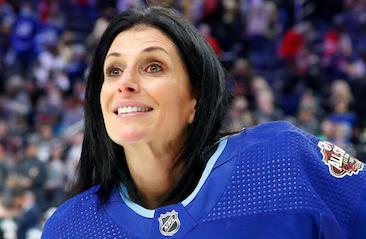
Manon Rhéaume is a trailblazing figure in ice hockey, best known for being the first woman to play in a major North American men’s professional sports league. Born on February 24, 1972, in Beauport, Quebec, Rhéaume made history in 1992 when she played as a goaltender for the Tampa Bay Lightning in an NHL preseason game. This marked the first and only time a woman competed in an NHL game, breaking barriers in a sport dominated by men.

Rhéaume had a successful career as a goaltender in women’s ice hockey as well. She represented Canada in international competition, winning silver medals at the Women’s World Championships and earning a silver medal at the 1998 Winter Olympics in Nagano, the first-time women’s ice hockey was included in the Olympics.

Her achievements have made her a symbol of progress in sports, inspiring many female athletes to pursue their goals regardless of traditional gender norms in competitive fields.

Manon Rhéaume’s groundbreaking appearance in an NHL game was the result of a combination of her exceptional talent and a strategic move by the Tampa Bay Lightning to generate publicity for their newly formed franchise. Here’s how it came to pass…

Rhéaume had already made a name for herself as a highly skilled goaltender. In 1991, she became the first woman to play in a men’s major junior hockey game, suiting up for the Trois-Rivières Draveurs in the Quebec Major Junior Hockey League (QMJHL). Her performance in men’s leagues drew attention and proved her ability to compete at a high level. She had also excelled in women’s hockey, leading the Canadian national team to world championships and establishing herself as one of the top female goaltenders in the world.

In 1992, the Tampa Bay Lightning were preparing for their inaugural season in the NHL. Team general manager Phil Esposito, a Hall of Fame player, saw an opportunity to make a splash and attract attention to the new team so he invited Rhéaume to the Lightning’s training camp. While the decision was seen by some as a publicity stunt, Rhéaume’s skills and accomplishments justified the invitation. Esposito later insisted that the move was not just a gimmick; Rhéaume had shown she was good enough to play at a high level, and she had earned the chance.

So that’s how it came to be that, on September 23, 1992, Rhéaume made history when she played in a preseason game for the Lightning against the St. Louis Blues. She played one period, stopping seven of nine shots in a solid performance.

Although Rhéaume didn’t continue with the Lightning in the regular season, her participation in the game was a major milestone. She was later signed by minor league teams and continued her career in professional and international women’s hockey through the 1990s and early 2000s. She represented Canada in international competition, including winning a silver medal at the 1998 Nagano Winter Olympics, the first-time women’s ice hockey was included in the Games. She officially retired from professional hockey in 2009. However, her competitive playing career had already slowed down before that point.

After retiring as a player, Rhéaume has remained active in the world of hockey, working in various coaching and mentoring roles. Her legacy continues to inspire many, especially young female players. As of recent years, Rhéaume has been particularly involved in developing youth hockey programs, with a focus on growing opportunities for girls in the sport. She has worked as a coach and mentor for young players, inspiring the next generation of female athletes. She has worked with organizations like the Detroit Red Wings to promote hockey through outreach and youth programs and has served as an ambassador for women’s hockey, frequently appearing at events to support the sport’s growth.

Rhéaume also started the Manon Rhéaume Foundation, which provides scholarships and financial aid to young girls who want to play hockey but face financial barriers. The foundation’s mission aligns with her lifelong dedication to empowering women and girls in sports.

And if all that wasn’t enough, Rhéaume is also active as a motivational speaker, where she shares her story of breaking barriers in the NHL and encourages young people, especially girls, to pursue their dreams, regardless of traditional gender expectations and she occasionally appears in media to discuss her career and to comment on the state of women’s hockey. Manon Rhéaume’s NHL appearance was significant not only for its historical value but also because it opened doors and brought visibility to women’s participation in traditionally male-dominated sports. She will forever remain a significant figure in the NHL, even though she only played in one game.

The Olympic Games Paris 2024 Draw to A Close

Paris 2024 After two weeks of exceptional competitions and intense emotions, the Olympic Games Paris 2024 came to an end on Sunday 11 August 2024. In the midst of darkness, the new show entitled “Records”, created by Thomas Jolly for the Closing Ceremony, highlighted the importance of the Olympic Games for the whole world. The athletes, the true heroes of the competitions, gathered at the Stade de France to be celebrated by the public one last time. At the end of the night, the Olympic Flame of Paris 2024 was extinguished, closing this unprecedented chapter in Olympic history, before it shines again in 2028, in Los Angeles. 

After lighting up the city, the Flame comes to the Olympic Stadium  

Lit at the Opening Ceremony of the Olympic Games, for a fortnight the Paris 2024 Cauldron illuminated the Jardins des Tuileries by day and the Paris skies by night. Above all, it was an unexpectedly popular success: 200,000 people booked tickets to see it up close, and hundreds of thousands more gathered on the quays, bridges and balconies to watch it take to the skies at sunset. 

At the heart of the Louvre estate, around the Grand Bassin Rond [water basin] in the Jardin des Tuileries, the Cauldron welcomed new guests. Echoing Hymne à l’amour sung by Céline Dion from the Eiffel Tower during the Opening Ceremony, French artist Zaho de Sagazan and the Haendel-Hendrix Academy Choir performed another iconic Edith Piaf song: Sous le ciel de Paris. 

As the Flying Cauldron was extinguished, XX, the four-time Olympic champion, appeared at the Louvre Palace. The most decorated athlete of the Olympic Games Paris 2024 carried the lantern containing the Olympic Flame towards the Stade de France, reversing the route taken two weeks ago. 

The Stade de France as the setting for the Closing Ceremony 

A major feature of the Olympic Games Paris 2024, the capital’s monuments were the perfect backdrop for the athletes’ performances. The Eiffel Tower, the Grand Palais, the Place de la Concorde, the Invalides, the Château de Versailles, etc. 

To close this unprecedented chapter in Olympic history, the public was invited to the temple of performance and athletes to celebrate them one last time: the Stade de France. A unique theatre, it gave Thomas Jolly the opportunity to use all the components of live performance: lighting, decor, costumes, machinery, set design, etc. to offer a final celebration of the Olympic Games Paris 2024. 

The triumphal entrance of the flag-bearers and athletes from all the delegations together  

As the Flame made its way towards the Stade de France, the flag-bearers of the 205 delegations chosen for this Ceremony were greeted by a standing ovation before parading on a stage in the shape of a planisphere.  

In a final celebration of the heroes of the Olympic Games Paris 2024, they were joined by all the athletes entering the stadium together, united and mingling without distinction of nationality, as tradition dictates. Their arrival was set to a medley of songs by the group Justice arranged by Victor Le Masne, followed by the hits that have accompanied the exploits of the French team throughout the Games, including notably ‘Que je t’aime,’ the Johnny Halliday anthem. 

Honouring the Women’s Marathon, its medallists and the Mass Event Running  

As with every edition, the Marathon winners’ ceremony took place during the Closing Ceremony. For the first time in the history of the Olympic Games, the women’s event concluded the athletics competitions and the women’s medallists were honoured, the final symbol of an edition that Paris 2024 wanted to be more equal between male and female athletes.  

A few hours before the women’s Marathon, Paris 2024 once again offered “Games Wide Open” with the first mass participation event in the history of the Games: the ‘Marathon pour tous.’ Nearly 35,000 people took up the challenge of the 42.195km and 10km courses and shared some unforgettable moments on the night of Saturday 10 August. In the Stade de France, striking images of this unprecedented event flashed across the screens. 

The spectacular arrival of a Golden Voyager and the return of key characters from the Opening Ceremony 

As night fell, the Stade de France was transformed into a huge theatre. In a nocturnal, deserted and mysterious atmosphere, a Golden Voyager landed in a spectacular setting. Inspired by the Golden Record, a disc launched into space in 1977 by the Voyager spacecraft containing an identity card of human civilisation, this Golden Voyager character took spectators and TV viewers on a dreamlike journey towards a fictional future in which the Olympic Games no longer existed. 

Set against a chiaroscuro backdrop of light effects and enhanced by epic music by Clément Mirguet, this new character in Thomas Jolly’s artistic universe pays tribute to Pierre de Coubertin’s ambition to revive the Ancient Games. A future in which the audience rediscovered characters from a not-so-distant past: the masked Torchbearer and the horsewoman, two protagonists of the Opening Ceremony, carried the flag of Greece, the birthplace of the Olympic Games. 

Light shows, Olympic Rings and Hymn to Apollo 

Just like the Opening Ceremony, the show created by Thomas Jolly was a true spectacle: the moment the Goddess of Victory appeared, the show spread to the stands of the Stade de France and the public became actors in the Ceremony. Wearing luminous bracelets, spectators conjured up athletes represented on pottery, then transformed into doves of peace.  

After the Greek flag and National Anthem, the Golden Voyager continued their quest by revealing new vestiges of the Games: the Olympic Rings. Buried in the ground, huge rings six metres in diameter rose up, serving as acrobats’ apparatus. Gradually, the world became festive and joyful again, with a choreography featuring over a hundred performers from parkour, street show, break dance, circus and gymnasts from the Paris Fire Brigade, who delighted the audience.   

During the ballet of the Rings, a levitating interlude opened up: the Hymn to Apollo was performed by Alain Roche, seated at a piano floating vertically in the air, offering a truly “suspended” moment. Thomas Jolly teamed up with the French pianist and Franco-Swiss opera singer Benjamin Bernheim for a performance that breathed new life into the oldest hymn of ancient Greece. 

Under the Olympic Rings hoisted into the sky, a celebration in honour of the Games   

Once the Rings were reunited in the sky over the Stade de France, the athletes took possession of the world stage to become actors in the show themselves. Like a symbol, the rediscovery of the Olympic Games in this fiction between past and future brings the world together. The highlights of the Paris 2024 edition were broadcast, bringing to life two weeks of performances, emotions and communion.  

The climax of the Closing Ceremony kicked off with a theatrical appearance by the French group Phoenix. After playing a first track from their emblematic repertoire, the duo invited a number of world-class artists to join them in celebrating the Olympic Games: Kavinsky, Angèle, Air, VannDa and Ezra Koenig took their turn among the athletes and performers. 

Tony Estanguet pays tribute to those who made the Paris 2024 Olympic Games possible 

Taking the podium, Tony Estanguet, President of Paris 2024, began by highlighting the emotions and moments of sharing that the Paris 2024 Olympic Games have offered: ” Since Day one of the Paris 2024 journey, on 23 June 2015, we have been preparing for everything (…) But we weren’t ready for that. There is no way we could have prepared for everything we’ve just experienced together.” 

He went on to thank all those who had made the Paris 2024 Olympic Games possible: the millions of spectators, whose passion had turned ” every venue into an raucous arena; every medal into a national holiday”; the Paris 2024 teams, whose “efforts have now been magnificently rewarded “; the volunteers who had ” infused a party spirit into our Games “; ” those who have kept us safe”; the French and international sports movements; and all the public authorities who had contributed to the success of these Olympic Games. Tony Estanguet then declared his pride: ” France has showed up. (…) Tonight, I have never felt so proud to be French. Together, we have shown the world the most beautiful face of France.” 

He expressed his admiration and gratitude to the athletes: ” We knew you would be brilliant, but you were magic. You made us happy. You made us feel alive. The world needed these emotions so much.” 

Concluding his speech, Tony Estanguet invited the public to the Paralympic Games: “All of you who love the Games in France and around the world, I invite you, on 28 August, in the stands, in the fan zones, in front of your screens, to the best return leg of your lives. 

Tony Estanguet then invited Thomas Bach, President of the IOC, to the podium, with a special word for him, as this was the last Closing Ceremony of the Olympic Games of his term of office: “It’s an immense honour to give the floor to Thomas Bach, the President of the International Olympic Committee, who is celebrating his last Games with us, and who I want to congratulate.” 

The Flame of Paris 2024 extinguished; Los Angeles 2028 launched 

On Sunday 11 August 2024, Paris officially passed the baton to Los Angeles. The Olympic Anthem resounded in the Stade de France, performed by the Maîtrise de Fontainebleau and the Divertimento orchestra, while the Olympic flag was lowered by members of several corps of the French Army. 

In accordance with protocol, the mayor of the host city, Anne Hidalgo, presented the Olympic flag to IOC President Thomas Bach, who in turn handed it over to the mayor of the City of Angels, Karen Bass.  

Then it was the turn of Los Angeles 2028 to put on a big show, from the Stade de France to L.A., speeding through the streets of Paris with Tom Cruise and the magic of Hollywood.  

Surrounded by legends from around the world, Léon Marchand extinguished the Olympic Flame for Paris 2024 

Léon Marchand entered the Stade de France to a roar he had already experienced in the pools of the Paris La Défense Arena in Nanterre. Carrying the Olympic Flame lantern, he met IOC President Thomas Bach, surrounded by six athletes chosen for their sporting achievements and to represent the world: Cindy Winner Djankeu Ngamba, bronze medallist in boxing, representing the Refugee Olympic Team; Sun Yingsha, triple Olympic gold medallist in table tennis, representing Asia; Eliud Kipchoge, double Olympic marathon champion, representing Africa; Mijain Lopez, five-time Olympic gold medallist in wrestling, representing America; Teddy Riner, also five-time Olympic champion, representing Europe; and Emma McKeon, swimmer with 6 Olympic gold medals, representing Oceania. 

Accompanied by these legends, Thomas Bach, President of the International Olympic Committee, blew out the Olympic Flame to close the final Olymic Games of his final mandate. 

A finale with Yseult, and now it’s time for the Paralympic Games! 

Before the ceremony finale and last artistic performance, one of the two flag bearers of the French delegation, Antoine Dupont, gold medallist with the Rugby Sevens team, handed over the French flag to Team France athletes who will be taking part in the Paralympic Games. 

Lucas Créange, Gloria Agblemagnon, Mandy François Elie, Félicien Siapo, Sophia Pace and Vittolio Kavakava (Para athletics), Assia Maurin Espau and David Smetanine (Para swimming), Méryl Loquette (Para badminton), Marie Patouillet and Kévin Le Cunff (Para cycling), Cédric Nankin, Sébastien Verdin, Pierre Fairbank, Ryhad Sallem (Wheelchair rugby), Sophie Caverzan (Para taekwondo), Michael Jérémiasz (Chef de Mission), Estelle Marsa Galant and Jenna Abodjan Prince and Aurélie Garcia (Sitting volleyball) and Rafik Arabat (Powerlifting). 

This group of athletes, representing several Para sports, was led by Michaël Jeremiasz, chef de mission of the French delegation. 

This symbolic passing of the baton is a first in the history of the Olympic Games and serves as a reminder of Paris 2024’s ambition, pursued from the start of its bid, to make the Paralympic Games the second chapter of a single story. 

To round off this final evening of the Olympic Games, French artist Yseult performed the song My Way. An English adaptation of Claude François’ timeless Comme d’habitude, the song serves as a link between France and the United States and highlights the reciprocal influence between the two cultures. With this poignant yet intimate version, the French singer brought to a close an emotional closing ceremony for the Olympic Games Paris 2024. See you at the Paralympic Games! 
Paris 2024 Reveals A Special “Medallist” Edition of Mascot

Paris 2024 has revealed its medallist mascot: a special edition that will be presented to all Games medallists after their competitions. 

The Paris 2024 Games honor a longstanding tradition 

Winning a medal at the Olympic or Paralympic Games, stepping on the podium, hearing their country’s anthem is the ultimate goal of every qualified athlete who has been preparing for years to compete at the Paris 2024 Games. 

Whether gold, silver or bronze, the Olympic and Paralympic medals are traditionally always presented alongside one or several gifts during the victory ceremonies. 

In line with this tradition, each athlete awarded a medal at the Paris 2024 Games will receive, alongside their medal, a medallist mascot together with the Games’ Iconic Poster. For the Olympic Games, the poster will be presented during the victory ceremony, whereas the mascot will be presented after the ceremony, in the Village. For the Paralympic Games, the medallist mascots will be presented during the victory ceremony, whereas the Paralympic poster will be presented at a later stage. These gifts will be presented by 515 Paris 2024 Volunteers.

The Phryges take over Paris 2024

A unique edition of the official mascots made in Brittany 

As with the official mascots revealed in November 2022, Paris 2024 collaborated with Doudou & Compagnie Group, which manufactures and sells a proportion of the stuffed “Phryges” available across the network of official stores, to design a medallist version of the Phryges, now an iconic symbol of the Games. The Phryges are made in France, in the Doudou & Compagnie factory, located in La Guerche-de-Bretagne. The gold, silver or bronze colours are featured on the medal emblem, sewn on the mascot’s belly, on the mascot’s sneakers and on the letters spelling out “Bravo” on the back. 

There will be as many medallist mascots manufactured as there are medallists at the Paris 2024 Games. 

The Games’ Iconic Posters unveiled in March will also be presented to medal-winning athletes in their Olympic or Paralympic version. A limited celebration edition will be available to buy, with 2,024 prints to be put on sale from 25 July on the Paris 2024 online store. 

FSM Exclusive: Intro to Pinnacles National Park

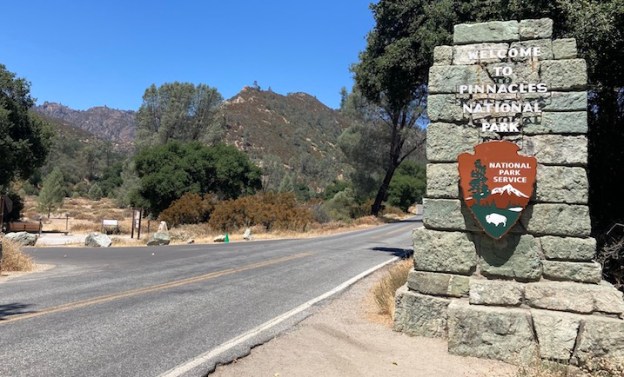
For the wanderers out there considering a visit to Pinnacles National Park, Free Sports Mag takes a quick look at California’s newest park in this exclusive 30-minute video.

But first, some cool background information about Pinnacles directly from the NPS website:

Some 23 million years ago multiple volcanoes erupted, flowed, and slid to form what would become Pinnacles National Park. What remains is a unique landscape. Travelers journey through chaparral, oak woodlands, and canyon bottoms. Hikers enter rare talus caves and emerge to towering rock spires teeming with life: prairie and peregrine falcons, golden eagles, and the inspiring California condor.

The most recent update to Pinnacles is its redesignation from National Monument to National Park when in 2013, Pinnacles became the 59th National Park. It was originally designated as a monument because of its unique geologic features such as rock spires and crags that are remnants of volcanic activity millions of years ago. However, the abundance of cultural and natural resources in the park, including its many federally protected species, made it an appropriate candidate for a National Park. The United States Senate and President Obama passed the bill that redesignated Pinnacles to a National Park which included a 3,000 acre expansion of wilderness to be named the Hain wilderness, in honor of the homesteader Schuyler Hain who worked to protect it in the early 1900s. The redesignation has also increased visitation and tourism to nearby communities.

Click here to see FSM’s quick review of the park and campsite!

Magic Johnson’s Fast Break Turns 35

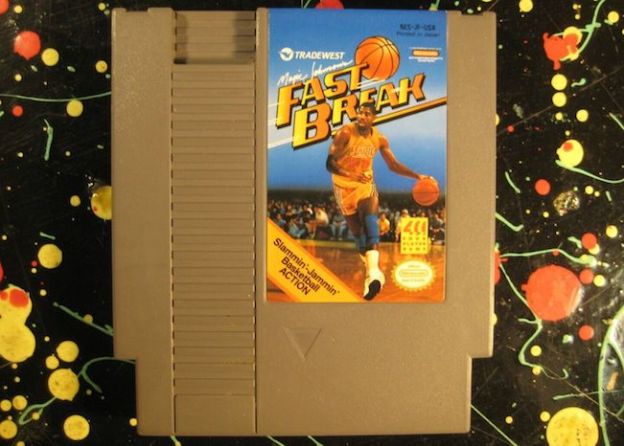
Magic Johnson’s Fast Break is a basketball video game released for the Nintendo Entertainment System (NES) in 1988. The game was developed and published by Tradewest, and it features basketball legend Magic Johnson as its namesake and cover star. Now 35 years old, FSM explores of if the game stands the test of time…

The game itself received mixed reviews from players and critics, which may have impacted its commercial success. Some praised it for its fast-paced gameplay and action, while others criticized it for its lack of depth and limited gameplay mechanics. The graphics and sound were considered decent for the NES era, but weren’t groundbreaking in terms of presentation.

However, the basketball game does offer a unique and fast-paced interpretation of the sport. While the game is played scrolling from side-to-side, similar to other classic basketball games of its time, the gameplay significantly differs as gamers are playing 2 on 2 instead of the traditional 5 on 5. Of course, 2 on 2 makes it easier to have Fast Breaks (and earn more money in the game) and makes for a different gaming experience. There is also the big Pepsi banner at half court which hardcore fans always seem to remember.

Overall, Magic Johnson’s Fast Break aimed to provide action-packed basketball, focusing on quick decision-making and high-scoring gameplay. While it did not have the complexity and realism of modern basketball games, it offered an enjoyable and engaging experience for players during its time on the NES platform.

The game did not end up being as successful for Nintendo compared to some of the more popular sports games released for the NES around that time. While it had a unique concept and featured a well-known sports personality like Magic Johnson (but no other NBA players), it didn’t achieve the same level of recognition as games such as Double Dribble and Tecmo NBA Basketball which became more established and had broader appeal. Fast Break didn’t become a standout title for the NES and is often not as well-remembered as the iconic games mentioned above. Ultimately, the game’s success can be considered modest but not on the level of major NES hits.

In the end, whether someone considers Magic Johnson’s Fast Break to be good or not depends on personal preferences and nostalgia for retro gaming. If you’re a fan of basketball and enjoy classic NES games, it might be worth trying out to see if it appeals to you. However, keep in mind that video game standards and expectations have evolved significantly since the NES era, so it may not hold up to modern gaming experiences.

Remember Woody Strode for Breaking Barriers

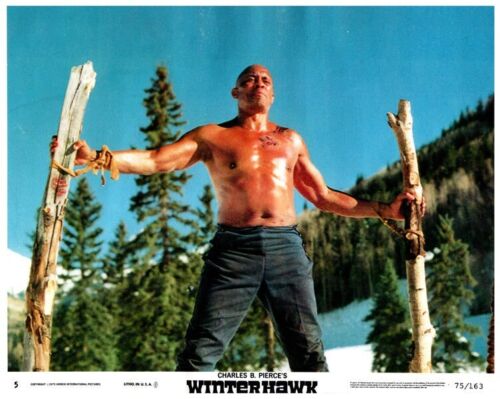
Woody Strode broke barriers and made significant contributions to society in various aspects of his life and career. While Strode’s impact may not be as widely recognized as some other historical figures, his determination and success in breaking barriers in professional football and Hollywood have made a lasting impact on the sports and entertainment industries, as well as on the fight for racial equality. Free Sports Magazine proudly presents the abridged story of his life.

Western movie fans may not know Woody Strode was a professional American football player before transitioning into acting. Born on July 25, 1914, in Los Angeles, California, Strode attended UCLA (University of California, Los Angeles), where he excelled in athletics, particularly in football and track and field.

Strode played as a standout fullback and defensive lineman for the UCLA Bruins football team during the late 1930s. His performance in college earned him recognition, and he was named to the All-American team in 1939. Making things more interesting, one of Strode’s teammates was THE Jackie Robinson. Yes, you read that correctly. Woody Strode and Jackie Robinson were indeed teammates on the same football team.

In 1939, both Strode and Robinson played for the UCLA Bruins which went undefeated with a record of 8-0-1 that season. During their time at UCLA, Strode played as a standout fullback and defensive lineman, while Robinson played as a running back. Strode’s physicality, strength, and versatility on the field, combined with Robinson’s speed and agility, contributed to the team’s success. Their undefeated season in 1939 remains a notable achievement in UCLA football history to this day.

After college, Strode played professional football in the NFL (National Football League). He signed with the Los Angeles Rams in 1946, becoming one of the first African-American players in the league’s modern era. Strode played for the Rams for two seasons before finishing his football career in Canada, where he played for the Calgary Stampeders in the Canadian Football League (CFL).

Following his football career, Strode transitioned into acting and appeared in numerous films and television shows. Strode’s athletic background often played a role in the types of characters he portrayed on screen, bringing a physicality and presence to his performances. The football star turned thespian delivered several outstanding performances throughout his acting career. While opinions may vary on his best movie performances, there were some notable ones that garnered critical acclaim and showcased his talent. Each film showcased different facets of his skillset, making it difficult to pinpoint a single best performance:

1. Spartacus (1960) – Strode portrayed the character of Draba, a gladiator in this epic historical drama. His memorable fight scene with Kirk Douglas’s character remains one of the film’s highlights.

2. The Man Who Shot Liberty Valance (1962) – Strode’s role as Pompey, a loyal ranch hand, in this classic Western showcased his strength and stoic presence. His chemistry with John Wayne’s character added depth to the film.

3. Sergeant Rutledge (1960) – Strode played the title role of Sergeant Braxton Rutledge, a Buffalo Soldier accused of rape and murder. His portrayal of Rutledge’s dignity and strength in the face of injustice was highly praised.

4. Once Upon a Time in the West (1968) – In this Sergio Leone spaghetti Western, Strode portrayed Stony, one of the gunmen hired to intimidate the protagonist. He showcased his physicality and intensity in a standout performance.

5. The Professionals (1966) – Strode’s role as Jake Sharp, a member of a group of mercenaries, displayed his versatility as an actor. He brought depth to the character and shared excellent chemistry with his co-stars.

While Woody Strode had a successful and exciting career, he should be most remembered for the multiple barriers he broke on the field, in front of the camera, and in real life.

He was one of the first African-American players in the modern era of the National Football League (NFL). He signed with the Los Angeles Rams in 1946, paving the way for future generations of Black athletes in professional football.

As an actor, he faced challenges and racial barriers in the film industry. However, he managed to carve out a successful career in an era when opportunities for Black actors were limited. He played diverse roles that went beyond stereotypes, helping to open doors for other African-American actors in Hollywood. Strode worked alongside Sidney Poitier, another trailblazing African-American actor, in the film “The Defiant Ones” (1958). Their performances in the movie, which addressed racial tensions and prejudice, helped bring attention to issues of racial equality and social justice.

Woody Strode passed away on December 31, 1994 after a battle with lung cancer. His final film was The Quick and the Dead (1995) which was released posthumously and directed by Sam Raimi of Evil Dead and Spiderman fame. In the movie, Strode finds himself in the Wild West yet again and is surrounded by an all-star ensemble cast for one last time. And while it is easy to watch Strode portray a wandering gunfighter named Charlie Moonlight, it is easier to forget his achievements and contributions as an athlete and actor were made in the face of many racial barriers. Strode’s courage and talent is not be forgotten and should continue to serve as a source of inspiration for aspiring athletes, actors, and other professionals.

FreeSportsMagazine.com Pays Tribute to the Iron Sheik

The sports world lost a legend on June 7th, 2023 when the Iron Sheik departed the squared circle of life. At 82 years of age, he led a full but often complicated life. What was undisputable was that he was appropriately hated during his time actively wrestling and appropriately beloved during his time after. Free Sports Magazine is proud to offer this tribute to the #1 Jabroni:

The Iron Sheik, born Hossein Khosrow Ali Vaziri on March 15, 1942, is an Iranian-born professional wrestler and former Olympic wrestler. Known for his flamboyant personality and his portrayal of a villainous character in the wrestling world, the Iron Sheik enjoyed a successful career that spanned several decades.

Vaziri’s journey began in his native Iran, where he developed a passion for wrestling. He competed in various international tournaments and even represented Iran in the 1968 Olympic Games. After immigrating to the United States, he continued his wrestling career and gained prominence in the professional wrestling circuit.

In the 1980s, the Iron Sheik rose to superstardom as a member of the World Wrestling Federation (now WWE). With his signature move, the Camel Clutch, and his provocative interviews, he quickly became one of the most hated villains in the industry. His intense rivalry with Hulk Hogan, which culminated in Hogan dethroning him for the WWF Championship in 1984, is often remembered as a defining moment in wrestling history.

Beyond his in-ring persona, the Iron Sheik faced personal struggles, including substance abuse issues, which impacted his career and personal life. However, in later years, he embarked on a path of recovery and found renewed popularity through social media, where his outspoken and often humorous posts endeared him to a new generation of fans.

Perhaps one of the Sheik’s most infamous moments occurred outside the ring. This moment can be revisited with smiles so many years after the fact. It’s One of those crazy stories that undoubtedly get shared at funerals or when friends get together to remember loved ones lost.

In January 1987, a highly publicized incident involving the Iron Sheik (Hossein Khosrow Ali Vaziri) and Jim Duggan occurred, commonly referred to as “The Busted Incident” or “The Sheik-Duggan Arrest.” The incident took place during a time when professional wrestling promotions had a vested interest in preserving the illusion of the wrestlers’ characters outside the ring.

The story goes that on January 23, 1987, Vaziri and Duggan were traveling together in a car for a World Wrestling Federation (now WWE) event. However, they were pulled over by the police in New Jersey for suspected drug possession. During the search, marijuana was found in the vehicle, leading to their arrest.

This incident caused a significant scandal within the wrestling industry at the time. The media coverage exposed the scripted nature of professional wrestling and brought negative attention to the wrestlers involved. The WWF promptly took action, swiftly punishing both wrestlers for their actions.

The Iron Sheik was released from the WWF shortly after the incident, with the company citing his arrest and his behavior as the reasons for his termination. Meanwhile, Jim Duggan received a suspension from the WWF, which was also seen as a disciplinary measure.

While the incident tarnished their public image, both wrestlers eventually managed to rebuild their careers. Jim Duggan, in particular, made a successful comeback and became a beloved figure in the wrestling community. As for the Iron Sheik, he found a new level of popularity in later years, thanks to his outspoken and humorous presence on social media.

At the time of his passing, the Iron Sheik is regarded as a wrestling legend and a cultural icon. His unique blend of charisma, athleticism, and controversial antics left an indelible mark on the wrestling world. Despite the challenges he faced, his enduring legacy will continue to inspire and entertain professional wrestling fans around the globe.

What the Hatha!? Learning About Hatha Yoga

Yoga was originally meant to be a spiritual treatment of the mind and the soul. It has, in today’s world, become more of a physical treatment than anything else. Hatha yoga is the type of yoga that prepares your body for its spiritual journey. This is mainly done with physical and breathing exercises as well as asceticism. This type of yoga requires the most physical exercise than any of the other types of yoga.

A few of the main factors for Hatha yoga are concentration on your breathing and your posture. This type of concentration can be more difficult than you think. Once you try this for yourself and see what this type of concentration can do, you will want to continue with this type of yoga. The purpose of practicing a great posture is to practice great meditation. You need to find a position that you can sit in for a long period of time. If you cannot be comfortable in your meditation and yoga positions, then you will be unsuccessful. The more postures and positions that you can acquire, a better meditative state will result.

Hatha is the form of yoga that anyone should begin with. Hatha begins with the basics of yoga and teaches you the inner workings of meditation and how you should begin. Once you master your own postures and positions of meditation comfort, it is time to master your breathing patterns. If you can master your own breathing patterns, than mastering your mind is not far out of reach for you. It takes many steps to reach these different levels of meditation and yoga. With practice and concentration anyone can do it.

If you are beginning your new adventure with yoga, Hatha is the form of yoga that you should begin with. If you want your yoga career to be successful you must begin with the proper steps and then learn in the right order. If you only learn the superficial methods of yoga, then you will not experience the desired results from this amazing technique of holistic meditation.

In today’s world, Hatha yoga mostly used for its physical exercise. We do not take advantage of the other benefits that Hatha yoga can give to us. It is a form of yoga that if done properly, can heal you in the most holistic way possible. Hatha yoga does evolve from its physical exercises. It is these exercises that begin and promote the mind and soul healing. No matter why you are participating in yoga, you can receive all of these benefits. The only way you can recognize them or use them to your benefit is to practice the other side of yoga, meditation. If you are unaware that these features, they will be of no use to you. When practicing yoga, you need to be aware of everything going on within you. Pay attention to yourself and you will instantly be able to see the changes that are going on within you.

Hatha yoga can be easy to learn if you are open minded and want to learn. It is a technique that can be mastered if you put all your energy and concentration into it. By learning the techniques of Hatha yoga, you are well on your way to an alternative way of healing in the most holistic way possible.

By Krishan Bakhru

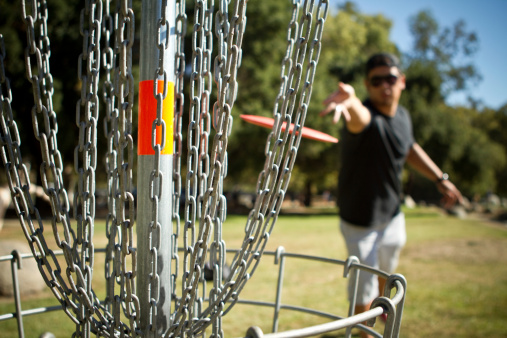
How To Speak The Language Of Disc Golf

By popular demand, Disc Golf blogger Steven Pease breaks down the language barrier for FSM readers…

Most people who play disc golf know the regular terms and language. There are lots of other words that people use for describing things that happen on the course. Words not in the dictionary, or in the general vocabulary for disc golf. I have gathered some interesting terms from other players, and from what I’ve read that other players use. I will share the common ones, and some better ones that are not common that I have found.

I got a great story sent to me a couple years ago. A player who was new went out to play a round with his dad, there was a reporter and a photographer at the course from the local paper. He asked if you could take a couple pictures for a story they were doing on disc golf; the guy said sure. The photographer got into position about 50 feet up the edge of the fairway; the guy let loose with his drive and hit the photographer square in the chest with his driver.

Very embarrassing and funny now, but no one wants to do that. I love this story because it shows exactly why everyone wants to get better. I put together terms that I have learned over the past 30 years of playing disc golf. Terms that will make you feel that you know what others are talking about. Disc golf is one of the fastest growing sports in the world. One of the main reasons for its popularity is players of almost any age and ability can play.

I play with guys half my age and I consistently beat them. I am 62 years old and in good shape. I know people older that still play. There are no limitations. If you can get around the course, you can play. If you have never played, you should. If you play now, keep on playing. It’s great exercise, and it’s a great way to socialize. As far as sports go, it is also very inexpensive. You can start with as few as three discs. A driver, a midrange and a putter. For just around $30 you can get started. Most courses are free to play.

Common disc golf language

  • Ace Getting the disc in the basket on the first shot
  • Hyzer Releasing the disc with he edge closest to your body highest than the other edge.
  • Anhyzer The outside is higher than the inside edge.
  • Overstable The disc wants to hyzer into the ground when you release it. To make it not hyzer, you must snap it and throw it hard with a slight anhyzer.
  • Understabe Can throw with less spin, less snap to fly straight.
  • Turnover When you throw the disc hard with good snap; it will turn opposite the way it normally will turn. If you’re throwing right hand back hand it will turn to the right.
  • S Curve The flight of the disc starts as an anhyzer, then will hyzer at the end of the flight.
  • Snap The amount of spin on the disc at release from your hand.
  • Driving The throw from the tee box.
  • Approach The shot from the drive to the basket.
  • Putt Throwing the disc into the basket.
  • Grip How you hold the disc when you’re throwing.

Player Invented Disc Golf Terms

  • Dead man When your putt hits the side of the basket and drops to the ground.
  • Chain smoking Several great putts in a row.
  • Bogey Sandwich A scorecard with a par bogey bogey par.
  • Black ace Acing the wrong hole.
  • Cabbage The weeds in the rough.
  • Chastity belt The yellow band on the Innova baskets.
  • Clank The sound that a putt makes when in hits the chastity belt.
  • Hit the nickel A putt that hits the number plate.
  • Horking A huge long throw.
  • Locals route Taking an unconventional path to get you to the basket.
  • Lumber jacking When you’re hitting every tree.
  • Mirkwood Very thick woods.
  • Nickel A score of 5 on a hole.
  • Nuclear shule Very thick rough.
  • Fly by Putt correct height, but sails by the basket.
  • Fluke deuce A two from something very lucky happening.
  • Gaack Missed a short putt.
  • Grenade A shot that is high and falls fast to the ground.
  • Head Banger When your drive lands under the basket and you might bang your head on the basket as you pick it up.

More Disc Golf Terms

  • Paper plate An understable disc.
  • pig putt A putt that’s really bad.
  • Pinball A shot that hits several trees.
  • Pinball Wizard Continually hitting multiple trees.
  • Rooted When the tree root stops you shot from skipping.
  • Saturn A score of 6 (saturn is the 6th planet)
  • Shank Any shot that does not do what you wanted.
  • Shule Heavy weeds off the fairway.
  • Sneak In flight instruction to the disc.
  • Snob A throw with the nose of the disc up.
  • Snowman A score of 8.
  • Spinach Bushes, trees, and undergrowth.
  • Taco To hit a tree so hard it folds like a taco.
  • Tombstone A disco golf disc that hits the ground, and remains standing on the edge.
  • Treefelction The tree gives you a good deflection.
  • Valet service When you park your drive under the basket.
  • CRF Candy fundraiser.
  • CTP Closest drive to the pole.
  • DL Dead last in the order of throwing.
  • FAT When you hit the first available tree.
  • LB Lucky bounce.
  • SED Seeing eye disc.
  • YSA You’re still away.
  • Gust from the Gods When the wind blows the disc way off line.
  • Getting greasy Sneaking through the trees.
  • Lawn dart A disco that has landed partially buried in the ground.
  • Merked When you get hit in the head from someones throw off of a tree.
  • Tombstone For those discs that stick on edge in muddy ground.
  • Helicopter A shot that needs to come straight down at the end without curving.
  • A rip The perfect drive.

The terms in the top section are ones you need to know. These terms will help you understand the game and how to play and how to play better. The rest are just temps other players use when they are playing.