Tag Archives: free sports magazine

Understanding the Benefit of Biomechanics in Golf

There is information available widely through the web, PGA courses and magazine articles that brings you up to date with the latest thinking in golf. They teach you the latest on how to swing each club correctly, how to putt, how to analyze your swing, how to get mentally ‘tough’, how to improve flexibility and how to get fitter and stronger for golf.

Today there is a plethora of information being offered about golf. Some of it correct, all of it interesting, but how much of it is relevant to you? And how do you know which of these generic exercise tips is going to help you? Even if you trained using each one for 6 weeks and then took the results onto the course and tried them – how do you then know whether your performance is ‘that exercise’ or that you just had a good day?

Even video/digital analysis, although interesting from all points of view measure the movement discrepancies in a golfer’s swing, it doesn’t tell us why you are performing these movement aberrations. Knowing what you’re doing wrong, but not knowing why you’re doing it is sometimes worse than not knowing what you’re doing wrong!

Golfers and Coaches need a simple system of analysis that they can use in conjunction with their coaching techniques to find out why golfers perform their particular swing. Although there are fundamental similarities to all good swings, each swing is like a finger-print and unique to that individual. Why is it unique? It’s because we are all biomechanically different, and unless you understand what those differences are, how can you identify whether your swing is due to poor technique or something that has to done to compensate for a mechanical problem? You can’t. The variety of golf swings that exist represent the many ways that the human body can compensate for its biomechanical problems.

For example, let’s take a typical handicapper’s slice. You know the typical causes of a slice and the things you would normally work on, bearing in mind the individual you are helping and what you see. At the same time we also know that these ways don’t always work. There may be a number of reasons for this: they may not be practicing, it may take some time to work out which is the best method for them, or quite simply it may be that the person doesn’t have it in them to do what you’re teaching. Alternatively, it is likely that they can’t physically do it. If that pupil has a longer right leg (assuming they’re a right handed golfer), then they will have a tendency towards a more upright back swing. We know this because of the way the spine and pelvis work biomechanically. A longer right leg compresses the joints in the spine on that side and so the person can’t rotate easily. They therefore have to side bend to gap the joints and initiate movement, which causes an upright backswing. We also know that this then leads to a more out-to-in downswing and therefore a slice (depending upon grip and ball position of course). So you could work all day on preventing this upright backswing, which you know is leading to a slice, but it will not change until you’ve addressed the leg length discrepancy.

Invariably these leg length discrepancies are caused by a rotated pelvis and often they don’t cause symptoms so you won’t even know they exist. If this is the case, then doing some simple exercises can help re-align the pelvis, reduce the leg length discrepancy and allow you to flatten that back swing.

There are many more of these examples. As well as leg length discrepancies, other biomechanical issues can include, poor motor programming strategy (the way the muscles link together in movement patterns), poor control between the pelvis and shoulders, nerve adhesions or stiffness, faulty core muscle control, immobility around the hips, pelvis and spine, and simple lack of flexibility. Some of these issues sound quite technical and complex, but they’re actually very simple to test and eradicate.

Biomechanics works ‘hand in glove’ with your teaching; it is crucial Pro’s understand and embrace this as its going to be the next big thing in golf.

There is a system that exists that can help others learn about and address these issues. It comes in 3 forms. First, there is a software package that takes you through some simple biomechanical tests. This expert system takes you through a series of exercises to eradicate biomechanical problems. Second, there are courses, which are endorsed by the PGA, which teach PGA professionals how to assess their own pupils and administer the exercises themselves. Lastly, experts can come to your club and assess your pupils individually and make recommendations based upon a detailed assessment of their biomechanics. Following a discussion with these experts, a decision can be made as to the best program for them to follow.

A Raw Tribute to Mr. Brodie Lee

Mr. Brodie Lee recently reminded me to never stop betting on myself, so I felt compelled to dedicate this month’s editorial entirely to him. As a preface, this piece is going to be a little raw (no pun intended).

Professional wrestling is one of those interests that became part of my life along the way. I think it’s a misconception that older wrestling fans are all die-hards. People don’t realize that wrestling is simply another item on The List (pun intended) of things we enjoy, similar to watching the NBA, playing Fantasy Football, or binge-watching new shows.

People who don’t like wrestling will always think it’s stupid and weird. They’ll adopt the generic, stereotypical position that people who enjoy wrestling are stupid weird. Well, my response to this lately has been, “You know what? I think people simulating rape and murder on shows like Criminal Minds is pretty fucking weird.”

If people just knew how many deaths the longtime wrestling fan must endure, maybe they’d leave us alone. When I was barely a teenager, the great Owen Hart plunged to his death during a live WWE show. I thought it was tragic and rare at the time. Now I know it was just tragic.

Fans react differently to the passing of wrestlers based on their own histories of reinforcement. Perhaps they remember watching their favorite wrestler on WCW Saturday Night with their father or maybe they have a special WrestleMania memory involving close friends. Add to this the often tragic, abrupt, and unexpected nature of deaths in wrestling, and it’s easy to see why adult wrestling fans have such strong emotional reactions to events like Brodie Lee’s recent passing.

Personally, my history of reinforcement with Mr. Brodie Lee was very brief – like 6 months of being an All Elite Wrestling (AEW) fan brief. For whatever reason, I was in one of those life phases in which I wasn’t paying much attention to wrestling when Lee was big bootin’ people as Luke Harper. I knew of his existence, but not much beyond what he looked like. But when Mr. Brodie Lee debuted on AEW Dynamite last year in the midst of COVID-19, I was paying attention to wrestling. I loved Lee’s look and mischievous energy. Watching from home, his charisma was palpable in that empty stadium.

Fortunately, due to the pandemic, I was in a life phase where I could watch AEW Dynamite every Wednesday. This meant getting weekly doses of Mr. Brodie Lee as leader of The Dark Order. I wasn’t quite sure the direction in which Lee would take this group of misfits but I was excited to find out. Then it happened. After a Dark Order segment to end Dynamite, I did a google search of “Brodie Lee” and “WWE”. The fact that I did this search outside of my allotted TV watching time signaled to me that I was now an official fan of Mr. Brodie Lee.

The articles and podcast transcripts produced by my Google search only made me a bigger aficionado of the Exalted One. I learned that Lee, real name Jon Huber, decided to leave the WWE and safe money behind to pursue new opportunities in AEW. The decision didn’t seem to be made on whim, however. After years of giving his blood, sweat, and tears to the WWE, Huber concluded he was not going to receive a huge push or promotion in the company any time soon. I got the impression he wanted to stay there – until he didn’t. Maybe he saw AEW as a more realistic path to his desired spotlight. Whatever his motivations, Huber took that path and became an AEW champion rather quickly. I must admit, seeing him destroy Cody Rhodes in a blink of an eye was pretty damn awesome to watch.

Luke Harper or Brodie Lee were never a part of my greatest memories (unless you consider watching wrestling during a pandemic good times). So why is the recent passing of Jon Huber hitting me extra hard if I was only a true fan of the man for about 6 months? Our history of reinforcement together was brief to say the least.

Perhaps it has to do with Huber’s path to that TNT Television title.

Perhaps, as a grown-ass fanboy closing in on four decades of life, I know what it feels like to scratch and claw and give everything you have – and still not achieve a desired result.

Perhaps it’s because I know what it feels like to take a leap of faith while trying to outrun father time.

And how it feels like to have to provide my credit score to people less credible than me.

Perhaps it’s because some days I want to give up.

Or perhaps it’s because Mr. Brodie Lee reminded me that it’s never too late to raise that strap.

FSM Movies: Escape to Victory

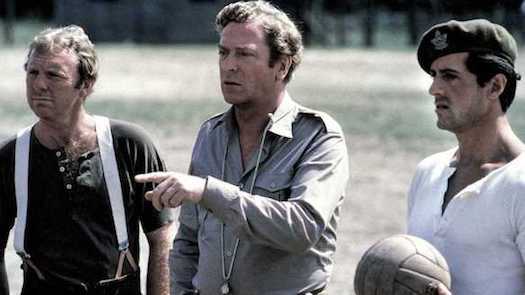
Sylvester Stallone is the gift that keeps on giving. Younger movie fans get the gift of discovering classic after classic as if each one was brand new. Older fans, who have the Rocky films memorized already, get the gift of quirky new projects and random appearances in things like the Marvel Universe. This review is more for the younger fans who may be aware that Stallone ended communism in Rocky IV but didn’t know he also helped end fascism by playing soccer in the movie Escape to Victory.

Headlined by the loveable Sir Michael Cane and directed by Hollywood legend John Huston, Victory was released to the masses in 1981. Since this film fell under the rare “War/Sport” genre, it made sense to cast Sylvester Stallone as he had recently played war hero John Rambo and boxing underdog Rocky Balboa.

In Victory, Stallone plays a World War II era prisoner-of-war named Captain Robert Hatch. He spends most days watching the cooler prisoners kick a soccer ball around before ending up as the team’s unlikely goalkeeper. These cooler prisoners were made up of actual soccer stars of the time such as Pelé, Bobby Moore, and Robin Turner.

For some strange reason in the film, a high-ranking Nazi officer played by Max von Sydow thinks it would be great for morale around the world to have these allied prisoners-of-war (who happen to be really really good at soccer) play an exhibition match against a German super team. Of course, the match is intended to be used as propaganda and perhaps a symbol of how Germany would crush the allies in war. Movie fans can probably guess that Stallone, Caine, and the rest of the allies put up a heck of a fight on the field. But a dilemma arises when the players have a chance to escape. This is when the movie gets especially enjoyable.

Victory is a pleasant ride from start to finish. The film presents many WW-II themes but with a lighter touch – something that’s perfect for a war movie about soccer! Additionally, the great chemistry of all cast members is evident from the opening few scenes. Stallone shines in a role that may have been written with him in mind. Pelé seems like a natural actor. The other professional footballers don’t try too hard (in a good way). And Michael Caine and Max von Sydow absolutely carry the movie. A younger Caine brings his spunky energy as the leader of the allies while von Sydow’s acting almost makes you feel bad for a Nazi.

While the subject matter and era are taken seriously, Victory feels like it could be the child of The Dirty Dozen and The Replacements. It’s not quite a war or sports movie and doesn’t necessarily try to inform the viewer of anything that’s not already known. But it’s a fun story you’ve probably never experienced before. Its ending is also one of the most underrated endings in sports movie history (no spoilers here except that Stallone is involved).

FSM Final Grade: B

Click here to purchase Victory today!

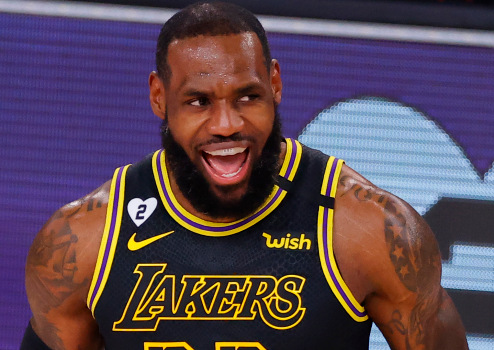
FSM Editorial: Top 5 Reasons LeBron Ain’t Trump

Sports shock jock (and professional LeBron hater) Jason Whitlock made a big fuss about King James recently, comparing him to the president and calling him “Black Trump”. Whitlock pointed to a few similarities between Lebron and the Donald (mostly the incoherent curse-filled tweeting) but presented a pretty weak case overall. Keep in mind, Whitlock recently left Fox Sports because they wouldn’t pay him so he may just be trying to be extra provocative to generate buzz for himself (insert sarcastic shocked face emoji here).

Here is a taste of Jason Whitlock’s comments:

“LeBron fashions himself as a dignified statesman, role model, political activist and champion of racial equality. He is every bit as crude, undignified and inarticulate as our sitting president.”

To read the full editorial originally posted on OutKick, click here.

Now then, being the sports junkies that we are, we thought we’d do a little counter punching on the King’s behalf. Free Sports Mag is not a political publication in any sense so please read the following Top 5 Reasons LeBron Ain’t Trump as if you were reading The Onion or MAD Magazine.

5. Lebron James has 3 children with the same woman

4. Blaze Pizza > Trump Steaks

3. Lebron James has never been bankrupt

2. I Promise School > Trump University

1. Lebron James is a billionaire   

FSM Books: Shoe Dog

To steal an adjective often used by good ole’ Jim Ross (of WWE and AEW fame), Nike creator Phil Knight’s recent memoir Shoe Dog is a “slobberknocker” of an experience. One would have never expected Nike to overcome its somewhat humble beginnings, growing pains, and its lies – oh the many, many lies!

The beginning of Knight’s memoir finds him as a recent graduate of the Stanford School of Business. Unsure of what direction to go in life, he thinks about an assignment he completed in which he came up with his own business concept. He did well on the assignment and, since he is feeling a sense of urgency to figure things out in life (as many people do in their 20s), he decides to turn that assignment into a pursuit. His concept at Stanford was to import and export high quality running shoes. While this doesn’t appear to be a groundbreaking idea in 2020, Knight makes the reader aware just how ridiculous this seemed to others when he started his quest in 1962.

The “whatever it takes” approach is perhaps the most captivating reoccurring theme in Shoe Dog. It’s what sucks the reader in and keeps the pages turning at a somewhat phrenetic pace (don’t be surprised if you finish this book in 3 days or less). Phil Knight writes in a way that makes the reader feel they are a part of his unbelievable journey. By the end of his tale, the reader has jumped every hurdle, navigated every roadblock, and ultimately gets to celebrate the success of Nike alongside Phil Knight and friends. Of course, the reader’s experience comes from a distance and many years after the fact, but the feeling of being present at all times speaks to how well Shoe Dog is written.

Being present at all times means the reader is treated to some of these “whatever it takes” moments. Be prepared to battle a little anxiety as Phil Knight wiggles out of various sticky situations. These moments mostly occur during Nike’s infancy and often involve big fibs told by Knight. The ethics of Knight’s behavior during these situations are definitely up for debate. However, it must be noted that there was never malice in Knight’s actions. In fact, FSM would bet dollars to doughnuts that many entrepreneurs have told the same fibs. Without spoiling too much, get ready to join Phil Knight as he lies or stretches the truth when dealing with banks, suppliers, and manufacturers. Observe him as he travels overseas and secures a shoe contract for his company that doesn’t exist yet.

Sports fans may be surprised that athletes such as Michael Jordan are scarcely discussed in Shoe Dog. We started the memoir thinking a large portion of the story would include Nike’s major athletes and their impact on the company over the years. Aside from begrudgingly admitting these athletes were needed for purposes of advertising, Knight rarely deviates from talking about his own journey and his significance to the creation of Nike. By the end of Shoe Dog, it’s clear that Knight’s self-critical nature and baffling insecurity kept pushing Nike forward amidst seemingly insurmountable odds at times.

For those reading this memoir for guidance about business and/or life, you definitely won’t leave empty handed. Knight’s guidance is not delivered explicitly but found in his actions and self-reflection. For those reading for the purposes of entertainment, lace up your running shoes, take a deep breath, and prepare for the run of your life!

FSM Final Grade: A+


Purchase Shoe Dog Today!

Purchase the Shoe Dog Kids Version

FSM Editorial: The Collectors Are Restless

Since this is an editorial piece, we have the freedom to vent and go on tangents at times. This article will be more of a polite vent. With COVID-19 shutting life down since March 2020, collectors have been itching to buy, sell, and trade in person. The card flippers are in paradise though, inflating card prices before selling them online to us desperate shut-ins.  

Do we sound bitter? Maybe a little. The flippers are taking advantage of events in the environment. It’s capitalism 101. We live in the USA. So, we aren’t full bitter. But bitter, yes.

Perhaps the most frustrating part of being a collector of memorabilia (or dare we say a “picker”) these days is that we cannot see, feel, and hold these valuable collectibles as we consider purchasing them. How does it make you feel to pull that Fleer Michael Jordan Rookie card in and out of your desk drawer? Is that feeling worth $3,000 or a lower PSA grade? Is the card you’re holding obviously a fake?

But even more heartbreaking to the FSM staff than not being able to walk into their local hobby shops is the disappearance of garage sales. It’s quite a felling to find a rare gem, collectible, or piece of memorabilia on a sunny Saturday morning. If you’re really lucky, you’ll get a cool story about the item to take with you as well. Garage sales are also one of the last places where people can actually negotiate a fair price for the things they want.

We recently came across a story in which someone found a lot of Patrick Mahomes rookie cards at a local thrift shop. The story was encouraging because it’s indicative that stores are opening and collectors are venturing out to search for treasure. We’ll end on that positive note. The collectors are restless – but not for much longer.

P.S. If the title of this editorial is familiar it’s because it was inspired by this Far Side collection.

FSM Editorial: How Much is Enough for Roy Jones Jr.?

This article was originally published in March 2011. With Roy Jones Jr. set to fight Mike Tyson by the end of 2020, the folks at FSM thought it was appropriate to share this editorial once again. Enjoy!

Here we go again – again. The announcement was made this month that fading boxing star Roy Jones Jr. will lace up the gloves for yet another questionable fight.

Exactly how much is enough punishment for a man to take in the ring? Unfortunately this is not a question a boxing fan can answer. Well I guess they could answer but it wouldn’t make much difference to Roy Jones Jr. who will travel to Russia on April 22 to face hot prospect Denis Lebedev (21-1, 16 KOs).

Lebedev is bigger, stronger, and 11 years younger. His only loss was a controversial decision in an opponent’s backyard. There should be no doubt that Roy Jones Jr. is being used as a stepping stone.  Check any Las Vegas sports book if you think the Russian guy is the underdog this time (yes that was a Rocky IV reference).

Roy Jones Jr. has lost two fights in a row. One of them was an embarrassing first round knockout to an Aussie journeyman and the other was a beating at the hands of Bernard Hopkins. Even before these two bouts, concerned citizens in the boxing community were pleading for Jones to stop fighting. His diminished skills were apparent in the fight against B-Hop. When fighting a younger contender like Lebedev, there will be potential for serious harm. I wouldn’t be surprised if we see Jones get knocked out in the style of the Glenn “Road Warrior” Johnson fight.

So back to my original question – how much is enough punishment for Jones Jr. to take? When a question like this is asked it usually means the person has already taken enough.

The truth is that it doesn’t matter what you or I think. And as much as I hate to see former greats blocking punches with their face, I’m not going to be the one to tell Roy Jones Jr. that he needs to quit boxing. I would loathe it if someone told me I had to stop doing something I love, especially if I was the best in the world at doing it at one point in my life.