Category Archives: Pop-Culture

The History of Nathan’s Hot Dog Eating Contest

The Nathan’s Hot Dog eating contest has become a legendary annual event held on July 4th at Coney Island, New York. The origins of this contest can be traced back to a friendly competition among immigrants in the early 20th century.

The contest’s roots can be found in the tradition of settling disputes among working-class men on Coney Island. According to popular legend, in 1916, a group of four immigrants—Irish immigrant James Mullen, Polish immigrant Max Bruck, German immigrant Chris Nicoll, and an unidentified man—decided to hold a hot dog eating contest to settle an argument about who was the most patriotic among them. As the story goes, they gathered in front of Nathan’s Famous, a popular hot dog stand owned by Nathan Handwerker, and began consuming as many hot dogs as possible in a set amount of time.

Nathan Handwerker saw the potential in this spectacle and embraced it as a promotional opportunity for his business. The contest gained attention and became an annual event at Nathan’s Famous. Over the years, it grew in popularity and attracted participants from various backgrounds.

In 1972, the contest took a hiatus but was revived in 1974 by PR man Max Rosey, who wanted to use the event to generate publicity for Nathan’s Famous. The contest has been held every year since then and has become a cherished tradition, drawing thousands of spectators to witness competitive eaters from around the world battle it out to consume the most hot dogs in a given time period.

Today, the Nathan’s Hot Dog eating contest is organized by Major League Eating (MLE), a professional competitive eating organization, and has gained international recognition as one of the most prestigious events in the competitive eating circuit. It is broadcast live on television every 4th of July and has catapulted many participants to fame in the world of competitive eating.

The origins of Major League Eating can be traced back to the early 1990s and the efforts of brothers George and Richard Shea. In 1997, George and Richard Shea, who were public relations professionals, were hired by the owners of Nathan’s Famous to rebrand and promote the Nathan’s Hot Dog eating contest. Recognizing the potential for competitive eating as a spectator sport, the Shea brothers sought to elevate it to a professional level and establish a governing body to oversee the events.

Later that same year, the brothers founded the International Federation of Competitive Eating (IFOCE) as the governing body for competitive eating. The IFOCE was responsible for establishing rules, rankings, and standards for various eating contests. They aimed to transform competitive eating into a legitimate sport and attract sponsors, media coverage, and public interest.

Under the IFOCE, the Shea brothers worked to expand the competitive eating circuit, organize events, and attract top eaters. They introduced a structured ranking system and established guidelines for competitions to ensure fairness and safety. Over time, the IFOCE gained recognition as the leading authority in the world of competitive eating.

In 2001, the IFOCE was rebranded as Major League Eating (MLE) to reflect its professional approach and enhance its marketability. MLE continued to expand its reach and popularity by organizing and sanctioning eating contests across the United States and internationally. The Nathan’s Hot Dog eating contest remained one of MLE’s flagship events, drawing significant media attention and shaping the perception of competitive eating as a competitive sport.

Major League Eating continues to oversee and promote competitive eating events, maintain rankings and records, and collaborate with sponsors, broadcasters, and participants to elevate the sport’s profile. It has played a significant role in popularizing and professionalizing competitive eating, turning it into a recognized and respected form of competition.

The first champion of the Nathan’s Hot Dog eating contest under the organization of Major League Eating (MLE) was Takeru Kobayashi. Kobayashi, a competitive eater from Japan, made his debut in the contest in 2001 and quickly revolutionized the sport with his unique eating technique and extraordinary capacity.

In his first year, Kobayashi shattered the existing world record by consuming 50 hot dogs and buns in 12 minutes, doubling the previous record. His incredible performance not only earned him the title but also captured the attention of the media and spectators, propelling competitive eating into the mainstream.

Kobayashi went on to dominate the Nathan’s Hot Dog eating contest for the next six years, winning the championship from 2001 to 2006. His unorthodox “Solomon Method,” which involved separating the hot dog from the bun and consuming them separately, allowed him to eat at an astonishing pace and set multiple records.

However, in 2007, Kobayashi’s reign as the champion came to an end when he was defeated by Joey Chestnut, an American competitive eater. Chestnut consumed 66 hot dogs and buns, surpassing Kobayashi’s previous record of 63. This marked the beginning of Chestnut’s own dominant era in the contest, as he went on to win the Nathan’s Hot Dog eating contest for several consecutive years.

It’s worth noting that in recent years, Kobayashi has not competed in the Nathan’s Hot Dog eating contest due to contractual disputes with Major League Eating. Nonetheless, his contributions to the sport and his initial victories played a crucial role in establishing the contest’s popularity and setting the stage for future champions.

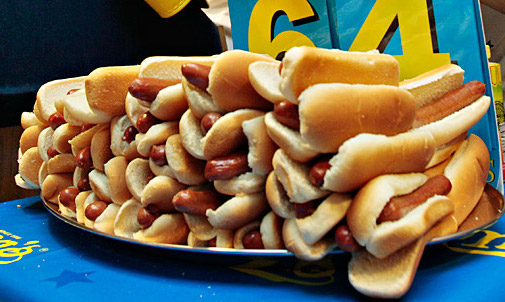
Joey Chestnut is the reigning champion of the Nathan’s Hot Dog eating contest under Major League Eating (MLE). Chestnut has been a dominant force in the competitive eating world and has held the title for numerous consecutive years. His record-breaking streak began in 2007 when he defeated Kobayashi (ending his six-year reign as champion). Since then, Chestnut has continued to dominate the competition, consistently consuming a large number of hot dogs and securing the championship year after year. Think you beat him? You can start practicing this Independence Day!
Find ways to watch this year’s contest by clicking here.

Remember Woody Strode for Breaking Barriers

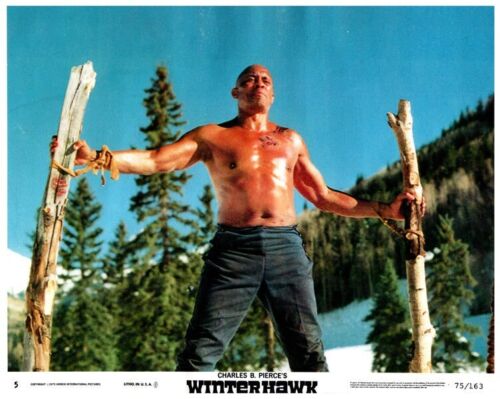
Woody Strode broke barriers and made significant contributions to society in various aspects of his life and career. While Strode’s impact may not be as widely recognized as some other historical figures, his determination and success in breaking barriers in professional football and Hollywood have made a lasting impact on the sports and entertainment industries, as well as on the fight for racial equality. Free Sports Magazine proudly presents the abridged story of his life.

Western movie fans may not know Woody Strode was a professional American football player before transitioning into acting. Born on July 25, 1914, in Los Angeles, California, Strode attended UCLA (University of California, Los Angeles), where he excelled in athletics, particularly in football and track and field.

Strode played as a standout fullback and defensive lineman for the UCLA Bruins football team during the late 1930s. His performance in college earned him recognition, and he was named to the All-American team in 1939. Making things more interesting, one of Strode’s teammates was THE Jackie Robinson. Yes, you read that correctly. Woody Strode and Jackie Robinson were indeed teammates on the same football team.

In 1939, both Strode and Robinson played for the UCLA Bruins which went undefeated with a record of 8-0-1 that season. During their time at UCLA, Strode played as a standout fullback and defensive lineman, while Robinson played as a running back. Strode’s physicality, strength, and versatility on the field, combined with Robinson’s speed and agility, contributed to the team’s success. Their undefeated season in 1939 remains a notable achievement in UCLA football history to this day.

After college, Strode played professional football in the NFL (National Football League). He signed with the Los Angeles Rams in 1946, becoming one of the first African-American players in the league’s modern era. Strode played for the Rams for two seasons before finishing his football career in Canada, where he played for the Calgary Stampeders in the Canadian Football League (CFL).

Following his football career, Strode transitioned into acting and appeared in numerous films and television shows. Strode’s athletic background often played a role in the types of characters he portrayed on screen, bringing a physicality and presence to his performances. The football star turned thespian delivered several outstanding performances throughout his acting career. While opinions may vary on his best movie performances, there were some notable ones that garnered critical acclaim and showcased his talent. Each film showcased different facets of his skillset, making it difficult to pinpoint a single best performance:

1. Spartacus (1960) – Strode portrayed the character of Draba, a gladiator in this epic historical drama. His memorable fight scene with Kirk Douglas’s character remains one of the film’s highlights.

2. The Man Who Shot Liberty Valance (1962) – Strode’s role as Pompey, a loyal ranch hand, in this classic Western showcased his strength and stoic presence. His chemistry with John Wayne’s character added depth to the film.

3. Sergeant Rutledge (1960) – Strode played the title role of Sergeant Braxton Rutledge, a Buffalo Soldier accused of rape and murder. His portrayal of Rutledge’s dignity and strength in the face of injustice was highly praised.

4. Once Upon a Time in the West (1968) – In this Sergio Leone spaghetti Western, Strode portrayed Stony, one of the gunmen hired to intimidate the protagonist. He showcased his physicality and intensity in a standout performance.

5. The Professionals (1966) – Strode’s role as Jake Sharp, a member of a group of mercenaries, displayed his versatility as an actor. He brought depth to the character and shared excellent chemistry with his co-stars.

While Woody Strode had a successful and exciting career, he should be most remembered for the multiple barriers he broke on the field, in front of the camera, and in real life.

He was one of the first African-American players in the modern era of the National Football League (NFL). He signed with the Los Angeles Rams in 1946, paving the way for future generations of Black athletes in professional football.

As an actor, he faced challenges and racial barriers in the film industry. However, he managed to carve out a successful career in an era when opportunities for Black actors were limited. He played diverse roles that went beyond stereotypes, helping to open doors for other African-American actors in Hollywood. Strode worked alongside Sidney Poitier, another trailblazing African-American actor, in the film “The Defiant Ones” (1958). Their performances in the movie, which addressed racial tensions and prejudice, helped bring attention to issues of racial equality and social justice.

Woody Strode passed away on December 31, 1994 after a battle with lung cancer. His final film was The Quick and the Dead (1995) which was released posthumously and directed by Sam Raimi of Evil Dead and Spiderman fame. In the movie, Strode finds himself in the Wild West yet again and is surrounded by an all-star ensemble cast for one last time. And while it is easy to watch Strode portray a wandering gunfighter named Charlie Moonlight, it is easier to forget his achievements and contributions as an athlete and actor were made in the face of many racial barriers. Strode’s courage and talent is not be forgotten and should continue to serve as a source of inspiration for aspiring athletes, actors, and other professionals.

FreeSportsMagazine.com Pays Tribute to the Iron Sheik

The sports world lost a legend on June 7th, 2023 when the Iron Sheik departed the squared circle of life. At 82 years of age, he led a full but often complicated life. What was undisputable was that he was appropriately hated during his time actively wrestling and appropriately beloved during his time after. Free Sports Magazine is proud to offer this tribute to the #1 Jabroni:

The Iron Sheik, born Hossein Khosrow Ali Vaziri on March 15, 1942, is an Iranian-born professional wrestler and former Olympic wrestler. Known for his flamboyant personality and his portrayal of a villainous character in the wrestling world, the Iron Sheik enjoyed a successful career that spanned several decades.

Vaziri’s journey began in his native Iran, where he developed a passion for wrestling. He competed in various international tournaments and even represented Iran in the 1968 Olympic Games. After immigrating to the United States, he continued his wrestling career and gained prominence in the professional wrestling circuit.

In the 1980s, the Iron Sheik rose to superstardom as a member of the World Wrestling Federation (now WWE). With his signature move, the Camel Clutch, and his provocative interviews, he quickly became one of the most hated villains in the industry. His intense rivalry with Hulk Hogan, which culminated in Hogan dethroning him for the WWF Championship in 1984, is often remembered as a defining moment in wrestling history.

Beyond his in-ring persona, the Iron Sheik faced personal struggles, including substance abuse issues, which impacted his career and personal life. However, in later years, he embarked on a path of recovery and found renewed popularity through social media, where his outspoken and often humorous posts endeared him to a new generation of fans.

Perhaps one of the Sheik’s most infamous moments occurred outside the ring. This moment can be revisited with smiles so many years after the fact. It’s One of those crazy stories that undoubtedly get shared at funerals or when friends get together to remember loved ones lost.

In January 1987, a highly publicized incident involving the Iron Sheik (Hossein Khosrow Ali Vaziri) and Jim Duggan occurred, commonly referred to as “The Busted Incident” or “The Sheik-Duggan Arrest.” The incident took place during a time when professional wrestling promotions had a vested interest in preserving the illusion of the wrestlers’ characters outside the ring.

The story goes that on January 23, 1987, Vaziri and Duggan were traveling together in a car for a World Wrestling Federation (now WWE) event. However, they were pulled over by the police in New Jersey for suspected drug possession. During the search, marijuana was found in the vehicle, leading to their arrest.

This incident caused a significant scandal within the wrestling industry at the time. The media coverage exposed the scripted nature of professional wrestling and brought negative attention to the wrestlers involved. The WWF promptly took action, swiftly punishing both wrestlers for their actions.

The Iron Sheik was released from the WWF shortly after the incident, with the company citing his arrest and his behavior as the reasons for his termination. Meanwhile, Jim Duggan received a suspension from the WWF, which was also seen as a disciplinary measure.

While the incident tarnished their public image, both wrestlers eventually managed to rebuild their careers. Jim Duggan, in particular, made a successful comeback and became a beloved figure in the wrestling community. As for the Iron Sheik, he found a new level of popularity in later years, thanks to his outspoken and humorous presence on social media.

At the time of his passing, the Iron Sheik is regarded as a wrestling legend and a cultural icon. His unique blend of charisma, athleticism, and controversial antics left an indelible mark on the wrestling world. Despite the challenges he faced, his enduring legacy will continue to inspire and entertain professional wrestling fans around the globe.

Body Slam: A Forgotten Movie of the Rock ‘n’ Wrestling Era

“Rock ‘n’ Wrestling” refers to a significant crossover between the worlds of professional wrestling and rock music that took place in the 1980s. It primarily revolves around the partnership between the World Wrestling Federation (now WWE) and the music industry, particularly with the involvement of musicians and collaborations with MTV.

During this era, the WWF recognized the potential of combining the popularity of professional wrestling with the mainstream appeal of rock music to create a larger fan base. This led to various initiatives and events that blended the two worlds, resulting in a phenomenon known as “Rock ‘n’ Wrestling.”

One of the key figures in this crossover was Cyndi Lauper, a prominent pop singer of the time. Lauper’s association with professional wrestling began when she appeared as a manager for wrestler Wendi Richter. This led to a storyline feud between Richter and Lauper’s rival manager, Captain Lou Albano, which culminated in a highly publicized match at the inaugural WrestleMania event in 1985.

The success of this collaboration prompted further integration of music and wrestling. The WWF featured rock musicians in their programming, such as Rick Derringer performing “Real American” for Hulk Hogan’s entrance theme. Additionally, the WWF created animated series called Hulk Hogan’s Rock ‘n’ Wrestling, which featured animated versions of wrestlers teaming up with various rock stars in comedic adventures.

The “Rock ‘n’ Wrestling” era represented a significant period of cross-promotion and entertainment convergence, bringing together the larger-than-life personalities of professional wrestling with the energy and appeal of rock music. It played a crucial role in expanding the fanbase of both industries and capturing the pop culture zeitgeist of the 1980s.

The natural progression of this awesome pairing was to bring the action of pro wrestling and sounds of rock music to the movie screen. However, this is where interest seemed to stop for most people. Perhaps purchasing a ticket and spending a day at the movies was always going to be a bit overkill for fans perfectly happy to watch Cyndi Lauper just have fun from their own living room for or parents who got a free cartoon for their kids every Saturday morning. Whatever the reasons, this effort to hit the big screen ultimately left us with movies like No Holds Barred (which Jim Ross once referred to as No Profits Allowed) and the should be cult-classic Body Slam.

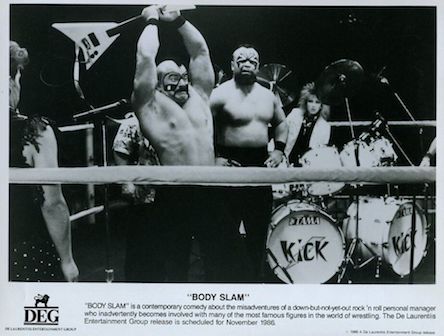
Body Slam was a comedy released in 1986, revolving around a down-on-his-luck music promoter named M. Harry Smilac, played by Dirk Benedict of The A-Team fame. Smilac just happens to get involved in the world of professional wrestling and mischief ensues.

The film follows Smilac as he encounters a washed-up pro wrestler named “Quick” Rick Roberts, portrayed by Rowdy Roddy Piper. Smilac sees an opportunity to combine his love for music and wrestling by managing Quick Rick and a wrestling rock band called Kick at the same time.

With the help of his assistant Candace, played by Tanya Roberts, Smilac sets out to promote Quick Rick and his wrestling partner Tonga Tom, played by Sam Fatu. They embark on a tour with Kick, hoping to achieve success and fame by merging the worlds of music and wrestling. As the story progresses, Smilac faces challenges, including rival wrestling promoters, the constant chaos of managing a group of wrestlers and musicians, and the difficulty of putting on a show that features both live music and wrestling. Of-course the film culminates in a climactic showdown and a high-stakes wrestling match.

Body Slam combines elements of comedy, wrestling action, and music, creating an entertaining story about an unlikely group of characters trying to find success and redemption in their respective fields. Other wrestlers and personalities of note appearing in the film include Captain Lou Albano, Afa Anoai, Barbarian, Billy Barty, John Astin, Fans of The A-Team will especially enjoy this film as Dirk Benedict drives around in a Ferrari in some scenes and is essentially playing the Templeton Peck character (he juggled commitments to both projects during this time). That’s perfectly fine because Rock ‘n’ Wresting is a venture that the Face man would get into to make a buck.

Body Slam was not a financial success. The film was met with negative reviews and failed to attract a significant audience. The movie’s poor performance contributed to its status as a relatively obscure and forgotten film today. While it has gained a small following among fans of professional wrestling and ’80s movies, it hasn’t achieved the same level of cult status as some other films from the era. Its lack of critical acclaim and commercial success prevented it from attaining widespread recognition or a dedicated cult following. This isn’t surprising when thinking about the mainstream audience but perhaps a little more unexpected when considering the fandom of wrestling fans.  

That Time the Harlem Globetrotters Got Stuck On Gilligan’s Island

The iconic Gilligan’s Island made a return in 1978 with a made-for-television movie called “Rescue from Gilligan’s Island.” The movie served as a sequel to the original series and brought back the original cast members, including Bob Denver as Gilligan, Alan Hale Jr. as the Skipper, Jim Backus as Thurston Howell III, Natalie Schafer as Lovey Howell, Russell Johnson as the Professor, Dawn Wells as Mary Ann, and Tina Louise as Ginger.

The storyline of “Rescue from Gilligan’s Island” revolves around the castaways finally being rescued after many years. However, upon their return to civilization, they face a variety of challenges and comedic situations. The movie was well-received by fans of the original series and provided closure to the story of Gilligan’s Island. Or did it?

The success of “Rescue from Gilligan’s Island” led to three subsequent made-for-television movies featuring the castaways which expanded on the original series and continued the adventures of the beloved characters. One of these forgotten gems may be of some interest to sports fans around the Globe.

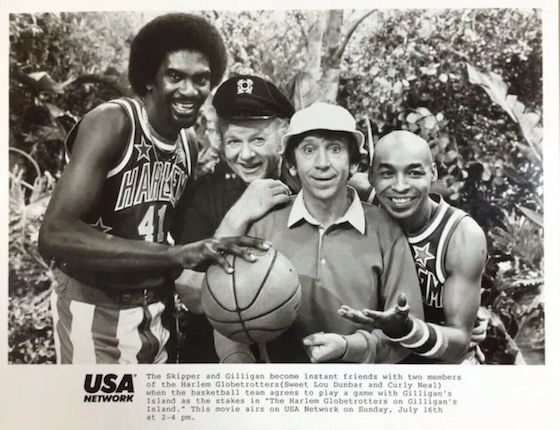
In a two-part episode titled “The Harlem Globetrotters on Gilligan’s Island,” which aired in 1981, the Harlem Globetrotters made a guest appearance on the television show. This crossover episode was a fun collaboration between the popular comedy series and the legendary basketball team. While the Globetrotters still exist today, the squad that took the court on the island in 1981 was a who’s who of iconic street ballers including Meadowlark Lemon and Curly Neal. It was perhaps the team’s most distinguished lineup from over the years.

The Globetrotters’ presence on the island is a result of this unexpected turn of events. In the storyline of “The Harlem Globetrotters on Gilligan’s Island,” it is explained that the Harlem Globetrotters were on a cruise ship named the S.S. Minnow II, which was named after the ill-fated original S.S. Minnow from the Gilligan’s Island series. The ship gets caught in a storm and ends up stranded on the same deserted island where the main characters of Gilligan’s Island have been marooned. The Globetrotters and the castaways of Gilligan’s Island end up having to work together to solve a series of challenges and conflicts on the island. Naturally, many shenanigans ensue.

Mainly, both parties discover that a band of Russian spies, led by a character named Vasily Kandinsky, is also on the island engaging in nefarious activities. Throughout the episodes, the Harlem Globetrotters display their basketball skills while getting involved in comedic adventures with the castaways. They face challenges such as building a raft, searching for treasure, and of course outsmarting the spies. Their unique talents and comedic interactions contribute to the lighthearted and entertaining atmosphere of the show.

Ultimately, with the combined efforts of the Globetrotters and the castaways, they manage to thwart the spies’ plans and create a plan to escape the island. The episodes conclude with a fun and lively basketball game between the Globetrotters and the castaways, adding a final touch of humor and entertainment to the story. You’ll have to watch the episode to see which team won!

How To Speak The Language Of Disc Golf

By popular demand, Disc Golf blogger Steven Pease breaks down the language barrier for FSM readers…

Most people who play disc golf know the regular terms and language. There are lots of other words that people use for describing things that happen on the course. Words not in the dictionary, or in the general vocabulary for disc golf. I have gathered some interesting terms from other players, and from what I’ve read that other players use. I will share the common ones, and some better ones that are not common that I have found.

I got a great story sent to me a couple years ago. A player who was new went out to play a round with his dad, there was a reporter and a photographer at the course from the local paper. He asked if you could take a couple pictures for a story they were doing on disc golf; the guy said sure. The photographer got into position about 50 feet up the edge of the fairway; the guy let loose with his drive and hit the photographer square in the chest with his driver.

Very embarrassing and funny now, but no one wants to do that. I love this story because it shows exactly why everyone wants to get better. I put together terms that I have learned over the past 30 years of playing disc golf. Terms that will make you feel that you know what others are talking about. Disc golf is one of the fastest growing sports in the world. One of the main reasons for its popularity is players of almost any age and ability can play.

I play with guys half my age and I consistently beat them. I am 62 years old and in good shape. I know people older that still play. There are no limitations. If you can get around the course, you can play. If you have never played, you should. If you play now, keep on playing. It’s great exercise, and it’s a great way to socialize. As far as sports go, it is also very inexpensive. You can start with as few as three discs. A driver, a midrange and a putter. For just around $30 you can get started. Most courses are free to play.

Common disc golf language

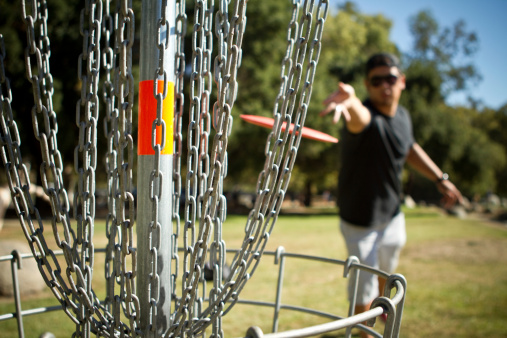
  • Ace Getting the disc in the basket on the first shot
  • Hyzer Releasing the disc with he edge closest to your body highest than the other edge.
  • Anhyzer The outside is higher than the inside edge.
  • Overstable The disc wants to hyzer into the ground when you release it. To make it not hyzer, you must snap it and throw it hard with a slight anhyzer.
  • Understabe Can throw with less spin, less snap to fly straight.
  • Turnover When you throw the disc hard with good snap; it will turn opposite the way it normally will turn. If you’re throwing right hand back hand it will turn to the right.
  • S Curve The flight of the disc starts as an anhyzer, then will hyzer at the end of the flight.
  • Snap The amount of spin on the disc at release from your hand.
  • Driving The throw from the tee box.
  • Approach The shot from the drive to the basket.
  • Putt Throwing the disc into the basket.
  • Grip How you hold the disc when you’re throwing.

Player Invented Disc Golf Terms

  • Dead man When your putt hits the side of the basket and drops to the ground.
  • Chain smoking Several great putts in a row.
  • Bogey Sandwich A scorecard with a par bogey bogey par.
  • Black ace Acing the wrong hole.
  • Cabbage The weeds in the rough.
  • Chastity belt The yellow band on the Innova baskets.
  • Clank The sound that a putt makes when in hits the chastity belt.
  • Hit the nickel A putt that hits the number plate.
  • Horking A huge long throw.
  • Locals route Taking an unconventional path to get you to the basket.
  • Lumber jacking When you’re hitting every tree.
  • Mirkwood Very thick woods.
  • Nickel A score of 5 on a hole.
  • Nuclear shule Very thick rough.
  • Fly by Putt correct height, but sails by the basket.
  • Fluke deuce A two from something very lucky happening.
  • Gaack Missed a short putt.
  • Grenade A shot that is high and falls fast to the ground.
  • Head Banger When your drive lands under the basket and you might bang your head on the basket as you pick it up.

More Disc Golf Terms

  • Paper plate An understable disc.
  • pig putt A putt that’s really bad.
  • Pinball A shot that hits several trees.
  • Pinball Wizard Continually hitting multiple trees.
  • Rooted When the tree root stops you shot from skipping.
  • Saturn A score of 6 (saturn is the 6th planet)
  • Shank Any shot that does not do what you wanted.
  • Shule Heavy weeds off the fairway.
  • Sneak In flight instruction to the disc.
  • Snob A throw with the nose of the disc up.
  • Snowman A score of 8.
  • Spinach Bushes, trees, and undergrowth.
  • Taco To hit a tree so hard it folds like a taco.
  • Tombstone A disco golf disc that hits the ground, and remains standing on the edge.
  • Treefelction The tree gives you a good deflection.
  • Valet service When you park your drive under the basket.
  • CRF Candy fundraiser.
  • CTP Closest drive to the pole.
  • DL Dead last in the order of throwing.
  • FAT When you hit the first available tree.
  • LB Lucky bounce.
  • SED Seeing eye disc.
  • YSA You’re still away.
  • Gust from the Gods When the wind blows the disc way off line.
  • Getting greasy Sneaking through the trees.
  • Lawn dart A disco that has landed partially buried in the ground.
  • Merked When you get hit in the head from someones throw off of a tree.
  • Tombstone For those discs that stick on edge in muddy ground.
  • Helicopter A shot that needs to come straight down at the end without curving.
  • A rip The perfect drive.

The terms in the top section are ones you need to know. These terms will help you understand the game and how to play and how to play better. The rest are just temps other players use when they are playing.

It’s California Avocado Month! Here are 6 Sports-Inspired Guacamole Dip Recipes to help you celebrate.

Celebrate 10 Years of California Avocado Month this June

(NewsUSA) – – Ten years ago, the California Avocado Commission first observed June officially as California Avocado Month and is excited to continue celebrating this long-standing tradition. As an ode to the past ten years, the Commission has enlisted the culinary talents of Southern California-native Chef Nyesha Arrington to create delicious and seasonal recipes that prominently feature California avocados, which are grown by about 3,000 California avocado growers with groves from San Diego to Monterey.

Arrington has been celebrated throughout her career for using farm fresh, locally and responsibly sourced ingredients, which made her the perfect partner to craft customized dishes for this celebratory anniversary.

“It’s hard narrowing down the recipes when California avocados have countless possibilities! However, I love when they are paired with complementing flavors. These California avocados definitely hold their own by leveling up any dish and giving an extra wow factor, making it a California chef’s key ingredient,” Arrington says.

Meticulously cared for and picked at their peak, California avocados are a heart-healthy superfood that provide “good” fats to one’s diet. Inspired by how the bountiful flavor and nutrition pair perfectly, Arrington’s Grilled California Avocado & Peach Salad showcases fresh and light flavors perfect for those warm summer nights. The recipe features fresh California avocados and peaches, grilled to perfection, layered on a bed of arugula and crispy quinoa, then paired with a tangy and delicious pistachio-arugula vinaigrette.

To view other mouthwatering creations, including Arrington’s California Avocado Crab & Tuna Stack, or to learn more about California avocados, visit CaliforniaAvocado.com.

For even more celebration, check out Shop.CaliforniaAvocado.com to grab this season’s newest merch just in time for California Avocado Month

And for FREE sports-themed guacamole dip and avocado inspired appetizer recipes, click your desired mouth-watering link below:

Billabong: A Brief History Of Australia’s Most Iconic Surf Brand

If you’ve been around in Earth for quite a while now, then you’ve surely read or heard of Billabong. You may have seen Billabong mens knit woven shirts and noticed the iconic double wave logo.

Founded in 1973, Billabong has since been one of the leading companies in manufacturing and selling surfing wear. With the company now on its 48th year of operations, let us take a brief look into the history of Australia’s most iconic surf brand.

Gordon Merchant, one of the founders, liked to travel a lot in Australia during the late 60s and 70s, totally embracing the surfing lifestyle. The goals of his travels were to find the best surfing spot to settle in. He would pack maps, tents, sleeping bags, and surfboards unto a Kombi van to aid him in his travels.

This surfing brand giant started with humble beginnings. Thanks to his experience when travelling in the years prior, Gordon learned to develop breakthrough innovations in surfing gear. Billabong mens shorts in its earliest form is the starter of the business. The founders, Gordon and Rena Merchant designed and made boardshorts at their home and sold them to the local surf shops. The durability of their boardshorts were the its biggest strength, a quality soon noticed by surfers in the area.

In order to boost the new company’s exposure and business, Billabong started hosting surfing events. This proved to be a very smart move which caused the company to grow faster. By the 80s, Billabong mens shorts were already available all throughout Australia. With the whole of Australia included in their operations, Billabong started putting their sights towards exporting products to other surf-loving countries – New Zealand, Japan, USA, and South Africa.

Billabong grew fast. With this fast growth, the company started to make acquisitions of other sport-related brands. Gordon followed his customer’s wants and needs and ventured into different kinds of board sports. Billabong reached a peak where is managed around 10 sport-related brands including Von Zipper, Kustom, Xcel, and RVCA.

The growth and acquisition continued to grow, but that growth was halted in 2012. Billabong experienced serious financial difficulties. Some say that Billabong got too much on their hands due to their acquisitions, losing clear sight of their core business strategy. Sales dropped and profits declined.

Billabong was able to make deals with the US that enabled the company to get back on its feet. Billabong sold some of its previous acquisitions get back their focus on their main business plan, perhaps confirming the speculation that the company was spread thin due the multiple brands they need to manage.

Today, Billabong is now back on its feet, backed up by the constant support of the community of customers that put their trust on the company. For now, we have yet to see what Billabong would become in the future. In the meantime, we can still be sure that we can still get the best quality boards, shorts, and gear including Billabong mens knit wovens from the beloved Australian brand.

To get your very own Billabong mens knits wovens shirt, be sure to look up Hansensurf online. Or if you want to wear and experience the iconic Billabong mens shorts , visit Hansensurf website to get the best Billabong product deals.

Pop-Culture Spotlight: Galleta Meadows

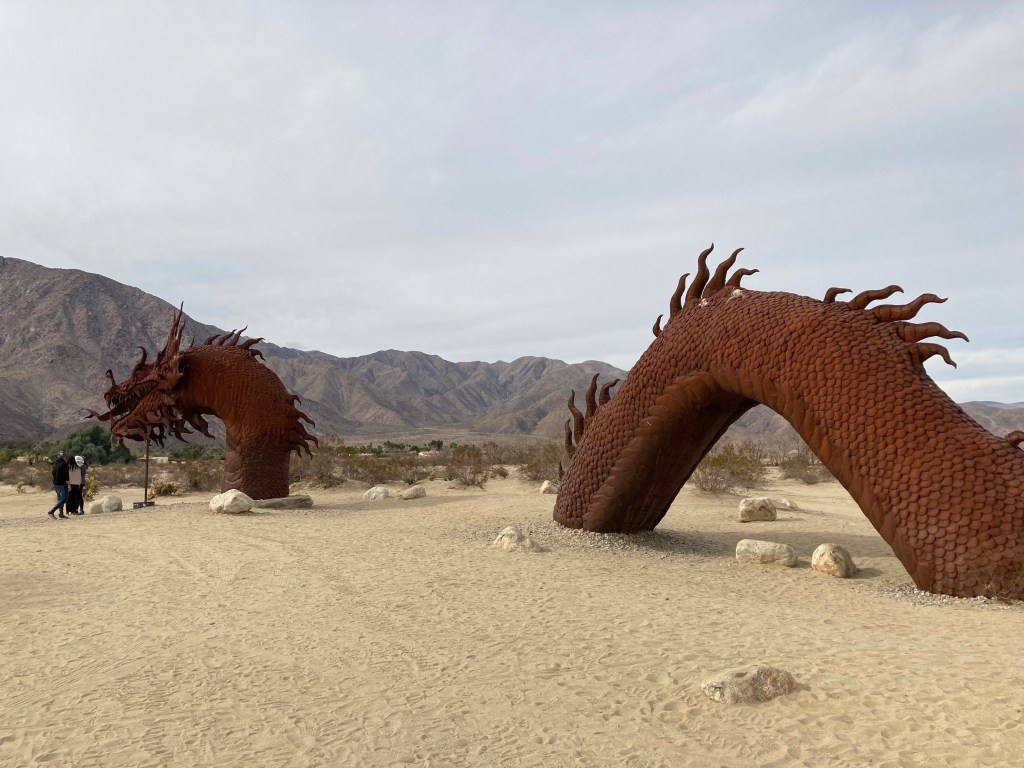
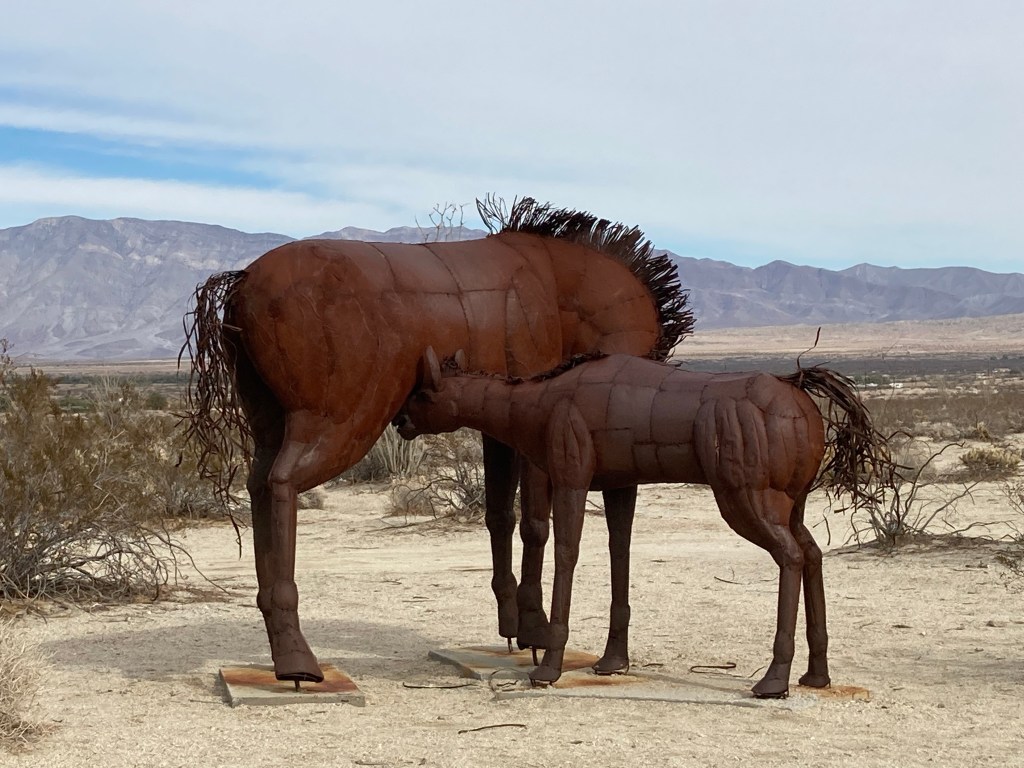
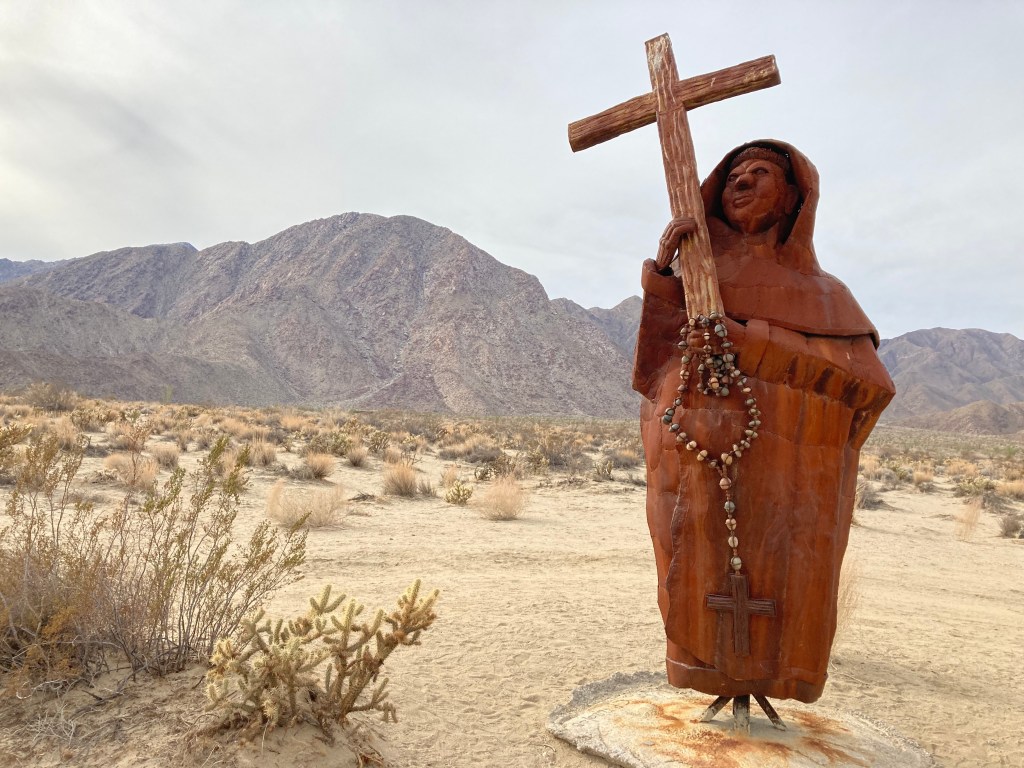
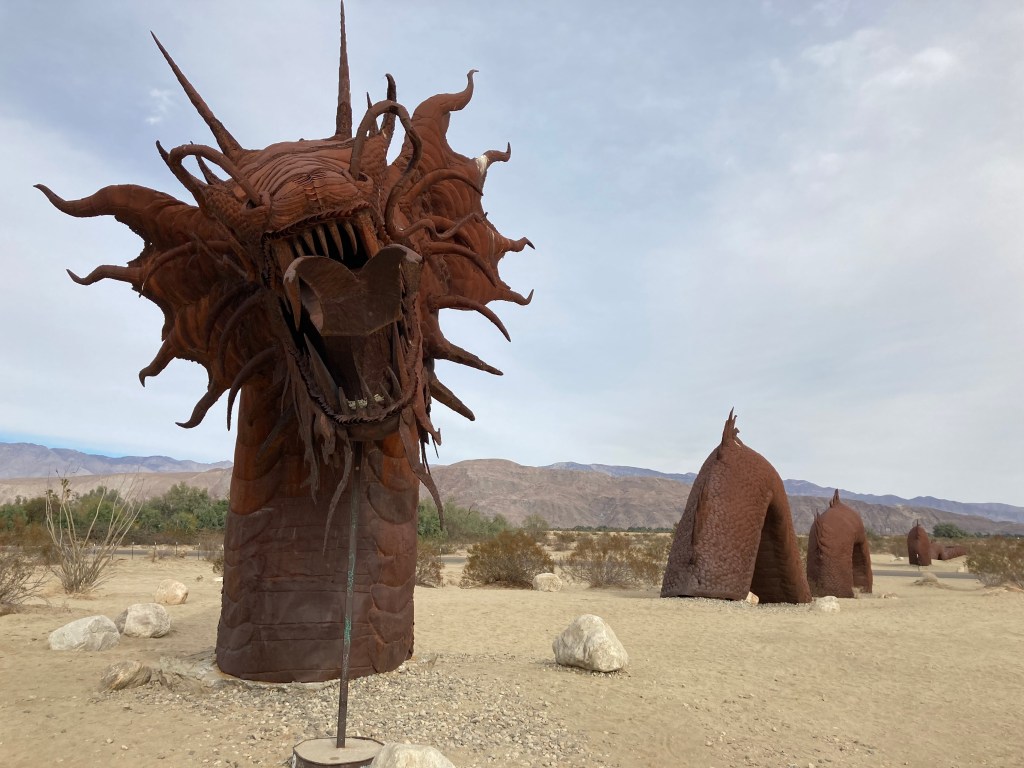
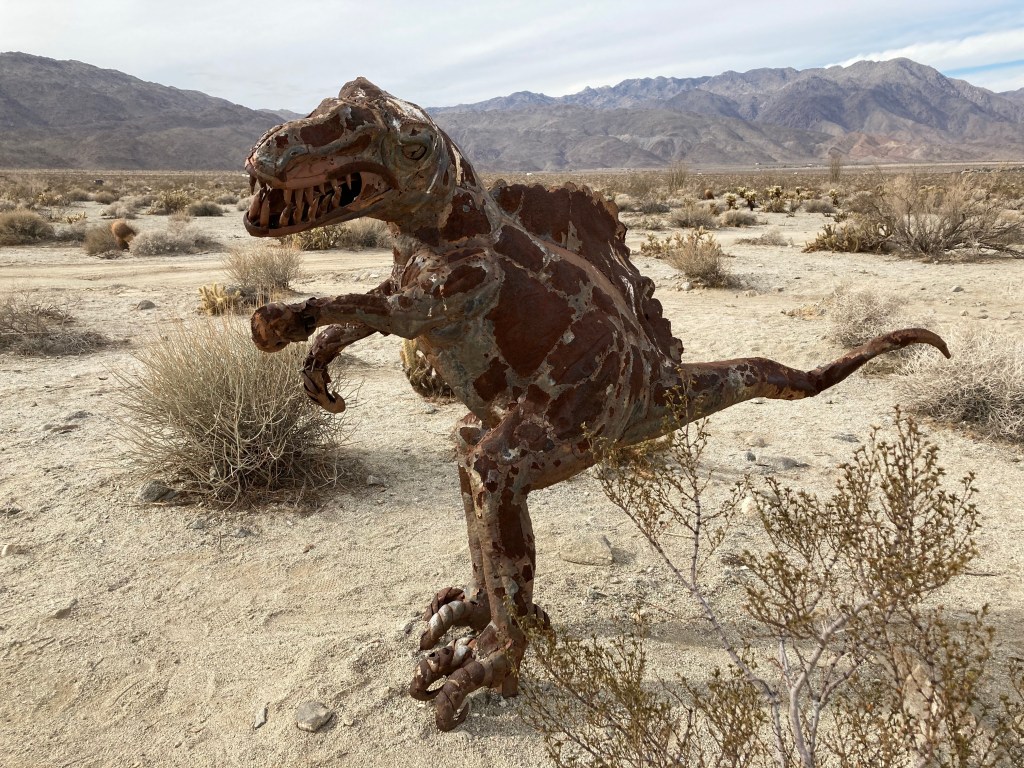
Desert Art, or “Sky Art” as it’s commonly referred to these days, has been gaining popularity in the age of the iPhone. People in the United States (California in particular) have been flocking to remote areas to get some pretty cool pictures of random, rusted metal sculptures.

Some say the crown jewel of Sky Art is found in a hidden spot called Galleta Meadows. The Sky Art here is spread out over 1500 acres of desert. All Sky Art is accessible by vehicle but parking and walking around for a few miles would make the experience more enjoyable. It would definitely make for some flat, easy hiking.

So where is this hidden gem of desert art? Where can you find these large metal sculptures for purposes of some really cool selfies? Let’s just say it’s down south near San Diego, California. If you hit Mexico, you’ve gone too far (but not by much).

Free Sports Magazine recently took a trip to this remote location. While we’re no experts in Sky Art, it was among the best we’ve ever seen. Enjoy the exclusive photos and read more about Galleta Meadows below.

The following info comes directly from the Keeper of the Meadows:

The Under the Sun Foundation is inspired by the work of Dennis Avery, the late landowner of Galleta Meadows in Borrego Springs, and his passion for bringing art to the local community and its visitors. Mr. Avery had 130 large scale, free-standing, metal sculptures produced by artist Ricardo Breceda, and referred to them as Sky Art. Spread over 1500+ acres of undeveloped desert land, these larger than life creations welcome the public to discover and enjoy art outdoors, surrounded by the rich and diverse desert environs of Borrego Springs.

The Under the Sun Foundation seeks to breathe new life and meaning into the existing sculptures…We at the Under the Sun Foundation are excited to see where our evolution might take us. We use Dennis Avery’s work and Borrego Springs as a point of inspiration, and expect to add new geographies, artistic endeavors, and ways to engage with our environment and one another over the coming years.

We invite you to take part in the journey!

L.A. Comic-Con Draws Nearly 100,000 Fans in 3 Days

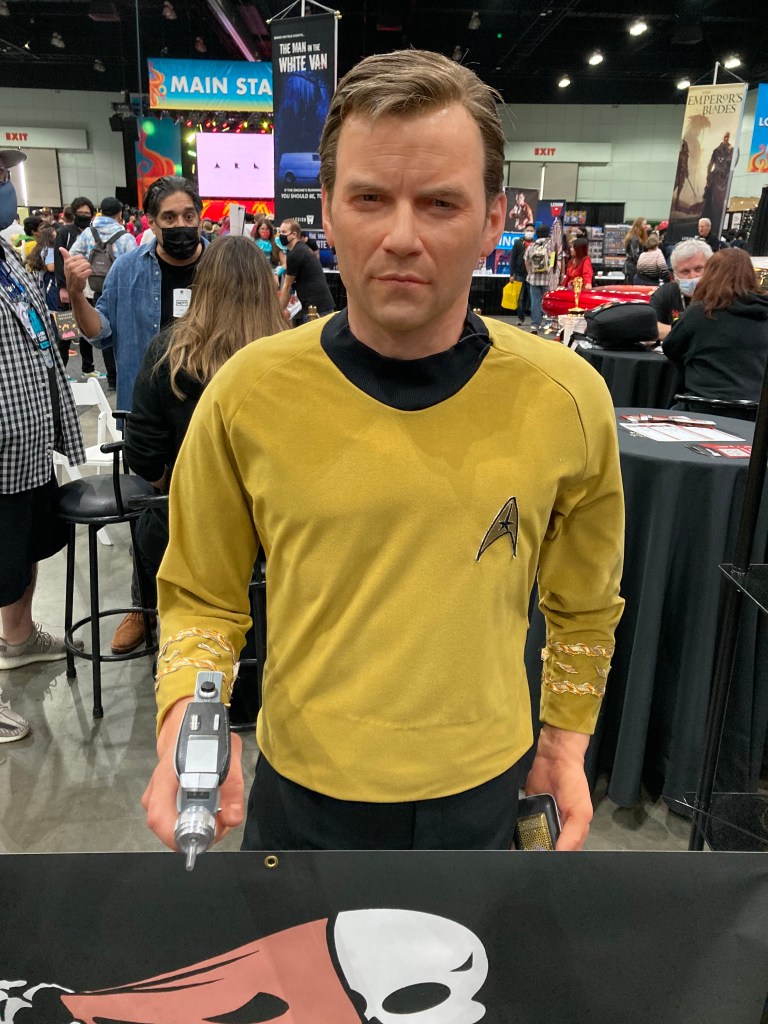
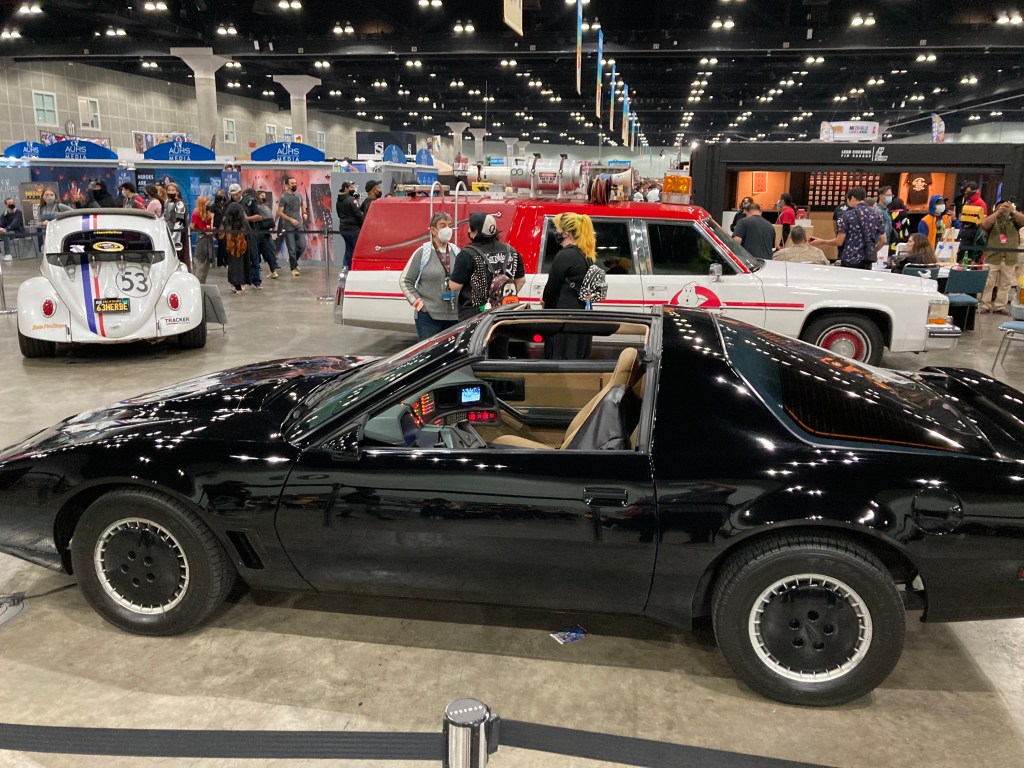
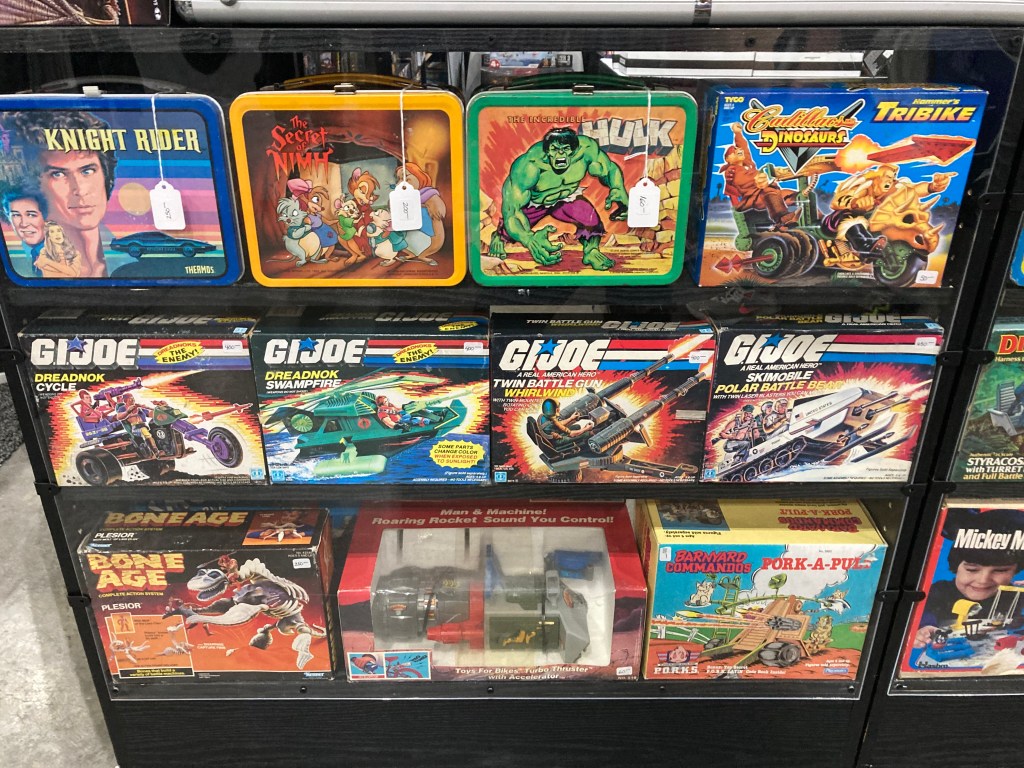
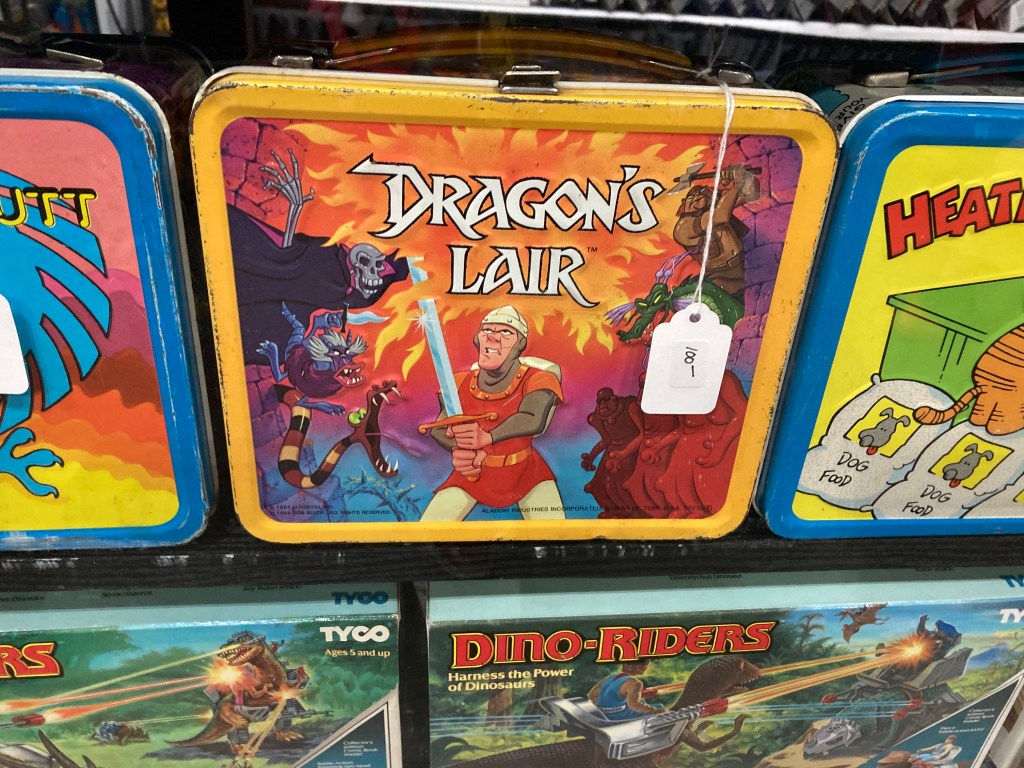
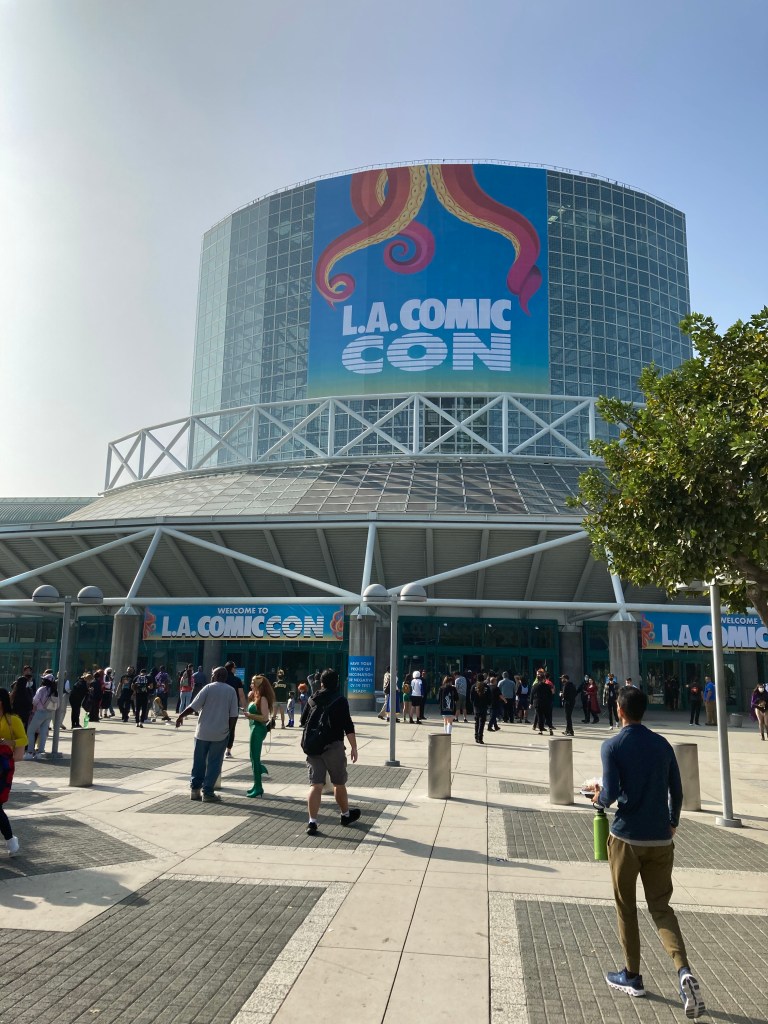
Los Angeles Comic-Con 2021 drew an impressive 94,900 fans this past weekend. While it provided a little something for everyone, the best thing was simply that IT”S BACK BABY! FreeSportsMagazine.com was on hand and is pleased to share some of these exclusive photos and videos directly with you. Don’t miss your chance to attend when it returns next year or comes to a city near you!