Author Archives: FSM Staff

Get Outside and Celebrate National Trails Day

Photo credit: Verónica Miranda

(NewsUSA) – This year, on June 4, millions of people across the United States will hit the trail, any trail, to celebrate the 30th annual American Hiking Society’s National Trails Day.® This year’s celebration focuses on encouraging novice and veteran trail lovers to come together to leave trails and the outdoor community better than they found them. Hikers, cyclists, horseback riders, paddlers, trail clubs, federal and local agencies, land trusts and businesses will partner at events across the country to forge a more inclusive trail community and advocate for, maintain and clean up trails and public lands.

American Hiking Society and the nationwide trails community invite people of all ages and abilities to connect with their friends and neighbors around the joy of being outside. Anyone can join the national movement by giving back to the trails to help ensure that everyone can enjoy the outdoors.

“There’s something magical about being outdoors,” says Kate Van Waes, Executive Director of American Hiking Society.

“Fresh air, birds singing, moving along a trail, or even just around the block; there’s nothing quite like it,” she emphasizes. “But today, those trails and green spaces are in dire need of help, and not everyone has access to or feels welcome in these places that can calm and inspire,” Dr. Van Waes explains.

“National Trails Day is the perfect opportunity to get out there with the people you love, give back to the trails that bring us together and make sure no one is left out.”

Not just on National Trails Day, but any day is a great time to commit to keeping the outdoors accessible and restorative for all.

Some ways you can make a difference include:

– Join a local trail event, or start your own. Search the American Hiking Society website for events in your area.

– Take the National Trails Day Pledge, and commit to leaving the trail and the outdoor community better than you find them. For example, take a trash bag with you on a walk or hike. Or speak up and tell your Members of Congress to support the Transit to Trails Act. You’ll be entered to win prizes from National Trails Day sponsors AKHG by Duluth Trading Co., Athletic Brewing Co., REI Co-op, Osprey Packs, and more.

– Share how you’ll leave the trail and the outdoor community better than you found them, and tag #NationalTrailsDay and @AmericanHiking on social media. Photos and videos tagged on Instagram will be entered into the National Trails Day® photo contest for a chance to win premium gear prize packages.

Visit americanhiking.org for more information and to find events near you.

American Hiking Society’s National Trails Day® is made possible by the generous support of corporate sponsors — AKGH by Duluth Trading Co., Athletic Brewing Co., REI Co-Op, and Osprey Packs. federal partners include the National Park Service, Bureau of Land Management, Federal Highway Administration, and U.S. Forest Service.

12 Things You Need to Know Before Betting The 2022 NBA Finals

The matchups are yet to be decided, but here are 12 facts you should know before placing your NBA Finals bets. Some of these little-known facts and figures can be the keys to placing winning bets. But keep in mind, betting lines are subject to change. Online sportsbooks such as BetUS.com update their NBA odds regularly.

1. The winner of Game 1 has claimed the title in 14 of the last 20 NBA Finals.

2. The home team has won Game One in 15 of the last 16 NBA Finals, excluding the 2020 championship, which was played on a neutral court. That trend could continue, so keep an eye on the NBA lines once the Finals are decided.

3. The team with home-court advantage has also won the championship in 14 of the last 20 NBA Finals. Golden State will have home-court advantage no matter its opponent. Dallas would have homecourt advantage over Boston but not Miami.

4. Since the NBA Finals MVP was first awarded in 1969, only two players — Joe White (1976) and Chauncey Billups (2004) — are among eligible players on the outside looking in at the Naismith Memorial Basketball Hall of Fame. The other 51 are either enshrined, still active or waiting to become eligible. That means the MVP will be: Steph Curry (+225), Jayson Tatum (+250), Jimmy Butler (+550) or Luka Doncic (+650).

5. The East has not had consecutive titles from different teams since Detroit and Chicago won back-to-back championships in 1990 and 1991. The winner of Miami and Boston will try to end that streak after Milwaukee won last year.

6. The last time a team outside the top two seeds represented the West was the 2012 Mavericks, who won the title vs. Miami as a No. 3 seed. The last time a No. 4 seed did the same? The 2008 Mavericks, who lost the championship series to Miami. Could we see a rubber match?

7. The 2008 Celtics were the last No. 1 seed from the East to win a title without LeBron James on their roster. Miami has a chance to change that.

8. The last three head coaches to win NBA titles — Nick Nurse, Frank Vogel and Mike Budeholzer — were all first-timers. Golden State’s Steve Kerr has three titles, and Miami’s Erik Spoelstra has two, while Dallas’s Jason Kidd and Boston’s Ime Udoka are in search of their first rings as head coaches.

9. The average NBA Finals score has leveled out since skyrocketing to 236 points per game in 2017. Averages were about 217 PPG in both 2018 and 2019 before dipping to 214.5 in 2020 and sneaking back up to 221 in 2021. Keep an eye on the totals (or over/unders), as anything outside that range may give you a leg up.

10. Dallas finished 6-2 in the regular season vs. the three other remaining teams. Golden State went 4-4, Boston 3-4 and Miami 2-5.

11. How long will the series last? History says six games is the most likely result. Since the 1976 merger, six series have been 4-0 sweeps, 10 have ended in Game 5 and eight have finished in a do-or-die Game 7. The other 22 went six games.

12. Titles have been relatively even between the two conferences. The West holds a 26-24 advantage over the last 50 championship series, and the last 10 are split evenly at 5-5.

Smart bettors read between the lines, and keeping these twelve little-known stats, facts and figures in mind when laying your NBA Finals bets this year should improve your odds of making a profit as we send this year’s NBA season off to the history books.

Photo Credit: Designed by Freepik

Rail-Trails Are Hidden Gems, And Good for You Too!

Explore Your Local Trails, Enjoy Long-Term Health Benefits

(NewsUSA) – Stress — it’s everywhere. But there is an easy form of stress reduction that is as simple as opening your front door.

Spending time outside can help improve your physical and mental health, and you don’t have to be an extreme athlete to reap the benefits.

Studies show that simply going out for a walk in nature can help build strength and endurance, and contribute to feelings of relaxation and resilience. Being active outside has proven benefits for people’s minds and bodies.

Rail-trails in particular are ideal for individuals of all abilities and fitness levels to safely enjoy the outdoors. Rail-trails are multipurpose public paths created from former railroad corridor. That means they are flat or gently sloping, have a hard surface that makes them accessible to all types of activities and are available in rural and urban areas.

Rails-to-Trails Conservancy is a nonprofit organization dedicated to connecting communities across America with trails. One way they do this is through promoting the value of time spent outside — by encouraging people to make “trail moments” a regular part of their lives and sharing these experiences to inspire others to discover the convenience and joy of being active outside on trails.

“I feel really lucky to have grown up in Virginia, and now I live in Washington state, with lots of access to these trails, but there are literally thousands of miles of rail-trails all over the country,” says Miranda Webster, (@mirandagoesoutside) a longtime outdoor-enthusiast.

“So, whether you are mountain biking, hiking, walking your dog, or riding your bike, I hope that you’re able to find a trail near you where you can enjoy it as much as I have through my entire life,” she says.

Travel blogger Jeff Jenkins (@chubbydiaries_), based in Texas, has taken his wanderlust to local trails in a series of blogs and videos for the Rails-to-Trails Conservancy.

“Now, I’m showing people how to discover their own backyards, from their local cities to national parks, trails and the great outdoors,” says Mr. Jenkins, who has also created an online community for plus-sized travelers at chubbydiaries.com.

“So often people see trails as a way to get a little outdoor recreation, and yes, that’s true,” says Ian Mackay (@ians_ride), who regularly enjoys the trails in rural Washington state from his power wheelchair. “But it is so much more for me… having a safe trail space where I can go explore my own interests, interact with the community, and run my own errands is monumental to my happiness,” adds Mr. Mackay, who is also the founder of Ian’s Ride, a nonprofit organization.

This fall, Rails-to-Trails Conservancy is taking inspiration from the thousands of stories that people have shared about the personal impact of time spent outside on trails and encouraging people of all ages and abilities to make a habit of it. Their #TrailMoments 21-Day Challenge offers fun activities to encourage people to get out on the trail every day.

Visit the Rails-to-Trails Conservancy website for more information and tips on making outdoor time part of your daily routine. www.railstotrails.org/trailmoments and @railstotrails #TrailMoments on social media.

FSM Scouting Report: 30 For 30 Shark

Book/Movie Title: 30 For 30: Shark

Total Pages/Duration: 76 minutes

Author/Director: Jason Hehir & Thomas Odelfelt

Pace of Play: Watching this documentary is similar to playing 18 holes of golf. Kind of dull for the most part but you do get some great moments of interest and excitement mixed in. While this doc clocks in just under 80 minutes, it feels like you’ve been watching for 2 hours by the time the credits roll.

Strengths: The strength of this documentary lies in the accessibility of Greg Norman. He takes on all questions about “choking” and even takes a literal walk through the Master’s course at Augusta, home of his 1996 heartbreak. He’s honest but also seems like he’s in denial. An honest denial? While the viewer gets a condensed back story and buildup, this documentary is really all about that 1996 choke job.

Weaknesses: Maybe we were spoiled by The Last Dance because there was no true drama in this doc. At times, things got boring. Norman’s low volume monotone voice didn’t help matters.

Unique Attributes: One the director’s is the same person who directed The Last Dance. There are some noticeable similarities in styles of each film.

The loveable Jack Nicklaus makes appearances throughout this documentary with some great insights. Always classy never sassy. Scott Van Pelt (SVP) also pops up often.

A montage of Norman driving Ferraris and riding on to golf courses on helicopters was perfectly set to ZZ Top’s Sharp Dressed Man. Some would say it’s the highlight of the entire film.  

Scout’s Recommendations: Subscribers of ESPN+ have access to this film and should definitely consider giving it a stream. It’s not really a film just for golf fans – most people will be able to relate to that moment of truth in their own life. Did they pull through under pressure or did they just pull a Shark?

Find out more about 30 For 30: Shark by clicking here.

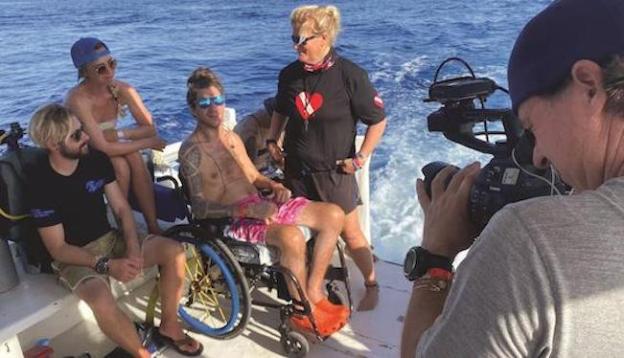
Diveheart Adaptive Scuba Diving Trip Transforms Filmmaker’s Life

(NewsUSA) – Scuba diving can be an exotic and enriching activity for anyone, but for individuals with a range of physical or cognitive disabilities, the unique weightlessness of the underwater environment allows them to exercise, relax, have fun and gain confidence like no other experience. Children and adults with challenges, including traumatic brain injuries, amputation, spinal cord injuries, cerebral palsy and blindness can enjoy the physical and psychological benefits of scuba diving.

Diveheart, a Downers Grove, Ill.,-based nonprofit tax-exempt organization, has been helping youth, veterans and others with disabilities through adaptive scuba and scuba therapy since 2001.Last year, Los Angeles filmmaker David Marsh accompanied a Diveheart team on a scuba trip to Cozumel, Mexico, to make a documentary about the organization and its mission. For Marsh, the experience was life-changing, as he completed the trip and his filming despite the tragic personal loss of his son to a drug overdose just one week earlier.On the last day of the trip, Marsh shared his loss with the Diveheart team.

“David Marsh is amazing and awesome. Despite his loss and grief, he soldiered on and captured the spirit, love and hope that emerges from every Diveheart trip,” says Diveheart’s founder and president, Jim Elliott.”He captured the essence of our mission and shared the real-life experience of what Diveheart does to help those with disabilities experience freedom underwater.”

In the documentary, every day embraces a theme; day one is trust, day two is freedom and day three is adapting. Audiences will see how Marsh translated the feelings of the adaptive divers, who shared their losses, struggles, fears and hopes.

“We are so grateful to David for capturing Diveheart in action,” Elliott emphasizes. “My hope for this documentary is to raise awareness to Diveheart’s mission: to revolutionize rehabilitation by using zero gravity underwater to help those with everything from mobility issues to chronic pain and post-traumatic stress disorder. We help our participants find that self-confidence, personal strength and independence, and we will continue to do so in the years to come.

The documentary, “Adapting To Dive,” premieres at 6:30 p.m. Wednesday, May 18, 2022, at Classic Cinemas Tivoli Theatre, 5021 Highland Ave. in Downers Grove, Ill. To see a trailer of the documentary, click here. Tickets are $12 for general admission and accessible seating.For more information about the documentary and tickets, click here.

Visit diveheart.org for more information about Diveheart. 

FSM Retro Reviews: The Craps Underground

FSM takes a looks back at Thomas “Irshsetter” Morgan’s classic scorched earth review of the controversial 2004 book The Craps Underground – The Inside Story of How Dice Controllers Are Winning Millions from the Casinos.

“Scoblete’s new book depicts the real world of dice influencing about as accurately as Hogan’s Heroes depicted life in a World War II German POW camp.”

That was my initial impression of Scoblete’s new book which I posted on the message board a few weeks back. Now I’ve had a chance to re-read the book a couple of times and fully digest it. Fortunately, I acquired one of the pre-release copies of the book, gratis. I would have had a SERIOUS case of buyers remorse had I actually paid $24.95 for this 315 page hard cover dog.

My complete review follows.

I read a lot. I spend an hour and a half each work day on a train, so I go through books quickly. In my library, I have probably 40 to 50 books on craps specifically or gambling in general. In all the gambling books I’ve read, I can unequivocally say that no matter how poorly written or conceived the book was, I’ve always found some redeeming quality in the book. The Craps Underground is the exception. If a good gambling book is like a delicious filet mignon, this book is more akin to the stuff they feed people on the TV show, Fear Factor.

Let’s start with the ENTIRE title of the book. The Craps Underground – The Inside Story of How Dice Controllers Are Winning Millions from the Casinos. Pure, unadulterated hype. For arguments sake, we’ll assume that “Millions” means something more than one or two million, ten million would be a reasonable starting point, and it’s at least implied that it also means millions in net profit. Last spring, Frank Scoblete estimated that there are fewer than 200 skilled “dice controllers” operating in the US. By doing a little division, that would mean on average, those 200 dice “controllers” are taking down $50,000 in profits, each. Except for a few rather well bankrolled shooters, there is no evidence that the average dice controller is showing that kind of profit. Yes, many dice influencers are consistently profitable but the title alone, and I’ll repeat myself here, is unadulterated hype.

So, now let’s get into the book a bit. Chapter one opens with Scoblete having a marathon winning session with the dicecoach, Beau Parker. Here’s how Scoblete describes the session with the dicecoach,

“…seven glorious hours shooting dice with a fellow dice controller and newfound friend known as the ‘Bodacious One,’ Beau Parker.”

This session, and these warm expressions of friendship for the dicecoach occurred just a few months prior to the formation of GTC. I’ll get back to that later.

Let’s dive a little further into this drivel. In the early chapters, we get to hear Scoblete wax poetically about “the Captain,” again. Yawn…. hasn’t he beaten that horse to death yet? Then he introduces various future members of the GTC organization. Apparently, these guys never lose! Or if they do happen to have a poor session, it is quickly followed by a miraculous comeback. AMAZING! There are a couple of chapters on “The Lee Brothers.” These two chapters are almost engaging. Except for one thing. OF COURSE “The Lee Brothers” coincidentally have read all of Scoblete’s books, and religiously play like the captain. Subtle as a freight train, that Scoblete.

There’s a chapter on the Las Vegas Craps Festival which I participated in. Scoblete briefly mentions me here, and he certainly had the opportunity to take some shots at me if he wanted to. Surprisingly he didn’t though, for whatever reason. However, he did misrepresent what I discussed that day. Here’s what he had to say about me.

“Irishsetter has strong opinions.”

Well, he got THAT part right but later went on to say,

“In fact, Irishsetter made a strong pitch that people shouldn’t be paying or charging to learn dice control, that all the information should be free.”

In all actuality, I said nothing of the sort. The gist of my discussion was twofold. One, that aspiring dice influencers should learn as much as possible for free, or as cheaply as they can, and two, that there is no one single correct philosophy on how to set, grip and throw the dice. My opinion today is no different. If you’re interested, I have an article on dicesetter.com which goes further into my discussion that day called, The “Missing” Tape – The Article. My guess is that given the opportunity, Scoblete didn’t want to take any obvious shots at me, but instead chose to misrepresent my discussion in an attempt to embarrass me since I do occasionally participate in seminars. What IS missing in the book, is what Scoblete talked about that day. One of the major points of his discussion was that dice influencers would soon begin to experience the kind of heat that card counters get if they didn’t go “underground.” It seems Scoblete had a change of heart. Either that, or his definition of going “underground” is hyping dice influencing in books, holding seminars in casinos, and advertising dice control on the radio and in newspapers and magazines.

Blah, blah, blah. Several chapters not even worth mentioning.

OK, what’s next. Scoblete raids Jerry Patterson’s PARR organization of most of the coaching staff and Golden Touch Craps is born. Despite the fact that I’m intimately knowledgeable about many of the personalities involved here, these chapters are about as interesting as watching hibernating bears. I have to give Scoblete credit though. He mentions his GTC staff and as many hangers on in the GTC periphery as often as possible. Why? Because the average Joe will think it’s really “neat” that Frank Scoblete put them in his book. Pathetic? Yes. But, those folks in the periphery will go out on amazon.com, buy multiple copies of the book, and write a glowing review so their friends will buy it and see their names in print. Oh Boy!

Now we get to the “A and E Special.” It’s my opinion that the truth lies somewhere between what was broadcast by A and E, what has been written on the various web sites, and what is written in this book about the special. What Scoblete wants you to believe is that A and E decided not to broadcast the footage of all the winning sessions that actually occurred. This despite the fact that the A and E special was basically a feel-good piece. The funny thing about the A and E special is that the dicecoach, who was the main focus, invited Frank Scoblete to join him. (Scoblete then invited several other folks. What a guy!) Remember how they’d become “friends” during their marathon craps shoot several months earlier? It seems that ‘ole Scoblete is beginning to have a change of heart again. You see, Scoblete in the A and E chapter elaborates these wonderful stories about the GTC folks involved, but basically trashes everyone else who is not involved with GTC like the dicecoach, Soft Touch, and Hardways.

Blah, blah, blah. A couple more chapters not even worth mentioning.

Ah…finally we’re heading to the conclusion of the book. Scoblete closes the book with his Las Vegas Diary. This portion of the book was published on his site several months back, so I was familiar with this part already. I’ll give you the long and short of his 15 day diary here. Frank wins. Frank says wonderful things about the various GTC folks he plays with. Frank says nasty things about various other people he comes across. They lament that Treasure Island isn’t as friendly as it used to be. Boo-hoo-hoo. Frank and his playing partners lose, but miraculously have a comeback! Heard this before? What is really interesting about the diary is how Scoblete trashes dicecoach, again. Remember, in the opening of the book, Frank and Beau are “newfound friends.” Now, just a year later, here are just a few things that Scoblete now has to say about dicecoach. When asked if Frank knew the dicecoach, he replied,

“No, no” and “I barely know him.”

Apparently he doesn’t even have the cojones to refer to Beau by his name or his moniker at this point. Throughout the diary he refers to him now as “Crapsguy” and basically lays blame on Beau for whatever heat they experience in the casino. Frank writes,

“Some GTC members had a theory that the Crapsguy, the freelance dice-control instructor, had been too public, aggressive and up-front at the tables about what he was doing…”

This coming from the Scoblete is a hoot! He goes on to say,

“even when GTC did our course at Sam’s Town in Tunica we were laid back at the tables and never talked about dice control or handed our business cards across the table to drum up new business as the Crapsguy is wont to do.”

Again, from Scoblete’s pen, this is a riot. I mean, he’s holding a seminar in a casino for Pete’s sake and he complaining about the dicecoach handing out his business card? Besides, just a few pages earlier in the book, Scoblete had elaborated the following story which occurred at the Green Valley Ranch crap tables.

“..a dealer at Sunset Station, who likes to play at Green Valley Ranch, complimented me on my style. I gave him one of our Craps Club Black Chips with our phone number, and whispered to him if he was interested in learning how to roll like that give us a call.”

So, Frank will deride you for behavior that he himself exhibits. Hmmm. What’s that saying? Oh yeah. Pot – Kettle – Black.

I wonder how Beau the dicecoach would have been portrayed in the The Craps Underground had he accepted GTC’s invitation to join their organization. You think perhaps THAT had something to do with Frank’s change of heart, from “friend” to “the Crapsguy?”

Basically, the book in a nutshell is this. 70% of the book is an infomercial for GTC. 20% of the book is various trip reports. Don’t worry. The few sessions which aren’t profitable for Scoblete? Just read on, a miraculous comeback is in store. The final 10% of the book is the subtle trashing of anyone who is not involved with GTC or a member of the GTC flock.

If you read the jacket cover of the book, and anything else Scoblete writes for that matter, it says,

“Frank Scoblete is the number-one best-selling gaming author in America..”

If that’s true, and people really do think Scoblete has something to say, well, then, my mother was right when she said,

“Never underestimate the power of stupid people in large groups.”

About the Author: Thomas Morgan aka Irishsetter is the webmaster of http://www.dicesetter.com and is widely recognized in the gambling community as an expert in dice influencing.

How to Cheat at Golf

by Stephen Bye

I have been around the game of golf since I was a young teenager, working as a caddie at a private country club. I have played over 2,000 rounds with hundreds of golfers and participate in amateur tournaments and match play at my private golf clubs. I have observed the most gross violations of the rules on the course, as well as how golfers rig official handicaps. The following is a summary of the best tactics to win at golf by cheating.

On the course: 1 Improve your golf ball lie or position on the course. This is best accomplished by a little foot kick or a short flick of a golf iron. Never actually pick up the ball and flip it because your playing partners might observe your actions. Here’s another great suggestion…keep another golf ball in your pocket (with a small hole) to surreptitiously drop the ball down your pant leg without anyone seeing it, but always be certain the second ball is the same brand and markings as the first ball in case the other golfers know what ball you’re played from the tee.

2. Bribe a caddie to walk well ahead of the group to your ball location and use one of the techniques above. In a match, also demand the caddie puts your opponent’s ball in a difficult lie.

3. On the putting green, be very generous on the distance to the hole for a “gimme”. If the local practice is to use the putter grip for an “in the leather” rule for a “gimme”, use a putter with a longer shaft or one with a much shorter grip.

4. If a bush obstructs your swing angle, use your body, or ask your caddie to bend the branches back to allow an unobstructed swing. Better yet, have a metal clipper in your bag so the branch can simply be cut.

5. If your golf ball lands in long rough, stomp on the grass or weeds repeatedly stepping until you have a clear path to strike the golf ball. If your golf shoes have spikes, for a better effect, use the bottom of the golf shoe to dig a clear path.

6. Use ample mulligans. Justify hitting a second ball by blaming a playing partner or caddie for creating a distraction or for other surprises…a sudden car horn, an overhead airplane, a bird or animal sound, an unexpected wind change, etc. Be creative.

7. Never take a 2-shot penalty if you hit your ball out of bounds…blame the owner of the club for being too cheap for not buying enough land when the course was designed. Without taking a penalty, drop your golf ball near the spot where it sailed over the OB stake.

8. Never identify your golf ball brand to your playing partners in advance or mark your golf ball. If you can’t find your own ball in the rough but discover an abandoned ball, claim it as your shot.

9. When marking your golf ball on the green, quickly nudge the mark an inch forward under the ball; when replacing the ball, hover your hand over the ball and spot it at least 2 inches ahead of the mark.

10. Create a distraction and simultaneously tap the golf ball a few inches closer to the hole on the green.

11. When hitting out of a sand bunker, never play the shot if anyone can see the ball…you want to be able to touch the sand behind the ball to help your focus without incurring a penalty.

12. Tee your golf ball at least a yard in front of the tee markers.

Scoring:

1. Insist on being the scorekeeper for the group and record a few lower scores than you actually had. Your playing partners may never audit the final scorecard.

2. If another player is scoring, just lie about your reported score. Very few players will ever challenge your count.

3. Tell your playing partners that you’re keeping your own score by using an app or simply suggest you have perfect memory to recall your score on every hole.

4. Even if the scorekeeper has been focused on recording every player’s score properly hole by hole, distract the scorekeeper at the conclusion of the round, swiftly swipe the scorecard, and immediately destroy it. When the scorekeeper attempts to reconstruct individual scores for 18 holes, you can easily lie about your score on a few holes… no one can possibly remember every shot for 4 players.

Recording scores for handicap posting

1. Most regular golfers have an official handicap used for adjusting scores for competition. The easiest way to cheat is to tell your opponents you don’t maintain a handicap. You can then make up a high number.

2. If you have an official handicap, add a few strokes to your score when posting.

3. Never record a great score.

4. If someone checks the handicap system and confronts you for not recording scores, simply tell them you forgot; if they see an inflated score posted, blame the pro shop for mistakenly entering your score; or you accidentally typed in an incorrect the score because of your fat fingers or nervousness when using a laptop. If you are really desperate for an excuse, explain that you have been diagnosed with dementia.

5. When posting your score into the handicap system, type your inflated score to match the easiest tee than the one you actually played…this can easily add 2 or 3 strokes to your official handicap.

6. Add inflated scores from other courses, whether you physically played them or not…no one can possibly follow you around to check where and when you play outside of your regular club.

7. Currently, the official scoring rule limits your maximum score on a hole to two shots above the course handicap for that hole. To inflate your official score posting, ignore this rule.

8. Play alone and record terrible scores.

There are hundreds of official rules in the game of golf. One general excuse for cheating is that you’ve never had the time to read the rules book.

Author: Steven Bye

Billabong: A Brief History Of Australia’s Most Iconic Surf Brand

If you’ve been around in Earth for quite a while now, then you’ve surely read or heard of Billabong. You may have seen Billabong mens knit woven shirts and noticed the iconic double wave logo.

Founded in 1973, Billabong has since been one of the leading companies in manufacturing and selling surfing wear. With the company now on its 48th year of operations, let us take a brief look into the history of Australia’s most iconic surf brand.

Gordon Merchant, one of the founders, liked to travel a lot in Australia during the late 60s and 70s, totally embracing the surfing lifestyle. The goals of his travels were to find the best surfing spot to settle in. He would pack maps, tents, sleeping bags, and surfboards unto a Kombi van to aid him in his travels.

This surfing brand giant started with humble beginnings. Thanks to his experience when travelling in the years prior, Gordon learned to develop breakthrough innovations in surfing gear. Billabong mens shorts in its earliest form is the starter of the business. The founders, Gordon and Rena Merchant designed and made boardshorts at their home and sold them to the local surf shops. The durability of their boardshorts were the its biggest strength, a quality soon noticed by surfers in the area.

In order to boost the new company’s exposure and business, Billabong started hosting surfing events. This proved to be a very smart move which caused the company to grow faster. By the 80s, Billabong mens shorts were already available all throughout Australia. With the whole of Australia included in their operations, Billabong started putting their sights towards exporting products to other surf-loving countries – New Zealand, Japan, USA, and South Africa.

Billabong grew fast. With this fast growth, the company started to make acquisitions of other sport-related brands. Gordon followed his customer’s wants and needs and ventured into different kinds of board sports. Billabong reached a peak where is managed around 10 sport-related brands including Von Zipper, Kustom, Xcel, and RVCA.

The growth and acquisition continued to grow, but that growth was halted in 2012. Billabong experienced serious financial difficulties. Some say that Billabong got too much on their hands due to their acquisitions, losing clear sight of their core business strategy. Sales dropped and profits declined.

Billabong was able to make deals with the US that enabled the company to get back on its feet. Billabong sold some of its previous acquisitions get back their focus on their main business plan, perhaps confirming the speculation that the company was spread thin due the multiple brands they need to manage.

Today, Billabong is now back on its feet, backed up by the constant support of the community of customers that put their trust on the company. For now, we have yet to see what Billabong would become in the future. In the meantime, we can still be sure that we can still get the best quality boards, shorts, and gear including Billabong mens knit wovens from the beloved Australian brand.

To get your very own Billabong mens knits wovens shirt, be sure to look up Hansensurf online. Or if you want to wear and experience the iconic Billabong mens shorts , visit Hansensurf website to get the best Billabong product deals.

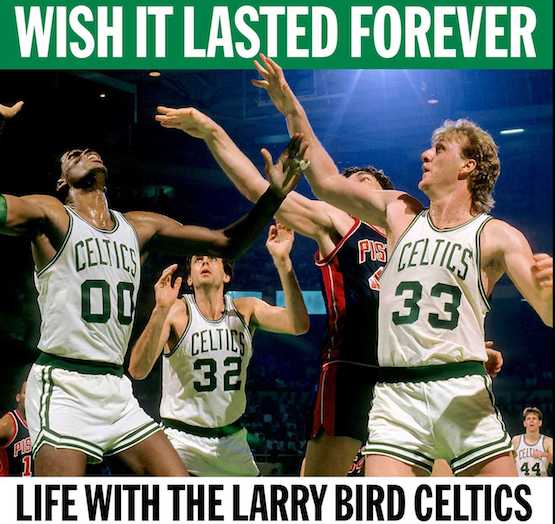
FSM Scouting Report: Wish It Lasted Forever

Book/Movie Title: Wish It Lasted Forever: Life with the Larry Bird Celtics

Total Pages/Duration: 226 (hardcover version)

Author/Director: Dan Shaughnessy

Pace of Play: Just like the 80’s Celtics, this book is fast paced in spurts with most of the action bunched in the middle. Motivated readers (i.e., Boston folks) will finish this in one sitting while most will take 2-3 days.

Strengths: The driving force of this book is the collection of Red Auerbach stories that are peppered in from start to finish. It makes the reader feel like Red is always there and that he could appear at any moment (not too different than his actual behavior).

Weaknesses: The author spends a little too much time talking about himself, his road to working the Celtics Beat, and the good old days of sports journalism (we think the first 40 pages of a 226-page book is too much time). While the book title indicates all stories would flow through Larry Legend, he does not pop up too often. It’s kind of like of all those Netflix movies with Bruce Willis on the movie poster. When you actually watch them, he shows up for about 12 minutes (and they are terrible). It would have been more appropriate to include Red Auerbach in the title of this book. There certainly seem to be more stories about him than Larry Bird.

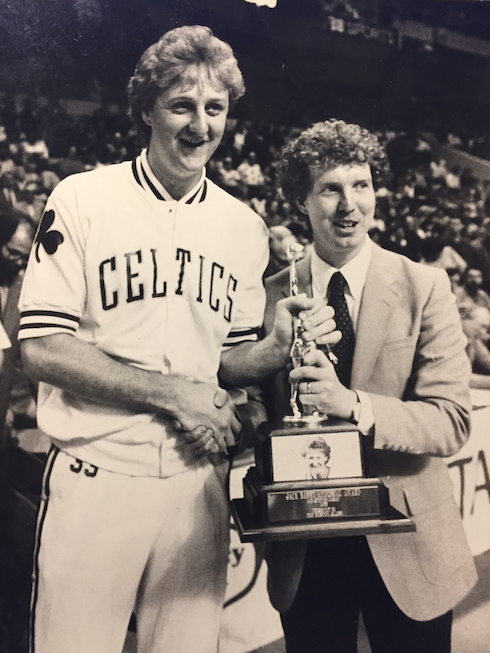
Photograph by Stan Grossfeld, Boston Globe

Unique Attributes: What this book lacks in new Larry Bird stories it makes up for in tales involving other team members. Bill Walton stories and his relationship to the Grateful Dead were particularly interesting as was learning which 1980’s in-flight movie was playing during various road trips. And perhaps the guiltiest pleasures came when reading about Bill Fitch’s slow demise as head coach. Random factoids are also presented and will keep you engaged. Did you know tanking was an issue way back in 1983? It was and it led to the creation of the lottery which delivered Michael “Air” Jordan to the Chicago Bulls and Hakeem “The Dream” Olajuwon to the Houston Rockets.   

Scout’s Recommendations: In a recent episode of Family Guy, the lovable Homer Simpson rip-off Peter Griffin had to come to terms with the 80’s being dead. His jokes and gags no longer got laughs and no one understood his dated references. His family begged him to let the 80’s go which he did with some help from John Hughes. Had Dan Shaughnessy seen this episode prior to writing Wish It Lasted Forever, he may not have written it. While very interesting at times, this book seemed like an unnecessary trip down memory lane. Perhaps its creation was brought on by the confines of the COVID-19 pandemic. Or maybe it started as a memoir of sorts, meant to be passed around to old colleagues and basketball insiders. Whatever the reason, reading this book is just another reminder that the 80’s ARE dead. We recommend you skip this one unless you’re a Boston Celtics fan.     

Pop-Culture Spotlight: Galleta Meadows

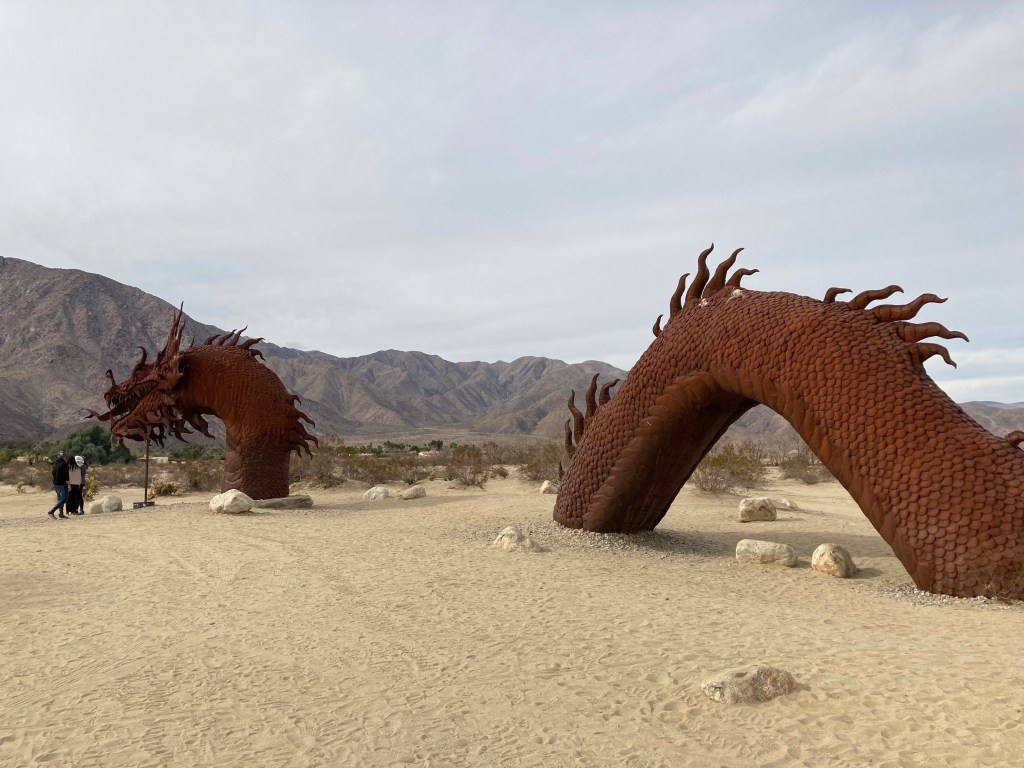
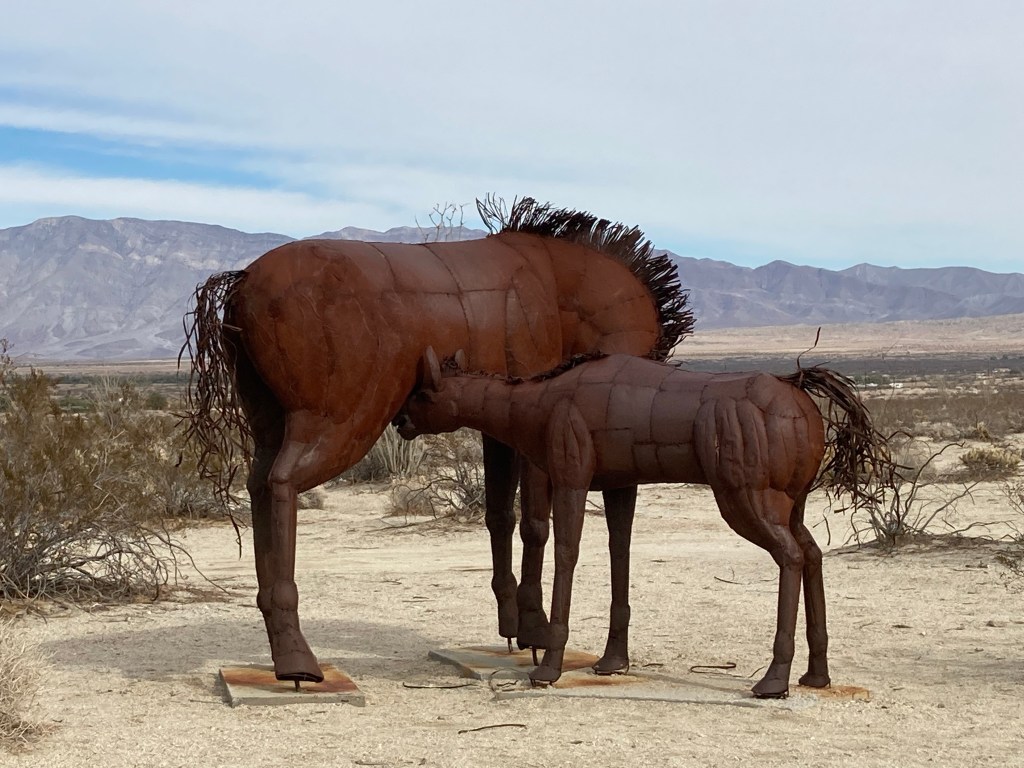
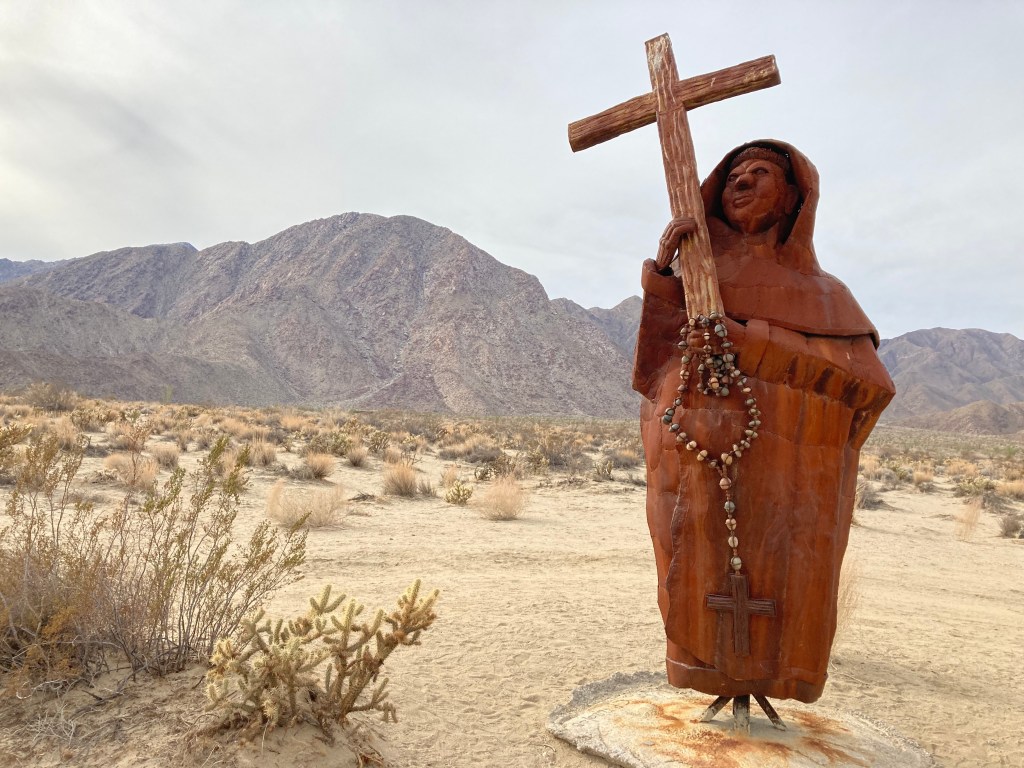
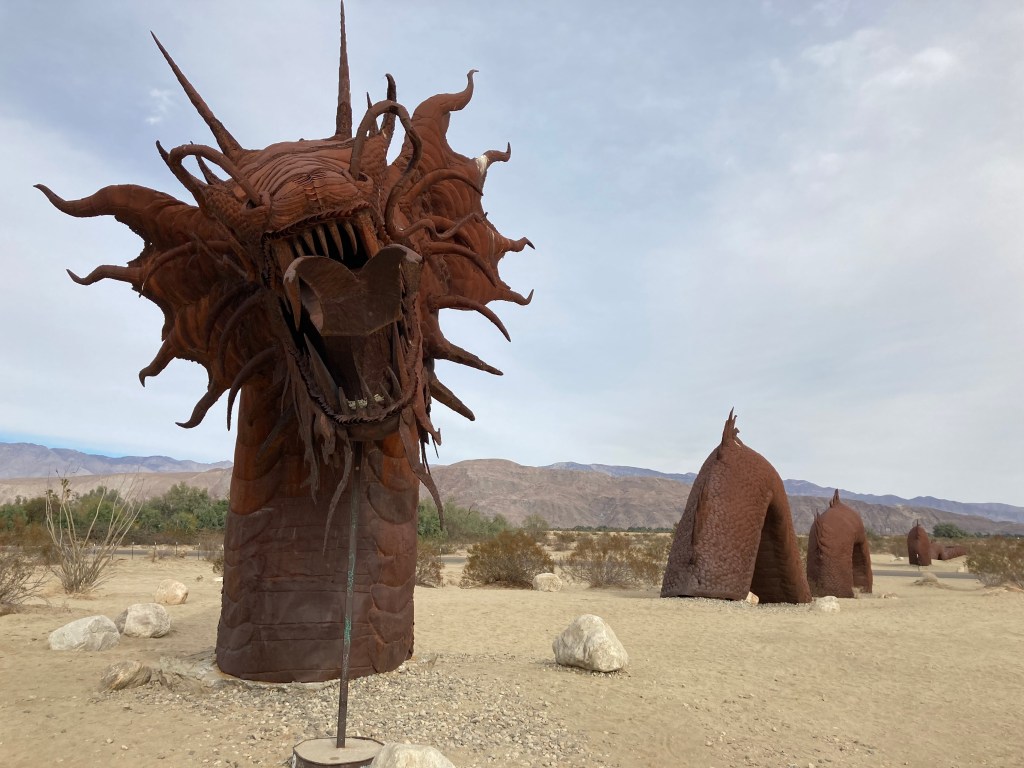
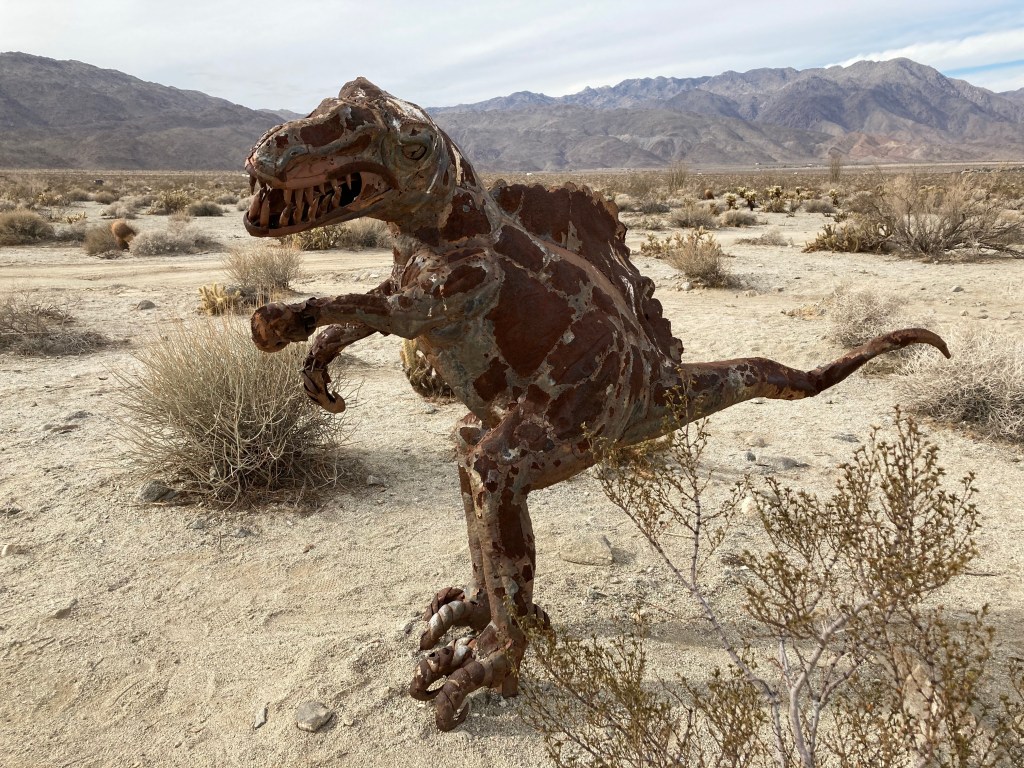
Desert Art, or “Sky Art” as it’s commonly referred to these days, has been gaining popularity in the age of the iPhone. People in the United States (California in particular) have been flocking to remote areas to get some pretty cool pictures of random, rusted metal sculptures.

Some say the crown jewel of Sky Art is found in a hidden spot called Galleta Meadows. The Sky Art here is spread out over 1500 acres of desert. All Sky Art is accessible by vehicle but parking and walking around for a few miles would make the experience more enjoyable. It would definitely make for some flat, easy hiking.

So where is this hidden gem of desert art? Where can you find these large metal sculptures for purposes of some really cool selfies? Let’s just say it’s down south near San Diego, California. If you hit Mexico, you’ve gone too far (but not by much).

Free Sports Magazine recently took a trip to this remote location. While we’re no experts in Sky Art, it was among the best we’ve ever seen. Enjoy the exclusive photos and read more about Galleta Meadows below.

The following info comes directly from the Keeper of the Meadows:

The Under the Sun Foundation is inspired by the work of Dennis Avery, the late landowner of Galleta Meadows in Borrego Springs, and his passion for bringing art to the local community and its visitors. Mr. Avery had 130 large scale, free-standing, metal sculptures produced by artist Ricardo Breceda, and referred to them as Sky Art. Spread over 1500+ acres of undeveloped desert land, these larger than life creations welcome the public to discover and enjoy art outdoors, surrounded by the rich and diverse desert environs of Borrego Springs.

The Under the Sun Foundation seeks to breathe new life and meaning into the existing sculptures…We at the Under the Sun Foundation are excited to see where our evolution might take us. We use Dennis Avery’s work and Borrego Springs as a point of inspiration, and expect to add new geographies, artistic endeavors, and ways to engage with our environment and one another over the coming years.

We invite you to take part in the journey!