Tag Archives: True Crime

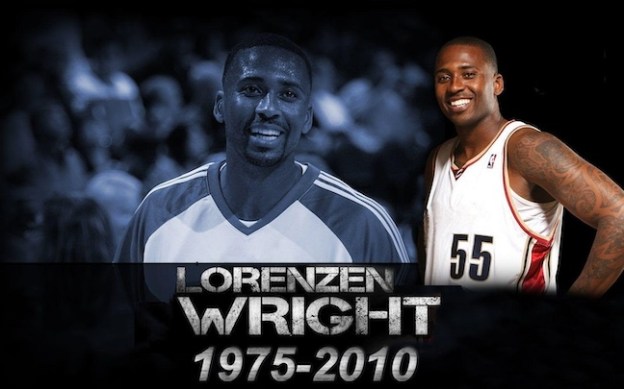
The True Crime Murder Story of Lorenzen Wright in 9 Short Chapters

Chapter 1: Introduction

The murder of former professional basketball star Lorenzen Wright remains one of the most disturbing true crime stories in sports history. Once a beloved basketball star in Memphis and across the National Basketball Association (NBA), Wright’s life ended in a brutal killing that shocked the sports world and launched a years-long investigation filled with mystery, betrayal, and unexpected suspects. This FreeSportsMag exclusive investigative story explores what happened to Lorenzen Wright, how police solved the case, and why the tragedy continues to draw attention in true crime, sports crime, and unsolved mystery discussions online.

Chapter 2: A Rising NBA Star

Before his name appeared in crime headlines and murder investigations, Lorenzen Wright was known as a talented professional basketball player.

Wright starred at the University of Memphis and became a local legend of sorts before entering the National Basketball Association. In the 1996 NBA Draft, he was officially selected seventh overall by the Los Angeles Clippers. During a 13-year NBA career, Wright also played for the Memphis Grizzlies, Atlanta Hawks, Sacramento Kings, and Cleveland Cavaliers.

At 6’11”, Wright was known for his defense, rebounding, and physical style of play. But more importantly, he was deeply connected to Memphis, where he grew up, played for the Grizzlies, and later returned to live after his NBA career. His reputation in the community was that of a generous and approachable figure who regularly gave back to local charities.

That reputation made what happened in 2010 even more shocking.

VISIT THE FREESPORTSMAGZINE.COM MEMORABILIA & COLLECTIBLE STORE ON EBAY

Chapter 3: The Disappearance

On July 18, 2010, Lorenzen Wright left his home in Memphis. It was the last time anyone saw him alive. His family reported him missing several days later, triggering a missing persons investigation by the Memphis Police Department. Concern quickly spread throughout Memphis and the NBA community as media outlets began covering the mysterious disappearance of Lorenzen Wright.

Then a strange piece of evidence surfaced.

Nine days after Wright vanished, emergency dispatchers received a 911 call from Wright’s phone. The recording captured gunshots and Wright apparently shouting in distress before the line went dead. Investigators immediately suspected foul play, but the call offered little information about the location or identity of the attacker. For weeks, the case remained a haunting mystery.

Chapter 4: A Grim Discovery

On July 28, 2010, authorities discovered Lorenzen Wright’s body in a wooded field near Callis Cutoff Road outside Memphis. He had been shot multiple times.

The discovery confirmed what many feared: this was not just a missing person case but a high-profile murder investigation involving a former NBA star. Investigators began examining Wright’s finances, personal relationships, and recent activities. Early speculation in the true crime community ranged from robbery to gambling debts to organized crime, but no clear suspect emerged for years.

The case gradually went cold.

Chapter 5: The Investigation Reopens

For nearly seven years, the Lorenzen Wright murder case remained one of Memphis’s most notorious unsolved crimes.

Then, in 2017, investigators received a breakthrough.

Authorities recovered the murder weapon—a handgun found in a Mississippi lake. Ballistics confirmed it was the gun used in Wright’s killing. The discovery reignited the investigation and led detectives to revisit earlier suspects.

The case began to point in a shocking direction.

Chapter 6: The Role of Ex-Wife

Investigators ultimately determined that Wright’s ex-wife, Sherra Wright, had played a central role in the crime. According to prosecutors, Sherra Wright conspired with a man named Billy Ray Turner to murder the former NBA player.

The motive, as old as time, allegedly involved financial problems she was having and a multimillion-dollar life insurance policy she was set to inherit.

In 2019, Sherra Wright pleaded guilty to facilitation of murder and received a 30-year prison sentence. Billy Ray Turner was later convicted of first-degree murder and conspiracy to commit murder, bringing long-awaited closure to a case that had haunted Memphis for nearly a decade.

Chapter 7: The Chilling 911 Call

One of the most unsettling aspects of the Lorenzen Wright case remains the 911 recording. The call, made moments before his death, captured Wright shouting and gunshots firing in the background. Investigators believe he was attempting to call for help while being attacked. The recording circulated widely online and became a focal point for true crime documentaries, podcasts, and investigative journalism, adding to the case’s notoriety.

Chapter 8: Legacy and Impact

The murder of Lorenzen Wright left a lasting mark on Memphis and the NBA community. His family created the Lorenzen Wright Foundation, which provides support for single mothers and families in need. The organization seeks to preserve Wright’s legacy as a compassionate community figure rather than allowing his story to be defined solely by tragedy.

Today, the case remains one of the most widely discussed true crime sports cases, often appearing in documentaries, podcasts, and investigative reports examining celebrity murders and sports-related crimes.

Chapter 9: Conclusion

What began as a missing NBA player case evolved into a complex murder investigation that took nearly a decade to solve. While the convictions of those responsible brought legal closure, the story of Lorenzen Wright remains a powerful and tragic chapter in both NBA history and American true crime investigations. It serves as a haunting example of how violence can intersect with fame, money, and personal relationships and raises lingering questions about warning signs, financial pressures, and the hidden struggles athletes may face after their playing careers end.

CLICK HERE FOR FREE CASH BACK WITH RAKUTEN

Hakuna Matata: The True Crime Story of Bison Dele in Four Short Chapters

The story of Bison Dele’s death reads like the final chapter of a noir thriller—sun-soaked paradise masking dark secrets, a charismatic ex-athlete yearning for peace, and someone whose jealousy would turn deadly. It’s a story of fame, escape, and the ultimate betrayal, set not in the cold alleys of a city but on the endless blue of the South Pacific.

Chapter 1: The Disappearing Star

Bison Dele wasn’t just another basketball player. Born Brian Carson Williams in 1969, he was a gifted, soulful giant who seemed both drawn to and haunted by fame. After stints with the Orlando Magic, Denver Nuggets, Los Angeles Clippers, and Chicago Bulls—where he won an NBA championship in 1997—Dele walked away at just 30 years old. He turned down millions, choosing freedom over fortune. He traveled the world, learned to play saxophone, and sailed from port to port, often unreachable, as if trying to erase the celebrity that had once defined him.

By 2002, Dele had settled into a quiet life aboard his beloved catamaran, the Hakuna Matata, named for the Swahili phrase meaning “no worries.” He sailed with his girlfriend, Serena Karlan, and occasionally with his older brother, Miles Dabord. Where Bison was introspective and gentle, his brother Miles could be restless, jealous, and increasingly unstable at times.

Chapter 2: Setting Sail

In early July 2002, Dele, Karlan, and Miles departed from Tahiti with their captain, Bertrand Saldo. It was supposed to be a short voyage—just a few days of island hopping. But when the Hakuna Matata failed to return, family and friends began to worry. No distress signals were sent. No sightings were reported. The ocean had seemingly swallowed four people whole.

Then, days later, the Hakuna Matata reappeared—mysteriously docked in Tahiti, piloted by a single man. He called himself “Arlando”—but fingerprints told a darker truth. It was Miles Dabord, alone.

Chapter 3: The Impostor

Dabord told conflicting stories to anyone who would listen. He said the others were “in Tahiti,” and that there had been an “accident.” But his behavior told another story. He forged his brother’s signature to withdraw money from Dele’s accounts. He bought gold. He changed his identity. And when investigators pressed him, his tangled web began to unravel.

Authorities pieced together a chilling narrative: somewhere in the remote waters between Tahiti and Honolulu, Miles had snapped. An argument escalated—possibly over money or control of the boat. In a fit of rage, he struck Serena. When the captain intervened, he was killed too. Finally, Bison—who had always tried to protect those around him—was murdered as well.

Miles, left alone with the aftermath, allegedly weighted their bodies and cast them into the sea, letting the Pacific become their grave.

Chapter 4: The Final Act

By September 2002, the truth was closing in. U.S. authorities tracked Dabord to a hotel in Tijuana, Mexico. He was found unconscious after an apparent insulin overdose—an act of apparent suicide. He never regained consciousness. When he died, so too did any chance of recovering the full truth.

The bodies of Bison Dele, Serena Karlan, and Bertrand Saldo were never found.

Epilogue: The Dream That Sank

In life, Bison Dele sought peace—a life far from the noise of arenas and headlines. He chased freedom across continents, only to be betrayed by a person he trusted to share the journey.

His death remains one of sport’s most haunting mysteries—a story of blood and brotherhood on the high seas, where jealousy drowned love, and paradise turned to nightmare.

The Pacific still rolls on, indifferent and endless. Somewhere beneath it, the echoes of Bison Dele’s final voyage drift with the tides—a reminder that even in paradise, darkness can find its way aboard.

FSM Scouting Report: All-American Murder

Book/Movie Title: All-American Murder: The Rise and Fall of Aaron Hernandez

Total Pages/Duration: 375 (paperback version)

Author/Director: James Patterson w/ Alex Abramoivch & Mike Harvkey

Pace of Play: Short chapters and lack of descriptive, flowery language make for a quick read. Some will finish this in one sitting while most will take 2-3 days.

Strengths: The authors stick to the facts and provide many direct quotes from individuals involved in the case. Information is easy to follow as it’s presented in a straight line. There are some flashbacks when necessary but you’ll never get confused. The authors bring the reader up to speed rather quickly in regard to Hernandez’s home life and his days in high school and college.  

Weaknesses: The book relies on direct quotes a little too much at times (sometimes quotes go on for an entire page). It just comes off as lazy. Also, some of the rumors of Hernandez being gay or bisexual are briefly mentioned. I’m assuming there weren’t enough facts to back any of it up, but the authors could have at least tried to disprove some of the rumors by showing what evidence exists. After all, true or not, the rumors were a big part of the story. Again, it comes off a little lazy.

Unique Attributes: The authors maintain a matter-of-fact tone and avoid the use of SAT vocabulary words. Except for the description of Hernandez’s jail cell, don’t expect some of that descriptive writing James Patterson is known for.

All-American Murder contains some interesting side stories involving Tim Tebow, Urban Meyer, and the Pouncey twins. You’ll also read about the lesser-known double-murder that Hernandez allegedly committed.  

Scout’s Recommendations: At this point, the story of Aaron Hernandez has been told across many mediums and probably doesn’t deserve any more of our time. But how often does James Patterson write about sports stuff? That being said, I’m skeptical Patterson did anything more than supervise on this project. All-American-Murder is worthy of a pickup if you’re about to go on a long flight or plan on lounging by the pool on a cruise ship. Other than that, it should be used as a “first stop” for people getting into the Aaron Hernandez saga for the first time.