Tag Archives: ncaa

The Origin Story of Saying “March Madness”

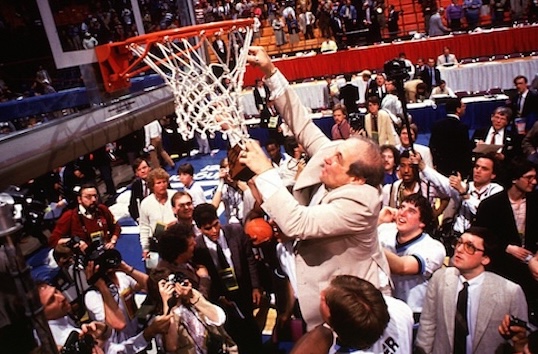
Every March, office pools explode, brackets bust, and underdogs become legends. The phrase “March Madness” now feels inseparable from the National Collegiate Athletic Association (NCAA) men’s basketball tournament—but its roots stretch back further than most fans realize. Long before billion-dollar TV deals and wall-to-wall coverage, March Madness belonged to high school basketball.

In 1939, Illinois high school official Henry V. Porter used the term in an essay to describe the emotional frenzy surrounding the annual state basketball tournament. Porter, who worked with the Illinois High School Association, wrote about the electricity in small-town gyms, the packed crowds, and the statewide obsession that peaked every March. To him, “March Madness” captured the chaos, passion, and community pride of tournament time.

At the time, the college game was still growing. That same year—1939—the first NCAA men’s basketball tournament was held, won by the Oregon Ducks men’s basketball team. But the phrase hadn’t yet attached itself to the college bracket. Fast forward to the 1980s. College basketball had become a television spectacle. As the tournament expanded and Cinderella stories multiplied, broadcasters searched for language big enough to match the moment.

Enter Brent Musburger.

While calling NCAA tournament games for CBS in the early 1980s, Musburger began using the term “March Madness” on national broadcasts. His booming delivery and prime-time platform cemented the phrase in the American sports vocabulary. What had once described Illinois high school gyms now echoed across the country.

The NCAA eventually trademarked “March Madness,” formally tying it to the Division I basketball tournament held every year. The phrase fits perfectly considering the structure of the NCAA tournament demands drama. Unlike professional playoffs that stretch over series, the college game offers no safety net. Survive and advance—or vanish. Add in buzzer-beaters, 15-seeds toppling 2-seeds, and brackets shredded before the Sweet 16 and it’s hard to deny this emotional whiplash packed into three weeks.

Today, “March Madness” represents more than just college basketball games being played. It means office bracket pools, billion-dollar TV contracts, Cinderella stories, alumni pride, and three weeks when productivity mysteriously declines nationwide What began as poetic wording in a 1939 essay evolved into one of the most powerful brands in American sports.

And that’s fitting. Because every year, when the ball tips in mid-March and dreams hang on every possession, madness doesn’t feel like exaggeration. It feels accurate.

FSM Books: Pistol Pete

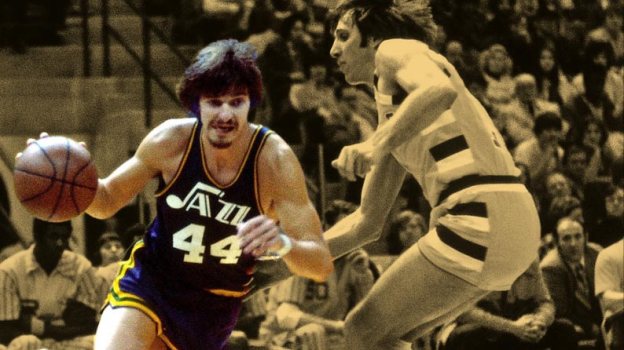
Pistol: The Life of Pete Maravich takes the reader on a surprising journey through light and dark while telling the tale of a basketball legend that will not be soon forgotten. Perhaps the quote that appears on the soft cover version of this intriguing biography written by Mark Kriegel summarizes this literary effort best by stating that, “His game was lordly, inimitable, and he should have been the greatest player to ever play the game. This great book will explain why he was not…”

I was excited to read this book for a few reasons. Primarily I wanted to learn a little more about the legendary Pistol Pete as he terrorized opponents in the NBA before my time as a fan (and as a human being). Secondarily, the book’s first couple of pages are lined with nearly 50 quotes from people in the media who are singing its praises. I figured so many experts couldn’t be wrong and delved in to 323 pages of basketball history with high expectations.

Pistol reads more like a chronicle than a biography. Many names and dates are hurled at the reader often times disrupting the flow of the narrative. Kriegel succeeds in providing a highly detailed account of Pete Maravich’s life but it comes at a cost. This is not the typical page turning sports biography which may be unappealing to a less seasoned reader.  It is more of a textbook about the Maravich family beginning with a lengthy background about Pistol’s notorious father Press Maravich and ending with a melancholy update on what the Pistol’s two sons have been up to in the last few years.

It would be impossible to tell the story of Pistol Pete without mention of his hard driving father and the turmoil he was experiencing in his family life. Kriegel documents a number of incidents and relays many tales when only a few would have sufficed. The thesis of Pistol is perfectly clear and its themes reoccur on nearly every page. Before the reader makes it half way through this book, they will have a good understanding of all the demons the Pistol was dealing with. After a while, the stories of demons become overkill. Pistol takes on a dark tone, and maybe rightfully so, but it would have been nice to read more about Maravich’s exploits as a professional basketball player and the magic he created on the hardwood.

Pistol: The Life of Pete Maravich has great historical value for fans of the college and professional game. It answers a multitude of questions including why a guy as talented and skilled as Pete Maravich never won a title or why he will never be considered in the same breath as Michael Jordan or Wilt Chamberlain. But people looking for a quick read or page-turner should try finding their fix elsewhere. Pistol is recommended for avid fans of basketball and sports historians only. The fringe would be better suited to remember Pete Maravich by watching YouTube highlights or the occasional feature on ESPN Classic.