Tag Archives: magazine subscriptions

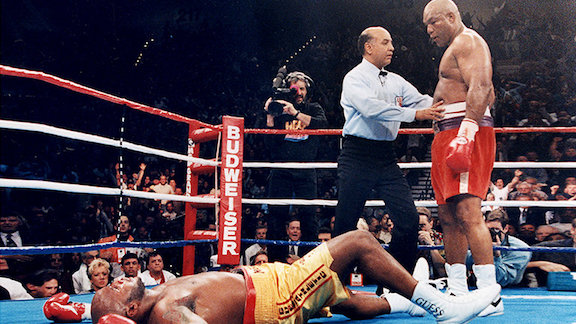
George Foreman's 1994 upset of Michael Moorer

The Three Acts of George Foreman

The Rumble in the Jungle wasn’t just a boxing match—it was the catalyst for one of the greatest transformations in sports history. Instead of breaking George Foreman, the loss ultimately made him a legend in an entirely new way while proving people can actually change. In tribute to the recently departed boxing and pop-culture icon, FreeSportsMagazine.com presents the Three Acts of George Foreman.

Act I: Mean George Foreman

On October 30, 1974, George Foreman entered the ring in Kinshasa, Zaire, as the undefeated heavyweight champion, set to defend his title against Muhammad Ali in what would become one of the most famous boxing matches in history: The Rumble in the Jungle. Foreman, known for his overwhelming power and intimidation, was a heavy favorite. However, by the end of the night, he found himself not only defeated but also on a path that would reshape his life in ways no one could have predicted.

Foreman had dominated his previous opponents, including Joe Frazier and Ken Norton, both of whom he had destroyed in less than two rounds. Many believed Ali wouldn’t last against Foreman’s brutal strength.

However, Ali executed a brilliant strategy—the rope-a-dope—leaning against the ropes, absorbing Foreman’s powerful blows, and letting the younger champion tire himself out. By the eighth round, a drained Foreman left an opening, and Ali capitalized, landing a rapid combination that sent Foreman crashing to the canvas. The world watched in shock as the referee counted Foreman out, giving Ali one of the greatest victories in boxing history.

Losing to Ali was devastating for Foreman. He had built his reputation on invincibility, and this loss shattered his confidence. Foreman later admitted he was deeply depressed following the fight. He struggled to accept the loss, making excuses about unfair conditions, including the heat and a biased referee.

Determined to reclaim his place as champion, Foreman continued fighting. He won several matches but suffered another major defeat to Jimmy Young in 1977. After the Young fight, Foreman claimed he had a near-death experience in the locker room, where he felt as if he was dying and had visions of himself in hell. This moment led him to abandon boxing and dedicate his life to religion.

Act II: Born Again George Foreman

Following his locker-room experience from the Young fight, Foreman retired from boxing at age 28 and became a born-again Christian. He spent the next decade preaching, helping troubled youth, and running a church in Houston, Texas. Many saw this as a shocking transformation for a man once feared as a brutal knockout artist. Even some family members were skeptical.

In need of funds for his youth center, Foreman made an unexpected return to boxing a decade later in 1987. Instead of the scowling destroyer of the ‘70s, he was now “Big George,” a smiling and cheerful fan-favorite known for his humor and humility. He slowly worked his way back into contention and in 1994, at age 45, he completed his redemption arc by knocking out Michael Moorer to regain the heavyweight title, becoming the oldest champion in history. His comeback story was seen as one of the greatest in sports history.

Act III: Spokesman George Foreman

In the midst of this inspiring comeback, Salton, Inc. developed a sloped-surface grill designed to drain fat while cooking. Looking for a marketable celebrity, they approached Foreman, whose friendly, charismatic persona and reputation for power made him the perfect spokesman. Foreman embraced the product, lending his name and image while delivering the famous tagline: “It knocks out the fat!”

The grill became an instant hit, selling millions of units worldwide. At its peak, it was selling 6 million units per year, and in total, over 100 million grills were sold. Foreman’s endorsement deal originally earned him 40% of the profits, but in 1999, he sold his naming rights to Salton for a lump sum of $137.5 million. In total, Foreman made an estimated $200–250 million from the grill—far surpassing his boxing earnings.

Epilogue

George Foreman’s defeat to Ali was the turning point of his life. Though it was painful at the time, it set him on a path to becoming a spiritual leader, comeback hero, and successful businessman. In a heartfelt Instagram post after his passing, Foreman’s family described him as a “devout preacher,” “protector of his legacy,” and a “force for good.”

Murder, Suicide, and the Pro Football Hall of Fame

Jim Tyrer was an American professional football offensive tackle, widely regarded as one of the most dominant players of his era. Born on February 25, 1939, in Newark, Ohio, he attended Newark High School, excelling in track, basketball, and football. He played college football at Ohio State University under head coach Woody Hayes, earning All-America honors.

In 1961, Tyrer signed with the American Football League’s Dallas Texans, who later became the Kansas City Chiefs. Over 13 seasons with the franchise, he played in 180 consecutive games, starting every game of his 11 seasons in Kansas City. Tyrer was a nine-time Pro Bowl selection and a six-time first-team All-Pro. He was instrumental in the Chiefs’ victory in Super Bowl IV, where he and guard Ed Budde opened holes for Chiefs running backs against the Minnesota Vikings’ defensive line.

Following his retirement from football, Tyrer faced financial difficulties. He ran his own company, Pro Forma, representing professional athletes in commercial ventures, which eventually failed. He then worked as a manufacturer’s representative, operated flea market booths, and managed Crown Tire and Alignment, a gas station/tire store, which also failed. In the last months of his life, Tyrer and his wife, Martha, deeply in debt, sold Amway products.

Tragically, in the early morning hours of September 15, 1980, Tyrer shot and killed his wife, Martha, before taking his own life. Three of their four children were in the home at the time. In 2024, research suggested that Tyrer likely suffered from chronic traumatic encephalopathy (CTE) at the time of his death, a condition linked to repeated head injuries.

The revelation of a likely CTE diagnosis led to Tyrer’s consideration as a Seniors finalist for the Pro Football Hall of Fame’s Class of 2025. The nomination alone brings him one step closer to induction, pending approval from at least 80% of the Hall’s Selection Committee during their annual meeting, which will take place in advance of the class unveiling during Super Bowl LIX week in New Orleans.

Advocates for induction, including many former teammates, historians, and fans, argue that Tyrer’s tragic actions at the end of his life were likely influenced by CTE. They contend that understanding CTE provides context for his behavior and should not overshadow his professional accomplishments, which were many. Additionally, many supporters emphasize the importance of recognizing players from the American Football League (AFL) era, during which Tyrer was a main standout.

The skeptics, including some Hall of Fame voters, remain hesitant, citing the lasting impact of his final actions. The circumstances of Tyrer’s death—killing his wife and then himself—make some uncomfortable with honoring him, as it raises questions about the morality of celebrating his legacy. Critics argue that the Hall of Fame should consider a player’s entire legacy, both on and off the field, and that Tyrer’s actions could overshadow his football achievements. Many also worry about setting a precedent for inducting individuals with controversial or criminal histories.

The debate is ongoing, and the decision rests with the Hall of Fame’s Selection Committee next month. The outcome will likely reflect broader discussions about balancing professional achievements with personal conduct in honoring athletes. How would you vote?

The Real-Life Flint Tropics and the Greatest Deal in TV History

The Flint Tropics basketball team from Will Ferrell’s sports comedy classic Semi-Pro is based on an amalgamation of all the teams from the eccentric American Basketball Association (ABA). However, it’s hard to deny that there is one ABA team in particular that seems to make up most of the Tropics’ DNA. While only existing for 2 years, the Spirits of St. Louis made a splash on the sports world during their brief time and somehow ended up with a broadcast television deal that still pays out to this day (more on that later).

Based in St. Louis, Missouri, and playing their home games at the St. Louis Arena, the Spirits existed in the ABA from 1974 to 1976. They were actually one of the last teams to join the ABA. The team’s name was a nod to the Gateway Arch and the city’s aviation history, referencing Charles Lindbergh’s famous plane, the Spirit of St. Louis.

The Spirit team became notable for its colorful players and high-scoring games, consistent with the ABA’s flashy style. The organization’s more entertaining personalities included great player but troubled human, Marvin “Bad News” Barnes and the energetic fledgling (sometimes annoying) announcer Bob Costas. Future hall of famer Moses Malone even logged some minutes with the team.

And if basketball wasn’t your thing, games often featured events for attendees like disco concerts at halftime, Ladies’ Night, or “shooting for cash”. Undoubtedly, a St. Louis version of Dukes from Semi-Pro attempted a half-court shot for cash at some point between 1974 and 1976.

The Tropics’ storyline about struggling to survive the merger with the National Basketball Association (NBA) echoes the real-life challenges faced by ABA teams in 1976. Only four ABA teams were absorbed into the NBA (the Denver Nuggets, Indiana Pacers, New York Nets, and San Antonio Spurs), leaving others to fold or relocate. The Spirits were not among the four teams absorbed. The left-out teams had to either fold or negotiate buyouts.

The owners of the Spirits, Ozzie and Daniel Silna, refused to be bought out and, we’d like to think in the style of Jackie Moon, negotiated a remarkable deal: instead of a lump sum buyout, they retained perpetual rights to a share of future TV revenues from the ABA teams that joined the NBA. The deal entitled the Silnas’ to 1/7th of the TV revenue share received by each of the four former ABA teams that joined the NBA. This worked out to approximately 2% of the NBA’s overall TV revenue.

This seemed like a bold move at the time since TV contracts were very modest and not worth much money. The Silna brothers understood the potential of future television revenue though and resisted that one-time buyout. The ABA agreed to the deal because they thought that 2% would not amount to much cash anyway and they had a merger to complete.

With the arrival of Magic Johnson, Larry Bird, and Michael Jordan, the NBA’s popularity soared and TV contracts exploded in subsequent decades. The Silnas began earning millions annually for a basketball team that no longer even existed.

The NBA naturally had been trying to get out of this deal for a while. In 2014, their wish was granted but at another great cost. A settlement was reached with the Silna brothers to end the perpetual payments. The Silnas reportedly received a lump sum of $500 million while retaining a reduced share of some revenues. It is believed they have earned close to $800 million since the original arrangement was made all those years ago.

The Silna brothers’ deal is a testament to foresight and negotiation skills, as they leveraged a long-term vision over short-term gain. The deal, often called “the greatest deal in sports,” has become a legendary example of how understanding the future potential of a growing industry can result in extraordinary financial returns. The Spirits of St. Louis may have had a short lifespan as a team, but this deal ensured their lasting legacy in sports history.

Like Pro Wrestling? There’s a Cruise for That

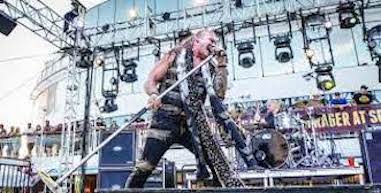
The Chris Jericho Cruise, officially known as “Chris Jericho’s Rock ‘N’ Wrestling Rager at Sea”, is a unique event blending professional wrestling, rock music, comedy, and pop culture into a cruise vacation experience. It was conceived by professional wrestler and musician Chris Jericho, and the event has gained a cult following due to its novelty and crossover appeal.

Jericho, a multi-talented entertainer known for his wrestling career in WWE, WCW, AEW, and his band Fozzy, had long been a fan of cruises and wanted to create an event that combined his passions for wrestling, music, and entertainment. The idea was to offer fans a one-of-a-kind experience with live wrestling matches, concerts, meet-and-greets with wrestlers and musicians, podcasts, and comedy shows, all while cruising on the open sea.

The first Chris Jericho Cruise set sail in October 2018 and was a major success, leading to it becoming an annual event. Each cruise typically features a themed name, such as “Part Deux: Second Wave” (2019) and “Triple Whammy” (2021). The event has helped bring wrestling fans and rock enthusiasts together, creating a loyal following. The intimate setting on the cruise ship allows fans to experience their favorite wrestlers and performers in a much more personal and relaxed atmosphere than traditional live shows.

Jericho’s involvement in AEW helped elevate the cruise’s profile even more. AEW has held Dynamite episodes on the cruise, bringing televised matches to the event. This connection has made the Chris Jericho Cruise a significant event for both wrestling and entertainment fans, adding an even greater level of excitement and exposure.

People attending the cruise can look forward to 4 key things that have remained consistent throughout the years and that undoubtedly contribute to the event’s success:

  1. Professional Wrestling Shows: The cruise features live wrestling matches on an outdoor ring set up on the ship’s deck. AEW (All Elite Wrestling) has played a key role in these matches, especially after Jericho joined AEW. Wrestling promotions like Ring of Honor (ROH) and independent promotions also participate. Fans get the chance to witness these matches in a very intimate and unique setting, something they wouldn’t experience in a regular arena.
  2. Music Performances: Jericho’s band Fozzy typically headlines the musical performances. Other bands from the rock and metal scene, as well as guest musicians, perform during the cruise. It’s a big draw for fans of both wrestling and hard rock.
  3. Celebrity Guests and Entertainment: Aside from wrestlers and musicians, the cruise features a variety of other entertainment forms. Guests include comedians, podcasters, and TV personalities, with live shows and panels catering to pop culture fans. Jericho’s own podcast, Talk Is Jericho, often has live episodes recorded on the ship with special guests.
  4. Fan Interaction: One of the highlights of the cruise is the fan interaction. Passengers have opportunities to meet and hang out with wrestlers, musicians, and celebrities. There are autograph signings, meet-and-greets, Q&A panels, and even themed costume nights.

Overall, the Chris Jericho Cruise is a reflection of Jericho’s eclectic career, combining his love for wrestling, music, and entertainment into a unique, highly successful, and fan-centric experience. Find out more at www.chrisjerichocruise.com.

Was the 1988 Death of Bruiser Brody Murder or Self-Defense?

Bruiser Brody, whose real name was Frank Goodish, was a legendary professional wrestler known for his brawling style and wild persona. He was one of the most influential figures in the wrestling industry, especially in Japan and the United States. However, his life was tragically cut short under mysterious and controversial circumstances, leaving pro wrestling fans outraged up to this day.

On July 16, 1988, Bruiser Brody was scheduled to wrestle in a show for the World Wrestling Council (WWC) in Bayamón, Puerto Rico. Before the show, a confrontation occurred between Brody and fellow wrestler José González, who wrestled masked under the name Invader I, in the locker room shower. The details of what transpired during this confrontation are still disputed by all parties, but what is not in dispute is that it ended with González stabbing Brody in the stomach with a knife. Brody was severely injured and was taken to a local hospital, but due to the severity of his injuries and the delay in getting him medical attention, he died in the early hours of July 17, 1988. He was 42 years old.

According to various accounts from witnesses present in the locker room, González asked Brody to come into the shower area to discuss something privately. Shortly afterward, wrestlers heard screams, and when they rushed to the area, they found Brody clutching his stomach, having been stabbed. González was holding the knife, and Brody was in critical condition.

The content of the conversation between Brody and González, and what led González to stab Brody, remains a matter of speculation, as no clear or consistent explanation has ever been provided.

The exact reasons behind why José González, also known as Invader I, killed Bruiser Brody (Frank Goodish) also remain unclear, as the true motivations have never been definitively established. However, there are several theories and pieces of speculation within the wrestling community that attempt to explain the incident.

Some believe that the stabbing was premeditated, while others think it may have been a spur-of-the-moment act driven by anger or fear. The trial and acquittal of González only added to the controversy, as many within the wrestling community felt that justice was not served, partly due to key witnesses not being called to testify.

In the years since the incident, various wrestlers and insiders have given their perspectives, but the true reasons behind why González killed Bruiser Brody remain a mystery, shrouded in the complex and often murky world of professional wrestling politics.

González claimed that he acted in self-defense, and during the trial, he was acquitted of the charges. The trial was seen by many as flawed, with key witnesses, including wrestlers Tony Atlas and Dutch Mantel, who were present during the incident, not being called to testify. Over the years, many possible motives have emerged and continue to be discussed by the wrestling community. The main ones are presented below:

Personal Grudges and Tensions: There were longstanding rumors of personal animosity between Brody and González. Some accounts suggest that Brody and González had a strained relationship due to past professional disagreements or personal issues when Gonzalez tried out for the WWF. In the wrestling business, it’s not uncommon for tensions to arise due to conflicts over booking decisions, pay, or the way matches were conducted.

Brody’s Reputation: Bruiser Brody was known for being a difficult personality in the wrestling business. He was fiercely independent and protective of his character and brand, often clashing with promoters and other wrestlers over how he was booked or how matches were conducted. It’s possible that González, who was also involved in booking for the World Wrestling Council (WWC), felt threatened or disrespected by Brody’s behavior.

Money and Business Disputes: Some have speculated that financial disagreements might have played a role. Brody was a top draw in the territories where he worked, and there could have been disputes over pay or the distribution of earnings, leading to heightened tensions. Some rumors even have him owing up to 5% of the Puerto Rican wrestling promotion.

Fear and Self-Defense: During the trial, González claimed that he acted in self-defense, stating that Brody had become aggressive and that he feared for his life. Given Brody’s size and reputation as a tough and intimidating figure, González’s defense was that he felt physically threatened. That still does not explain why he brought the knife into the shower (wrapped in a towel) before asking Brody to enter the shower and chat.

Professional wrestling fans were deeply affected by Brody’s death. Many wrestlers expressed their belief that justice was not served, and the incident cast a long shadow over the wrestling industry, particularly in Puerto Rico. Brody’s death is still a topic of discussion and debate among wrestling fans and professionals.

Despite the tragic end to his life, Bruiser Brody’s legacy in professional wrestling remains strong. He is remembered as one of the toughest and most influential wrestlers of his era, with a style that has inspired many wrestlers who came after him. His death also served as a reminder of the darker side of the wrestling business and the need for greater protection and rights for wrestlers.

Brody was posthumously inducted into several wrestling halls of fame, including the WWE Hall of Fame in 2019. His influence is still felt in the wrestling world, and his story continues to be told as a cautionary tale of the dangers that can lurk behind the scenes in professional wrestling.

Paris 2024 Reveals A Special “Medallist” Edition of Mascot

Paris 2024 has revealed its medallist mascot: a special edition that will be presented to all Games medallists after their competitions. 

The Paris 2024 Games honor a longstanding tradition 

Winning a medal at the Olympic or Paralympic Games, stepping on the podium, hearing their country’s anthem is the ultimate goal of every qualified athlete who has been preparing for years to compete at the Paris 2024 Games. 

Whether gold, silver or bronze, the Olympic and Paralympic medals are traditionally always presented alongside one or several gifts during the victory ceremonies. 

In line with this tradition, each athlete awarded a medal at the Paris 2024 Games will receive, alongside their medal, a medallist mascot together with the Games’ Iconic Poster. For the Olympic Games, the poster will be presented during the victory ceremony, whereas the mascot will be presented after the ceremony, in the Village. For the Paralympic Games, the medallist mascots will be presented during the victory ceremony, whereas the Paralympic poster will be presented at a later stage. These gifts will be presented by 515 Paris 2024 Volunteers.

The Phryges take over Paris 2024

A unique edition of the official mascots made in Brittany 

As with the official mascots revealed in November 2022, Paris 2024 collaborated with Doudou & Compagnie Group, which manufactures and sells a proportion of the stuffed “Phryges” available across the network of official stores, to design a medallist version of the Phryges, now an iconic symbol of the Games. The Phryges are made in France, in the Doudou & Compagnie factory, located in La Guerche-de-Bretagne. The gold, silver or bronze colours are featured on the medal emblem, sewn on the mascot’s belly, on the mascot’s sneakers and on the letters spelling out “Bravo” on the back. 

There will be as many medallist mascots manufactured as there are medallists at the Paris 2024 Games. 

The Games’ Iconic Posters unveiled in March will also be presented to medal-winning athletes in their Olympic or Paralympic version. A limited celebration edition will be available to buy, with 2,024 prints to be put on sale from 25 July on the Paris 2024 online store. 

Going to Cooperstown in 1999

I Can’t Wait! We Are Going to Cooperstown

My heart soared. We were going to take another trip to The Baseball Hall of Fame. One of my favorite places on earth. Just like the first trip to Upstate New York. I wanted to see the likes of Babe Ruth, Lou Gehrig, Honus Wagner, Mickey Mantle, Ty Cobb and Yogi Berra. one more time.

What I saw that day has stayed with me at the depths of my being, to this very day. More about that later.

As we walked into the building in the spring of 1999 I was greeted by two giant size replicas of two great hitters Ted Williams and Babe Ruth. I loved seeing the Babe again. “My friend Babe Ruth. Hello. Hey Ted, you look pretty good.” I remember saying. I found it very interesting that I and most people (if you stood under seven foot five inches) would have to look up to see these two sculptured figures.

My wife and I strolled through the museum looking at the artifacts. We adored the old gloves, spikes, balls, bats and uniforms that were encased in their glass display bins. These items brought me back to a time and place before television, radar guns and luxury boxes. I was getting very nostalgic.

We soon entered the wing that housed the Sammy Sosa, and Mark McGwire artifacts. This Home Run Wing was abundant with Sosa and McGwire memorabilia. This was like being in a home run baseball fantasy park. There were huge posters of both men. There were posters of each man’s list of home runs.. When they hit them and what pitcher gave up that particular home run. There were bats they used in games and balls they hit over the fences Amazing. Never had two major league men hit so many home runs in one year. Upon leaving that wing I could not help but feel overwhelmed by the slugging feats of these two huge men. One a Cub and one a Cardinal.

We continued to stroll through the hall until we came up to a narrow wing that I did not remember from my previous visit. I looked down the left side of the corridor and saw a group of pictures. Hanging from wires, these colorful paintings were displayed at my eye level. Perfect for me. I had to see these pictures. I was compelled. to walk down this aisle. The first picture as I entered the area was of Babe Ruth. His bat was over his shoulder. His face was wrought with age. He looked a little old, a wee bit tired heavy and somewhat overweight. As I stared at the picture I got very sad. I could see that his career was about to end.

Next painting was of Lou Gehrig. A smiling Lou Gehrig. I felt so happy just to be in the presence of one of my all time heroes. Even if it was just a picture. Then there was one of Joe DiMaggio and Ted Williams standing on the dugout steps Their bodies were angled toward each other. I enjoyed the joy they seemed to have just being there. Ready to play another game. There were other paintings one of Jackie Robinson, another of Ty Cobb and another of Honus Wagner that I loved.

Gazing toward the end of the row of paintings I saw a glass case with what looked like a tan baseball glove inside. This seemed very weird in that all the players that were depicted in the paintings were from an era when dark brown gloves were used. . I felt confused. This mitt did not seem to belong here. I just had to see whose glove this was.

I could not believe my eyes. It was not a glove. It was a sculpture of a glove. Perfect in size. Detailed so exact that the grayish colored seams were complete in length width and color. The depth of this piece was ideal What this sculptor had captured amazed me. I thought about the time he invested in creating this piece. About how much this person must have loved baseball that he took the time to mold a piece equipment. I visualized he sitting in his workroom playing with clay to make this piece real. I called my wife to come see this incredible piece. We both were moved. I even cried.

I was given a glimpse of one of the greatest pieces of art I had ever seen. I have been to major museums and have seen painting by Van Gough, Picasso, and Dahli… I have seen the Thinker by Rodin. I have never been moved like I was by the glove.

Whenever I think of the Hall of Fame my mind jumps to the glove. I do not know if this piece is there any more. It did have a price tag of $8500 when I was there so it may have been moved.

But if you get the chance to see the glove I suggest you take a look.

Author Bio
Aron Wallad has been a baseball lover for over 45 years. You will love his honesty and his passion. You will be touched by the heartwarming stories. The unusual statistics will amaze you and the quotes will make you laugh…sometimes. He is the creator of the now defunct ezine www.baseballsprideandjoy.com.

A Legend in Pro Wrestling Also Had A Small Hollywood Career

Terry funk was a legend in the professional ring. He truly loved the sport and wrestled well into his golden years. After his passing last month, fans have been coming together to share their favorite Terry funk stories and moments. Chainsaw Charlie has been mentioned more than a few times. Many are surprised to find out Funk had small career in Hollywood which included stunt work on Sylvester Stallone’s film Rocky III. Since there are already many stories out there dedicated to Funk’s life and career in the squared circle, FSM is ranking Terry Funk’s Top 4 Movie Roles:

4. The Ringer – In this 2005 comedy, Funk plays a debt collector who gets a little physical with the main character’s (Johnny Knoxville) uncle in order to get some cash that is owed.  

3. Road House – Funk appeared in the 1989 action film Road House in the role of Morgan, a tough bouncer and one of the henchmen working for the film’s antagonist, Brad Wesley, played by Ben Gazzara. Most notably, the film also stars Patrick Swayze as a bouncer named Dalton who is hired to clean up a rowdy bar. Terry Funk’s presence in the film certainly added to the action and intensity of some of the fight scenes.

2. Over the Top – Funk’s role in the 1987 Sylvester Stallone film Over the Top was the character Ruker, a fellow arm wrestler and antagonist to Stallone’s main character, Lincoln Hawk. Over the Top is a sports drama film centered around the world of professional arm wrestling, and Terry Funk’s appearance added to the fighting atmosphere of the movie. The film has become a bit of a cult classic over the years.

1. Paradise Alley – In the film, Terry Funk’s character, Frankie the Thumper, is a professional wrestler. Frankie is one of the wrestlers in the local wrestling circuit that the Carboni brothers, played by Sylvester Stallone (Cosmo), Armand Assante (Lenny), and Lee Canalito (Victor), are involved with. Frankie the Thumper is known for his wrestling skills and is part of the wrestling world that the Carboni brothers navigate as they pursue their dreams and get involved in various wrestling matches and events throughout the film. The film portrays their interactions and challenges within the wrestling community in New York City’s Hell’s Kitchen during the 1940s. Funk also served as the stunt coordinator.

Which was your favorite Terry Funk movie? Did it make our list?

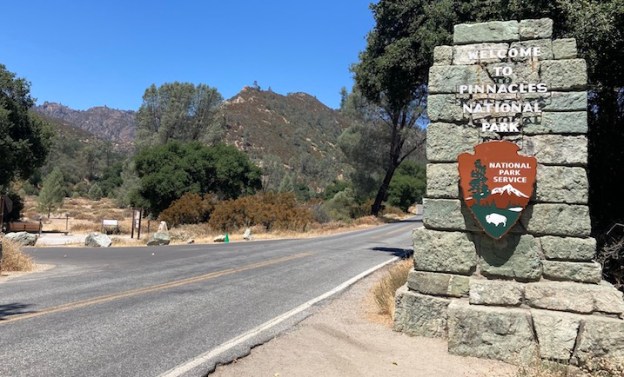
FSM Exclusive: Intro to Pinnacles National Park

For the wanderers out there considering a visit to Pinnacles National Park, Free Sports Mag takes a quick look at California’s newest park in this exclusive 30-minute video.

But first, some cool background information about Pinnacles directly from the NPS website:

Some 23 million years ago multiple volcanoes erupted, flowed, and slid to form what would become Pinnacles National Park. What remains is a unique landscape. Travelers journey through chaparral, oak woodlands, and canyon bottoms. Hikers enter rare talus caves and emerge to towering rock spires teeming with life: prairie and peregrine falcons, golden eagles, and the inspiring California condor.

The most recent update to Pinnacles is its redesignation from National Monument to National Park when in 2013, Pinnacles became the 59th National Park. It was originally designated as a monument because of its unique geologic features such as rock spires and crags that are remnants of volcanic activity millions of years ago. However, the abundance of cultural and natural resources in the park, including its many federally protected species, made it an appropriate candidate for a National Park. The United States Senate and President Obama passed the bill that redesignated Pinnacles to a National Park which included a 3,000 acre expansion of wilderness to be named the Hain wilderness, in honor of the homesteader Schuyler Hain who worked to protect it in the early 1900s. The redesignation has also increased visitation and tourism to nearby communities.

Click here to see FSM’s quick review of the park and campsite!

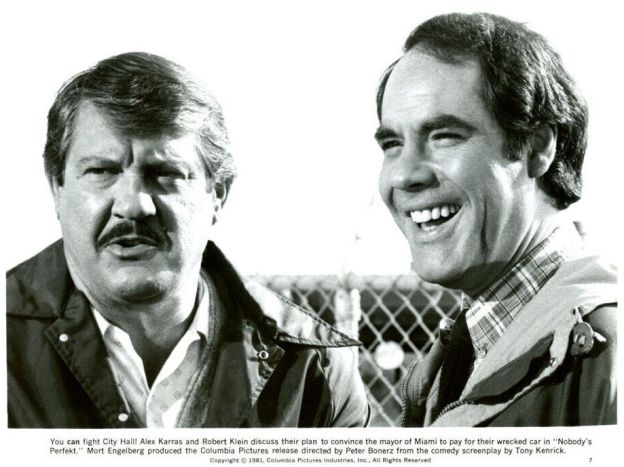
Alex Karras’ Top 3 Comedic Roles

Alex Karras got further into acting after his successful career as a professional football player ended. Upon retiring from the NFL, Karras pursued different opportunities in the entertainment industry beyond the smaller roles he landed while he was an active player. FSM presents the abridged version of his foray into acting and discusses his top 3 comedy performances:

Alex Karras played as a defensive tackle for the Detroit Lions in the National Football League (NFL) from 1958 to 1970. He had a notable career and was known for his strong presence on the field. Following his retirement from football, Karras ventured into sports broadcasting. He worked as a color commentator for NFL games and also had a stint as a co-host on “Monday Night Football” in the mid-1970s.

Karras made his acting debut in the late 1960s, appearing in a few guest roles on television shows such as “Daniel Boone” and “The Bing Crosby Show.” These early experiences sparked his interest in pursuing acting further. It was once retired however that his roles became larger and more prominent, as he had more time to dedicate to his new craft. His roles often matched his personality on the field – loud, boisterous and no nonsense.

In the 1970s and 1980s, Karras began to land his most notable roles in film and television and FSM has ranked the Top 3 comedic ones for your reading pleasure.

  1. Mongo in “Blazing Saddles” (1974): Karras played the character of Mongo, a hulking and dim-witted brute in Mel Brooks’ iconic comedy film. His portrayal of Mongo and the memorable scene of him punching out a horse made him a fan favorite.
  2. Sheriff Wallace in “Porky’s” (1981): In this raunchy teen comedy, Karras portrayed the role of Porky’s brother, a corrupt Sheriff who helps with straightening out wild teens from other counties. His comedic timing and tough-guy persona certainly enhance the film’s humor.
  3. Doc in “Webster” (TV Series, 1983-1989): Karras’ portrayal of George Papadopoulos, or “Doc,” in the television series “Webster” captured the hearts of viewers for many years. This popular sitcom followed the lives of a young orphan (played by Emanuel Lewis) and the couple who adopted him. Karras’ portrayal of the kind-hearted and lovable father figure earned him recognition and popularity among TV audiences across the board. He mostly made audiences laugh while hitting the serious notes as needed.

Alex Karras passed away on October 10, 2012 due to kidney failure. His death marked the end of a remarkable life that encompassed achievements in both professional football and acting.Throughout his acting career, he showcased his skills and versatility, transitioning from his football background to become a respected figure in the entertainment industry.