Tag Archives: magazine subscriptions

Paris 2024 Reveals A Special “Medallist” Edition of Mascot

Paris 2024 has revealed its medallist mascot: a special edition that will be presented to all Games medallists after their competitions. 

The Paris 2024 Games honor a longstanding tradition 

Winning a medal at the Olympic or Paralympic Games, stepping on the podium, hearing their country’s anthem is the ultimate goal of every qualified athlete who has been preparing for years to compete at the Paris 2024 Games. 

Whether gold, silver or bronze, the Olympic and Paralympic medals are traditionally always presented alongside one or several gifts during the victory ceremonies. 

In line with this tradition, each athlete awarded a medal at the Paris 2024 Games will receive, alongside their medal, a medallist mascot together with the Games’ Iconic Poster. For the Olympic Games, the poster will be presented during the victory ceremony, whereas the mascot will be presented after the ceremony, in the Village. For the Paralympic Games, the medallist mascots will be presented during the victory ceremony, whereas the Paralympic poster will be presented at a later stage. These gifts will be presented by 515 Paris 2024 Volunteers.

The Phryges take over Paris 2024

A unique edition of the official mascots made in Brittany 

As with the official mascots revealed in November 2022, Paris 2024 collaborated with Doudou & Compagnie Group, which manufactures and sells a proportion of the stuffed “Phryges” available across the network of official stores, to design a medallist version of the Phryges, now an iconic symbol of the Games. The Phryges are made in France, in the Doudou & Compagnie factory, located in La Guerche-de-Bretagne. The gold, silver or bronze colours are featured on the medal emblem, sewn on the mascot’s belly, on the mascot’s sneakers and on the letters spelling out “Bravo” on the back. 

There will be as many medallist mascots manufactured as there are medallists at the Paris 2024 Games. 

The Games’ Iconic Posters unveiled in March will also be presented to medal-winning athletes in their Olympic or Paralympic version. A limited celebration edition will be available to buy, with 2,024 prints to be put on sale from 25 July on the Paris 2024 online store. 

Going to Cooperstown in 1999

I Can’t Wait! We Are Going to Cooperstown

My heart soared. We were going to take another trip to The Baseball Hall of Fame. One of my favorite places on earth. Just like the first trip to Upstate New York. I wanted to see the likes of Babe Ruth, Lou Gehrig, Honus Wagner, Mickey Mantle, Ty Cobb and Yogi Berra. one more time.

What I saw that day has stayed with me at the depths of my being, to this very day. More about that later.

As we walked into the building in the spring of 1999 I was greeted by two giant size replicas of two great hitters Ted Williams and Babe Ruth. I loved seeing the Babe again. “My friend Babe Ruth. Hello. Hey Ted, you look pretty good.” I remember saying. I found it very interesting that I and most people (if you stood under seven foot five inches) would have to look up to see these two sculptured figures.

My wife and I strolled through the museum looking at the artifacts. We adored the old gloves, spikes, balls, bats and uniforms that were encased in their glass display bins. These items brought me back to a time and place before television, radar guns and luxury boxes. I was getting very nostalgic.

We soon entered the wing that housed the Sammy Sosa, and Mark McGwire artifacts. This Home Run Wing was abundant with Sosa and McGwire memorabilia. This was like being in a home run baseball fantasy park. There were huge posters of both men. There were posters of each man’s list of home runs.. When they hit them and what pitcher gave up that particular home run. There were bats they used in games and balls they hit over the fences Amazing. Never had two major league men hit so many home runs in one year. Upon leaving that wing I could not help but feel overwhelmed by the slugging feats of these two huge men. One a Cub and one a Cardinal.

We continued to stroll through the hall until we came up to a narrow wing that I did not remember from my previous visit. I looked down the left side of the corridor and saw a group of pictures. Hanging from wires, these colorful paintings were displayed at my eye level. Perfect for me. I had to see these pictures. I was compelled. to walk down this aisle. The first picture as I entered the area was of Babe Ruth. His bat was over his shoulder. His face was wrought with age. He looked a little old, a wee bit tired heavy and somewhat overweight. As I stared at the picture I got very sad. I could see that his career was about to end.

Next painting was of Lou Gehrig. A smiling Lou Gehrig. I felt so happy just to be in the presence of one of my all time heroes. Even if it was just a picture. Then there was one of Joe DiMaggio and Ted Williams standing on the dugout steps Their bodies were angled toward each other. I enjoyed the joy they seemed to have just being there. Ready to play another game. There were other paintings one of Jackie Robinson, another of Ty Cobb and another of Honus Wagner that I loved.

Gazing toward the end of the row of paintings I saw a glass case with what looked like a tan baseball glove inside. This seemed very weird in that all the players that were depicted in the paintings were from an era when dark brown gloves were used. . I felt confused. This mitt did not seem to belong here. I just had to see whose glove this was.

I could not believe my eyes. It was not a glove. It was a sculpture of a glove. Perfect in size. Detailed so exact that the grayish colored seams were complete in length width and color. The depth of this piece was ideal What this sculptor had captured amazed me. I thought about the time he invested in creating this piece. About how much this person must have loved baseball that he took the time to mold a piece equipment. I visualized he sitting in his workroom playing with clay to make this piece real. I called my wife to come see this incredible piece. We both were moved. I even cried.

I was given a glimpse of one of the greatest pieces of art I had ever seen. I have been to major museums and have seen painting by Van Gough, Picasso, and Dahli… I have seen the Thinker by Rodin. I have never been moved like I was by the glove.

Whenever I think of the Hall of Fame my mind jumps to the glove. I do not know if this piece is there any more. It did have a price tag of $8500 when I was there so it may have been moved.

But if you get the chance to see the glove I suggest you take a look.

Author Bio
Aron Wallad has been a baseball lover for over 45 years. You will love his honesty and his passion. You will be touched by the heartwarming stories. The unusual statistics will amaze you and the quotes will make you laugh…sometimes. He is the creator of the now defunct ezine www.baseballsprideandjoy.com.

A Legend in Pro Wrestling Also Had A Small Hollywood Career

Terry funk was a legend in the professional ring. He truly loved the sport and wrestled well into his golden years. After his passing last month, fans have been coming together to share their favorite Terry funk stories and moments. Chainsaw Charlie has been mentioned more than a few times. Many are surprised to find out Funk had small career in Hollywood which included stunt work on Sylvester Stallone’s film Rocky III. Since there are already many stories out there dedicated to Funk’s life and career in the squared circle, FSM is ranking Terry Funk’s Top 4 Movie Roles:

4. The Ringer – In this 2005 comedy, Funk plays a debt collector who gets a little physical with the main character’s (Johnny Knoxville) uncle in order to get some cash that is owed.  

3. Road House – Funk appeared in the 1989 action film Road House in the role of Morgan, a tough bouncer and one of the henchmen working for the film’s antagonist, Brad Wesley, played by Ben Gazzara. Most notably, the film also stars Patrick Swayze as a bouncer named Dalton who is hired to clean up a rowdy bar. Terry Funk’s presence in the film certainly added to the action and intensity of some of the fight scenes.

2. Over the Top – Funk’s role in the 1987 Sylvester Stallone film Over the Top was the character Ruker, a fellow arm wrestler and antagonist to Stallone’s main character, Lincoln Hawk. Over the Top is a sports drama film centered around the world of professional arm wrestling, and Terry Funk’s appearance added to the fighting atmosphere of the movie. The film has become a bit of a cult classic over the years.

1. Paradise Alley – In the film, Terry Funk’s character, Frankie the Thumper, is a professional wrestler. Frankie is one of the wrestlers in the local wrestling circuit that the Carboni brothers, played by Sylvester Stallone (Cosmo), Armand Assante (Lenny), and Lee Canalito (Victor), are involved with. Frankie the Thumper is known for his wrestling skills and is part of the wrestling world that the Carboni brothers navigate as they pursue their dreams and get involved in various wrestling matches and events throughout the film. The film portrays their interactions and challenges within the wrestling community in New York City’s Hell’s Kitchen during the 1940s. Funk also served as the stunt coordinator.

Which was your favorite Terry Funk movie? Did it make our list?

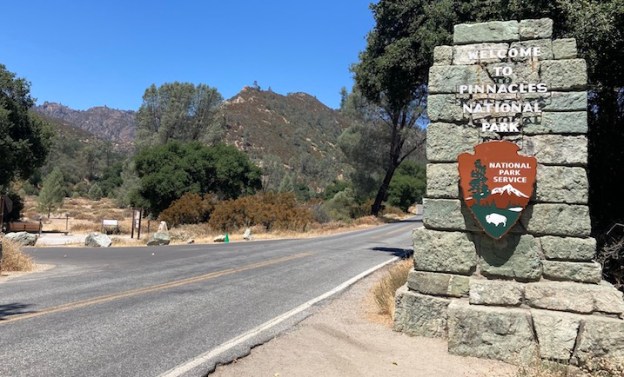
FSM Exclusive: Intro to Pinnacles National Park

For the wanderers out there considering a visit to Pinnacles National Park, Free Sports Mag takes a quick look at California’s newest park in this exclusive 30-minute video.

But first, some cool background information about Pinnacles directly from the NPS website:

Some 23 million years ago multiple volcanoes erupted, flowed, and slid to form what would become Pinnacles National Park. What remains is a unique landscape. Travelers journey through chaparral, oak woodlands, and canyon bottoms. Hikers enter rare talus caves and emerge to towering rock spires teeming with life: prairie and peregrine falcons, golden eagles, and the inspiring California condor.

The most recent update to Pinnacles is its redesignation from National Monument to National Park when in 2013, Pinnacles became the 59th National Park. It was originally designated as a monument because of its unique geologic features such as rock spires and crags that are remnants of volcanic activity millions of years ago. However, the abundance of cultural and natural resources in the park, including its many federally protected species, made it an appropriate candidate for a National Park. The United States Senate and President Obama passed the bill that redesignated Pinnacles to a National Park which included a 3,000 acre expansion of wilderness to be named the Hain wilderness, in honor of the homesteader Schuyler Hain who worked to protect it in the early 1900s. The redesignation has also increased visitation and tourism to nearby communities.

Click here to see FSM’s quick review of the park and campsite!

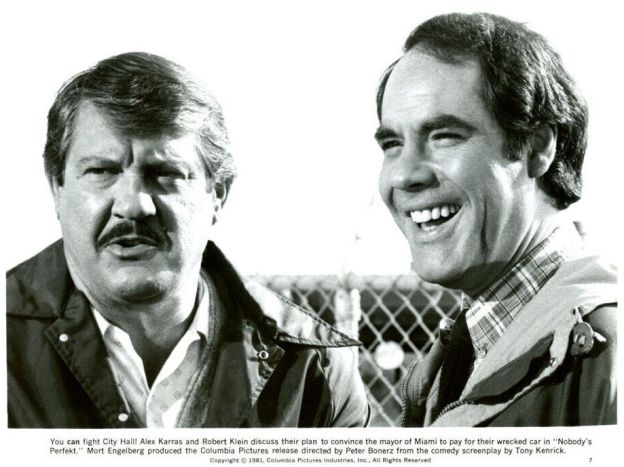
Alex Karras’ Top 3 Comedic Roles

Alex Karras got further into acting after his successful career as a professional football player ended. Upon retiring from the NFL, Karras pursued different opportunities in the entertainment industry beyond the smaller roles he landed while he was an active player. FSM presents the abridged version of his foray into acting and discusses his top 3 comedy performances:

Alex Karras played as a defensive tackle for the Detroit Lions in the National Football League (NFL) from 1958 to 1970. He had a notable career and was known for his strong presence on the field. Following his retirement from football, Karras ventured into sports broadcasting. He worked as a color commentator for NFL games and also had a stint as a co-host on “Monday Night Football” in the mid-1970s.

Karras made his acting debut in the late 1960s, appearing in a few guest roles on television shows such as “Daniel Boone” and “The Bing Crosby Show.” These early experiences sparked his interest in pursuing acting further. It was once retired however that his roles became larger and more prominent, as he had more time to dedicate to his new craft. His roles often matched his personality on the field – loud, boisterous and no nonsense.

In the 1970s and 1980s, Karras began to land his most notable roles in film and television and FSM has ranked the Top 3 comedic ones for your reading pleasure.

  1. Mongo in “Blazing Saddles” (1974): Karras played the character of Mongo, a hulking and dim-witted brute in Mel Brooks’ iconic comedy film. His portrayal of Mongo and the memorable scene of him punching out a horse made him a fan favorite.
  2. Sheriff Wallace in “Porky’s” (1981): In this raunchy teen comedy, Karras portrayed the role of Porky’s brother, a corrupt Sheriff who helps with straightening out wild teens from other counties. His comedic timing and tough-guy persona certainly enhance the film’s humor.
  3. Doc in “Webster” (TV Series, 1983-1989): Karras’ portrayal of George Papadopoulos, or “Doc,” in the television series “Webster” captured the hearts of viewers for many years. This popular sitcom followed the lives of a young orphan (played by Emanuel Lewis) and the couple who adopted him. Karras’ portrayal of the kind-hearted and lovable father figure earned him recognition and popularity among TV audiences across the board. He mostly made audiences laugh while hitting the serious notes as needed.

Alex Karras passed away on October 10, 2012 due to kidney failure. His death marked the end of a remarkable life that encompassed achievements in both professional football and acting.Throughout his acting career, he showcased his skills and versatility, transitioning from his football background to become a respected figure in the entertainment industry.

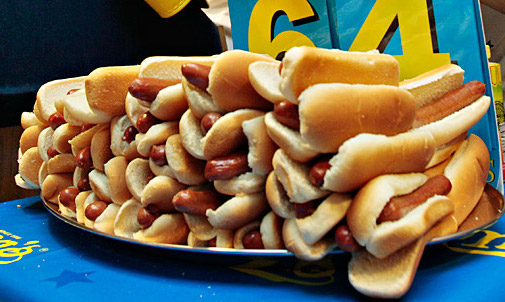
The History of Nathan’s Hot Dog Eating Contest

The Nathan’s Hot Dog eating contest has become a legendary annual event held on July 4th at Coney Island, New York. The origins of this contest can be traced back to a friendly competition among immigrants in the early 20th century.

The contest’s roots can be found in the tradition of settling disputes among working-class men on Coney Island. According to popular legend, in 1916, a group of four immigrants—Irish immigrant James Mullen, Polish immigrant Max Bruck, German immigrant Chris Nicoll, and an unidentified man—decided to hold a hot dog eating contest to settle an argument about who was the most patriotic among them. As the story goes, they gathered in front of Nathan’s Famous, a popular hot dog stand owned by Nathan Handwerker, and began consuming as many hot dogs as possible in a set amount of time.

Nathan Handwerker saw the potential in this spectacle and embraced it as a promotional opportunity for his business. The contest gained attention and became an annual event at Nathan’s Famous. Over the years, it grew in popularity and attracted participants from various backgrounds.

In 1972, the contest took a hiatus but was revived in 1974 by PR man Max Rosey, who wanted to use the event to generate publicity for Nathan’s Famous. The contest has been held every year since then and has become a cherished tradition, drawing thousands of spectators to witness competitive eaters from around the world battle it out to consume the most hot dogs in a given time period.

Today, the Nathan’s Hot Dog eating contest is organized by Major League Eating (MLE), a professional competitive eating organization, and has gained international recognition as one of the most prestigious events in the competitive eating circuit. It is broadcast live on television every 4th of July and has catapulted many participants to fame in the world of competitive eating.

The origins of Major League Eating can be traced back to the early 1990s and the efforts of brothers George and Richard Shea. In 1997, George and Richard Shea, who were public relations professionals, were hired by the owners of Nathan’s Famous to rebrand and promote the Nathan’s Hot Dog eating contest. Recognizing the potential for competitive eating as a spectator sport, the Shea brothers sought to elevate it to a professional level and establish a governing body to oversee the events.

Later that same year, the brothers founded the International Federation of Competitive Eating (IFOCE) as the governing body for competitive eating. The IFOCE was responsible for establishing rules, rankings, and standards for various eating contests. They aimed to transform competitive eating into a legitimate sport and attract sponsors, media coverage, and public interest.

Under the IFOCE, the Shea brothers worked to expand the competitive eating circuit, organize events, and attract top eaters. They introduced a structured ranking system and established guidelines for competitions to ensure fairness and safety. Over time, the IFOCE gained recognition as the leading authority in the world of competitive eating.

In 2001, the IFOCE was rebranded as Major League Eating (MLE) to reflect its professional approach and enhance its marketability. MLE continued to expand its reach and popularity by organizing and sanctioning eating contests across the United States and internationally. The Nathan’s Hot Dog eating contest remained one of MLE’s flagship events, drawing significant media attention and shaping the perception of competitive eating as a competitive sport.

Major League Eating continues to oversee and promote competitive eating events, maintain rankings and records, and collaborate with sponsors, broadcasters, and participants to elevate the sport’s profile. It has played a significant role in popularizing and professionalizing competitive eating, turning it into a recognized and respected form of competition.

The first champion of the Nathan’s Hot Dog eating contest under the organization of Major League Eating (MLE) was Takeru Kobayashi. Kobayashi, a competitive eater from Japan, made his debut in the contest in 2001 and quickly revolutionized the sport with his unique eating technique and extraordinary capacity.

In his first year, Kobayashi shattered the existing world record by consuming 50 hot dogs and buns in 12 minutes, doubling the previous record. His incredible performance not only earned him the title but also captured the attention of the media and spectators, propelling competitive eating into the mainstream.

Kobayashi went on to dominate the Nathan’s Hot Dog eating contest for the next six years, winning the championship from 2001 to 2006. His unorthodox “Solomon Method,” which involved separating the hot dog from the bun and consuming them separately, allowed him to eat at an astonishing pace and set multiple records.

However, in 2007, Kobayashi’s reign as the champion came to an end when he was defeated by Joey Chestnut, an American competitive eater. Chestnut consumed 66 hot dogs and buns, surpassing Kobayashi’s previous record of 63. This marked the beginning of Chestnut’s own dominant era in the contest, as he went on to win the Nathan’s Hot Dog eating contest for several consecutive years.

It’s worth noting that in recent years, Kobayashi has not competed in the Nathan’s Hot Dog eating contest due to contractual disputes with Major League Eating. Nonetheless, his contributions to the sport and his initial victories played a crucial role in establishing the contest’s popularity and setting the stage for future champions.

Joey Chestnut is the reigning champion of the Nathan’s Hot Dog eating contest under Major League Eating (MLE). Chestnut has been a dominant force in the competitive eating world and has held the title for numerous consecutive years. His record-breaking streak began in 2007 when he defeated Kobayashi (ending his six-year reign as champion). Since then, Chestnut has continued to dominate the competition, consistently consuming a large number of hot dogs and securing the championship year after year. Think you beat him? You can start practicing this Independence Day!

Find ways to watch this year’s contest by clicking here.

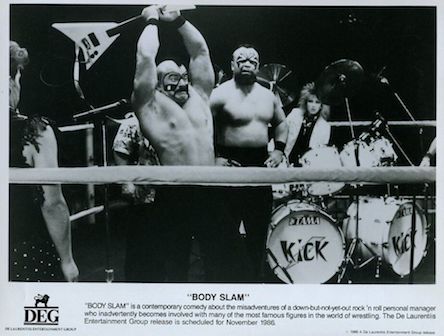
Body Slam: A Forgotten Movie of the Rock ‘n’ Wrestling Era

“Rock ‘n’ Wrestling” refers to a significant crossover between the worlds of professional wrestling and rock music that took place in the 1980s. It primarily revolves around the partnership between the World Wrestling Federation (now WWE) and the music industry, particularly with the involvement of musicians and collaborations with MTV.

During this era, the WWF recognized the potential of combining the popularity of professional wrestling with the mainstream appeal of rock music to create a larger fan base. This led to various initiatives and events that blended the two worlds, resulting in a phenomenon known as “Rock ‘n’ Wrestling.”

One of the key figures in this crossover was Cyndi Lauper, a prominent pop singer of the time. Lauper’s association with professional wrestling began when she appeared as a manager for wrestler Wendi Richter. This led to a storyline feud between Richter and Lauper’s rival manager, Captain Lou Albano, which culminated in a highly publicized match at the inaugural WrestleMania event in 1985.

The success of this collaboration prompted further integration of music and wrestling. The WWF featured rock musicians in their programming, such as Rick Derringer performing “Real American” for Hulk Hogan’s entrance theme. Additionally, the WWF created animated series called Hulk Hogan’s Rock ‘n’ Wrestling, which featured animated versions of wrestlers teaming up with various rock stars in comedic adventures.

The “Rock ‘n’ Wrestling” era represented a significant period of cross-promotion and entertainment convergence, bringing together the larger-than-life personalities of professional wrestling with the energy and appeal of rock music. It played a crucial role in expanding the fanbase of both industries and capturing the pop culture zeitgeist of the 1980s.

The natural progression of this awesome pairing was to bring the action of pro wrestling and sounds of rock music to the movie screen. However, this is where interest seemed to stop for most people. Perhaps purchasing a ticket and spending a day at the movies was always going to be a bit overkill for fans perfectly happy to watch Cyndi Lauper just have fun from their own living room for or parents who got a free cartoon for their kids every Saturday morning. Whatever the reasons, this effort to hit the big screen ultimately left us with movies like No Holds Barred (which Jim Ross once referred to as No Profits Allowed) and the should be cult-classic Body Slam.

Body Slam was a comedy released in 1986, revolving around a down-on-his-luck music promoter named M. Harry Smilac, played by Dirk Benedict of The A-Team fame. Smilac just happens to get involved in the world of professional wrestling and mischief ensues.

The film follows Smilac as he encounters a washed-up pro wrestler named “Quick” Rick Roberts, portrayed by Rowdy Roddy Piper. Smilac sees an opportunity to combine his love for music and wrestling by managing Quick Rick and a wrestling rock band called Kick at the same time.

With the help of his assistant Candace, played by Tanya Roberts, Smilac sets out to promote Quick Rick and his wrestling partner Tonga Tom, played by Sam Fatu. They embark on a tour with Kick, hoping to achieve success and fame by merging the worlds of music and wrestling. As the story progresses, Smilac faces challenges, including rival wrestling promoters, the constant chaos of managing a group of wrestlers and musicians, and the difficulty of putting on a show that features both live music and wrestling. Of-course the film culminates in a climactic showdown and a high-stakes wrestling match.

Body Slam combines elements of comedy, wrestling action, and music, creating an entertaining story about an unlikely group of characters trying to find success and redemption in their respective fields. Other wrestlers and personalities of note appearing in the film include Captain Lou Albano, Afa Anoai, Barbarian, Billy Barty, John Astin, Fans of The A-Team will especially enjoy this film as Dirk Benedict drives around in a Ferrari in some scenes and is essentially playing the Templeton Peck character (he juggled commitments to both projects during this time). That’s perfectly fine because Rock ‘n’ Wresting is a venture that the Face man would get into to make a buck.

Body Slam was not a financial success. The film was met with negative reviews and failed to attract a significant audience. The movie’s poor performance contributed to its status as a relatively obscure and forgotten film today. While it has gained a small following among fans of professional wrestling and ’80s movies, it hasn’t achieved the same level of cult status as some other films from the era. Its lack of critical acclaim and commercial success prevented it from attaining widespread recognition or a dedicated cult following. This isn’t surprising when thinking about the mainstream audience but perhaps a little more unexpected when considering the fandom of wrestling fans.  

Leo Ferris: The Man Who Saved The NBA

The early days of basketball often seen slow fan-unfriendly low scoring matches that often left spectators bored. Games often only got into the 40’s and many of the best players averaged less than 15 points a game. Many early basketball games looked more like a glorified version of the children’s game of keep-away than an action packed professional sport. This style of play culminated in a game between Minneapolis and Fort Wayne, where the Pistons of Fort Wayne held the ball most of the second half nursing a 1 point lead over the Lakers. The Pistons would win 19-18 in the lowest scoring game in NBA history. Prior to that the fewest points ever score 33 points, just 4 fewer than both teams scored, and that game was one the opening night of the NBA, or BAA as it was called back then.

This pace bored fans, many of whom were promised an action packed fun experience and attendance and interest in the new league had begun to dip. The NBA needed a solution and needed it fast. The solution was an ingenious one and one that would revolutionize the game as we know it. A simple clock, with just 24 seconds on it would forever change the game.

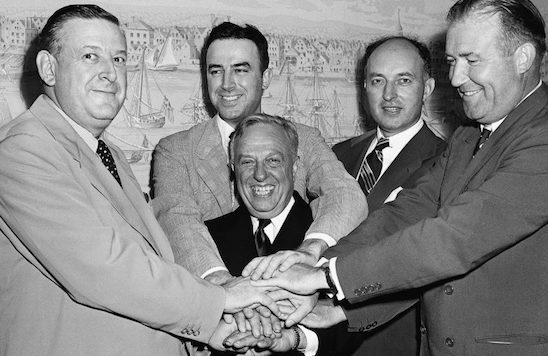
The clock was the brain child of Syracuse Nationals general manager Leo Ferris, a man that the NBA has long forgotten in one of the biggest travesties in the games history. Ferris, is as important to the early days of the NBA as anyone and one could argue that without Ferris there would be no NBA today; and there definitely would be no Atlanta Hawks, or Philadelphia 76ers. The NBA would look much different today without Ferris’s input all those years ago.

Ferris got his start with basketball not in the NBA but in the NBL when in 1946 he helped found the Buffalo Bisons. The Bisons were pretty much a failure in upstate New York and after only 13 games the Bisons picked up and left the shores of Lake Erie and heated to the American Heartland in Molina, Illinois. Technically, the team played in Molina and Rock Island, Illinois and Davenport, Iowa but most of their games were played in Molina. The team was called the Tri-Cities Blackhawks and while they struggled the foundation of one of the longest tenured NBA teams was laid. The Blackhawks would eventually move to Milwaukee, where they took on the moniker Hawks, and than move to St Louis and finally to Atlanta.

Shortly after the team moved to Tri-Cities Ferris would go on to make one of his first major shake ups of the basketball world when he signed Pop Gates for the all-black New York Ren’s to a contract. African-American players had played in the NBL before, but only during the early 1940s when World War II had taken a lot of the white players from the NBL. Gates was the first black player signed to a contract when there was not a necessity for them, and the first one signed because of his skill and talent and not because the league needed players. Gates would re-join the Rens when they joined the NBL as the Dayton Rens two years later.

After only a season with the Blackhawks, Ferris returned to his native upstate New York and began as the general manager of the NBL’s Syracuse Nationals. As manager of the Nationals he scored a huge coup for the Nationals and the NBL when he lured highly coveted big man Dolph Schayes away from the New York Knicks of the upstart BAA.

The BAA and NBL rivalry only got worse, with the BAA stealing away most of the best players from the NBL and starting in 1948 the BAA started taking the best teams as well. In 1947 the Minneapolis Lakers, Rochester Royals and Indianapolis Kautskies left the NBL for the BAA. The Nationals were now in an uncertain league and they and the NBL desperately needed to find a solution, and Leo Ferris would find that solution.

Starting in the spring of 1949 Ferris started meeting with executives of the BAA, at first it was an attempt to possible get the Nationals into the growing league, but would soon expand to merging the two leagues. The talks ended in August of 1949 when an agreement was reached to merge the NBL and BAA and form the NBA. The BAA only wanted to absorb two teams; the Nationals, and the upstart Indianapolis Olympians; who would replace the Jets. Ferris managed to talk the BAA into accepting both of those teams, as well as the Denver Nuggets, Sheboygan Redskins, Anderson Packers and the Blackhawks. He originally wanted the merger to include Oshkosh, Hammond and Dayton, but financial backing ruined Oshkosh’s attempt to relocate to Milwaukee and Hammond was thought too close to Chicago where the BAA already had a team. The Rens of Dayton were not allowed to join because their players consisted of black players. In addition to the Rens not being allowed to join, black players on Syracuse also had to be let go.

The merge proved successful as the 17 team NBA seen initial success, but the old NBL teams had given up too much power in the merger and despite Ferris’s best efforts the league kicked out 5 of the former NBL teams the next season.

The 1950 season saw the Lakers continue their dominance and the Pistons thought the only way to stop them was to hold on to a one point lead and the ball. This was the event that usurer in Leo Ferris’s clock or more commonly known as the shot clock. Ferris had always liked math and had been good at it, and he used math to come up with the 24 second clock. He took the number of seconds in a 48-minute game (2,880) and divided that by the average number of shots in a game (120) to get to 24 seconds.

It took 4 more years for the league to implement the shot clocks and when they did the league seen a jump in scoring by nearly 20 points a game and gone were the days of games ending up in the 40s. In fact, since the introduction of the shot clock there has been only 20 regular season games were a team has scored less than 60 points, and only one were a team scored less than 50 and only one playoff game were a team scored less then 60 points.

The introduction of the shot clock caused the game to enter into an era of frenzied paces, with teams scoring what were once thought of as impossible number of points. In 1954-55 Neil Johnston lead the NBA in scoring with 22 points a game, seven years later Wilt Chamberlain would set the NBA record by averaging 50 points a game.

Ferris would only stick around the NBA for one season after his clock was introduced before permanently leaving the league and the game to develop real-estate. It was a shockingly short career for someone who would have such a profound impact on the game.

Despite all that he accomplished, Ferris has yet to be introduced into the Naismith Hall-of-Fame. He has been a finalist multiple times but never made it to the enshrinement portion. This is likely due to the utter and complete disregard and disdain that the NBA has often shown towards the NBL and its former players and staff.

Excluding Ferris has been one of the worst tragedies that the NBA has done in its 70 plus years of existence. Many people are in the Hall-of-Fame who have lesser resumes than Ferris and yet Ferris gets overlooked time and again. Maybe, hopefully, 2018 will be the year for the man who may have saved the NBA.

Resources and references come from http://nbahoopsonline.com/

Article Source: http://EzineArticles.com/9883795

Photo Credit: John Lent/AP

An Adventure into the Wild: The National Parks of Sri Lanka

Are you a fellow wildlife enthusiast? Then visiting the National Parks is a must when you’re in Sri Lanka. The country is blessed with a number of these jungle-clad areas housing diverse species of flora and fauna. Read on to discover some of the most popular National Parks of Sri Lanka. Our friends from the Travellanka Connection break down the top 5!

Wilpattu National Park

Located 30 kilometers west of Anuradhapura, Wilpattu National Park has declared a wildlife sanctuary in 1905. It was later elevated to “National Park” status. Spanning an area of no less than 131,693 hectares, this is the largest National Park in Sri Lanka. Wilpattu National Park has a unique topography; a complex of around 50 wetlands known as “Villus”. Surrounded by open, grassy plains, “Villus” are shallow lakes filled with rainwater. The best time to visit this National Park is the dry season between May to September. One would be able to spot an array of wildlife species including sambar deer, crocodiles, wild boars, wild elephants, and especially the elusive Sri Lankan leopard.

Yala National Park

Book a Sri Lanka Holiday Package to explore the famous Yala National Park; the second-largest wildlife reserve and one of the first protected sanctuaries to have been established in the tear-drop island nation. This National Park is home to over 31 mammals and more than 124 species of birds. The terrain boasts lush, green environs, and is home to its fair share of reptiles and other lagoon fauna. Embark on a jeep safari to spot the elusive leopard. These safaris are available during early morning and evening hours. Travel Lanka Connection and similar other reputed travel companies will put together carefully curated itineraries to suit all your travel needs – and this can include a safari to Yala National Park as well!

Kumana National Park

Kumana National Park is nestled on the eastern fringes of Yala National Park; however, it is considered a wildlife hub in its own right. Famous among avid birders and ornithologists, this National Park is blessed with a number of magnificent bird species. A few of the most prized bird species that one can spot here include the rare, black-necked storks, egrets, hawk eagles, godwits, and ibises. The park is also a prime location to spot many wildlife species such as sambar deer and elephants.

Minneriya National Park

Minneriya National Park is located in the middle of the famous cultural triangle of Sri Lanka. It is mostly famous for “The Gathering”, which is believed to be the world’s largest congregation of Asian elephants. The best time to witness this spectacular phenomenon is during the dry season, which spans from July to October; hundreds of elephants gather around the lake in search of water, creating a majestic scenery for the onlookers. Apart from the elephants, many inhabitants call this relatively small National Park their home, and these include the purple-faced langur monkeys, spotted deer, sambar, and macaques.

Wasgamuwa National Park

Located approximately 225 kilometres away from Colombo, Wasgamuwa National Park is bordered by two rivers – Mahaweli Ganga and Amban Ganga (‘ganga’ translates to ‘river’ in English). The park is dominated by a dry-mixed evergreen forest and is characterized by tall trees such as Weera, Palu, and Burutha. From November to May, tourists can spot large herds of elephants. These gentle giants migrate to the nearby Minneriya and Kaudulla National Parks during the dry season. Apart from mammals such as purple-faced langur monkeys and wild boars, Wasgamuwa National Park is famous for birds such as the endemic red-faced mal koha, Ceylon jungle fowl, and lesser adjutant stork.

How To Speak The Language Of Disc Golf

By popular demand, Disc Golf blogger Steven Pease breaks down the language barrier for FSM readers…

Most people who play disc golf know the regular terms and language. There are lots of other words that people use for describing things that happen on the course. Words not in the dictionary, or in the general vocabulary for disc golf. I have gathered some interesting terms from other players, and from what I’ve read that other players use. I will share the common ones, and some better ones that are not common that I have found.

I got a great story sent to me a couple years ago. A player who was new went out to play a round with his dad, there was a reporter and a photographer at the course from the local paper. He asked if you could take a couple pictures for a story they were doing on disc golf; the guy said sure. The photographer got into position about 50 feet up the edge of the fairway; the guy let loose with his drive and hit the photographer square in the chest with his driver.

Very embarrassing and funny now, but no one wants to do that. I love this story because it shows exactly why everyone wants to get better. I put together terms that I have learned over the past 30 years of playing disc golf. Terms that will make you feel that you know what others are talking about. Disc golf is one of the fastest growing sports in the world. One of the main reasons for its popularity is players of almost any age and ability can play.

I play with guys half my age and I consistently beat them. I am 62 years old and in good shape. I know people older that still play. There are no limitations. If you can get around the course, you can play. If you have never played, you should. If you play now, keep on playing. It’s great exercise, and it’s a great way to socialize. As far as sports go, it is also very inexpensive. You can start with as few as three discs. A driver, a midrange and a putter. For just around $30 you can get started. Most courses are free to play.

Common disc golf language

  • Ace Getting the disc in the basket on the first shot
  • Hyzer Releasing the disc with he edge closest to your body highest than the other edge.
  • Anhyzer The outside is higher than the inside edge.
  • Overstable The disc wants to hyzer into the ground when you release it. To make it not hyzer, you must snap it and throw it hard with a slight anhyzer.
  • Understabe Can throw with less spin, less snap to fly straight.
  • Turnover When you throw the disc hard with good snap; it will turn opposite the way it normally will turn. If you’re throwing right hand back hand it will turn to the right.
  • S Curve The flight of the disc starts as an anhyzer, then will hyzer at the end of the flight.
  • Snap The amount of spin on the disc at release from your hand.
  • Driving The throw from the tee box.
  • Approach The shot from the drive to the basket.
  • Putt Throwing the disc into the basket.
  • Grip How you hold the disc when you’re throwing.

Player Invented Disc Golf Terms

  • Dead man When your putt hits the side of the basket and drops to the ground.
  • Chain smoking Several great putts in a row.
  • Bogey Sandwich A scorecard with a par bogey bogey par.
  • Black ace Acing the wrong hole.
  • Cabbage The weeds in the rough.
  • Chastity belt The yellow band on the Innova baskets.
  • Clank The sound that a putt makes when in hits the chastity belt.
  • Hit the nickel A putt that hits the number plate.
  • Horking A huge long throw.
  • Locals route Taking an unconventional path to get you to the basket.
  • Lumber jacking When you’re hitting every tree.
  • Mirkwood Very thick woods.
  • Nickel A score of 5 on a hole.
  • Nuclear shule Very thick rough.
  • Fly by Putt correct height, but sails by the basket.
  • Fluke deuce A two from something very lucky happening.
  • Gaack Missed a short putt.
  • Grenade A shot that is high and falls fast to the ground.
  • Head Banger When your drive lands under the basket and you might bang your head on the basket as you pick it up.

More Disc Golf Terms

  • Paper plate An understable disc.
  • pig putt A putt that’s really bad.
  • Pinball A shot that hits several trees.
  • Pinball Wizard Continually hitting multiple trees.
  • Rooted When the tree root stops you shot from skipping.
  • Saturn A score of 6 (saturn is the 6th planet)
  • Shank Any shot that does not do what you wanted.
  • Shule Heavy weeds off the fairway.
  • Sneak In flight instruction to the disc.
  • Snob A throw with the nose of the disc up.
  • Snowman A score of 8.
  • Spinach Bushes, trees, and undergrowth.
  • Taco To hit a tree so hard it folds like a taco.
  • Tombstone A disco golf disc that hits the ground, and remains standing on the edge.
  • Treefelction The tree gives you a good deflection.
  • Valet service When you park your drive under the basket.
  • CRF Candy fundraiser.
  • CTP Closest drive to the pole.
  • DL Dead last in the order of throwing.
  • FAT When you hit the first available tree.
  • LB Lucky bounce.
  • SED Seeing eye disc.
  • YSA You’re still away.
  • Gust from the Gods When the wind blows the disc way off line.
  • Getting greasy Sneaking through the trees.
  • Lawn dart A disco that has landed partially buried in the ground.
  • Merked When you get hit in the head from someones throw off of a tree.
  • Tombstone For those discs that stick on edge in muddy ground.
  • Helicopter A shot that needs to come straight down at the end without curving.
  • A rip The perfect drive.

The terms in the top section are ones you need to know. These terms will help you understand the game and how to play and how to play better. The rest are just temps other players use when they are playing.