Tag Archives: history

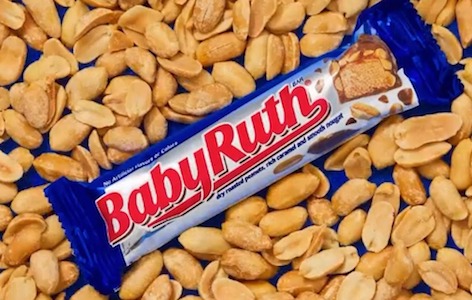
Baby Ruth Bar Not Named After Babe Ruth (but really it is)

If you’ve ever unwrapped a Baby Ruth candy bar, you might have wondered: Who on earth is Baby Ruth? Was it Babe Ruth, the home run king? Was it some long-lost child celebrity? Or was it just a clever way to sell chocolate, caramel, peanuts, and nougat without admitting it? As it turns out, the true origin of the Baby Ruth bar is a story filled with sugar, baseball bats, and a little bit of corporate trickery.

The Baby Ruth bar was introduced in 1921 by the Curtiss Candy Company. At that time, Babe Ruth was smashing baseballs into orbit and basically becoming America’s first real sports superstar. So naturally, people thought, “Oh, this candy must be named after Babe Ruth.” Logical, right? Wrong—or at least, that’s what the candy company claimed. Instead, Curtiss Candy swore on a stack of nougat that the candy was actually named after President Grover Cleveland’s daughter, Ruth. This would’ve been a fine explanation, except for one small detail: poor Ruth Cleveland had been dead for 17 years by the time the candy bar came out. It’s hard to believe America was clamoring for a caramel-and-peanut tribute to a child they hadn’t thought about since the 1890s.

So why the cover-up? Well, Babe Ruth wasn’t exactly thrilled about having his name slapped on a candy bar without his permission. Rumor has it he asked for royalties, and the candy company responded with a very polite version of “Nice try, slugger.” By insisting the bar was about Ruth Cleveland instead of Babe Ruth, they dodged paying the Sultan of Swat a single peanut. A crafty move, considering candy companies are very protective of their nougat margins.

The irony of the whole situation is that Babe Ruth himself actually tried to launch his own candy bar in the 1920s, called the Ruth’s Home Run Bar. Unfortunately, it struck out almost immediately because Baby Ruth was already dominating the shelves. Imagine trying to sell a soda called “Coca-Kola” after Coke already existed—it just wasn’t going to work. So while Babe Ruth may have been the king of baseball, he was benched in the candy aisle.

Today, the Baby Ruth remains a staple in the world of candy, even though most people still assume it was named after Babe Ruth. In a way, it’s the greatest inside joke in American snack history: a candy bar that everyone thinks honors a baseball legend but officially commemorates a president’s long-deceased daughter. If anything, that’s proof that nougat mixed with caramel and peanuts can cover up a lot—including a suspicious backstory.

So the next time you bite into a Baby Ruth, just remember: you’re not just enjoying a candy bar—you’re unwrapping a century-old argument between a candy company and a baseball legend. And if that doesn’t make it taste sweeter, at least you can laugh knowing America once pretended it was nostalgic for a president’s kid just to avoid cutting Babe Ruth a check.
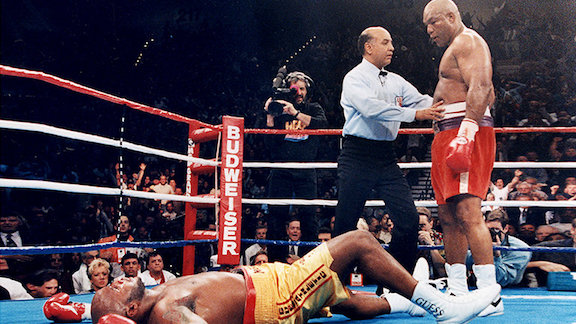
George Foreman's 1994 upset of Michael Moorer

The Three Acts of George Foreman

The Rumble in the Jungle wasn’t just a boxing match—it was the catalyst for one of the greatest transformations in sports history. Instead of breaking George Foreman, the loss ultimately made him a legend in an entirely new way while proving people can actually change. In tribute to the recently departed boxing and pop-culture icon, FreeSportsMagazine.com presents the Three Acts of George Foreman.

Act I: Mean George Foreman

On October 30, 1974, George Foreman entered the ring in Kinshasa, Zaire, as the undefeated heavyweight champion, set to defend his title against Muhammad Ali in what would become one of the most famous boxing matches in history: The Rumble in the Jungle. Foreman, known for his overwhelming power and intimidation, was a heavy favorite. However, by the end of the night, he found himself not only defeated but also on a path that would reshape his life in ways no one could have predicted.

Foreman had dominated his previous opponents, including Joe Frazier and Ken Norton, both of whom he had destroyed in less than two rounds. Many believed Ali wouldn’t last against Foreman’s brutal strength.

However, Ali executed a brilliant strategy—the rope-a-dope—leaning against the ropes, absorbing Foreman’s powerful blows, and letting the younger champion tire himself out. By the eighth round, a drained Foreman left an opening, and Ali capitalized, landing a rapid combination that sent Foreman crashing to the canvas. The world watched in shock as the referee counted Foreman out, giving Ali one of the greatest victories in boxing history.

Losing to Ali was devastating for Foreman. He had built his reputation on invincibility, and this loss shattered his confidence. Foreman later admitted he was deeply depressed following the fight. He struggled to accept the loss, making excuses about unfair conditions, including the heat and a biased referee.

Determined to reclaim his place as champion, Foreman continued fighting. He won several matches but suffered another major defeat to Jimmy Young in 1977. After the Young fight, Foreman claimed he had a near-death experience in the locker room, where he felt as if he was dying and had visions of himself in hell. This moment led him to abandon boxing and dedicate his life to religion.

Act II: Born Again George Foreman

Following his locker-room experience from the Young fight, Foreman retired from boxing at age 28 and became a born-again Christian. He spent the next decade preaching, helping troubled youth, and running a church in Houston, Texas. Many saw this as a shocking transformation for a man once feared as a brutal knockout artist. Even some family members were skeptical.

In need of funds for his youth center, Foreman made an unexpected return to boxing a decade later in 1987. Instead of the scowling destroyer of the ‘70s, he was now “Big George,” a smiling and cheerful fan-favorite known for his humor and humility. He slowly worked his way back into contention and in 1994, at age 45, he completed his redemption arc by knocking out Michael Moorer to regain the heavyweight title, becoming the oldest champion in history. His comeback story was seen as one of the greatest in sports history.

Act III: Spokesman George Foreman

In the midst of this inspiring comeback, Salton, Inc. developed a sloped-surface grill designed to drain fat while cooking. Looking for a marketable celebrity, they approached Foreman, whose friendly, charismatic persona and reputation for power made him the perfect spokesman. Foreman embraced the product, lending his name and image while delivering the famous tagline: “It knocks out the fat!”

The grill became an instant hit, selling millions of units worldwide. At its peak, it was selling 6 million units per year, and in total, over 100 million grills were sold. Foreman’s endorsement deal originally earned him 40% of the profits, but in 1999, he sold his naming rights to Salton for a lump sum of $137.5 million. In total, Foreman made an estimated $200–250 million from the grill—far surpassing his boxing earnings.

Epilogue

George Foreman’s defeat to Ali was the turning point of his life. Though it was painful at the time, it set him on a path to becoming a spiritual leader, comeback hero, and successful businessman. In a heartfelt Instagram post after his passing, Foreman’s family described him as a “devout preacher,” “protector of his legacy,” and a “force for good.”

Fort Tejon: Get Some Exercise Before Your Final Destination

California has always had a history of looking after their own. This includes in 1854 when Fort Tejon was established to protect its residents from people looking to do them harm and to crack down on cattle raiding. In 2022, the fort still provides refuge for overheated cars, respite for tired travelers, and tons of cool things to explore.

When driving through the infamous Grapevine on I-5 in southern California, one doesn’t necessarily think to themselves, “Hmm, this seems like a good place to stop.” Nor should they unless they are planning on making a quick stop at Fort Tejon State Historic Park. This hidden gem is located right off the highway and has been a cooling down spot for autos and their radiators struggling to make it through the vine for years. But just behind the wall of trees that line the parking lot lie the remains of a powerful little fort – and a great spot for EXERCISE!

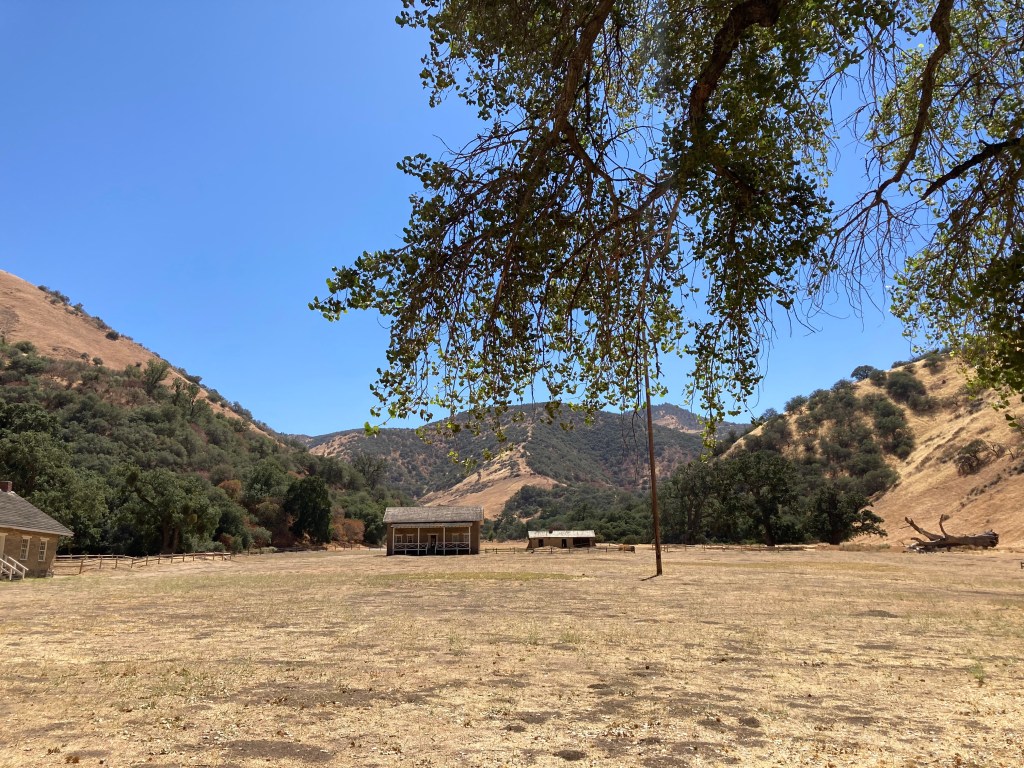
View of Fort Tejon State Park

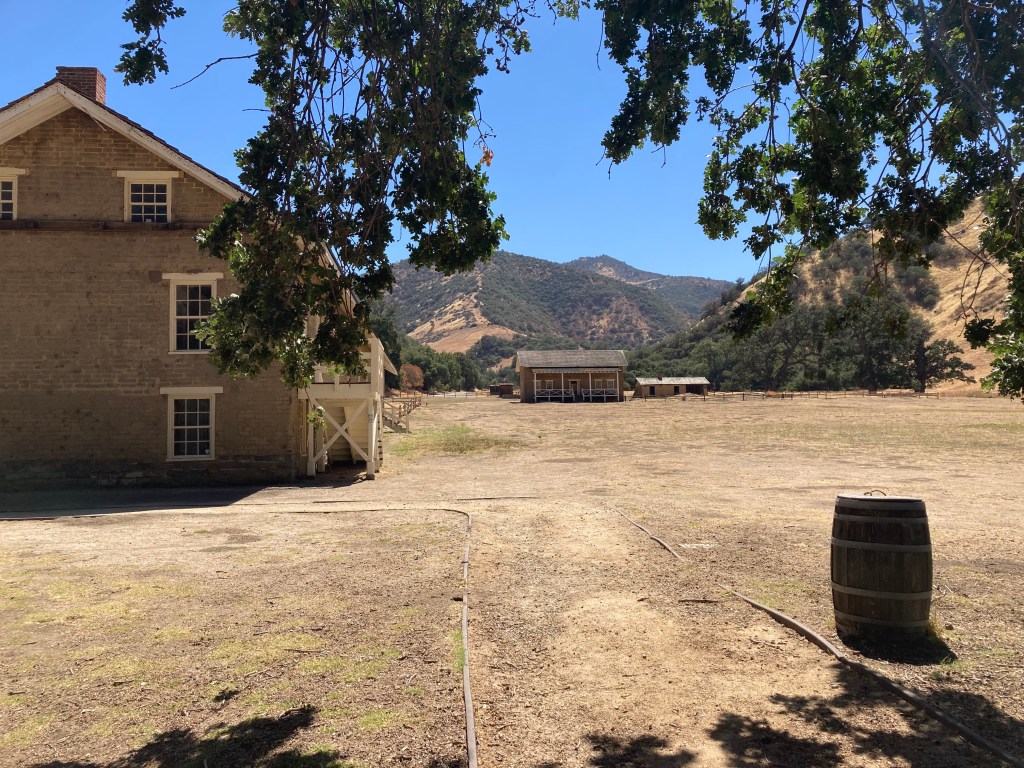
The beauty of Fort Tejon hits you once you walk past that wall of trees and take a quick turn through a small wooden gate. Multiple structures in various stages of preservation make up the perimeter of Fort Tejon, giving it a weird Melrose Place (the TV show) feel with an open field and a handful of picnic tables acting as the pool/courtyard.

Preserved buildings at Fort Tejon State Historic Park

In addition to taking in some great California history, stopping at Fort Tejon State Park can be good for your health! If you’ve been sitting or driving for a long time, the fields and open areas are a great place to move around to get the blood flowing. Remember that sitting down for too long can be dangerous in certain situations. Road trip veterans may know this but that doesn’t mean rookie mistakes don’t happen once and a while. The Fort offers a safe space for some quick activity and never gets too busy.

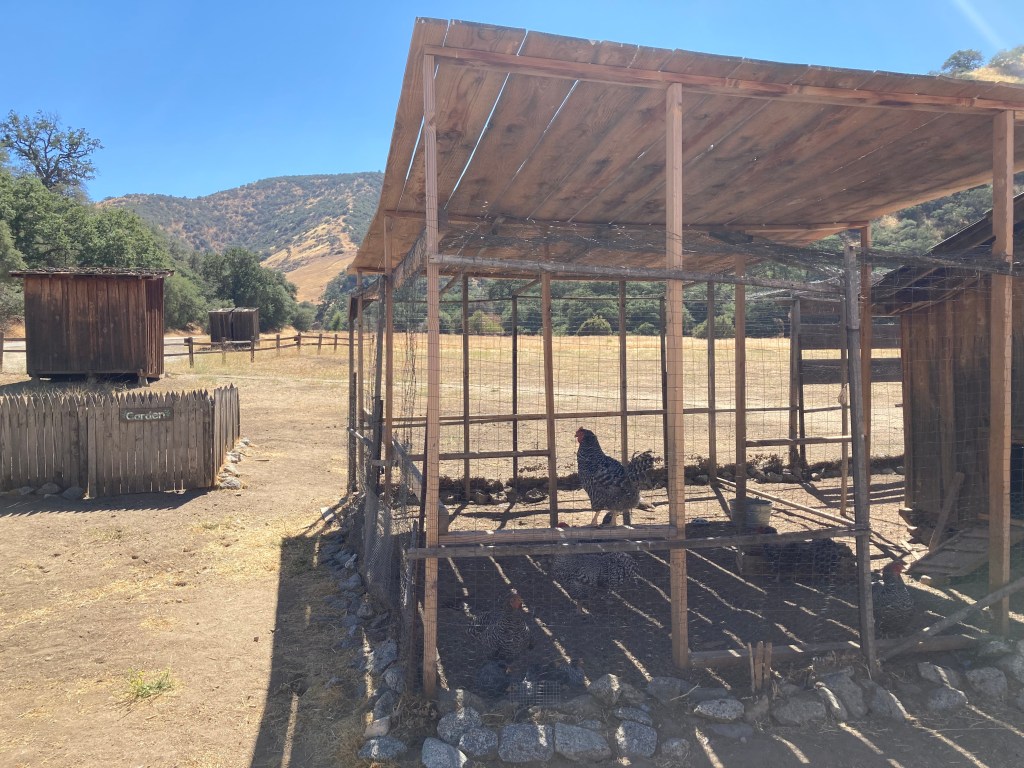
Chicken Coop at Fort Tejon

So, when traveling this path, consider visiting Fort Tejon State Historic Park before you reach your next destination for any of the following heart healthy activities:

Individualized Stretch Routine

10 Minute Yoga

Meditation

Easy Hiking / Exploring

Brisk Walking

Running

Sprints

For more info about Fort Tejon State Historic Park, click here.