Tag Archives: free sports magazine

Hakuna Matata: The True Crime Story of Bison Dele in Four Short Chapters

The story of Bison Dele’s death reads like the final chapter of a noir thriller—sun-soaked paradise masking dark secrets, a charismatic ex-athlete yearning for peace, and someone whose jealousy would turn deadly. It’s a story of fame, escape, and the ultimate betrayal, set not in the cold alleys of a city but on the endless blue of the South Pacific.

Chapter 1: The Disappearing Star

Bison Dele wasn’t just another basketball player. Born Brian Carson Williams in 1969, he was a gifted, soulful giant who seemed both drawn to and haunted by fame. After stints with the Orlando Magic, Denver Nuggets, Los Angeles Clippers, and Chicago Bulls—where he won an NBA championship in 1997—Dele walked away at just 30 years old. He turned down millions, choosing freedom over fortune. He traveled the world, learned to play saxophone, and sailed from port to port, often unreachable, as if trying to erase the celebrity that had once defined him.

By 2002, Dele had settled into a quiet life aboard his beloved catamaran, the Hakuna Matata, named for the Swahili phrase meaning “no worries.” He sailed with his girlfriend, Serena Karlan, and occasionally with his older brother, Miles Dabord. Where Bison was introspective and gentle, his brother Miles could be restless, jealous, and increasingly unstable at times.

Chapter 2: Setting Sail

In early July 2002, Dele, Karlan, and Miles departed from Tahiti with their captain, Bertrand Saldo. It was supposed to be a short voyage—just a few days of island hopping. But when the Hakuna Matata failed to return, family and friends began to worry. No distress signals were sent. No sightings were reported. The ocean had seemingly swallowed four people whole.

Then, days later, the Hakuna Matata reappeared—mysteriously docked in Tahiti, piloted by a single man. He called himself “Arlando”—but fingerprints told a darker truth. It was Miles Dabord, alone.

Chapter 3: The Impostor

Dabord told conflicting stories to anyone who would listen. He said the others were “in Tahiti,” and that there had been an “accident.” But his behavior told another story. He forged his brother’s signature to withdraw money from Dele’s accounts. He bought gold. He changed his identity. And when investigators pressed him, his tangled web began to unravel.

Authorities pieced together a chilling narrative: somewhere in the remote waters between Tahiti and Honolulu, Miles had snapped. An argument escalated—possibly over money or control of the boat. In a fit of rage, he struck Serena. When the captain intervened, he was killed too. Finally, Bison—who had always tried to protect those around him—was murdered as well.

Miles, left alone with the aftermath, allegedly weighted their bodies and cast them into the sea, letting the Pacific become their grave.

Chapter 4: The Final Act

By September 2002, the truth was closing in. U.S. authorities tracked Dabord to a hotel in Tijuana, Mexico. He was found unconscious after an apparent insulin overdose—an act of apparent suicide. He never regained consciousness. When he died, so too did any chance of recovering the full truth.

The bodies of Bison Dele, Serena Karlan, and Bertrand Saldo were never found.

Epilogue: The Dream That Sank

In life, Bison Dele sought peace—a life far from the noise of arenas and headlines. He chased freedom across continents, only to be betrayed by a person he trusted to share the journey.

His death remains one of sport’s most haunting mysteries—a story of blood and brotherhood on the high seas, where jealousy drowned love, and paradise turned to nightmare.

The Pacific still rolls on, indifferent and endless. Somewhere beneath it, the echoes of Bison Dele’s final voyage drift with the tides—a reminder that even in paradise, darkness can find its way aboard.

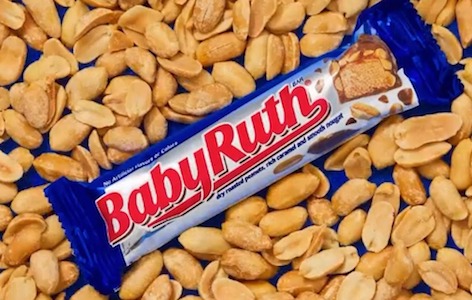
Baby Ruth Bar Not Named After Babe Ruth (but really it is)

If you’ve ever unwrapped a Baby Ruth candy bar, you might have wondered: Who on earth is Baby Ruth? Was it Babe Ruth, the home run king? Was it some long-lost child celebrity? Or was it just a clever way to sell chocolate, caramel, peanuts, and nougat without admitting it? As it turns out, the true origin of the Baby Ruth bar is a story filled with sugar, baseball bats, and a little bit of corporate trickery.

The Baby Ruth bar was introduced in 1921 by the Curtiss Candy Company. At that time, Babe Ruth was smashing baseballs into orbit and basically becoming America’s first real sports superstar. So naturally, people thought, “Oh, this candy must be named after Babe Ruth.” Logical, right? Wrong—or at least, that’s what the candy company claimed. Instead, Curtiss Candy swore on a stack of nougat that the candy was actually named after President Grover Cleveland’s daughter, Ruth. This would’ve been a fine explanation, except for one small detail: poor Ruth Cleveland had been dead for 17 years by the time the candy bar came out. It’s hard to believe America was clamoring for a caramel-and-peanut tribute to a child they hadn’t thought about since the 1890s.

So why the cover-up? Well, Babe Ruth wasn’t exactly thrilled about having his name slapped on a candy bar without his permission. Rumor has it he asked for royalties, and the candy company responded with a very polite version of “Nice try, slugger.” By insisting the bar was about Ruth Cleveland instead of Babe Ruth, they dodged paying the Sultan of Swat a single peanut. A crafty move, considering candy companies are very protective of their nougat margins.

The irony of the whole situation is that Babe Ruth himself actually tried to launch his own candy bar in the 1920s, called the Ruth’s Home Run Bar. Unfortunately, it struck out almost immediately because Baby Ruth was already dominating the shelves. Imagine trying to sell a soda called “Coca-Kola” after Coke already existed—it just wasn’t going to work. So while Babe Ruth may have been the king of baseball, he was benched in the candy aisle.

Today, the Baby Ruth remains a staple in the world of candy, even though most people still assume it was named after Babe Ruth. In a way, it’s the greatest inside joke in American snack history: a candy bar that everyone thinks honors a baseball legend but officially commemorates a president’s long-deceased daughter. If anything, that’s proof that nougat mixed with caramel and peanuts can cover up a lot—including a suspicious backstory.

So the next time you bite into a Baby Ruth, just remember: you’re not just enjoying a candy bar—you’re unwrapping a century-old argument between a candy company and a baseball legend. And if that doesn’t make it taste sweeter, at least you can laugh knowing America once pretended it was nostalgic for a president’s kid just to avoid cutting Babe Ruth a check.

Fantasy Football Logo

Why Do So Many People Play Fantasy Football?

Fantasy football isn’t just a side hobby anymore—it’s a huge part of how people enjoy the National Football League (NFL). Today, tens of millions of people in the U.S. and Canada play some form of fantasy sports, and football is by far the most popular. What started as a few fans keeping score with pen and paper has turned into a massive pastime that keeps growing every season. Millions of people draft teams, track player performances, and compete with friends, coworkers, or strangers in leagues that mirror the real NFL season.

According to the Fantasy Sports & Gaming Association (FSGA), more than 60 million people in North America play fantasy sports, with football being the most popular by a wide margin. Within this group, fantasy football alone accounts for tens of millions of participants, making it a cultural phenomenon that has transformed from a niche hobby into one of the most popular forms of sports entertainment in the United States and beyond. But why is it so popular?

One big reason for the boom is how easy it is now. Back in the day, you had to flip through the newspaper on Monday to add up stats by hand. Now, apps like ESPN, Yahoo, and Sleeper do everything for you instantly. You can draft your team in minutes, check scores on your phone, and even get alerts if one of your players is hurt. It’s simple enough that casual fans can play, but still competitive enough to keep hardcore football junkies hooked.

Another reason people love it is the social side. Fantasy football gives friends, coworkers, and even family members a reason to connect every week. Whether it’s talking trash in the group chat, holding a draft party, or sweating out a Monday Night Football game together, it turns watching football into a shared experience. For a lot of people, the league itself is as much about bonding as it is about winning.

The rise of media and social platforms has also made fantasy football bigger than ever. There are shows, podcasts, and entire websites dedicated to fantasy advice. Social media makes it easy to share hot takes, funny memes, or those heartbreaking last-second losses with your league mates. The constant coverage keeps people engaged and makes the fantasy world feel like part of the real NFL season.

Lastly, the popularity of sports betting has helped fantasy football grow, too. Daily fantasy leagues like DraftKings and FanDuel mix in a gambling element, and while season-long leagues are more about bragging rights, the competitive thrill is similar. People love the strategy, the unpredictability, and of course, the chance to win a little money (or at least avoid finishing last).

In the end, fantasy football has exploded because it’s easy, social, and fun. It turns every game into something personal, whether you’re rooting for your favorite team or just hoping your kicker doesn’t blow it. As long as football is around, fantasy football is only going to keep pulling in more players.

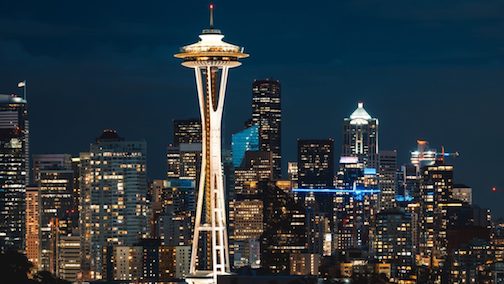
The Space Needle: Seattle’s Tallest Misunderstanding

The Seattle Space Needle is the kind of building that begs to be misunderstood. Standing 605 feet tall with a flying-saucer-shaped top, it looks less like a piece of architecture and more like something that landed while the city wasn’t paying attention. Built for the 1962 World’s Fair, it was designed to embody a “space age” future—sleek, optimistic, and just a little bit weird. The problem? When you design a tower that resembles a UFO on stilts, people are bound to think it’s doing more than just offering panoramic views and overpriced snacks.

Part of the confusion comes from timing. The early ’60s were the golden age of space fever—satellites were circling the globe, astronauts were practicing moonwalks, and every other household appliance seemed to have “astro” in the name. Into this atmosphere arrived the Space Needle, its futuristic silhouette rising over Seattle like mission control for the Jetsons. Tourists didn’t exactly need an announcement from NASA to connect the dots.

The design itself doesn’t help the case for the truth. The saucer top? Clearly a UFO landing pad. The skinny legs? Obviously to minimize alien wind resistance. The rotating restaurant? A clever cover story for a high-tech tracking system scanning the heavens for rogue asteroids or overly curious extraterrestrials. If you squint hard enough, you can practically see a scientist in a silver jumpsuit walking across the deck, clipboard in hand, checking the day’s warp speed calibrations.

In reality, the Space Needle’s mission is far more down-to-earth—literally. It’s an observation tower, a restaurant, and a selfie magnet for tourists. Instead of scientists monitoring deep-space signals, you’ll find diners enjoying a plate of Pacific salmon while the floor slowly spins, giving them a 360-degree view of mountains, water, and, yes, the occasional rain cloud. The only thing it’s “launching” are elevator rides that reach the top in just 41 seconds.

Still, the myth lives on because it’s simply more fun than the truth. Seattleites don’t mind; a little mystery makes their skyline even more iconic. And if the Space Needle keeps a few people wondering whether the city secretly communicates with aliens, that’s fine—after all, every great city deserves a legend, and this one just happens to look like it could fly away at any moment.

Teddy Roosevelt: The First MMA President?

Theodore “Teddy” Roosevelt, the 26th president of the United States, was a lifelong advocate of physical fitness and athleticism. Throughout his life, he engaged in a wide array of sports—from hiking, horseback riding, and rowing to tennis and jiu-jitsu. However, the sport he was arguably best at—and most passionate about—was boxing. He also had a love for wrestling and the martial arts. This begs the question, was Teddy Roosevelt the first ever MMA president?

Roosevelt began boxing as a student at Harvard University, where he competed as a lightweight. Though he never won any titles, he was known for his grit, determination, and surprising toughness in the ring. He continued boxing recreationally into adulthood, often sparring with younger, more skilled opponents during his political career—even while serving in the White House.

One famous story tells of Roosevelt engaging in a White House sparring match with a young Army artillery officer. The future president, well into his 40s at the time, took a punch so hard that it left him permanently blind in one eye. Yet, he never made a fuss and only quietly stopped boxing afterward, shifting to other sports like jiu-jitsu and hiking.

Boxing symbolized Roosevelt’s philosophy of the “strenuous life”—a belief that hard physical labor and rugged living built character and leadership. While he enjoyed many sports, none captured his spirit of tenacity, courage, and self-discipline quite like boxing.

As previously mentioned, Roosevelt eventually moved away from boxing in favor of other activities such as hiking, climbing, and wrestling. Roosevelt enjoyed jiu-jitsu in particular because much like boxing, it aligned perfectly with his philosophy centered on discipline, toughness, and constant self-improvement. He saw the martial art not only as a form of physical exercise but as a way to sharpen the mind, build character, and cultivate personal courage.

Additionally, being president during a time of increasing U.S.-Japan relations, Roosevelt’s interest in jiu-jitsu reflected his fascination with Japanese culture and martial tradition. He even brought in Japanese experts—like Yoshiaki Yamashita—to teach him and members of his inner circle at the White House.

Roosevelt was the first U.S. president known to study and participate in martial arts. His enthusiasm helped generate early American interest in jiu-jitsu and, later, judo. It’s not a stretch to say he planted the seeds for MMA’s modern day popularity and that if he were president today, he would he be sitting front row at the big UFC events.

Chestnut’s Ban Lifted, Will Return to Hot Dog Contest this Year

The Nathan’s Hot Dog Eating Contest is a uniquely American spectacle—a competitive eating event held every Fourth of July at the original Nathan’s Famous restaurant on Coney Island in Brooklyn, New York. Over the decades, it has grown from a local novelty into a nationally televised cultural event. Its history is a curious blend of patriotism, marketing savvy, and extreme physical endurance.

According to Nathan’s lore, the first contest was held in 1916 when four immigrants competed to prove who was the most patriotic by eating the most hot dogs. While this origin story has since been debunked as a clever piece of marketing invented in the 1970s, it nonetheless set the tone for the contest’s mythology.

The modern era of the contest began in earnest in the early 2000s, when ESPN started broadcasting it live. The rise of competitive eating as entertainment coincided with the reign of Takeru Kobayashi, a Japanese competitor who revolutionized the sport with his technique and stamina. Kobayashi’s arrival in 2001, and his subsequent record-breaking performances, put Nathan’s on the map internationally.

The next chapter in the contest’s evolution was written by Joey Chestnut, a California native who dethroned Kobayashi in 2007 and ushered in a new era of dominance. Chestnut’s feats were nothing short of extraordinary. From 2007 to 2023, he won the contest 16 times, setting multiple world records in the process—including his astonishing 76 hot dogs in 10 minutes in 2021.

Chestnut became synonymous with the event. His relentless training, competitive fire, and ability to perform under pressure earned him the nickname “Jaws” and made him a household name. His duels with other top eaters added drama, but Chestnut often proved untouchable. He became the face of Nathan’s contest and competitive eating itself.

In 2024, however, Joey Chestnut’s long association with the Nathan’s contest came to a sudden and unexpected end. Major League Eating (MLE), the organization that sanctions the event, announced that Chestnut would not be competing due to a sponsorship conflict. Chestnut had signed a promotional deal with Impossible Foods, a company known for its plant-based meat alternatives, including vegan hot dogs.

Nathan’s Famous and MLE viewed this sponsorship as a direct conflict of interest. Nathan’s, which promotes its traditional all-beef hot dogs, reportedly asked Chestnut to drop the Impossible Foods partnership if he wanted to compete. Chestnut declined, stating that he should be able to work with other brands and that he was not under a formal contract that restricted such agreements. This impasse led to his exclusion from the 2024 event.

The public reaction was swift and largely supportive of Chestnut. Many fans and commentators criticized Nathan’s and MLE for what they saw as a shortsighted business decision that prioritized brand protection over honoring the contest’s most iconic figure. Some likened it to banning Michael Jordan from the NBA Finals or Tom Brady from the Super Bowl.

Nathan’s Hot Dog Eating Contest has always been about more than just food—it’s about American tradition, spectacle, and the quirky pursuit of glory. Joey Chestnut embodied that spirit for nearly two decades. For many, Chestnut was a part of their Fourth of July celebrations which is something MLE and Nathan’s probably came to realize when they decided to lift his ban.

In mid‑June, Chestnut confirmed on social media (X) and through various outlets like ESPN, ABC News, and CBS Sports that he will compete in the 2025 contest after missing the 2024 event due to the sponsorship dispute. Chestnut explained that he partners with a variety of companies, including some that are plant‑based, but none of them conflict with his love for hot dogs, and that Nathan’s is the only hot dog brand he’s ever endorsed.

MLE’s president voiced enthusiasm, stating they’re “extremely excited to welcome Joey back…for what will surely be the greatest Nathan’s Famous Hot Dog Eating Contest of all time.”

Chestnut will be pursuing a record 17th title. Fox Sports notes he is the heavy favorite to exceed 71.5 hot dogs in the 10‑minute contest, reflecting strong betting odds.

Rick Fox: From Hardwood to Hollywood

Rick Fox, a name synonymous with basketball during the 1990s and early 2000s, successfully transitioned from a standout NBA career to a noteworthy presence in the entertainment industry.

Born on July 24, 1969, in Toronto, Canada, Fox rose to prominence as a versatile forward for the Boston Celtics and later the Los Angeles Lakers, where he won three NBA championships. Yet, what sets Rick Fox apart from many of his athletic peers is not just his talent on the court, but his remarkable second act as a working actor in film and television.

Fox’s foray into acting began even before his retirement from basketball. He made his film debut in 1994 with a role in Blue Chips, a sports drama that also featured fellow NBA stars like Shaquille O’Neal and Penny Hardaway. This early appearance was a natural extension of his basketball fame, but it signaled the start of something deeper: a genuine interest in performing arts.

Following his retirement from the NBA in 2004, Fox increasingly devoted time to acting. He built an eclectic filmography that spanned drama, comedy, and even holiday fare. Notable roles include Chick Deagan in He Got Game (1998), directed by Spike Lee, and Clyde “Sweet Feet” Livingston in the popular family film Holes (2003). He also played Harry Belton in Tyler Perry’s Meet the Browns (2008), a role that further cemented his credibility among movie-going audiences and helped broaden his appeal beyond sports fans.

One of the most distinctive elements of Fox’s acting career is his willingness to take on diverse and sometimes unexpected roles. In the cult indie film Mini’s First Time (2006), he played a suave character named Fabrizio, showcasing his comedic timing and range. In the action-horror Navy Seals vs. Zombies (2015), he played the Vice President of the United States—a role far removed from the world of sports, reflecting his growing versatility as an actor.

In addition to feature films, Fox has made significant appearances on television. He starred in the HBO prison drama Oz as Jackson Vahue, a storyline that tackled the challenges faced by professional athletes who fall from grace. Later, he played recurring roles on hit series like Ugly Betty and participated in reality shows such as Dancing with the Stars, which broadened his visibility and helped him reach a new generation of viewers.

Fox’s most enduring television role in recent years has been as Detective Ian Jackson in the Morning Show Mysteries series on Hallmark Movies & Mysteries, a franchise that blends suspense with lighthearted charm. His character’s consistent presence has made him a familiar face for mystery movie fans, and the role has become one of his most recognized post-NBA personas.

Rick Fox exemplifies how a career in professional sports can serve as a springboard into a second life in the arts. His journey from Lakers legend to actor is not merely a tale of celebrity crossover but a genuine narrative of reinvention. With over a dozen film roles, numerous television credits, and a steady presence in pop culture, Rick Fox stands as a rare example of a multi-talented performer who has thrived in two intensely competitive worlds.

The Time RoboCop Tried Professional Wrestling

The transition from the 80’s to the 90’s was a wild time. Some would say the best of both worlds were colliding and everyone was along for the ride. Part of that ride was RoboCop’s arrival in World Championship Wrestling (WCW). How can we even begin to explain this? Robocop, a fictional character from the movies, was now somehow real and decided to fight crime in a real sports organization that was really just a fictional sports organization.  

RoboCop showed up in World Championship Wrestling during the 1990 Capital Combat: Return of RoboCop pay-per-view event. This bizarre crossover happened mainly for marketing reasons. At the time, Orion Pictures was about to release the movie RoboCop 2. WCW and Orion worked out a promotional tie-in in which RoboCop would make an appearance at the wrestling event to hype up the film.

In the storyline, RoboCop helped Sting, who was one of WCW’s top stars, fend off an attack from the villainous group known as the Four Horsemen. RoboCop came down to ringside, “bent” the bars of a cage to rescue Sting, and helped him chase the bad guys off.

Fans and critics heavily mocked the segment, and it’s still remembered as one of the most embarrassing and absurd moments in pro wrestling history. The “action” was slow and obviously fake. RoboCop was being portrayed by a guy in a heavy suit (probably not Peter Weller) who could barely move.

So what’s the big deal? Fort starters, RoboCop is a fictional cyborg from a dystopian sci-fi movie — totally out of place in a wrestling environment that, even by 1990s standards, tried to maintain some realism. Arn Anderson was a major member of the Four Horsemen and one of the guys involved in the RoboCop segment. He thought the whole idea was “embarrassing” and made wrestling look like a “clown show”. Arn described the whole thing as “cartoonish” and something that hurt WCW’s credibility, especially when the company was trying to be seen as a more serious alternative to WWF’s over-the-top characters at the time.

Arn Anderson has gone on the record during his “ARN” podcast to share his true thoughts about the infamous RoboCop moment:

“I knew it was horsesh*t from the get-go. How do you fight a robot? Are we supposed to punch him and knock his head off? Are we supposed to sell for him? Run from him? He can’t move! It was one of the most embarrassing things I’ve ever been part of.”

Not pile on, but professional wrestling historian extortionate Jim Cornette also did not hold back when talking about the subject on an old “Kayfabe Commentaries” podcast.  

“It was the stupidest goddamn thing I’d ever seen. Who in the f*** thought RoboCop would draw money in wrestling? It made everyone look like idiots — the wrestlers, the announcers, the fans who had to sit through it. I was embarrassed to even be in the same building.”

Even the eternal optimist Sting (who Robocop saved during the segment) had trouble finding the silver lining. During the episode of “WWE Untold: Sting”, the wrestling icon had this to say about what went down that fateful day:

“I was standing there thinking, ‘Man, I hope nobody I know is watching this.”

George Foreman's 1994 upset of Michael Moorer

The Three Acts of George Foreman

The Rumble in the Jungle wasn’t just a boxing match—it was the catalyst for one of the greatest transformations in sports history. Instead of breaking George Foreman, the loss ultimately made him a legend in an entirely new way while proving people can actually change. In tribute to the recently departed boxing and pop-culture icon, FreeSportsMagazine.com presents the Three Acts of George Foreman.

Act I: Mean George Foreman

On October 30, 1974, George Foreman entered the ring in Kinshasa, Zaire, as the undefeated heavyweight champion, set to defend his title against Muhammad Ali in what would become one of the most famous boxing matches in history: The Rumble in the Jungle. Foreman, known for his overwhelming power and intimidation, was a heavy favorite. However, by the end of the night, he found himself not only defeated but also on a path that would reshape his life in ways no one could have predicted.

Foreman had dominated his previous opponents, including Joe Frazier and Ken Norton, both of whom he had destroyed in less than two rounds. Many believed Ali wouldn’t last against Foreman’s brutal strength.

However, Ali executed a brilliant strategy—the rope-a-dope—leaning against the ropes, absorbing Foreman’s powerful blows, and letting the younger champion tire himself out. By the eighth round, a drained Foreman left an opening, and Ali capitalized, landing a rapid combination that sent Foreman crashing to the canvas. The world watched in shock as the referee counted Foreman out, giving Ali one of the greatest victories in boxing history.

Losing to Ali was devastating for Foreman. He had built his reputation on invincibility, and this loss shattered his confidence. Foreman later admitted he was deeply depressed following the fight. He struggled to accept the loss, making excuses about unfair conditions, including the heat and a biased referee.

Determined to reclaim his place as champion, Foreman continued fighting. He won several matches but suffered another major defeat to Jimmy Young in 1977. After the Young fight, Foreman claimed he had a near-death experience in the locker room, where he felt as if he was dying and had visions of himself in hell. This moment led him to abandon boxing and dedicate his life to religion.

Act II: Born Again George Foreman

Following his locker-room experience from the Young fight, Foreman retired from boxing at age 28 and became a born-again Christian. He spent the next decade preaching, helping troubled youth, and running a church in Houston, Texas. Many saw this as a shocking transformation for a man once feared as a brutal knockout artist. Even some family members were skeptical.

In need of funds for his youth center, Foreman made an unexpected return to boxing a decade later in 1987. Instead of the scowling destroyer of the ‘70s, he was now “Big George,” a smiling and cheerful fan-favorite known for his humor and humility. He slowly worked his way back into contention and in 1994, at age 45, he completed his redemption arc by knocking out Michael Moorer to regain the heavyweight title, becoming the oldest champion in history. His comeback story was seen as one of the greatest in sports history.

Act III: Spokesman George Foreman

In the midst of this inspiring comeback, Salton, Inc. developed a sloped-surface grill designed to drain fat while cooking. Looking for a marketable celebrity, they approached Foreman, whose friendly, charismatic persona and reputation for power made him the perfect spokesman. Foreman embraced the product, lending his name and image while delivering the famous tagline: “It knocks out the fat!”

The grill became an instant hit, selling millions of units worldwide. At its peak, it was selling 6 million units per year, and in total, over 100 million grills were sold. Foreman’s endorsement deal originally earned him 40% of the profits, but in 1999, he sold his naming rights to Salton for a lump sum of $137.5 million. In total, Foreman made an estimated $200–250 million from the grill—far surpassing his boxing earnings.

Epilogue

George Foreman’s defeat to Ali was the turning point of his life. Though it was painful at the time, it set him on a path to becoming a spiritual leader, comeback hero, and successful businessman. In a heartfelt Instagram post after his passing, Foreman’s family described him as a “devout preacher,” “protector of his legacy,” and a “force for good.”

Murder, Suicide, and the Pro Football Hall of Fame

Jim Tyrer was an American professional football offensive tackle, widely regarded as one of the most dominant players of his era. Born on February 25, 1939, in Newark, Ohio, he attended Newark High School, excelling in track, basketball, and football. He played college football at Ohio State University under head coach Woody Hayes, earning All-America honors.

In 1961, Tyrer signed with the American Football League’s Dallas Texans, who later became the Kansas City Chiefs. Over 13 seasons with the franchise, he played in 180 consecutive games, starting every game of his 11 seasons in Kansas City. Tyrer was a nine-time Pro Bowl selection and a six-time first-team All-Pro. He was instrumental in the Chiefs’ victory in Super Bowl IV, where he and guard Ed Budde opened holes for Chiefs running backs against the Minnesota Vikings’ defensive line.

Following his retirement from football, Tyrer faced financial difficulties. He ran his own company, Pro Forma, representing professional athletes in commercial ventures, which eventually failed. He then worked as a manufacturer’s representative, operated flea market booths, and managed Crown Tire and Alignment, a gas station/tire store, which also failed. In the last months of his life, Tyrer and his wife, Martha, deeply in debt, sold Amway products.

Tragically, in the early morning hours of September 15, 1980, Tyrer shot and killed his wife, Martha, before taking his own life. Three of their four children were in the home at the time. In 2024, research suggested that Tyrer likely suffered from chronic traumatic encephalopathy (CTE) at the time of his death, a condition linked to repeated head injuries.

The revelation of a likely CTE diagnosis led to Tyrer’s consideration as a Seniors finalist for the Pro Football Hall of Fame’s Class of 2025. The nomination alone brings him one step closer to induction, pending approval from at least 80% of the Hall’s Selection Committee during their annual meeting, which will take place in advance of the class unveiling during Super Bowl LIX week in New Orleans.

Advocates for induction, including many former teammates, historians, and fans, argue that Tyrer’s tragic actions at the end of his life were likely influenced by CTE. They contend that understanding CTE provides context for his behavior and should not overshadow his professional accomplishments, which were many. Additionally, many supporters emphasize the importance of recognizing players from the American Football League (AFL) era, during which Tyrer was a main standout.

The skeptics, including some Hall of Fame voters, remain hesitant, citing the lasting impact of his final actions. The circumstances of Tyrer’s death—killing his wife and then himself—make some uncomfortable with honoring him, as it raises questions about the morality of celebrating his legacy. Critics argue that the Hall of Fame should consider a player’s entire legacy, both on and off the field, and that Tyrer’s actions could overshadow his football achievements. Many also worry about setting a precedent for inducting individuals with controversial or criminal histories.

The debate is ongoing, and the decision rests with the Hall of Fame’s Selection Committee next month. The outcome will likely reflect broader discussions about balancing professional achievements with personal conduct in honoring athletes. How would you vote?