Tag Archives: boxing

Teddy Roosevelt: The First MMA President?

Theodore “Teddy” Roosevelt, the 26th president of the United States, was a lifelong advocate of physical fitness and athleticism. Throughout his life, he engaged in a wide array of sports—from hiking, horseback riding, and rowing to tennis and jiu-jitsu. However, the sport he was arguably best at—and most passionate about—was boxing. He also had a love for wrestling and the martial arts. This begs the question, was Teddy Roosevelt the first ever MMA president?

Roosevelt began boxing as a student at Harvard University, where he competed as a lightweight. Though he never won any titles, he was known for his grit, determination, and surprising toughness in the ring. He continued boxing recreationally into adulthood, often sparring with younger, more skilled opponents during his political career—even while serving in the White House.

One famous story tells of Roosevelt engaging in a White House sparring match with a young Army artillery officer. The future president, well into his 40s at the time, took a punch so hard that it left him permanently blind in one eye. Yet, he never made a fuss and only quietly stopped boxing afterward, shifting to other sports like jiu-jitsu and hiking.

Boxing symbolized Roosevelt’s philosophy of the “strenuous life”—a belief that hard physical labor and rugged living built character and leadership. While he enjoyed many sports, none captured his spirit of tenacity, courage, and self-discipline quite like boxing.

As previously mentioned, Roosevelt eventually moved away from boxing in favor of other activities such as hiking, climbing, and wrestling. Roosevelt enjoyed jiu-jitsu in particular because much like boxing, it aligned perfectly with his philosophy centered on discipline, toughness, and constant self-improvement. He saw the martial art not only as a form of physical exercise but as a way to sharpen the mind, build character, and cultivate personal courage.

Additionally, being president during a time of increasing U.S.-Japan relations, Roosevelt’s interest in jiu-jitsu reflected his fascination with Japanese culture and martial tradition. He even brought in Japanese experts—like Yoshiaki Yamashita—to teach him and members of his inner circle at the White House.

Roosevelt was the first U.S. president known to study and participate in martial arts. His enthusiasm helped generate early American interest in jiu-jitsu and, later, judo. It’s not a stretch to say he planted the seeds for MMA’s modern day popularity and that if he were president today, he would he be sitting front row at the big UFC events.
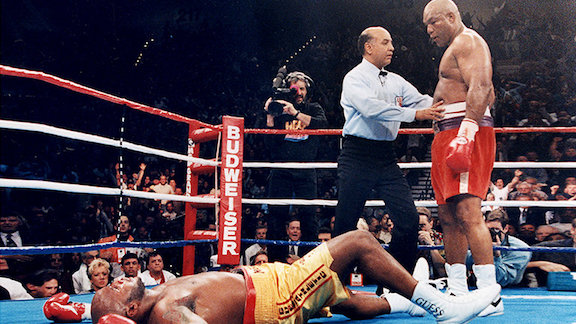
George Foreman's 1994 upset of Michael Moorer

The Three Acts of George Foreman

The Rumble in the Jungle wasn’t just a boxing match—it was the catalyst for one of the greatest transformations in sports history. Instead of breaking George Foreman, the loss ultimately made him a legend in an entirely new way while proving people can actually change. In tribute to the recently departed boxing and pop-culture icon, FreeSportsMagazine.com presents the Three Acts of George Foreman.

Act I: Mean George Foreman

On October 30, 1974, George Foreman entered the ring in Kinshasa, Zaire, as the undefeated heavyweight champion, set to defend his title against Muhammad Ali in what would become one of the most famous boxing matches in history: The Rumble in the Jungle. Foreman, known for his overwhelming power and intimidation, was a heavy favorite. However, by the end of the night, he found himself not only defeated but also on a path that would reshape his life in ways no one could have predicted.

Foreman had dominated his previous opponents, including Joe Frazier and Ken Norton, both of whom he had destroyed in less than two rounds. Many believed Ali wouldn’t last against Foreman’s brutal strength.

However, Ali executed a brilliant strategy—the rope-a-dope—leaning against the ropes, absorbing Foreman’s powerful blows, and letting the younger champion tire himself out. By the eighth round, a drained Foreman left an opening, and Ali capitalized, landing a rapid combination that sent Foreman crashing to the canvas. The world watched in shock as the referee counted Foreman out, giving Ali one of the greatest victories in boxing history.

Losing to Ali was devastating for Foreman. He had built his reputation on invincibility, and this loss shattered his confidence. Foreman later admitted he was deeply depressed following the fight. He struggled to accept the loss, making excuses about unfair conditions, including the heat and a biased referee.

Determined to reclaim his place as champion, Foreman continued fighting. He won several matches but suffered another major defeat to Jimmy Young in 1977. After the Young fight, Foreman claimed he had a near-death experience in the locker room, where he felt as if he was dying and had visions of himself in hell. This moment led him to abandon boxing and dedicate his life to religion.

Act II: Born Again George Foreman

Following his locker-room experience from the Young fight, Foreman retired from boxing at age 28 and became a born-again Christian. He spent the next decade preaching, helping troubled youth, and running a church in Houston, Texas. Many saw this as a shocking transformation for a man once feared as a brutal knockout artist. Even some family members were skeptical.

In need of funds for his youth center, Foreman made an unexpected return to boxing a decade later in 1987. Instead of the scowling destroyer of the ‘70s, he was now “Big George,” a smiling and cheerful fan-favorite known for his humor and humility. He slowly worked his way back into contention and in 1994, at age 45, he completed his redemption arc by knocking out Michael Moorer to regain the heavyweight title, becoming the oldest champion in history. His comeback story was seen as one of the greatest in sports history.

Act III: Spokesman George Foreman

In the midst of this inspiring comeback, Salton, Inc. developed a sloped-surface grill designed to drain fat while cooking. Looking for a marketable celebrity, they approached Foreman, whose friendly, charismatic persona and reputation for power made him the perfect spokesman. Foreman embraced the product, lending his name and image while delivering the famous tagline: “It knocks out the fat!”

The grill became an instant hit, selling millions of units worldwide. At its peak, it was selling 6 million units per year, and in total, over 100 million grills were sold. Foreman’s endorsement deal originally earned him 40% of the profits, but in 1999, he sold his naming rights to Salton for a lump sum of $137.5 million. In total, Foreman made an estimated $200–250 million from the grill—far surpassing his boxing earnings.

Epilogue

George Foreman’s defeat to Ali was the turning point of his life. Though it was painful at the time, it set him on a path to becoming a spiritual leader, comeback hero, and successful businessman. In a heartfelt Instagram post after his passing, Foreman’s family described him as a “devout preacher,” “protector of his legacy,” and a “force for good.”

FSM Retro: A Lil’ Love for SNES’ Super Punch-Out!!

FSM takes a look back at the rarely talked about Super Punch-Out!! boxing game courtesy of Shaun Rogers from NextLevelGamerz. We find out it’s not that hard following the classic sans Mike Tyson and that gamers can have a little old-school fun…

Super Punch-Out!! is a boxing video game developed and published by Nintendo for the SNES. It was released on September 14, 1994 in North America and again in the same region in 1996.

Super Punch-Out!! is an impressive boxing game for the Super Nintendo Entertainment System. It features great graphics, cool music, tight control, and excellent replay value. This game should be considered one of the greatest boxing games in video game history. The characters are full of personality and are unique and fun to fight. The game takes advantage of the SNES graphics chip capabilities and really pushes the envelope as far as graphics are concerned.

Playing this game is very enjoyable, as it is fun to play as a newbie or as an experienced veteran. Beating the opposition takes time and learning their patterns and moves really is a must. Super Punch-Out still rates up there as one of my favorite video games of all time. Beating the special hidden circuit definitely takes skills, and that is what I love about the game.

Gameplay

The action is fast, and the response times are lightning quick. Each opponent forces you to re-think your maneuvering, as they all have their own unique styles and patterns. The controls are simple enough, with a left and right punch, as well as a super punch. Dodging and blocking become key components in this game if you are to be successful.

The game play is very tight and responsive and pulling off super punches is easy. The game is easy enough for anybody to pick up and learn, and it is fun enough for everyone who wants to. Your boxer controls flawlessly and avoiding your opponent’s attacks will timing and skill.

The Storyline

You must take over the role of an underdog boxer attempting to win the Minor, Major, World, and Special Circuit Championships. Old arcade favorites like Bear Hugger, Piston Hurricane, and Bald Bull are here, as well as NES favorites like Mr. Sandman, and Super Macho Man. You are attempting to battle your way to the top of these circuits, which contain four boxers in each circuit, and the fourth opponent is the reigning champion. Overall the story is very simple but it works.

Graphics & Sound

Super Punch-Out is well animated and features beautiful cartoon like graphics that gives each fighter their own personality. The graphics are colorful and the characters are well animated. I love the opponents, Narcis Prince and Bear Hugger both are very different from one another but are so beautifully drawn that they just make my jaw drop wide open. The ring mat changes from circuit to circuit, but you only have the choice of using the one boxer.

He does not appear to be Little Mac from Mike Tyson’s Punch-Out but rather is a different character all together. The graphics are so bright and colorful that it is hard not to appreciate them. The opponents all have special facial and body expressions when they are about to pull off a new move or when they get decked themselves. It is comical to watch your opponent go sprawling into the corner after a knockdown punch.

It seems that each character is bigger than the last, and they all are so well done that each one is either very likable or easy to despise. The boxers feature their own theme songs and the sound effects from the punches are excellent. The sounds of the boxers are great as they each have their own voice samples, and the sound of your boxer after winning a match is great too. He will either exclaim that the match was, “A piece of cake,” or, “Too close”… your opponents laugh and pose when they win the match, which is incentive enough to get back in there and take them on once again.

The Games Re-playability

This game is very fun and the replay value is so high until you finish every circuit. The game has great graphics and sound, and the control is very precise and tight. Playing this game over and over can be easy to do because of all the entertainment value it possesses.

Attempting to beat your old best scores can be another incentive to play this game again. Tweaking your skills and becoming a master takes lots of time and practice, but putting a lot of effort into a game like this is easy just because it is so well done.

Final Thoughts

This game is a must have for Super NES owners. The cartoon like quality of the graphics makes this game humorous and addicting, and the music and sound effects are all right on with the game atmosphere. Missing out on Super Punch-Out!! would be a tragedy as this is the best boxing game Nintendo has ever made.

It is fun, addictive, humorous, challenging, and entertaining. Spending lots of time with your SNES will not be to difficult once you pick up a copy of Super Punch-Out!!, it is that kind of a game that still amazes even years later.

For more game reviews and things alike, visit nextlevelgamerz.

There’s More To Shadow Boxing Than Warming Up For Your Boxing Training Workouts

Shadow boxing is often looked at as just a quick way to warm up before the actual boxing workout session. Shadow boxing no doubt serves to warm the body for the upcoming workout. More importantly though, shadow boxing helps you to groove the skills you have been taught by your boxing coach during your boxing training workouts. It also serves as a tool to hone your own unique fighting style. If you think it’s just throwing punches to break a sweat, you’re going about it the wrong way.

When you’re shadow boxing, It’s best to shadow box in front of a mirror where you can monitor the technique that has been taught to you. I often say…the mirror doesn’t lie. Once you know what to look for, it’s impossible to have bad technique in front of the mirror! Unless of course you just don’t care or aren’t really focusing and putting your all into it. Shadow boxing is when you can better groove the new skills your trainer has been teaching you. Skill retention is a lot better when you shadow box in front of the mirror, grooving good skill.

If you really focus on what you’re doing while shadow boxing, progression is heightened. Your boxing coach won’t have to yell at you so much to stop dropping your hands when you’re working the bags. He will be very pleased to see your fast progression due to your commitment to solid technique when shadow boxing. Boxers can say all they want that they have been putting in the extra work shadow boxing, but good technique will be the telling sign and truth to the coach that the fighter has indeed been putting in the work.

Great fighters will tell you that when they shadow box and move around they envision real situations that may come up in the ring. They think about another fighter being in front of them firing back and moving away. From offensive combos, to defensive tactics, all is covered. Boxers are continually focusing focusing on what an opponent can possibly do while shadow boxing. That is why some boxing coaches call shadow boxing shadow sparring. It actually looks like the boxer is sparring an invisible opponent.

Look at an experienced fighter’s body language and eyes when doing this. It shows they are in a different world. Indeed they are, a world where they see themselves dominating. You wonder why these fighters get so good? Because they see themselves doing it first. The mind can’t tell the difference from something it’s experiencing or imagining. That’s why this secret is so important to apply. Your boxing performance will improve very quickly when you practice shadow boxing in this manner.

Now think about that the next time you shadow box or shadow spar.

About the author: Rob Pilger is a Certified Strength and Conditioning Specialist and Level II USA Boxing Coach.

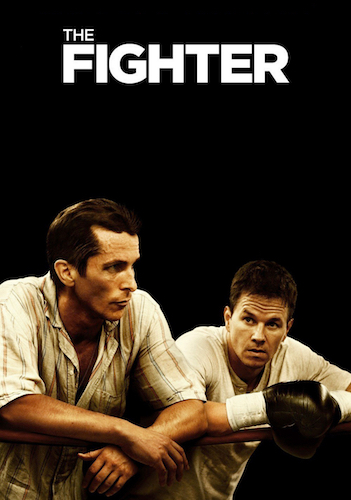
FSM Movies: The Fighter Turns 10

FSM revisits this Bostonian boxing saga nearly a decade after its release. This review was originally published on freesportsmagazine.com in December 2010.

Based on the life of boxing favorite “Irish” Mickey Ward, The Fighter fails to deliver the knockout blow which could have made it an instant classic with moviegoers this holiday season. Much like Ward’s professional career, The Fighter flirts with greatness but falls just a hair short when all is said and done.

The timeline and some of the events presented in this tale are inaccurate but nothing that is too atypical for a movie “based on a true story.” Overall, The Fighter gets the point across and the viewer leaves the theater with a good Cliff’s Notes version of the Mickey Ward story.

For a movie about a fast paced sport like boxing, this film trudges along at a snail’s pace. The fighting scenes are spectacularly exhilarating though they are few and far between and when they do pop up, they are short lived. The bulk of this film is a series of surreal interactions between Mickey Ward , his family, and of course the obligatory love interest.

This is definitely not the first boxing movie that is not about boxing. The original Rocky film did an excellent job of telling a love story using the darker side of the sport as a backdrop. The Fighter attempts to employ the same strategy but there is simply too much going on in the movie. Is this film about a dysfunctional family? A drug addict brother? A man who has lost the belief in himself? By trying to go in so many different directions, the movie spreads itself thin and ends up lacking in substance.

In terms of acting, there are a few strong performances, most notably Christian Bale as Dickie Ekland, the half-brother of Mickey Ward who is battling crack addiction. Melissa Leo (of Homicide: Life on the Street fame) also delivers as Ward’s mother who is both loveable and annoying to the viewer, often time simultaneously. And Mark Wahlberg is his typical, average, muscular self.  He does well during the tough guy scenes and fails miserably when trying to invoke that sense of drama which really would have made this flick reach the next level.

Despite all the hype and Golden Globe nominations (it seems like the only prerequisite these days to get nominated is that a film is released in December), The Fighter is a movie you can wait to see in the comfort of your own home for a fraction of the price.

FreeSportsMag gives The Fighter a grade of C+

FSM Editorial: How Much is Enough for Roy Jones Jr.?

This article was originally published in March 2011. With Roy Jones Jr. set to fight Mike Tyson by the end of 2020, the folks at FSM thought it was appropriate to share this editorial once again. Enjoy!

Here we go again – again. The announcement was made this month that fading boxing star Roy Jones Jr. will lace up the gloves for yet another questionable fight.

Exactly how much is enough punishment for a man to take in the ring? Unfortunately this is not a question a boxing fan can answer. Well I guess they could answer but it wouldn’t make much difference to Roy Jones Jr. who will travel to Russia on April 22 to face hot prospect Denis Lebedev (21-1, 16 KOs).

Lebedev is bigger, stronger, and 11 years younger. His only loss was a controversial decision in an opponent’s backyard. There should be no doubt that Roy Jones Jr. is being used as a stepping stone.  Check any Las Vegas sports book if you think the Russian guy is the underdog this time (yes that was a Rocky IV reference).

Roy Jones Jr. has lost two fights in a row. One of them was an embarrassing first round knockout to an Aussie journeyman and the other was a beating at the hands of Bernard Hopkins. Even before these two bouts, concerned citizens in the boxing community were pleading for Jones to stop fighting. His diminished skills were apparent in the fight against B-Hop. When fighting a younger contender like Lebedev, there will be potential for serious harm. I wouldn’t be surprised if we see Jones get knocked out in the style of the Glenn “Road Warrior” Johnson fight.

So back to my original question – how much is enough punishment for Jones Jr. to take? When a question like this is asked it usually means the person has already taken enough.

The truth is that it doesn’t matter what you or I think. And as much as I hate to see former greats blocking punches with their face, I’m not going to be the one to tell Roy Jones Jr. that he needs to quit boxing. I would loathe it if someone told me I had to stop doing something I love, especially if I was the best in the world at doing it at one point in my life.