Category Archives: FSM Editorials

Understanding the Benefit of Biomechanics in Golf

There is information available widely through the web, PGA courses and magazine articles that brings you up to date with the latest thinking in golf. They teach you the latest on how to swing each club correctly, how to putt, how to analyze your swing, how to get mentally ‘tough’, how to improve flexibility and how to get fitter and stronger for golf.

Today there is a plethora of information being offered about golf. Some of it correct, all of it interesting, but how much of it is relevant to you? And how do you know which of these generic exercise tips is going to help you? Even if you trained using each one for 6 weeks and then took the results onto the course and tried them – how do you then know whether your performance is ‘that exercise’ or that you just had a good day?

Even video/digital analysis, although interesting from all points of view measure the movement discrepancies in a golfer’s swing, it doesn’t tell us why you are performing these movement aberrations. Knowing what you’re doing wrong, but not knowing why you’re doing it is sometimes worse than not knowing what you’re doing wrong!

Golfers and Coaches need a simple system of analysis that they can use in conjunction with their coaching techniques to find out why golfers perform their particular swing. Although there are fundamental similarities to all good swings, each swing is like a finger-print and unique to that individual. Why is it unique? It’s because we are all biomechanically different, and unless you understand what those differences are, how can you identify whether your swing is due to poor technique or something that has to done to compensate for a mechanical problem? You can’t. The variety of golf swings that exist represent the many ways that the human body can compensate for its biomechanical problems.

For example, let’s take a typical handicapper’s slice. You know the typical causes of a slice and the things you would normally work on, bearing in mind the individual you are helping and what you see. At the same time we also know that these ways don’t always work. There may be a number of reasons for this: they may not be practicing, it may take some time to work out which is the best method for them, or quite simply it may be that the person doesn’t have it in them to do what you’re teaching. Alternatively, it is likely that they can’t physically do it. If that pupil has a longer right leg (assuming they’re a right handed golfer), then they will have a tendency towards a more upright back swing. We know this because of the way the spine and pelvis work biomechanically. A longer right leg compresses the joints in the spine on that side and so the person can’t rotate easily. They therefore have to side bend to gap the joints and initiate movement, which causes an upright backswing. We also know that this then leads to a more out-to-in downswing and therefore a slice (depending upon grip and ball position of course). So you could work all day on preventing this upright backswing, which you know is leading to a slice, but it will not change until you’ve addressed the leg length discrepancy.

Invariably these leg length discrepancies are caused by a rotated pelvis and often they don’t cause symptoms so you won’t even know they exist. If this is the case, then doing some simple exercises can help re-align the pelvis, reduce the leg length discrepancy and allow you to flatten that back swing.

There are many more of these examples. As well as leg length discrepancies, other biomechanical issues can include, poor motor programming strategy (the way the muscles link together in movement patterns), poor control between the pelvis and shoulders, nerve adhesions or stiffness, faulty core muscle control, immobility around the hips, pelvis and spine, and simple lack of flexibility. Some of these issues sound quite technical and complex, but they’re actually very simple to test and eradicate.

Biomechanics works ‘hand in glove’ with your teaching; it is crucial Pro’s understand and embrace this as its going to be the next big thing in golf.

There is a system that exists that can help others learn about and address these issues. It comes in 3 forms. First, there is a software package that takes you through some simple biomechanical tests. This expert system takes you through a series of exercises to eradicate biomechanical problems. Second, there are courses, which are endorsed by the PGA, which teach PGA professionals how to assess their own pupils and administer the exercises themselves. Lastly, experts can come to your club and assess your pupils individually and make recommendations based upon a detailed assessment of their biomechanics. Following a discussion with these experts, a decision can be made as to the best program for them to follow.

A Rowdy Guy Who Made Pro Wrestling Fans Smile

In 2015 the world of sports and entertainment lost a legend who passed away far too young. “Rowdy” Roddy Piper died of a heart attack at just 61 years of age. Born as Roderick George Toombs in Saskatoon, Saskatchewan, Canada in 1954, Piper was a professional wrestling superstar whose “Piper’s Pit” interviews were as legendary as his antics in and out of the ring. He was able to morph his career into many areas of entertainment including acting. He appeared in a number of on-screen roles and did cartoon voices, but Roddy is probably best known for playing John Nada in They Live, the John Carpenter science fiction classic that has developed a cult following over the years. Never one to remain in one persona very long Roddy began as a villain wrestler, but often crossed over to being a bit of a hero or good guy of sorts. He also performed as a comedian as late as 2014 and had an impressive following as a podcast show host.

Roddy was primarily of Scottish decent and proud of it as evidenced by the garb he wore into the ring. Although he became expertly adept at playing the Bagpipes at a young age, Piper says he cannot recall how that came about. Roddy does recall how he got his wrestling name. Early in his pro career he walked into the ring wearing a kilt and playing bagpipes. When the announcer forgot the last name he was using, he simply introduced the wrestler as “Roddy the Piper” and the name stuck. Piper’s life was always filled with controversy which began when he was unceremoniously kicked out of Junior High School. He later left home as a young teen after a number of arguments with his father. His dad was a member of the Royal Canadian Mounted Police and always concerned about the family’s reputation. A natural athlete who worked out regularly, Piper managed to find work in any number of gyms which gave him the cash to live in Hostels.

Roddy had a very competitive spirit and began his athletic career as an amateur wrestler, boxer and judo competitor. He eventually won the prestigious Golden Gloves Championship and received a black belt in Judo from American pro wrestler, judo expert and champion Gene LeBell. By the time Piper was just 15 years of age he was ready to turn pro and joined the American Wrestling Association where he gained a reputation as a “bad guy” wrestler. He moved on to the more affluent National Wrestling Alliance in 1975. This organization was huge at that time and produced a number of super stars which included Buddy Rogers, Killer Kowalski, Bobo Brazil, Gene Kiniski, Dory Funk, Dory Funk Jr., Harley Race, Jack Brisco, Dusty Rhodes, Great Malenko, Buddy Colt, Eddie Graham, Sting and Bobby Shane to name just a few.

In the late 1970s to 1983 Piper moved through various pro wrestling territories and went up against top stars like Ric Flair, Jack Brisco, Chavo Guerrero and many others. He was often compared to Freddie Blassie and the two actually met in Madison Square Garden when Piper was given a match in the WWF by Vince McMahon. Blassie stuffed toilet paper in Roddy’s Bagpipes so that he could not play them for the crowd. In 1984 “Rowdy” Roddy Piper moved to McMahon’s Worldwide Wrestling Federal and instantly became a pro wrestling super star due to all the TV coverage the WWF garnered. One would think he was at the top of his career, but this was just the beginning. Piper became so popular and adept at interview skills that he was given his own TV segment called “Piper’s Pit” which became a favorite of WWF fans.

Piper was involved in all sorts of orchestrated mayhem which included feuds that involved WWF stars Captain Lou Albano, Hulk Hogan, Bruno Sammartino Greg Valentine and even Cyndi Lauper. Lauper was allegedly kicked in the head by Piper during an interview and that lead to a major row with Hulk Hogan and Lou Albano (who appeared in Lauper’s “Girls Just Want To Have Fun” music video). That blew up into a major grudge match at WrestleMania. Piper also somehow managed to get into a dispute with Mr. T (from the “A Team” TV Show and the “Rocky 3” film). The two eventually settled their differences by facing off during WrestleMania II. Piper lost after being disqualified for an illegal move. Like many pro wrestling super stars, Roddy Piper was beginning to feel the pain of a few too many injuries and took a year off from the WWF. He returned in 1986 with a revenge when he discovered that his “Piper’s Pit” had been replaced by a show hosted by Adrian Adonis called “The Flower Shop”. Piper appeared on the show, destroyed the set and all this lead to several very popular grudge matches that WWF fans really enjoyed.

By 1989 Roddy was more popular than ever and even hosted a live “Piper’s Pit” during WrestleMania V. An appearance on the show by once popular TV host Morton Downey Jr. turned into a big mess when Piper pointed a fire extinguisher at the always smoking Downey and sprayed him down. As Piper’s popularity continued to grow he began co-hosting Prime Time Wrestling along side pro wrestling legend Gorilla Monsoon. After replacing Bobby Heenan as co-host for the Prime Time show, Roddy and Heenan became fast enemies. Heenan enlisted “Ravishing” Rick Rude and Brother Love to get revenge and several entertaining encounters between the four followed. Brother Love (pro wrestler Bruce Pritchard, manager of The Undertake). Love wore a while suit and had a wrestling character based on some of the more outrageous tele-evangelists of the day. Love took over the TV spot once occupied by “Piper’s Pit” which angered Roddy so much that when he appeared on the show he told Brother Love that he smelled and had bad breath. Piper threw mouthwash and toothpaste in his face.

Although he began scaling back his actual pro wrestling matches, Roddy Piper managed to stay in the thick of things by getting involved in more feuds with competitors like Ted DiBiase (the Million Dollar Man), Jerry “The King” Lawler and Brett Hart. Piper was a regular at the WrestleMania events from 1989 to 1996 and even served as a celebrity referee. Roddy moved to the World Championship Wrestling organization in 1996 and joined in the much watched “Halloween Havoc” and “Starrcade” shows with the likes of Hulk Hogan, Randy Savage and Brett Hart. Roddy later served briefly as the WCW Commissioner. During that reign he had major disputes with Rick Flair, Sid Vicious and Scott Hall. After peaking with the declining WCW, Piper found himself back with the WWF which in 2003 became Worldwide Wrestling Entertainment. That stint included a popular match with Hulk Hogan who, even after he was attacked with a steel pipe by Roddy, won the event.

During an extremely controversial appearance on HBO’s “Real Sports with Bryant Gumbel” Piper admitted that he had taken drugs to remain in the ring over the past twenty years of his career. He also intimated that all or most other pro wrestling stars did the same so that they could continue competing given the injuries they all sustained and pain they felt. This got Roddy fired from Worldwide Wrestling Entertainment. The TAW (Total Action Wrestling) group which included NWA stars, grabbed him up in 2003 despite all the controversy. The move quickly proved to be a good deal for both Piper and the TAW. So much so that Vince McMahon could not ignore Roddy’s new found popularity and soon brought him back to the now huge and still growing Worldwide Wrestling Entertainment in 2005. During that time Piper hosted yet another “Piper’s Pit” live show at WrestleMania 21. That same year he was also inducted into the Worldwide Wrestling Entertainment Wrestling Hall Of Fame. Piper often appeared on the much watched “RAW!” and “SMACKDOWN” Worldwide Wrestling Entertainment TV shows which brought his talent and craziness to the attention of a whole new generation of pro wrestling fans.

From 2003 to 2014 Piper continued to build his popularity with more “Piper’s Pit” shows and various matches and feuds with Ricky Steamboat, Zac Rider, The Miz, Dolph Ziggler and many others. Roddy had a few rough patches during this time which included some injuries he sustained from an auto accident in 2005 and a diagnosis of Hodgkin’s lymphoma in 2007. He recovered from the accident injuries and was said to have been in remission from the lymphoma in 2008 after receiving treatment for nearly a year. As his appearances on the major pro wrestling TV shows wained, Piper still appeared at a number of popular independent pro wrestling events like WrestleReunion joining other famous veterans like Bob Orton Jr. and Terry Funk. Popular MMA and UFC female star competitor Rhonda “Rowdy” Rousey (12 wins, 0 losses as of this writing) met Piper and told him she was a huge fan. She asked if she could use his “Rowdy” moniker and he happily gave her his blessing. She recently dedicated her match against Bethe Correia at UFC 190 to Piper after hearing about his death. She won the match in 34 seconds.

Piper’s final years were spent appearing on various TV shows including “Celebrity Wife Swap” while doing voice overs for popular cartoons, making comedy club appearances and taking on a few more acting gigs along with his pro wrestling duties. He never faded from from public view and even appeared on “Celebrity Ghost Stories”. During that episode he admitted having seen the ghost of his friend and fellow pro competitor Adrian Adonis in 2013. Roddy most recently lived in Portland, Oregon, with his wife Kitty. He had four children: Three daughters and a son. Piper became a Grandfather after his daughter Anastacia recently gave birth. “Rowdy” Roddy Piper passed away as a result of a heart attack on July 31, 2015. This is a common cause of death among former pro wrestling stars. After a lifetime of pushing their bodies to the limit I suppose that their hearts just eventually give out. Regardless of the cause of his death, Piper will be missed by the millions of fans who thoroughly enjoyed his skills and rowdiness in and out of the ring.

Article Source: http://EzineArticles.com/9121260

About the Author: https://ezinearticles.com/expert/William_A._Edwards/1222533

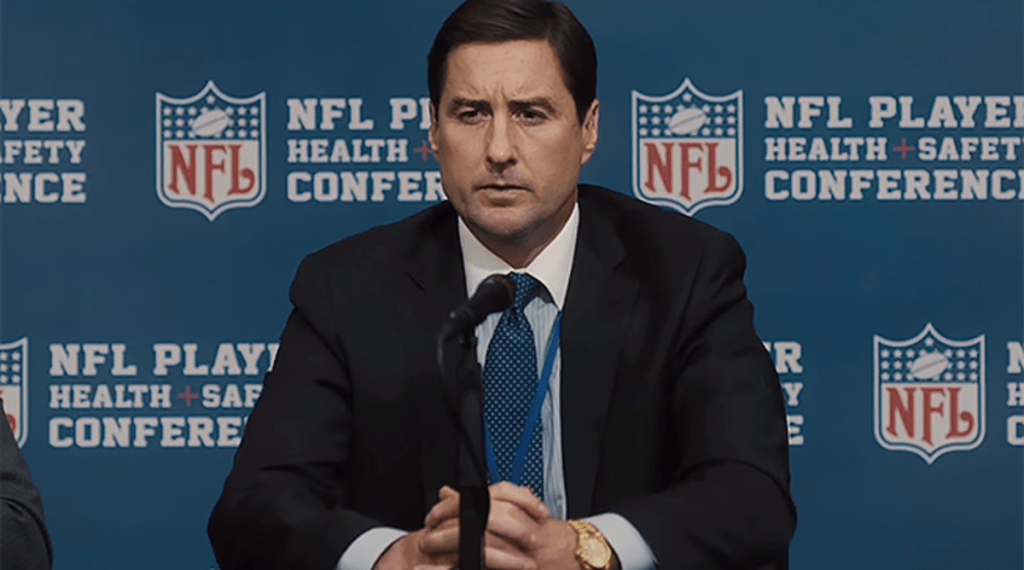
Data Don’t Care If NFL Players Lie About Concussions (and other musings on CTE)

NFL fans watching the playoffs last week probably saw Patrick Mahomes take a concussion-inducing DDT from the Cleveland Browns defense. There was no hiding a wobbly Mahomes trying to regain his senses in front of millions of viewers. While the Kansas City Chiefs have declared Mahomes fit enough to play in this Sunday’s AFC title game against the Buffalo Bills, we can’t help but wonder if were just turning our heads away from the seriousness of the matter once again.    

Baseline measures are extremely important in the world of Applied Behavior Analysis (ABA). Emphasis on extremely. Baseline is really the only way to know the type of influence a treatment or environmental event has on a person’s behavior. In short, data gathered during baseline periods are often the factor when determining what effect ABA treatment has had on a target behavior. I mean, how else would we know if a behavior has increased or decreased if we never knew how much it occurred to begin with?

The practice of establishing baseline levels as a starting point is not just limited to the field of ABA. You probably guessed that from the title of this piece. We won’t go into all the things that incorporate the use of baseline in some form because I’d be typing in perpetuity. However, we would like to highlight an area in which baseline can be used to help save lives.

Chronic Traumatic Encephalopathy has received an increasing amount of attention in the last 10 or so years. Thank goodness for that. If you’ve never heard of the term, you’re probably more familiar with its abbreviation CTE. If you’re a fan of the National Football League (NFL), you’re probably sick of hearing about it. Being a huge NFL fans, we feel doubly guilty writing this piece. One part of me feels like a traitor to football for jumping on the CTE bandwagon. Another part is worried that I’m contributing to the demise of some of my sports heroes by forking over my cash to watch them play this violent sport.    

But the NFL is such an excellent case study for CTE since there aren’t many professions in which people are legally hit on the head over time. The NFL is out in the open for all to see and can be regulated to a certain degree. With the proper regulations in place, accurate data can be collected. And with the TV coverage the NFL receives, it’s likely every hit to the head or concussion for a particular player is documented somewhere on video. This is different than a situation in which researchers may not have as much access to information. For example, it would probably be harder to track the severity of head trauma for a person who has been physically abused in their home over time.

If we were king of the NFL for a year, independent neuropsychological testing would be a quarterly requirement for every player as a bare minimum. Results of their very first battery of tests would serve as their baseline level that future tests would be compared against. Of course this would not be a pure measure of baseline (it would not account for head trauma occurring in high school or college), but it would be a darn good place to start. Best case scenario is that we’d be made king of the sports universe though. Then, we would require testing to start before anyone plays any contact sport for the first time. The younger testing occurs, the better. That would provide a true baseline. Ahhh…a sports mag can dream can’t it?

Requiring the NFL to provide independent neuropsychological testing to every single player (even kickers) on a quarterly basis has multiple benefits. First, independent testing is just that – independent. These assessors don’t have a dog in the fight and would not buckle under pressure from the NFL or any of its teams to falsify results. Second, it would provide important information regarding any change in an individual’s cognitive functioning in a given quarter. This information is crucial since there is no way to test for the presence of CTE while someone is alive. However, by administering a battery of appropriate tests, medical professionals will have data to compare to those initial baseline levels for each player. This will allow them to identify any decline in functioning in the short term and also over time. Furthermore, the data would provide insight into which specific positions on the field of play are more vulnerable to symptoms associated with concussions or CTE. This would then hopefully prompt the NFL to make rule changes to protect certain positions.

Most importantly, DATA DON’T LIE! If a player is functioning at levels below their baseline, or if their functioning is gradually declining over several quarters, it’s time to pump the breaks and come up with a plan. It doesn’t matter if the player is telling you he’s fine or that the hit he took last game looked much worse than it actually was. It doesn’t matter if the coach expects him to be available for the big game on Sunday or if the owner dismisses his symptoms as migraines. DATA DON’T CARE about a player’s pride, the sanctity of football, or a team owner’s bottom line.  

We’re not sure what volume of research is needed to definitively link CTE to playing professional football. For us, the volume of “isolated” incidents is enough. Growing up in southern California, Junior Seau was a bit of a local legend. Seau claimed to have suffered over 1,000 concussions in his 20 year NFL career. In retrospect, there is no doubt we were cheering him on during many of those blows to the head. That thought is a bit of a hard pill to swallow in the present. Junior Seau committed suicide by shooting himself in the chest in 2012. His brain was donated to the National Institute of Health where abnormalities consistent with CTE were identified.    If playing football is ever definitively linked to CTE, it would mean the absence of it would stop CTE from occurring in football players. Sounds weird right? To stop football players from getting CTE, do not allow them to play football. As a cool sports mag that views sports as both entertainment and an effective tool to teach life skills, that’s not a reassuring thought. How about we just start with mandatory neuropsychological baseline testing with quarterly follow-ups and go from there?

A Raw Tribute to Mr. Brodie Lee

Mr. Brodie Lee recently reminded me to never stop betting on myself, so I felt compelled to dedicate this month’s editorial entirely to him. As a preface, this piece is going to be a little raw (no pun intended).

Professional wrestling is one of those interests that became part of my life along the way. I think it’s a misconception that older wrestling fans are all die-hards. People don’t realize that wrestling is simply another item on The List (pun intended) of things we enjoy, similar to watching the NBA, playing Fantasy Football, or binge-watching new shows.

People who don’t like wrestling will always think it’s stupid and weird. They’ll adopt the generic, stereotypical position that people who enjoy wrestling are stupid weird. Well, my response to this lately has been, “You know what? I think people simulating rape and murder on shows like Criminal Minds is pretty fucking weird.”

If people just knew how many deaths the longtime wrestling fan must endure, maybe they’d leave us alone. When I was barely a teenager, the great Owen Hart plunged to his death during a live WWE show. I thought it was tragic and rare at the time. Now I know it was just tragic.

Fans react differently to the passing of wrestlers based on their own histories of reinforcement. Perhaps they remember watching their favorite wrestler on WCW Saturday Night with their father or maybe they have a special WrestleMania memory involving close friends. Add to this the often tragic, abrupt, and unexpected nature of deaths in wrestling, and it’s easy to see why adult wrestling fans have such strong emotional reactions to events like Brodie Lee’s recent passing.

Personally, my history of reinforcement with Mr. Brodie Lee was very brief – like 6 months of being an All Elite Wrestling (AEW) fan brief. For whatever reason, I was in one of those life phases in which I wasn’t paying much attention to wrestling when Lee was big bootin’ people as Luke Harper. I knew of his existence, but not much beyond what he looked like. But when Mr. Brodie Lee debuted on AEW Dynamite last year in the midst of COVID-19, I was paying attention to wrestling. I loved Lee’s look and mischievous energy. Watching from home, his charisma was palpable in that empty stadium.

Fortunately, due to the pandemic, I was in a life phase where I could watch AEW Dynamite every Wednesday. This meant getting weekly doses of Mr. Brodie Lee as leader of The Dark Order. I wasn’t quite sure the direction in which Lee would take this group of misfits but I was excited to find out. Then it happened. After a Dark Order segment to end Dynamite, I did a google search of “Brodie Lee” and “WWE”. The fact that I did this search outside of my allotted TV watching time signaled to me that I was now an official fan of Mr. Brodie Lee.

The articles and podcast transcripts produced by my Google search only made me a bigger aficionado of the Exalted One. I learned that Lee, real name Jon Huber, decided to leave the WWE and safe money behind to pursue new opportunities in AEW. The decision didn’t seem to be made on whim, however. After years of giving his blood, sweat, and tears to the WWE, Huber concluded he was not going to receive a huge push or promotion in the company any time soon. I got the impression he wanted to stay there – until he didn’t. Maybe he saw AEW as a more realistic path to his desired spotlight. Whatever his motivations, Huber took that path and became an AEW champion rather quickly. I must admit, seeing him destroy Cody Rhodes in a blink of an eye was pretty damn awesome to watch.

Luke Harper or Brodie Lee were never a part of my greatest memories (unless you consider watching wrestling during a pandemic good times). So why is the recent passing of Jon Huber hitting me extra hard if I was only a true fan of the man for about 6 months? Our history of reinforcement together was brief to say the least.

Perhaps it has to do with Huber’s path to that TNT Television title.

Perhaps, as a grown-ass fanboy closing in on four decades of life, I know what it feels like to scratch and claw and give everything you have – and still not achieve a desired result.

Perhaps it’s because I know what it feels like to take a leap of faith while trying to outrun father time.

And how it feels like to have to provide my credit score to people less credible than me.

Perhaps it’s because some days I want to give up.

Or perhaps it’s because Mr. Brodie Lee reminded me that it’s never too late to raise that strap.

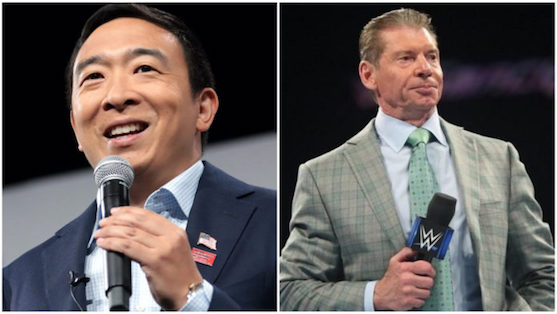
Yang Picks Fight with WWE

It feels like former presidential hopeful Andrew Yang is trying to pick a fight with the WWE. He has been vocal in recent months about the company’s treatment of its pro wrestling superstars who are actually independent contractors.

While Yang never gained serious support in his bid to win the democratic nomination for president, he became somewhat of a sensation and acquired a group of enthusiastic followers known as the Yang Gang. More relevant to this article though, Yang has always been a huge fan of professional wrestling. He also has never been one to hide his disdain of WWE owner Vince McMahon.

Yang’s main beef with McMahon is his treatment of his workers. As independent contractors, they are forced to cover their own health and travel expenses. Think about that for a second. The Undertaker has to pay for his own health insurance.

Wrestlers are also not allowed to use third party platforms like Twitch and Cameo. In fact, one recently got fired for defying this rule.

And then there are the many accusations of bullying and pressure to work in unsafe environments.

Yang suggested the solution may be as simple as the wrestlers joining an existing union like the Screen Actors Guild (SAG) to protect themselves. He has been much more vocal and passionate about this lately. The timing is a bit curious. Could he be taking this up as his cause?

More on this issue:

Andrew Yang Slams WWE on Talk is Jericho

Andrew Yang Discusses SAG with Wrestling, Inc.

Forbes talks about Andrew Yang calling out the WWE      

FSM Editorial: In Free Solo, Conquering Fear Is Not the Goal

An abridged version of the recent award winning documentary Free Solo goes something like this: Man climbs giant rock in Yosemite with no safety equipment for first time in history. The longer version involves a man with poor social skills, elite climbing skills, and a small circle of really patient friends. Instead of spoiling the journey for those who have not watched this epic documentary yet, I just want to focus on something simple said by protagonist Alex Honnald when he was discussing the danger of free soloing the famously tall El Capitan:

“YOU FACE YOUR FEAR BECAUSE YOUR GOAL DEMANDS IT.”

I physically moved, well flinched actually, upon hearing that quote for the first time (I’ve watched the film many more times since then). So simple yet so profound – one of those obvious tidbits of information I hear once in blue moon that completely changes my way of looking at something.

For so long, I’ve conflated conquering fear with the ultimate outcome of a goal. Consider for example, a swimming goal for a child who is afraid of the water. The goal itself is recording if the child gets in the pool or not, not necessarily if they are afraid. In that sense, conquering the fear of water isn’t the ultimate goal – getting in the pool is! Not being afraid is just a benchmark to hit along the way.

Or think of a person who wants to visit someone in another country but is too afraid of flying. If the goal is to fly to another country, they will have to learn more about flying than just how to manage their fear. Being unafraid won’t guarantee the individual makes it to his or her final destination. Imagine showing up in the wrong country? Then we’ll have new fears to deal with. Another example is a first time entrepreneur who finally overcomes their fear of taking out a large loan. They were just loaned the money, now what? 

Alex Honnald’s goal was never to conquer his fear of dying. His goal was to free solo El Captian. When he was confident enough in his skills and preparation, his fear of making a fatal mistake subsided. But he still had to climb the darn rock!

You face your fear because your goal demands it. So I’m moving forward with this new mentality of looking at conquering fear as more of a benchmark, or a dragon to be slain along the way, than the end result.

To purchase Free Solo on amazing 4K, click here.

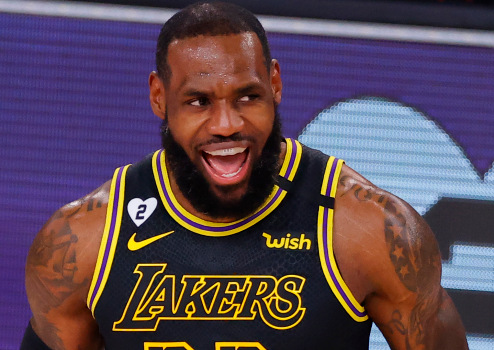
FSM Editorial: Top 5 Reasons LeBron Ain’t Trump

Sports shock jock (and professional LeBron hater) Jason Whitlock made a big fuss about King James recently, comparing him to the president and calling him “Black Trump”. Whitlock pointed to a few similarities between Lebron and the Donald (mostly the incoherent curse-filled tweeting) but presented a pretty weak case overall. Keep in mind, Whitlock recently left Fox Sports because they wouldn’t pay him so he may just be trying to be extra provocative to generate buzz for himself (insert sarcastic shocked face emoji here).

Here is a taste of Jason Whitlock’s comments:

“LeBron fashions himself as a dignified statesman, role model, political activist and champion of racial equality. He is every bit as crude, undignified and inarticulate as our sitting president.”

To read the full editorial originally posted on OutKick, click here.

Now then, being the sports junkies that we are, we thought we’d do a little counter punching on the King’s behalf. Free Sports Mag is not a political publication in any sense so please read the following Top 5 Reasons LeBron Ain’t Trump as if you were reading The Onion or MAD Magazine.

5. Lebron James has 3 children with the same woman

4. Blaze Pizza > Trump Steaks

3. Lebron James has never been bankrupt

2. I Promise School > Trump University

1. Lebron James is a billionaire   

FSM Editorial: The Collectors Are Restless

Since this is an editorial piece, we have the freedom to vent and go on tangents at times. This article will be more of a polite vent. With COVID-19 shutting life down since March 2020, collectors have been itching to buy, sell, and trade in person. The card flippers are in paradise though, inflating card prices before selling them online to us desperate shut-ins.  

Do we sound bitter? Maybe a little. The flippers are taking advantage of events in the environment. It’s capitalism 101. We live in the USA. So, we aren’t full bitter. But bitter, yes.

Perhaps the most frustrating part of being a collector of memorabilia (or dare we say a “picker”) these days is that we cannot see, feel, and hold these valuable collectibles as we consider purchasing them. How does it make you feel to pull that Fleer Michael Jordan Rookie card in and out of your desk drawer? Is that feeling worth $3,000 or a lower PSA grade? Is the card you’re holding obviously a fake?

But even more heartbreaking to the FSM staff than not being able to walk into their local hobby shops is the disappearance of garage sales. It’s quite a felling to find a rare gem, collectible, or piece of memorabilia on a sunny Saturday morning. If you’re really lucky, you’ll get a cool story about the item to take with you as well. Garage sales are also one of the last places where people can actually negotiate a fair price for the things they want.

We recently came across a story in which someone found a lot of Patrick Mahomes rookie cards at a local thrift shop. The story was encouraging because it’s indicative that stores are opening and collectors are venturing out to search for treasure. We’ll end on that positive note. The collectors are restless – but not for much longer.

P.S. If the title of this editorial is familiar it’s because it was inspired by this Far Side collection.

FSM Editorial: COVID & Angels

With COVID-19 forcing people to social distance, our country’s beloved national parks have received a much-needed boost in foot traffic. One of these parks offers a healthy dose of danger and excitement and is more accessible than you might think…

Angels Landing located at Zion National Park in Utah is perhaps the most semi-famous hike in the United States. Many hikers I’ve encountered during my travels have “kind of” heard of it. Common responses are, “That’s the one with the big walls right?” or “The one where people always fall off and die?” My answer to these and similar questions is usually, “Well…kinda.”

Anyone in half decent shape shouldn’t have trouble completing this hike. There is nothing overly strenuous about this trail. The switchbacks leading up to the final leg of the trail are steep but they are also paved which is extremely helpful (not to mention a rarity on this kind of trek).  This section is affectionately known as Walton’s Wiggles. As you hike up the wiggles, you will have solid canyon wall to your left.  To your right, you will have a sliver of a view of the bigger canyon you find yourself in. Depending on the time of day, you will see a different mix of orange, red, and maroon in the rocks with random greenery sprinkled throughout. An avid hiker would probably spend no more than 60 minutes completing this trail through the end of Walton’s Wiggles.

The WW switchbacks lead to a narrow trail that eventually ascends like a staircase to the point of the trail known as Scout’s Lookout. This is where first timers will have an initial glimpse of the behemoth they are about to take on. This is also where people usually start thinking about turning back. I mentioned earlier that this hike is not strenuous which is true. The emotional component to completing this hike cannot be understated however. When you are standing on Scout’s Lookout, gazing at the thin strip of trail that leads up to Angel’s Landing, looking at the thousands of feet of drop-off on each side, there is a good chance your nerves will make the decision of quitting or going on for you. Don’t make a hasty decision though. Use the random outhouse at the lookout if you need a second to compose yourself. Take reassurance knowing that the number of people who have died trying to reach the top is not even in double digits. My point is that’s an extremely low number.

Admittedly, there are a few spots on the way to the top of Angels Landing that could use some chains. But the final portion of trail is well constructed and safe overall. Hold on to the chains whenever available, watch where you step, and resist the urge to take in the scenery until you summit. Once you make it to the top, there is plenty of space to relax safely and admire the beautiful views: giant walls of multi colored rock on both sides with a river curving its way through the canyon floor.

Don’t let any initial fears at Scout’s Lookout prevent you from completing this hike. If you exercise caution and respect your environment, you should be fine. The payoff for crossing the finish line is twofold. You get treated to unimaginable views that few will ever see form that vantage point and you gain the satisfaction of completing what most consider a daunting task. The trail is properly named. If a landing strip for angels really exists in Utah, there is good chance this is it.

FSM Editorial: How Much is Enough for Roy Jones Jr.?

This article was originally published in March 2011. With Roy Jones Jr. set to fight Mike Tyson by the end of 2020, the folks at FSM thought it was appropriate to share this editorial once again. Enjoy!

Here we go again – again. The announcement was made this month that fading boxing star Roy Jones Jr. will lace up the gloves for yet another questionable fight.

Exactly how much is enough punishment for a man to take in the ring? Unfortunately this is not a question a boxing fan can answer. Well I guess they could answer but it wouldn’t make much difference to Roy Jones Jr. who will travel to Russia on April 22 to face hot prospect Denis Lebedev (21-1, 16 KOs).

Lebedev is bigger, stronger, and 11 years younger. His only loss was a controversial decision in an opponent’s backyard. There should be no doubt that Roy Jones Jr. is being used as a stepping stone.  Check any Las Vegas sports book if you think the Russian guy is the underdog this time (yes that was a Rocky IV reference).

Roy Jones Jr. has lost two fights in a row. One of them was an embarrassing first round knockout to an Aussie journeyman and the other was a beating at the hands of Bernard Hopkins. Even before these two bouts, concerned citizens in the boxing community were pleading for Jones to stop fighting. His diminished skills were apparent in the fight against B-Hop. When fighting a younger contender like Lebedev, there will be potential for serious harm. I wouldn’t be surprised if we see Jones get knocked out in the style of the Glenn “Road Warrior” Johnson fight.

So back to my original question – how much is enough punishment for Jones Jr. to take? When a question like this is asked it usually means the person has already taken enough.

The truth is that it doesn’t matter what you or I think. And as much as I hate to see former greats blocking punches with their face, I’m not going to be the one to tell Roy Jones Jr. that he needs to quit boxing. I would loathe it if someone told me I had to stop doing something I love, especially if I was the best in the world at doing it at one point in my life.