After years of rejection but with constant hustle, Jay Glazer has built a career as one of the most iconic sports insiders, earning himself a spot on the Emmy award-winning Fox NFL Sunday, a role as the confidant of coaches and players across the league, and a role as himself alongside Dwayne “The Rock” Johnson on HBO series Ballers. His gym, Unbreakable Performance Center, attracts some of the biggest names in Hollywood, and is the headquarters to the powerful charity MVP (Merging Vets and Players) that Jay founded in 2015. MVP began as a weekly physical and mental health huddle with combat veterans and retired athletes has expanded to seven locations, helping soldiers and players transition to a new team.
In Unbreakable, Jay Glazer talks directly to you, his teammates, and shares his truth. All of his success from his screeching-and-swerving joy ride through professional football, the media, the fighting world, Hollywood, the military-warrior community, comes with a side of relentless depression and anxiety. Living in the gray, as Jay calls it, is just a constant for him. And, in order to work through the gray and succeed, Jay has to maintain an Unbreakable Mindset. With this book, you can too.
· Be of Service—help others and help yourself in the process
· Build Your Team—give support, get support
· Never Underestimate the Power of Laughter—never take yourself too seriously
· Be Proud of Your Scars—our trauma makes us who we are
Throughout Unbreakable, Jay will use his stories—featuring some of the biggest, baddest, and most fascinating characters in the public eye today—to show how he walks this walk, has learned that while the gray is very real, it doesn’t have to define him. And it doesn’t have to define you either.
We all face obstacles-physical, emotional, between the ears. The good news is that everything we have fought back against can empower us, IF WE KNOW HOW TO USE IT. My obstacles happen to be anxiety and depression. I call it living in thegray, and I’ve been mired in it my whole life. To be honest, it sucks. But I have also recently recognized that this same gray that has held me down has also empowered me to make my wildest dreams come true. You have probably overcome many of your own obstacles, but you’ve been too close to the conflict to clearly see what you’ve accomplished. We are all UNBREAKABLE, no matter what we do, who we are, or what traumas we may have experienced. We just need to admit that we can’t walk this walk alone.
Book/Movie Title: All-American Murder: The Rise and Fall of Aaron Hernandez
Total Pages/Duration: 375 (paperback version)
Author/Director: James Patterson w/ Alex Abramoivch & Mike Harvkey
Pace of Play: Short chapters and lack of descriptive, flowery language make for a quick read. Some will finish this in one sitting while most will take 2-3 days.
Strengths: The authors stick to the facts and provide many direct quotes from individuals involved in the case. Information is easy to follow as it’s presented in a straight line. There are some flashbacks when necessary but you’ll never get confused. The authors bring the reader up to speed rather quickly in regard to Hernandez’s home life and his days in high school and college.
Weaknesses: The book relies on direct quotes a little too much at times (sometimes quotes go on for an entire page). It just comes off as lazy. Also, some of the rumors of Hernandez being gay or bisexual are briefly mentioned. I’m assuming there weren’t enough facts to back any of it up, but the authors could have at least tried to disprove some of the rumors by showing what evidence exists. After all, true or not, the rumors were a big part of the story. Again, it comes off a little lazy.
Unique Attributes: The authors maintain a matter-of-fact tone and avoid the use of SAT vocabulary words. Except for the description of Hernandez’s jail cell, don’t expect some of that descriptive writing James Patterson is known for.
All-American Murder contains some interesting side stories involving Tim Tebow, Urban Meyer, and the Pouncey twins. You’ll also read about the lesser-known double-murder that Hernandez allegedly committed.
Scout’s Recommendations: At this point, the story of Aaron Hernandez has been told across many mediums and probably doesn’t deserve any more of our time. But how often does James Patterson write about sports stuff? That being said, I’m skeptical Patterson did anything more than supervise on this project. All-American-Murder is worthy of a pickup if you’re about to go on a long flight or plan on lounging by the pool on a cruise ship. Other than that, it should be used as a “first stop” for people getting into the Aaron Hernandez saga for the first time.
The NFL regular season is often focused on totals and sides, but with every betting site offering different wagering types, NFL props are becoming the go-to bet every Sunday, Monday, Thursday, and some Saturdays. Rather making moneyline wager or a traditional point spread bet, why not try something a little more entertaining? Making NFL Prop Bets requires skill and a little handicapping, but no worries because we are here to kick start your betting journey.
An NFL prop bet is a wager that typically has nothing to do with a game outcome. NFL prop bets can be anything from how an individual player performs, how long the national anthem will be, which team will be winning the coin toss and even how many penalties a team will get. A prop is short term for proposition and these are bets that are generally made for entertainment purposes. At your online betting site of choice, NFL prop bets for a specific type of player would be something like:
• How many touchdowns will he be throwing in the Saints’ game against the Falcons?
• How many passing yards will he be having in the first quarter of a game against the Panthers?
• Will he be throwing an interception against the Buccaneers?
How to read NFL Prop Bet odds
When visiting any online sportsbook, you will find prop odds. Depending on the type of NFL props bettors are looking to make, the NFL odds will look something like this:
Will Player A announce his retirement in the post-game interview?
Yes +400 No -900
In such scenario, let’s assume that a star player is turning 45 and isn’t moving as fast as he used to. There are rumors that he is going to retire at some point during the current NFL season. Oddsmakers hear the same buzz that we do and will create NFL props based on that information.
If you believe that Player A will announce his retirement after the game you’re betting on, you will choose Yes. Let’s say you lay down $25, and he does end his playing career. You would get a payout of $150 – your $25 comes back along with your winnings of $125.
On the other hand, a winning $25 No bet would get you $27.50 – your original amount is returned plus the $2.50 you won. In this case, the Yes would be a riskier bet with a higher payoff because of the plus sign (+). A No bet comes with less risk and a smaller win due to the minus sign (-). This is the same as a traditional moneyline bet where you have an underdog and a favorite In this case, there is no favorite (-) or dog (+), but the same symbols signify which bet is riskier for gamblers. As your online sports betting skill improves, you can make more advanced NFL prop bets. Since NFL props are considered the more entertaining bets you can make on any regular-season matchup, the better you get at betting, the easier it is to find value in other prop wagers.
NFL fans watching the playoffs last week probably saw Patrick Mahomes take a concussion-inducing DDT from the Cleveland Browns defense. There was no hiding a wobbly Mahomes trying to regain his senses in front of millions of viewers. While the Kansas City Chiefs have declared Mahomes fit enough to play in this Sunday’s AFC title game against the Buffalo Bills, we can’t help but wonder if were just turning our heads away from the seriousness of the matter once again.
Baseline measures are extremely important in the world of Applied Behavior Analysis (ABA). Emphasis on extremely. Baseline is really the only way to know the type of influence a treatment or environmental event has on a person’s behavior. In short, data gathered during baseline periods are often the factor when determining what effect ABA treatment has had on a target behavior. I mean, how else would we know if a behavior has increased or decreased if we never knew how much it occurred to begin with?
The practice of establishing baseline levels as a starting point is not just limited to the field of ABA. You probably guessed that from the title of this piece. We won’t go into all the things that incorporate the use of baseline in some form because I’d be typing in perpetuity. However, we would like to highlight an area in which baseline can be used to help save lives.
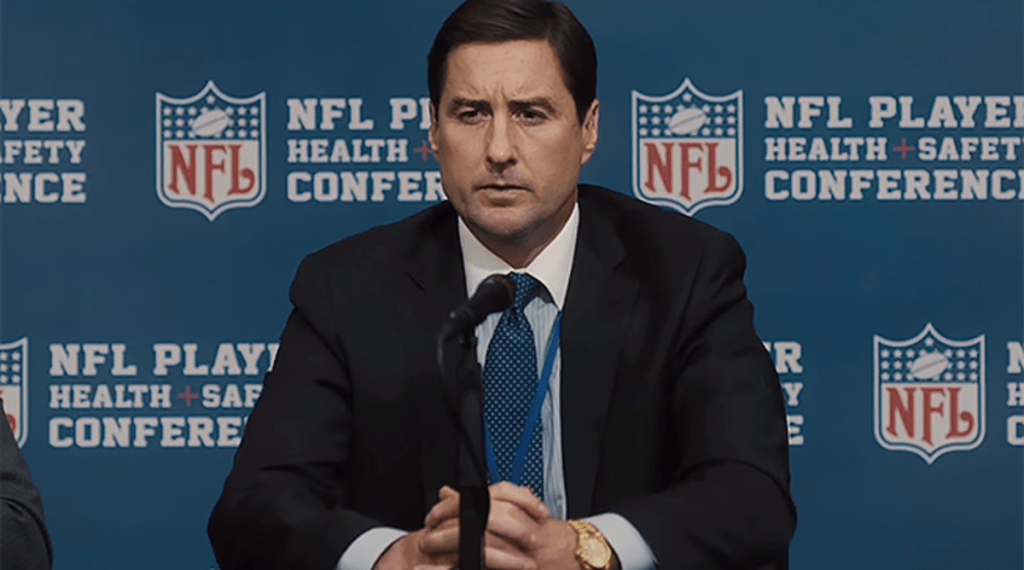
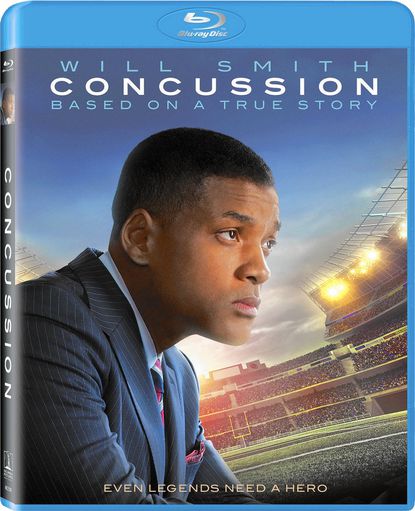
Chronic Traumatic Encephalopathy has received an increasing amount of attention in the last 10 or so years. Thank goodness for that. If you’ve never heard of the term, you’re probably more familiar with its abbreviation CTE. If you’re a fan of the National Football League (NFL), you’re probably sick of hearing about it. Being a huge NFL fans, we feel doubly guilty writing this piece. One part of me feels like a traitor to football for jumping on the CTE bandwagon. Another part is worried that I’m contributing to the demise of some of my sports heroes by forking over my cash to watch them play this violent sport.
But the NFL is such an excellent case study for CTE since there aren’t many professions in which people are legally hit on the head over time. The NFL is out in the open for all to see and can be regulated to a certain degree. With the proper regulations in place, accurate data can be collected. And with the TV coverage the NFL receives, it’s likely every hit to the head or concussion for a particular player is documented somewhere on video. This is different than a situation in which researchers may not have as much access to information. For example, it would probably be harder to track the severity of head trauma for a person who has been physically abused in their home over time.
If we were king of the NFL for a year, independent neuropsychological testing would be a quarterly requirement for every player as a bare minimum. Results of their very first battery of tests would serve as their baseline level that future tests would be compared against. Of course this would not be a pure measure of baseline (it would not account for head trauma occurring in high school or college), but it would be a darn good place to start. Best case scenario is that we’d be made king of the sports universe though. Then, we would require testing to start before anyone plays any contact sport for the first time. The younger testing occurs, the better. That would provide a true baseline. Ahhh…a sports mag can dream can’t it?
Requiring the NFL to provide independent neuropsychological testing to every single player (even kickers) on a quarterly basis has multiple benefits. First, independent testing is just that – independent. These assessors don’t have a dog in the fight and would not buckle under pressure from the NFL or any of its teams to falsify results. Second, it would provide important information regarding any change in an individual’s cognitive functioning in a given quarter. This information is crucial since there is no way to test for the presence of CTE while someone is alive. However, by administering a battery of appropriate tests, medical professionals will have data to compare to those initial baseline levels for each player. This will allow them to identify any decline in functioning in the short term and also over time. Furthermore, the data would provide insight into which specific positions on the field of play are more vulnerable to symptoms associated with concussions or CTE. This would then hopefully prompt the NFL to make rule changes to protect certain positions.
Most importantly, DATA DON’T LIE! If a player is functioning at levels below their baseline, or if their functioning is gradually declining over several quarters, it’s time to pump the breaks and come up with a plan. It doesn’t matter if the player is telling you he’s fine or that the hit he took last game looked much worse than it actually was. It doesn’t matter if the coach expects him to be available for the big game on Sunday or if the owner dismisses his symptoms as migraines. DATA DON’T CARE about a player’s pride, the sanctity of football, or a team owner’s bottom line.
We’re not sure what volume of research is needed to definitively link CTE to playing professional football. For us, the volume of “isolated” incidents is enough. Growing up in southern California, Junior Seau was a bit of a local legend. Seau claimed to have suffered over 1,000 concussions in his 20 year NFL career. In retrospect, there is no doubt we were cheering him on during many of those blows to the head. That thought is a bit of a hard pill to swallow in the present. Junior Seau committed suicide by shooting himself in the chest in 2012. His brain was donated to the National Institute of Health where abnormalities consistent with CTE were identified. If playing football is ever definitively linked to CTE, it would mean the absence of it would stop CTE from occurring in football players. Sounds weird right? To stop football players from getting CTE, do not allow them to play football. As a cool sports mag that views sports as both entertainment and an effective tool to teach life skills, that’s not a reassuring thought. How about we just start with mandatory neuropsychological baseline testing with quarterly follow-ups and go from there?


 FreeSportsMagazine.com