Category Archives: aew

The Time RoboCop Tried Professional Wrestling

The transition from the 80’s to the 90’s was a wild time. Some would say the best of both worlds were colliding and everyone was along for the ride. Part of that ride was RoboCop’s arrival in World Championship Wrestling (WCW). How can we even begin to explain this? Robocop, a fictional character from the movies, was now somehow real and decided to fight crime in a real sports organization that was really just a fictional sports organization.  

RoboCop showed up in World Championship Wrestling during the 1990 Capital Combat: Return of RoboCop pay-per-view event. This bizarre crossover happened mainly for marketing reasons. At the time, Orion Pictures was about to release the movie RoboCop 2. WCW and Orion worked out a promotional tie-in in which RoboCop would make an appearance at the wrestling event to hype up the film.

In the storyline, RoboCop helped Sting, who was one of WCW’s top stars, fend off an attack from the villainous group known as the Four Horsemen. RoboCop came down to ringside, “bent” the bars of a cage to rescue Sting, and helped him chase the bad guys off.

Fans and critics heavily mocked the segment, and it’s still remembered as one of the most embarrassing and absurd moments in pro wrestling history. The “action” was slow and obviously fake. RoboCop was being portrayed by a guy in a heavy suit (probably not Peter Weller) who could barely move.

So what’s the big deal? Fort starters, RoboCop is a fictional cyborg from a dystopian sci-fi movie — totally out of place in a wrestling environment that, even by 1990s standards, tried to maintain some realism. Arn Anderson was a major member of the Four Horsemen and one of the guys involved in the RoboCop segment. He thought the whole idea was “embarrassing” and made wrestling look like a “clown show”. Arn described the whole thing as “cartoonish” and something that hurt WCW’s credibility, especially when the company was trying to be seen as a more serious alternative to WWF’s over-the-top characters at the time.

Arn Anderson has gone on the record during his “ARN” podcast to share his true thoughts about the infamous RoboCop moment:

“I knew it was horsesh*t from the get-go. How do you fight a robot? Are we supposed to punch him and knock his head off? Are we supposed to sell for him? Run from him? He can’t move! It was one of the most embarrassing things I’ve ever been part of.”

Not pile on, but professional wrestling historian extortionate Jim Cornette also did not hold back when talking about the subject on an old “Kayfabe Commentaries” podcast.  

“It was the stupidest goddamn thing I’d ever seen. Who in the f*** thought RoboCop would draw money in wrestling? It made everyone look like idiots — the wrestlers, the announcers, the fans who had to sit through it. I was embarrassed to even be in the same building.”

Even the eternal optimist Sting (who Robocop saved during the segment) had trouble finding the silver lining. During the episode of “WWE Untold: Sting”, the wrestling icon had this to say about what went down that fateful day:

“I was standing there thinking, ‘Man, I hope nobody I know is watching this.”

AEW Finds Success in the Land Down Under

AEW Grand Slam: Australia, held on February 15, 2025, at the Brisbane Entertainment Centre, achieved notable success both financially and in terms of viewership. The event generated a gate revenue of $1.3 million, ranking as the third-highest in All Elite Wresting’s history. Attendance figures indicate that approximately 11,000 to 12,000 tickets were distributed, nearing the venue’s capacity of 13,500.

Originally slated for the 52,000-seat Suncorp Stadium, the event was relocated to the Brisbane Entertainment Centre due to reportedly sluggish ticket sales. Despite this change, the event’s financial performance remained strong.

In terms of viewership, the broadcast drew 502,000 viewers, with one million tuning in for the match featuring Kenny Omega and Will Ospreay versus Konosuke Takeshita and Kyle Fletcher. AEW’s leadership expressed satisfaction with these numbers, highlighting the positive momentum leading into the event.

However, some fans expressed dissatisfaction with the event’s promotion and venue change, feeling misled about the scale and nature of the show. Despite these concerns, the event delivered strong financial results and viewership (hitting millions of dollars and at one point millions of viewers), indicating overall success.

AEW Grand Slam: Australia featured several high-profile matches. Below are the results…

AEW Women’s World Championship: “Timeless” Toni Storm defeated Mariah May to capture her record-setting fourth AEW Women’s World Championship.

Tag Team Match: Will Ospreay and Kenny Omega overcame The Don Callis Family’s Konosuke Takeshita and Kyle Fletcher.

TBS Championship: Mercedes Moné successfully defended her title against Harley Cameron.

Brisbane Brawl: Jon Moxley and Claudio Castagnoli defeated Adam Copeland and Jay White in a hard-hitting encounter.

AEW Continental Championship: Kazuchika Okada retained his title against Buddy Matthews.

Like Pro Wrestling? There’s a Cruise for That

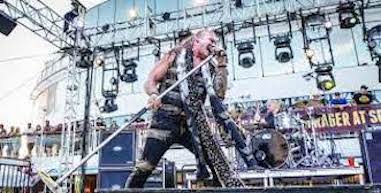
The Chris Jericho Cruise, officially known as “Chris Jericho’s Rock ‘N’ Wrestling Rager at Sea”, is a unique event blending professional wrestling, rock music, comedy, and pop culture into a cruise vacation experience. It was conceived by professional wrestler and musician Chris Jericho, and the event has gained a cult following due to its novelty and crossover appeal.

Jericho, a multi-talented entertainer known for his wrestling career in WWE, WCW, AEW, and his band Fozzy, had long been a fan of cruises and wanted to create an event that combined his passions for wrestling, music, and entertainment. The idea was to offer fans a one-of-a-kind experience with live wrestling matches, concerts, meet-and-greets with wrestlers and musicians, podcasts, and comedy shows, all while cruising on the open sea.

The first Chris Jericho Cruise set sail in October 2018 and was a major success, leading to it becoming an annual event. Each cruise typically features a themed name, such as “Part Deux: Second Wave” (2019) and “Triple Whammy” (2021). The event has helped bring wrestling fans and rock enthusiasts together, creating a loyal following. The intimate setting on the cruise ship allows fans to experience their favorite wrestlers and performers in a much more personal and relaxed atmosphere than traditional live shows.

Jericho’s involvement in AEW helped elevate the cruise’s profile even more. AEW has held Dynamite episodes on the cruise, bringing televised matches to the event. This connection has made the Chris Jericho Cruise a significant event for both wrestling and entertainment fans, adding an even greater level of excitement and exposure.

People attending the cruise can look forward to 4 key things that have remained consistent throughout the years and that undoubtedly contribute to the event’s success:

  1. Professional Wrestling Shows: The cruise features live wrestling matches on an outdoor ring set up on the ship’s deck. AEW (All Elite Wrestling) has played a key role in these matches, especially after Jericho joined AEW. Wrestling promotions like Ring of Honor (ROH) and independent promotions also participate. Fans get the chance to witness these matches in a very intimate and unique setting, something they wouldn’t experience in a regular arena.
  2. Music Performances: Jericho’s band Fozzy typically headlines the musical performances. Other bands from the rock and metal scene, as well as guest musicians, perform during the cruise. It’s a big draw for fans of both wrestling and hard rock.
  3. Celebrity Guests and Entertainment: Aside from wrestlers and musicians, the cruise features a variety of other entertainment forms. Guests include comedians, podcasters, and TV personalities, with live shows and panels catering to pop culture fans. Jericho’s own podcast, Talk Is Jericho, often has live episodes recorded on the ship with special guests.
  4. Fan Interaction: One of the highlights of the cruise is the fan interaction. Passengers have opportunities to meet and hang out with wrestlers, musicians, and celebrities. There are autograph signings, meet-and-greets, Q&A panels, and even themed costume nights.

Overall, the Chris Jericho Cruise is a reflection of Jericho’s eclectic career, combining his love for wrestling, music, and entertainment into a unique, highly successful, and fan-centric experience. Find out more at www.chrisjerichocruise.com.

Was the 1988 Death of Bruiser Brody Murder or Self-Defense?

Bruiser Brody, whose real name was Frank Goodish, was a legendary professional wrestler known for his brawling style and wild persona. He was one of the most influential figures in the wrestling industry, especially in Japan and the United States. However, his life was tragically cut short under mysterious and controversial circumstances, leaving pro wrestling fans outraged up to this day.

On July 16, 1988, Bruiser Brody was scheduled to wrestle in a show for the World Wrestling Council (WWC) in Bayamón, Puerto Rico. Before the show, a confrontation occurred between Brody and fellow wrestler José González, who wrestled masked under the name Invader I, in the locker room shower. The details of what transpired during this confrontation are still disputed by all parties, but what is not in dispute is that it ended with González stabbing Brody in the stomach with a knife. Brody was severely injured and was taken to a local hospital, but due to the severity of his injuries and the delay in getting him medical attention, he died in the early hours of July 17, 1988. He was 42 years old.

According to various accounts from witnesses present in the locker room, González asked Brody to come into the shower area to discuss something privately. Shortly afterward, wrestlers heard screams, and when they rushed to the area, they found Brody clutching his stomach, having been stabbed. González was holding the knife, and Brody was in critical condition.

The content of the conversation between Brody and González, and what led González to stab Brody, remains a matter of speculation, as no clear or consistent explanation has ever been provided.

The exact reasons behind why José González, also known as Invader I, killed Bruiser Brody (Frank Goodish) also remain unclear, as the true motivations have never been definitively established. However, there are several theories and pieces of speculation within the wrestling community that attempt to explain the incident.

Some believe that the stabbing was premeditated, while others think it may have been a spur-of-the-moment act driven by anger or fear. The trial and acquittal of González only added to the controversy, as many within the wrestling community felt that justice was not served, partly due to key witnesses not being called to testify.

In the years since the incident, various wrestlers and insiders have given their perspectives, but the true reasons behind why González killed Bruiser Brody remain a mystery, shrouded in the complex and often murky world of professional wrestling politics.

González claimed that he acted in self-defense, and during the trial, he was acquitted of the charges. The trial was seen by many as flawed, with key witnesses, including wrestlers Tony Atlas and Dutch Mantel, who were present during the incident, not being called to testify. Over the years, many possible motives have emerged and continue to be discussed by the wrestling community. The main ones are presented below:

Personal Grudges and Tensions: There were longstanding rumors of personal animosity between Brody and González. Some accounts suggest that Brody and González had a strained relationship due to past professional disagreements or personal issues when Gonzalez tried out for the WWF. In the wrestling business, it’s not uncommon for tensions to arise due to conflicts over booking decisions, pay, or the way matches were conducted.

Brody’s Reputation: Bruiser Brody was known for being a difficult personality in the wrestling business. He was fiercely independent and protective of his character and brand, often clashing with promoters and other wrestlers over how he was booked or how matches were conducted. It’s possible that González, who was also involved in booking for the World Wrestling Council (WWC), felt threatened or disrespected by Brody’s behavior.

Money and Business Disputes: Some have speculated that financial disagreements might have played a role. Brody was a top draw in the territories where he worked, and there could have been disputes over pay or the distribution of earnings, leading to heightened tensions. Some rumors even have him owing up to 5% of the Puerto Rican wrestling promotion.

Fear and Self-Defense: During the trial, González claimed that he acted in self-defense, stating that Brody had become aggressive and that he feared for his life. Given Brody’s size and reputation as a tough and intimidating figure, González’s defense was that he felt physically threatened. That still does not explain why he brought the knife into the shower (wrapped in a towel) before asking Brody to enter the shower and chat.

Professional wrestling fans were deeply affected by Brody’s death. Many wrestlers expressed their belief that justice was not served, and the incident cast a long shadow over the wrestling industry, particularly in Puerto Rico. Brody’s death is still a topic of discussion and debate among wrestling fans and professionals.

Despite the tragic end to his life, Bruiser Brody’s legacy in professional wrestling remains strong. He is remembered as one of the toughest and most influential wrestlers of his era, with a style that has inspired many wrestlers who came after him. His death also served as a reminder of the darker side of the wrestling business and the need for greater protection and rights for wrestlers.

Brody was posthumously inducted into several wrestling halls of fame, including the WWE Hall of Fame in 2019. His influence is still felt in the wrestling world, and his story continues to be told as a cautionary tale of the dangers that can lurk behind the scenes in professional wrestling.

A Legend in Pro Wrestling Also Had A Small Hollywood Career

Terry funk was a legend in the professional ring. He truly loved the sport and wrestled well into his golden years. After his passing last month, fans have been coming together to share their favorite Terry funk stories and moments. Chainsaw Charlie has been mentioned more than a few times. Many are surprised to find out Funk had small career in Hollywood which included stunt work on Sylvester Stallone’s film Rocky III. Since there are already many stories out there dedicated to Funk’s life and career in the squared circle, FSM is ranking Terry Funk’s Top 4 Movie Roles:

4. The Ringer – In this 2005 comedy, Funk plays a debt collector who gets a little physical with the main character’s (Johnny Knoxville) uncle in order to get some cash that is owed.  

3. Road House – Funk appeared in the 1989 action film Road House in the role of Morgan, a tough bouncer and one of the henchmen working for the film’s antagonist, Brad Wesley, played by Ben Gazzara. Most notably, the film also stars Patrick Swayze as a bouncer named Dalton who is hired to clean up a rowdy bar. Terry Funk’s presence in the film certainly added to the action and intensity of some of the fight scenes.

2. Over the Top – Funk’s role in the 1987 Sylvester Stallone film Over the Top was the character Ruker, a fellow arm wrestler and antagonist to Stallone’s main character, Lincoln Hawk. Over the Top is a sports drama film centered around the world of professional arm wrestling, and Terry Funk’s appearance added to the fighting atmosphere of the movie. The film has become a bit of a cult classic over the years.

1. Paradise Alley – In the film, Terry Funk’s character, Frankie the Thumper, is a professional wrestler. Frankie is one of the wrestlers in the local wrestling circuit that the Carboni brothers, played by Sylvester Stallone (Cosmo), Armand Assante (Lenny), and Lee Canalito (Victor), are involved with. Frankie the Thumper is known for his wrestling skills and is part of the wrestling world that the Carboni brothers navigate as they pursue their dreams and get involved in various wrestling matches and events throughout the film. The film portrays their interactions and challenges within the wrestling community in New York City’s Hell’s Kitchen during the 1940s. Funk also served as the stunt coordinator.

Which was your favorite Terry Funk movie? Did it make our list?

FSM Scouting Report: MOX

Book/Movie Title: Mox

Total Pages/Duration: 271 pages (Hardcover)

Author/Director: Jon Moxley

Pace of Play: Inconsistent sums up the pace of this autobiography. Based on the quick hitting prologue, the reader may get the feeling they’re about to buckle in for a wild ride. However, the book ends up feeling more “stop-and-go” by the final few pages. A page turner, this is not. There is never a sense of urgency to find out what’s coming next.

Strengths: The strength of this book comes from Moxley’s raw storytelling. He adds in some jokes and adjectives, but he usually gets to his point rather quickly (it’s just that one point quickly leads to an unrelated point which leads to yet another unrelated story and so on. The good news is that all the tangents are relatively brief). For example, the chapter about the late Brodie Lee starts off simply with, “Brodie died today.” Another chapter about a bully named Scott Baio goes into violent detail about Mox’s first significant fight. 

Weaknesses: The structure of this book is that there is no real structure. At least that’s clear from the beginning which helps the reader prepare. Maybe it was done on purpose to get a sense of what it’s like in Moxley’s head but it’s definitely a weakness in this case. Reading the stream of consciousness of someone who has ADHD can be a double-edged sword. The chapter about Mox receiving his training and paying his dues was surprisingly slow and boring. The tedious detail in that chapter came from out of nowhere. Lastly, professional wrestling books are generally known for some cool glossy photos, usually in the middle of the book. Mox has none. We just get a bunch of random pictures randomly placed, with some randomly in black and white (pretty random right?).

Unique Attributes: This book is unique in that it reads like a collection of short stories about Jon Moxley. One chapter doesn’t always lead into the next (there is a chapter about how to make a sandwich which includes diagrams) but it was a nice experience to read a crazy anecdote here and there over a few weeks. While most stories aren’t about the WWE, the best ones certainly involve Seth Rollins, Roman Reigns and the creation of the Shield.

Scout’s Recommendations: Mox is definitely worth a read if you’re a fan of WWE, AEW, New Japan or any other of the many organizations that exist now. Chances are Jon Moxley has wrestled in most of them and has a story to share. If you’re not a wrestling fan, avoid this one at all costs as it’s just going to be one big confusing mess.

A Raw Tribute to Mr. Brodie Lee

Mr. Brodie Lee recently reminded me to never stop betting on myself, so I felt compelled to dedicate this month’s editorial entirely to him. As a preface, this piece is going to be a little raw (no pun intended).

Professional wrestling is one of those interests that became part of my life along the way. I think it’s a misconception that older wrestling fans are all die-hards. People don’t realize that wrestling is simply another item on The List (pun intended) of things we enjoy, similar to watching the NBA, playing Fantasy Football, or binge-watching new shows.

People who don’t like wrestling will always think it’s stupid and weird. They’ll adopt the generic, stereotypical position that people who enjoy wrestling are stupid weird. Well, my response to this lately has been, “You know what? I think people simulating rape and murder on shows like Criminal Minds is pretty fucking weird.”

If people just knew how many deaths the longtime wrestling fan must endure, maybe they’d leave us alone. When I was barely a teenager, the great Owen Hart plunged to his death during a live WWE show. I thought it was tragic and rare at the time. Now I know it was just tragic.

Fans react differently to the passing of wrestlers based on their own histories of reinforcement. Perhaps they remember watching their favorite wrestler on WCW Saturday Night with their father or maybe they have a special WrestleMania memory involving close friends. Add to this the often tragic, abrupt, and unexpected nature of deaths in wrestling, and it’s easy to see why adult wrestling fans have such strong emotional reactions to events like Brodie Lee’s recent passing.

Personally, my history of reinforcement with Mr. Brodie Lee was very brief – like 6 months of being an All Elite Wrestling (AEW) fan brief. For whatever reason, I was in one of those life phases in which I wasn’t paying much attention to wrestling when Lee was big bootin’ people as Luke Harper. I knew of his existence, but not much beyond what he looked like. But when Mr. Brodie Lee debuted on AEW Dynamite last year in the midst of COVID-19, I was paying attention to wrestling. I loved Lee’s look and mischievous energy. Watching from home, his charisma was palpable in that empty stadium.

Fortunately, due to the pandemic, I was in a life phase where I could watch AEW Dynamite every Wednesday. This meant getting weekly doses of Mr. Brodie Lee as leader of The Dark Order. I wasn’t quite sure the direction in which Lee would take this group of misfits but I was excited to find out. Then it happened. After a Dark Order segment to end Dynamite, I did a google search of “Brodie Lee” and “WWE”. The fact that I did this search outside of my allotted TV watching time signaled to me that I was now an official fan of Mr. Brodie Lee.

The articles and podcast transcripts produced by my Google search only made me a bigger aficionado of the Exalted One. I learned that Lee, real name Jon Huber, decided to leave the WWE and safe money behind to pursue new opportunities in AEW. The decision didn’t seem to be made on whim, however. After years of giving his blood, sweat, and tears to the WWE, Huber concluded he was not going to receive a huge push or promotion in the company any time soon. I got the impression he wanted to stay there – until he didn’t. Maybe he saw AEW as a more realistic path to his desired spotlight. Whatever his motivations, Huber took that path and became an AEW champion rather quickly. I must admit, seeing him destroy Cody Rhodes in a blink of an eye was pretty damn awesome to watch.

Luke Harper or Brodie Lee were never a part of my greatest memories (unless you consider watching wrestling during a pandemic good times). So why is the recent passing of Jon Huber hitting me extra hard if I was only a true fan of the man for about 6 months? Our history of reinforcement together was brief to say the least.

Perhaps it has to do with Huber’s path to that TNT Television title.

Perhaps, as a grown-ass fanboy closing in on four decades of life, I know what it feels like to scratch and claw and give everything you have – and still not achieve a desired result.

Perhaps it’s because I know what it feels like to take a leap of faith while trying to outrun father time.

And how it feels like to have to provide my credit score to people less credible than me.

Perhaps it’s because some days I want to give up.

Or perhaps it’s because Mr. Brodie Lee reminded me that it’s never too late to raise that strap.