Tag Archives: film

Rick Fox: From Hardwood to Hollywood

Rick Fox, a name synonymous with basketball during the 1990s and early 2000s, successfully transitioned from a standout NBA career to a noteworthy presence in the entertainment industry.

Born on July 24, 1969, in Toronto, Canada, Fox rose to prominence as a versatile forward for the Boston Celtics and later the Los Angeles Lakers, where he won three NBA championships. Yet, what sets Rick Fox apart from many of his athletic peers is not just his talent on the court, but his remarkable second act as a working actor in film and television.

Fox’s foray into acting began even before his retirement from basketball. He made his film debut in 1994 with a role in Blue Chips, a sports drama that also featured fellow NBA stars like Shaquille O’Neal and Penny Hardaway. This early appearance was a natural extension of his basketball fame, but it signaled the start of something deeper: a genuine interest in performing arts.

Following his retirement from the NBA in 2004, Fox increasingly devoted time to acting. He built an eclectic filmography that spanned drama, comedy, and even holiday fare. Notable roles include Chick Deagan in He Got Game (1998), directed by Spike Lee, and Clyde “Sweet Feet” Livingston in the popular family film Holes (2003). He also played Harry Belton in Tyler Perry’s Meet the Browns (2008), a role that further cemented his credibility among movie-going audiences and helped broaden his appeal beyond sports fans.

One of the most distinctive elements of Fox’s acting career is his willingness to take on diverse and sometimes unexpected roles. In the cult indie film Mini’s First Time (2006), he played a suave character named Fabrizio, showcasing his comedic timing and range. In the action-horror Navy Seals vs. Zombies (2015), he played the Vice President of the United States—a role far removed from the world of sports, reflecting his growing versatility as an actor.

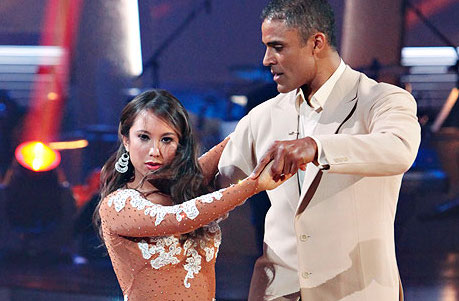
In addition to feature films, Fox has made significant appearances on television. He starred in the HBO prison drama Oz as Jackson Vahue, a storyline that tackled the challenges faced by professional athletes who fall from grace. Later, he played recurring roles on hit series like Ugly Betty and participated in reality shows such as Dancing with the Stars, which broadened his visibility and helped him reach a new generation of viewers.

Fox’s most enduring television role in recent years has been as Detective Ian Jackson in the Morning Show Mysteries series on Hallmark Movies & Mysteries, a franchise that blends suspense with lighthearted charm. His character’s consistent presence has made him a familiar face for mystery movie fans, and the role has become one of his most recognized post-NBA personas.

Rick Fox exemplifies how a career in professional sports can serve as a springboard into a second life in the arts. His journey from Lakers legend to actor is not merely a tale of celebrity crossover but a genuine narrative of reinvention. With over a dozen film roles, numerous television credits, and a steady presence in pop culture, Rick Fox stands as a rare example of a multi-talented performer who has thrived in two intensely competitive worlds.

The Real-Life Flint Tropics and the Greatest Deal in TV History

The Flint Tropics basketball team from Will Ferrell’s sports comedy classic Semi-Pro is based on an amalgamation of all the teams from the eccentric American Basketball Association (ABA). However, it’s hard to deny that there is one ABA team in particular that seems to make up most of the Tropics’ DNA. While only existing for 2 years, the Spirits of St. Louis made a splash on the sports world during their brief time and somehow ended up with a broadcast television deal that still pays out to this day (more on that later).

Based in St. Louis, Missouri, and playing their home games at the St. Louis Arena, the Spirits existed in the ABA from 1974 to 1976. They were actually one of the last teams to join the ABA. The team’s name was a nod to the Gateway Arch and the city’s aviation history, referencing Charles Lindbergh’s famous plane, the Spirit of St. Louis.

The Spirit team became notable for its colorful players and high-scoring games, consistent with the ABA’s flashy style. The organization’s more entertaining personalities included great player but troubled human, Marvin “Bad News” Barnes and the energetic fledgling (sometimes annoying) announcer Bob Costas. Future hall of famer Moses Malone even logged some minutes with the team.

And if basketball wasn’t your thing, games often featured events for attendees like disco concerts at halftime, Ladies’ Night, or “shooting for cash”. Undoubtedly, a St. Louis version of Dukes from Semi-Pro attempted a half-court shot for cash at some point between 1974 and 1976.

The Tropics’ storyline about struggling to survive the merger with the National Basketball Association (NBA) echoes the real-life challenges faced by ABA teams in 1976. Only four ABA teams were absorbed into the NBA (the Denver Nuggets, Indiana Pacers, New York Nets, and San Antonio Spurs), leaving others to fold or relocate. The Spirits were not among the four teams absorbed. The left-out teams had to either fold or negotiate buyouts.

The owners of the Spirits, Ozzie and Daniel Silna, refused to be bought out and, we’d like to think in the style of Jackie Moon, negotiated a remarkable deal: instead of a lump sum buyout, they retained perpetual rights to a share of future TV revenues from the ABA teams that joined the NBA. The deal entitled the Silnas’ to 1/7th of the TV revenue share received by each of the four former ABA teams that joined the NBA. This worked out to approximately 2% of the NBA’s overall TV revenue.

This seemed like a bold move at the time since TV contracts were very modest and not worth much money. The Silna brothers understood the potential of future television revenue though and resisted that one-time buyout. The ABA agreed to the deal because they thought that 2% would not amount to much cash anyway and they had a merger to complete.

With the arrival of Magic Johnson, Larry Bird, and Michael Jordan, the NBA’s popularity soared and TV contracts exploded in subsequent decades. The Silnas began earning millions annually for a basketball team that no longer even existed.

The NBA naturally had been trying to get out of this deal for a while. In 2014, their wish was granted but at another great cost. A settlement was reached with the Silna brothers to end the perpetual payments. The Silnas reportedly received a lump sum of $500 million while retaining a reduced share of some revenues. It is believed they have earned close to $800 million since the original arrangement was made all those years ago.

The Silna brothers’ deal is a testament to foresight and negotiation skills, as they leveraged a long-term vision over short-term gain. The deal, often called “the greatest deal in sports,” has become a legendary example of how understanding the future potential of a growing industry can result in extraordinary financial returns. The Spirits of St. Louis may have had a short lifespan as a team, but this deal ensured their lasting legacy in sports history.

“Major League” and the Power of the Underdog

At the beginning of 1989’s Major League, the audience is shown a montage of newspaper headlines of the Cleveland Indians baseball team on a losing streak. The montage sets a pretty somber tone at first of a city in a rough spot. But more importantly it establishes the Cleveland Indians as a classic case of a rag-tag team of misfits that people, even some of their own teammates, don’t take seriously. David S. Ward said he wrote Major League because it was “the only way I would see the Indians win a World Series” and it definitely feels like a celebration of an underdog team. It transcends the traditional sports movie by, intentionally or not, becoming a story of the value of diversity in America, and while some elements haven’t aged particularly well, it’s still an interesting statement disguised as a goofy sports comedy.

The film begins with the wife of a recently deceased former owner inheriting the Cleveland Indians. She hatches a plan to move the team to Las Vegas by gathering up some of the worst players in the league. Naturally, this new move worries the actual players. The players they bring in include a convicted felon (Charlie Sheen), a voodoo priest (Dennis Haysbert), and some guy who showed up uninvited but ends up as one of the best runners in the league (Westley Snipes). It fits right in with Guardians of the Galaxy, The Suicide Squad, among other movies that are about a rag tag team of misfits working together; and despite some of the more problematic and stereotypical elements, the film still works because it depicts these people as some of the more likable players on the team. These personalities clash and create conflict that doesn’t feel unlike the types of arguments between different backgrounds of people in the United States. The main plot of a rag-tag team of misfits is as old as the country itself. One particular subplot involves the voodoo priest being harassed by another player on the team who doesn’t know how to accept other people’s religion. Despite the voodoo priest character being a stereotype, the audience is 100% on his side.

However, some of the film’s more satirical elements, specifically the character of the new owner of the team, could’ve used a couple more rewrites to make them less cartoonish. The character of Rachel Phelps, the team’s new owner, feels like a two dimensional corporate stooge, especially after a TV show like Ted Lasso retooled a similar character and made her into someone who feels like a complex but still very flawed person. She feels like she exists inside of a bubble and only interacts with members of the team for a climactic argument towards the end of the film, making her more of a plot device than a character. This is made worse by a scene involving a cardboard cutout of this character being sexually objectified.

Additionally, because this is a fantasy, this results in the film occasionally being a little too cheery for its own good despite some of the more satirical elements. The protagonist, Jake (Tom Berenger)’s ex-wife, a former athlete named Lynn (Renee Russo) is engaged to a pompous rich oaf who has no respect for her, and now that Jake has also re-entered her life, she has to contend with him being incredibly annoying in trying to win her back. His main goal in the film is to get back together with her by becoming a high ranking baseball player. It’s clear that this is a fantasy, but he doesn’t learn anything by the end of it. His wife calls off the engagement, but she should have walked away from both of these guys and gone on to become a great athlete on her own. Instead, she smiles at Jake from the crowded baseball stands, indicating the two of them are going to get back together. This subplot could have said something far deeper about the cost of ambition by providing a dark counterpoint to a goofy comedy, but it goes in a feel-good romance direction that ends up clashing against the more satirical elements. It doesn’t feel like the movie wants to fully commit to some of the ideas that could’ve made it an all time classic satire, rather than just a pretty enjoyable piece of late 80’s comedy

Overall, despite some hiccups, Major League is a more clever movie than the viewer might assume for a mainstream comedy from that time. It arguably avoids the pitfalls of 80’s comedy stereotyping in some areas by making said characters incredibly competent at the sport. And while some elements haven’t aged particularly well, it more than laid the groundwork for successful sports comedies after it.

Author: Dylan James