Category Archives: FSM Movies

Rick Fox: From Hardwood to Hollywood

Rick Fox, a name synonymous with basketball during the 1990s and early 2000s, successfully transitioned from a standout NBA career to a noteworthy presence in the entertainment industry.

Born on July 24, 1969, in Toronto, Canada, Fox rose to prominence as a versatile forward for the Boston Celtics and later the Los Angeles Lakers, where he won three NBA championships. Yet, what sets Rick Fox apart from many of his athletic peers is not just his talent on the court, but his remarkable second act as a working actor in film and television.

Fox’s foray into acting began even before his retirement from basketball. He made his film debut in 1994 with a role in Blue Chips, a sports drama that also featured fellow NBA stars like Shaquille O’Neal and Penny Hardaway. This early appearance was a natural extension of his basketball fame, but it signaled the start of something deeper: a genuine interest in performing arts.

Following his retirement from the NBA in 2004, Fox increasingly devoted time to acting. He built an eclectic filmography that spanned drama, comedy, and even holiday fare. Notable roles include Chick Deagan in He Got Game (1998), directed by Spike Lee, and Clyde “Sweet Feet” Livingston in the popular family film Holes (2003). He also played Harry Belton in Tyler Perry’s Meet the Browns (2008), a role that further cemented his credibility among movie-going audiences and helped broaden his appeal beyond sports fans.

One of the most distinctive elements of Fox’s acting career is his willingness to take on diverse and sometimes unexpected roles. In the cult indie film Mini’s First Time (2006), he played a suave character named Fabrizio, showcasing his comedic timing and range. In the action-horror Navy Seals vs. Zombies (2015), he played the Vice President of the United States—a role far removed from the world of sports, reflecting his growing versatility as an actor.

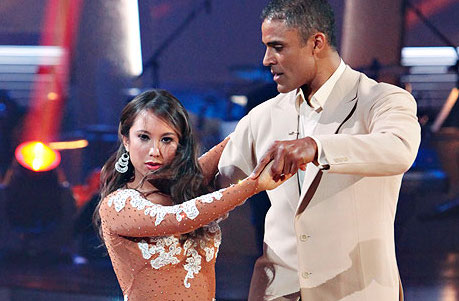
In addition to feature films, Fox has made significant appearances on television. He starred in the HBO prison drama Oz as Jackson Vahue, a storyline that tackled the challenges faced by professional athletes who fall from grace. Later, he played recurring roles on hit series like Ugly Betty and participated in reality shows such as Dancing with the Stars, which broadened his visibility and helped him reach a new generation of viewers.

Fox’s most enduring television role in recent years has been as Detective Ian Jackson in the Morning Show Mysteries series on Hallmark Movies & Mysteries, a franchise that blends suspense with lighthearted charm. His character’s consistent presence has made him a familiar face for mystery movie fans, and the role has become one of his most recognized post-NBA personas.

Rick Fox exemplifies how a career in professional sports can serve as a springboard into a second life in the arts. His journey from Lakers legend to actor is not merely a tale of celebrity crossover but a genuine narrative of reinvention. With over a dozen film roles, numerous television credits, and a steady presence in pop culture, Rick Fox stands as a rare example of a multi-talented performer who has thrived in two intensely competitive worlds.

The Time RoboCop Tried Professional Wrestling

The transition from the 80’s to the 90’s was a wild time. Some would say the best of both worlds were colliding and everyone was along for the ride. Part of that ride was RoboCop’s arrival in World Championship Wrestling (WCW). How can we even begin to explain this? Robocop, a fictional character from the movies, was now somehow real and decided to fight crime in a real sports organization that was really just a fictional sports organization.  

RoboCop showed up in World Championship Wrestling during the 1990 Capital Combat: Return of RoboCop pay-per-view event. This bizarre crossover happened mainly for marketing reasons. At the time, Orion Pictures was about to release the movie RoboCop 2. WCW and Orion worked out a promotional tie-in in which RoboCop would make an appearance at the wrestling event to hype up the film.

In the storyline, RoboCop helped Sting, who was one of WCW’s top stars, fend off an attack from the villainous group known as the Four Horsemen. RoboCop came down to ringside, “bent” the bars of a cage to rescue Sting, and helped him chase the bad guys off.

Fans and critics heavily mocked the segment, and it’s still remembered as one of the most embarrassing and absurd moments in pro wrestling history. The “action” was slow and obviously fake. RoboCop was being portrayed by a guy in a heavy suit (probably not Peter Weller) who could barely move.

So what’s the big deal? Fort starters, RoboCop is a fictional cyborg from a dystopian sci-fi movie — totally out of place in a wrestling environment that, even by 1990s standards, tried to maintain some realism. Arn Anderson was a major member of the Four Horsemen and one of the guys involved in the RoboCop segment. He thought the whole idea was “embarrassing” and made wrestling look like a “clown show”. Arn described the whole thing as “cartoonish” and something that hurt WCW’s credibility, especially when the company was trying to be seen as a more serious alternative to WWF’s over-the-top characters at the time.

Arn Anderson has gone on the record during his “ARN” podcast to share his true thoughts about the infamous RoboCop moment:

“I knew it was horsesh*t from the get-go. How do you fight a robot? Are we supposed to punch him and knock his head off? Are we supposed to sell for him? Run from him? He can’t move! It was one of the most embarrassing things I’ve ever been part of.”

Not pile on, but professional wrestling historian extortionate Jim Cornette also did not hold back when talking about the subject on an old “Kayfabe Commentaries” podcast.  

“It was the stupidest goddamn thing I’d ever seen. Who in the f*** thought RoboCop would draw money in wrestling? It made everyone look like idiots — the wrestlers, the announcers, the fans who had to sit through it. I was embarrassed to even be in the same building.”

Even the eternal optimist Sting (who Robocop saved during the segment) had trouble finding the silver lining. During the episode of “WWE Untold: Sting”, the wrestling icon had this to say about what went down that fateful day:

“I was standing there thinking, ‘Man, I hope nobody I know is watching this.”

Travis Kelce Scores Touchdown in Debut as Executive Producer

Travis Kelce has ventured into film production with his role as executive producer for the dark comedy-drama My Dead Friend Zoe, which premiered at the South by Southwest Film Festival on March 9, 2024. The film, directed by Kyle Hausmann-Stokes, explores the story of a U.S. Army veteran dealing with the loss of her best friend and reconciling with her estranged grandfather. The all-star cast includes Morgan Freeman, Ed Harris, Sonequa Martin-Green, and Natalie Morales.

My Dead Friend Zoe is a dark comedy-drama centered on a U.S. Army veteran named Merit, who is grappling with post-military life and the emotional scars of her service. The story explores her complicated relationship with her late best friend, Zoe, whose ghost continues to appear, symbolizing unresolved grief and trauma. As Merit navigates her life, she also faces the challenge of reconnecting with her estranged grandfather, a Vietnam War veteran. Their generational differences and shared experiences with military service create tension, but also opportunities for healing and understanding. 

The film balances humor with heartfelt moments, offering a nuanced look at mental health, military culture, and the complexities of human connection. Perhaps its effectiveness is partly due to the source material for this story being director Hausmann-Stokes’ own experiences. A U.S. Army veteran himself, Hausmann-Stokes served in Iraq and has been an advocate for veteran mental health and storytelling. The film reflects his insights into the emotional and psychological challenges faced by veterans, including themes of grief, survivor’s guilt, and post-traumatic stress. 

Hausmann-Stokes has stated that the story, while fictional, draws heavily from his personal journey and those of fellow veterans, aiming to provide an authentic portrayal of military life and its aftermath. The character of Zoe, who appears as a ghost, symbolizes the lingering presence of fallen comrades, a feeling familiar to many who have served. The film seeks to address these issues with both humor and compassion, offering a fresh perspective on the veteran experience.

Audiences have responded positively to early screenings of the film with Rotten Tomatoes giving it a score of 100% at the time of this writing. Not a bad start for Travis Kelce’s first big project as a producer in Hollywood.

The Real-Life Flint Tropics and the Greatest Deal in TV History

The Flint Tropics basketball team from Will Ferrell’s sports comedy classic Semi-Pro is based on an amalgamation of all the teams from the eccentric American Basketball Association (ABA). However, it’s hard to deny that there is one ABA team in particular that seems to make up most of the Tropics’ DNA. While only existing for 2 years, the Spirits of St. Louis made a splash on the sports world during their brief time and somehow ended up with a broadcast television deal that still pays out to this day (more on that later).

Based in St. Louis, Missouri, and playing their home games at the St. Louis Arena, the Spirits existed in the ABA from 1974 to 1976. They were actually one of the last teams to join the ABA. The team’s name was a nod to the Gateway Arch and the city’s aviation history, referencing Charles Lindbergh’s famous plane, the Spirit of St. Louis.

The Spirit team became notable for its colorful players and high-scoring games, consistent with the ABA’s flashy style. The organization’s more entertaining personalities included great player but troubled human, Marvin “Bad News” Barnes and the energetic fledgling (sometimes annoying) announcer Bob Costas. Future hall of famer Moses Malone even logged some minutes with the team.

And if basketball wasn’t your thing, games often featured events for attendees like disco concerts at halftime, Ladies’ Night, or “shooting for cash”. Undoubtedly, a St. Louis version of Dukes from Semi-Pro attempted a half-court shot for cash at some point between 1974 and 1976.

The Tropics’ storyline about struggling to survive the merger with the National Basketball Association (NBA) echoes the real-life challenges faced by ABA teams in 1976. Only four ABA teams were absorbed into the NBA (the Denver Nuggets, Indiana Pacers, New York Nets, and San Antonio Spurs), leaving others to fold or relocate. The Spirits were not among the four teams absorbed. The left-out teams had to either fold or negotiate buyouts.

The owners of the Spirits, Ozzie and Daniel Silna, refused to be bought out and, we’d like to think in the style of Jackie Moon, negotiated a remarkable deal: instead of a lump sum buyout, they retained perpetual rights to a share of future TV revenues from the ABA teams that joined the NBA. The deal entitled the Silnas’ to 1/7th of the TV revenue share received by each of the four former ABA teams that joined the NBA. This worked out to approximately 2% of the NBA’s overall TV revenue.

This seemed like a bold move at the time since TV contracts were very modest and not worth much money. The Silna brothers understood the potential of future television revenue though and resisted that one-time buyout. The ABA agreed to the deal because they thought that 2% would not amount to much cash anyway and they had a merger to complete.

With the arrival of Magic Johnson, Larry Bird, and Michael Jordan, the NBA’s popularity soared and TV contracts exploded in subsequent decades. The Silnas began earning millions annually for a basketball team that no longer even existed.

The NBA naturally had been trying to get out of this deal for a while. In 2014, their wish was granted but at another great cost. A settlement was reached with the Silna brothers to end the perpetual payments. The Silnas reportedly received a lump sum of $500 million while retaining a reduced share of some revenues. It is believed they have earned close to $800 million since the original arrangement was made all those years ago.

The Silna brothers’ deal is a testament to foresight and negotiation skills, as they leveraged a long-term vision over short-term gain. The deal, often called “the greatest deal in sports,” has become a legendary example of how understanding the future potential of a growing industry can result in extraordinary financial returns. The Spirits of St. Louis may have had a short lifespan as a team, but this deal ensured their lasting legacy in sports history.

“Major League” and the Power of the Underdog

At the beginning of 1989’s Major League, the audience is shown a montage of newspaper headlines of the Cleveland Indians baseball team on a losing streak. The montage sets a pretty somber tone at first of a city in a rough spot. But more importantly it establishes the Cleveland Indians as a classic case of a rag-tag team of misfits that people, even some of their own teammates, don’t take seriously. David S. Ward said he wrote Major League because it was “the only way I would see the Indians win a World Series” and it definitely feels like a celebration of an underdog team. It transcends the traditional sports movie by, intentionally or not, becoming a story of the value of diversity in America, and while some elements haven’t aged particularly well, it’s still an interesting statement disguised as a goofy sports comedy.

The film begins with the wife of a recently deceased former owner inheriting the Cleveland Indians. She hatches a plan to move the team to Las Vegas by gathering up some of the worst players in the league. Naturally, this new move worries the actual players. The players they bring in include a convicted felon (Charlie Sheen), a voodoo priest (Dennis Haysbert), and some guy who showed up uninvited but ends up as one of the best runners in the league (Westley Snipes). It fits right in with Guardians of the Galaxy, The Suicide Squad, among other movies that are about a rag tag team of misfits working together; and despite some of the more problematic and stereotypical elements, the film still works because it depicts these people as some of the more likable players on the team. These personalities clash and create conflict that doesn’t feel unlike the types of arguments between different backgrounds of people in the United States. The main plot of a rag-tag team of misfits is as old as the country itself. One particular subplot involves the voodoo priest being harassed by another player on the team who doesn’t know how to accept other people’s religion. Despite the voodoo priest character being a stereotype, the audience is 100% on his side.

However, some of the film’s more satirical elements, specifically the character of the new owner of the team, could’ve used a couple more rewrites to make them less cartoonish. The character of Rachel Phelps, the team’s new owner, feels like a two dimensional corporate stooge, especially after a TV show like Ted Lasso retooled a similar character and made her into someone who feels like a complex but still very flawed person. She feels like she exists inside of a bubble and only interacts with members of the team for a climactic argument towards the end of the film, making her more of a plot device than a character. This is made worse by a scene involving a cardboard cutout of this character being sexually objectified.

Additionally, because this is a fantasy, this results in the film occasionally being a little too cheery for its own good despite some of the more satirical elements. The protagonist, Jake (Tom Berenger)’s ex-wife, a former athlete named Lynn (Renee Russo) is engaged to a pompous rich oaf who has no respect for her, and now that Jake has also re-entered her life, she has to contend with him being incredibly annoying in trying to win her back. His main goal in the film is to get back together with her by becoming a high ranking baseball player. It’s clear that this is a fantasy, but he doesn’t learn anything by the end of it. His wife calls off the engagement, but she should have walked away from both of these guys and gone on to become a great athlete on her own. Instead, she smiles at Jake from the crowded baseball stands, indicating the two of them are going to get back together. This subplot could have said something far deeper about the cost of ambition by providing a dark counterpoint to a goofy comedy, but it goes in a feel-good romance direction that ends up clashing against the more satirical elements. It doesn’t feel like the movie wants to fully commit to some of the ideas that could’ve made it an all time classic satire, rather than just a pretty enjoyable piece of late 80’s comedy

Overall, despite some hiccups, Major League is a more clever movie than the viewer might assume for a mainstream comedy from that time. It arguably avoids the pitfalls of 80’s comedy stereotyping in some areas by making said characters incredibly competent at the sport. And while some elements haven’t aged particularly well, it more than laid the groundwork for successful sports comedies after it.

Author: Dylan James

A Legend in Pro Wrestling Also Had A Small Hollywood Career

Terry funk was a legend in the professional ring. He truly loved the sport and wrestled well into his golden years. After his passing last month, fans have been coming together to share their favorite Terry funk stories and moments. Chainsaw Charlie has been mentioned more than a few times. Many are surprised to find out Funk had small career in Hollywood which included stunt work on Sylvester Stallone’s film Rocky III. Since there are already many stories out there dedicated to Funk’s life and career in the squared circle, FSM is ranking Terry Funk’s Top 4 Movie Roles:

4. The Ringer – In this 2005 comedy, Funk plays a debt collector who gets a little physical with the main character’s (Johnny Knoxville) uncle in order to get some cash that is owed.  

3. Road House – Funk appeared in the 1989 action film Road House in the role of Morgan, a tough bouncer and one of the henchmen working for the film’s antagonist, Brad Wesley, played by Ben Gazzara. Most notably, the film also stars Patrick Swayze as a bouncer named Dalton who is hired to clean up a rowdy bar. Terry Funk’s presence in the film certainly added to the action and intensity of some of the fight scenes.

2. Over the Top – Funk’s role in the 1987 Sylvester Stallone film Over the Top was the character Ruker, a fellow arm wrestler and antagonist to Stallone’s main character, Lincoln Hawk. Over the Top is a sports drama film centered around the world of professional arm wrestling, and Terry Funk’s appearance added to the fighting atmosphere of the movie. The film has become a bit of a cult classic over the years.

1. Paradise Alley – In the film, Terry Funk’s character, Frankie the Thumper, is a professional wrestler. Frankie is one of the wrestlers in the local wrestling circuit that the Carboni brothers, played by Sylvester Stallone (Cosmo), Armand Assante (Lenny), and Lee Canalito (Victor), are involved with. Frankie the Thumper is known for his wrestling skills and is part of the wrestling world that the Carboni brothers navigate as they pursue their dreams and get involved in various wrestling matches and events throughout the film. The film portrays their interactions and challenges within the wrestling community in New York City’s Hell’s Kitchen during the 1940s. Funk also served as the stunt coordinator.

Which was your favorite Terry Funk movie? Did it make our list?

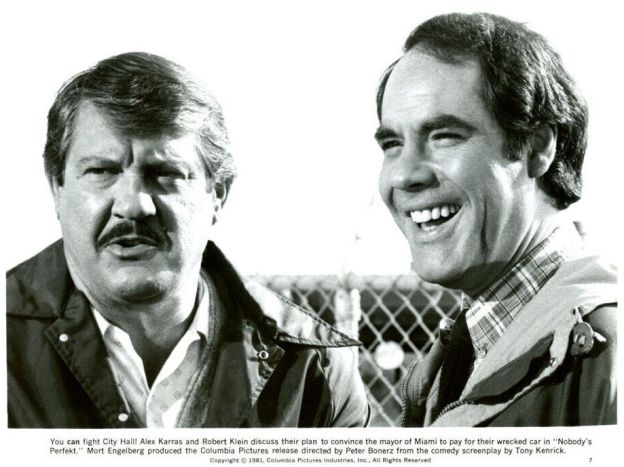
Alex Karras’ Top 3 Comedic Roles

Alex Karras got further into acting after his successful career as a professional football player ended. Upon retiring from the NFL, Karras pursued different opportunities in the entertainment industry beyond the smaller roles he landed while he was an active player. FSM presents the abridged version of his foray into acting and discusses his top 3 comedy performances:

Alex Karras played as a defensive tackle for the Detroit Lions in the National Football League (NFL) from 1958 to 1970. He had a notable career and was known for his strong presence on the field. Following his retirement from football, Karras ventured into sports broadcasting. He worked as a color commentator for NFL games and also had a stint as a co-host on “Monday Night Football” in the mid-1970s.

Karras made his acting debut in the late 1960s, appearing in a few guest roles on television shows such as “Daniel Boone” and “The Bing Crosby Show.” These early experiences sparked his interest in pursuing acting further. It was once retired however that his roles became larger and more prominent, as he had more time to dedicate to his new craft. His roles often matched his personality on the field – loud, boisterous and no nonsense.

In the 1970s and 1980s, Karras began to land his most notable roles in film and television and FSM has ranked the Top 3 comedic ones for your reading pleasure.

  1. Mongo in “Blazing Saddles” (1974): Karras played the character of Mongo, a hulking and dim-witted brute in Mel Brooks’ iconic comedy film. His portrayal of Mongo and the memorable scene of him punching out a horse made him a fan favorite.
  2. Sheriff Wallace in “Porky’s” (1981): In this raunchy teen comedy, Karras portrayed the role of Porky’s brother, a corrupt Sheriff who helps with straightening out wild teens from other counties. His comedic timing and tough-guy persona certainly enhance the film’s humor.
  3. Doc in “Webster” (TV Series, 1983-1989): Karras’ portrayal of George Papadopoulos, or “Doc,” in the television series “Webster” captured the hearts of viewers for many years. This popular sitcom followed the lives of a young orphan (played by Emanuel Lewis) and the couple who adopted him. Karras’ portrayal of the kind-hearted and lovable father figure earned him recognition and popularity among TV audiences across the board. He mostly made audiences laugh while hitting the serious notes as needed.

Alex Karras passed away on October 10, 2012 due to kidney failure. His death marked the end of a remarkable life that encompassed achievements in both professional football and acting.Throughout his acting career, he showcased his skills and versatility, transitioning from his football background to become a respected figure in the entertainment industry.

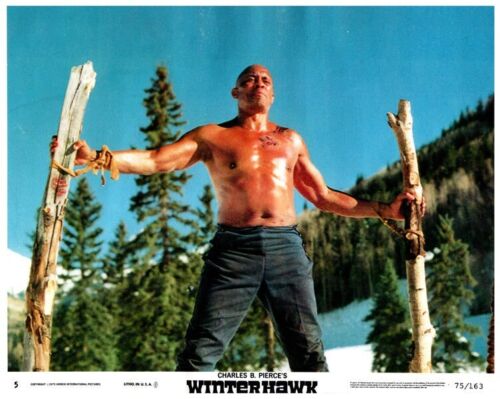
Remember Woody Strode for Breaking Barriers

Woody Strode broke barriers and made significant contributions to society in various aspects of his life and career. While Strode’s impact may not be as widely recognized as some other historical figures, his determination and success in breaking barriers in professional football and Hollywood have made a lasting impact on the sports and entertainment industries, as well as on the fight for racial equality. Free Sports Magazine proudly presents the abridged story of his life.

Western movie fans may not know Woody Strode was a professional American football player before transitioning into acting. Born on July 25, 1914, in Los Angeles, California, Strode attended UCLA (University of California, Los Angeles), where he excelled in athletics, particularly in football and track and field.

Strode played as a standout fullback and defensive lineman for the UCLA Bruins football team during the late 1930s. His performance in college earned him recognition, and he was named to the All-American team in 1939. Making things more interesting, one of Strode’s teammates was THE Jackie Robinson. Yes, you read that correctly. Woody Strode and Jackie Robinson were indeed teammates on the same football team.

In 1939, both Strode and Robinson played for the UCLA Bruins which went undefeated with a record of 8-0-1 that season. During their time at UCLA, Strode played as a standout fullback and defensive lineman, while Robinson played as a running back. Strode’s physicality, strength, and versatility on the field, combined with Robinson’s speed and agility, contributed to the team’s success. Their undefeated season in 1939 remains a notable achievement in UCLA football history to this day.

After college, Strode played professional football in the NFL (National Football League). He signed with the Los Angeles Rams in 1946, becoming one of the first African-American players in the league’s modern era. Strode played for the Rams for two seasons before finishing his football career in Canada, where he played for the Calgary Stampeders in the Canadian Football League (CFL).

Following his football career, Strode transitioned into acting and appeared in numerous films and television shows. Strode’s athletic background often played a role in the types of characters he portrayed on screen, bringing a physicality and presence to his performances. The football star turned thespian delivered several outstanding performances throughout his acting career. While opinions may vary on his best movie performances, there were some notable ones that garnered critical acclaim and showcased his talent. Each film showcased different facets of his skillset, making it difficult to pinpoint a single best performance:

1. Spartacus (1960) – Strode portrayed the character of Draba, a gladiator in this epic historical drama. His memorable fight scene with Kirk Douglas’s character remains one of the film’s highlights.

2. The Man Who Shot Liberty Valance (1962) – Strode’s role as Pompey, a loyal ranch hand, in this classic Western showcased his strength and stoic presence. His chemistry with John Wayne’s character added depth to the film.

3. Sergeant Rutledge (1960) – Strode played the title role of Sergeant Braxton Rutledge, a Buffalo Soldier accused of rape and murder. His portrayal of Rutledge’s dignity and strength in the face of injustice was highly praised.

4. Once Upon a Time in the West (1968) – In this Sergio Leone spaghetti Western, Strode portrayed Stony, one of the gunmen hired to intimidate the protagonist. He showcased his physicality and intensity in a standout performance.

5. The Professionals (1966) – Strode’s role as Jake Sharp, a member of a group of mercenaries, displayed his versatility as an actor. He brought depth to the character and shared excellent chemistry with his co-stars.

While Woody Strode had a successful and exciting career, he should be most remembered for the multiple barriers he broke on the field, in front of the camera, and in real life.

He was one of the first African-American players in the modern era of the National Football League (NFL). He signed with the Los Angeles Rams in 1946, paving the way for future generations of Black athletes in professional football.

As an actor, he faced challenges and racial barriers in the film industry. However, he managed to carve out a successful career in an era when opportunities for Black actors were limited. He played diverse roles that went beyond stereotypes, helping to open doors for other African-American actors in Hollywood. Strode worked alongside Sidney Poitier, another trailblazing African-American actor, in the film “The Defiant Ones” (1958). Their performances in the movie, which addressed racial tensions and prejudice, helped bring attention to issues of racial equality and social justice.

Woody Strode passed away on December 31, 1994 after a battle with lung cancer. His final film was The Quick and the Dead (1995) which was released posthumously and directed by Sam Raimi of Evil Dead and Spiderman fame. In the movie, Strode finds himself in the Wild West yet again and is surrounded by an all-star ensemble cast for one last time. And while it is easy to watch Strode portray a wandering gunfighter named Charlie Moonlight, it is easier to forget his achievements and contributions as an athlete and actor were made in the face of many racial barriers. Strode’s courage and talent is not be forgotten and should continue to serve as a source of inspiration for aspiring athletes, actors, and other professionals.

Body Slam: A Forgotten Movie of the Rock ‘n’ Wrestling Era

“Rock ‘n’ Wrestling” refers to a significant crossover between the worlds of professional wrestling and rock music that took place in the 1980s. It primarily revolves around the partnership between the World Wrestling Federation (now WWE) and the music industry, particularly with the involvement of musicians and collaborations with MTV.

During this era, the WWF recognized the potential of combining the popularity of professional wrestling with the mainstream appeal of rock music to create a larger fan base. This led to various initiatives and events that blended the two worlds, resulting in a phenomenon known as “Rock ‘n’ Wrestling.”

One of the key figures in this crossover was Cyndi Lauper, a prominent pop singer of the time. Lauper’s association with professional wrestling began when she appeared as a manager for wrestler Wendi Richter. This led to a storyline feud between Richter and Lauper’s rival manager, Captain Lou Albano, which culminated in a highly publicized match at the inaugural WrestleMania event in 1985.

The success of this collaboration prompted further integration of music and wrestling. The WWF featured rock musicians in their programming, such as Rick Derringer performing “Real American” for Hulk Hogan’s entrance theme. Additionally, the WWF created animated series called Hulk Hogan’s Rock ‘n’ Wrestling, which featured animated versions of wrestlers teaming up with various rock stars in comedic adventures.

The “Rock ‘n’ Wrestling” era represented a significant period of cross-promotion and entertainment convergence, bringing together the larger-than-life personalities of professional wrestling with the energy and appeal of rock music. It played a crucial role in expanding the fanbase of both industries and capturing the pop culture zeitgeist of the 1980s.

The natural progression of this awesome pairing was to bring the action of pro wrestling and sounds of rock music to the movie screen. However, this is where interest seemed to stop for most people. Perhaps purchasing a ticket and spending a day at the movies was always going to be a bit overkill for fans perfectly happy to watch Cyndi Lauper just have fun from their own living room for or parents who got a free cartoon for their kids every Saturday morning. Whatever the reasons, this effort to hit the big screen ultimately left us with movies like No Holds Barred (which Jim Ross once referred to as No Profits Allowed) and the should be cult-classic Body Slam.

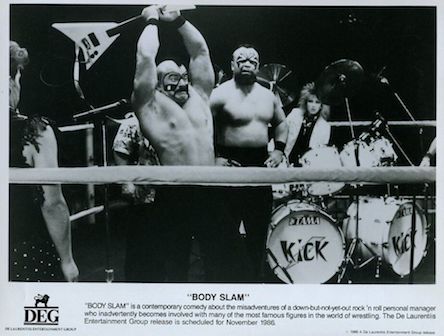
Body Slam was a comedy released in 1986, revolving around a down-on-his-luck music promoter named M. Harry Smilac, played by Dirk Benedict of The A-Team fame. Smilac just happens to get involved in the world of professional wrestling and mischief ensues.

The film follows Smilac as he encounters a washed-up pro wrestler named “Quick” Rick Roberts, portrayed by Rowdy Roddy Piper. Smilac sees an opportunity to combine his love for music and wrestling by managing Quick Rick and a wrestling rock band called Kick at the same time.

With the help of his assistant Candace, played by Tanya Roberts, Smilac sets out to promote Quick Rick and his wrestling partner Tonga Tom, played by Sam Fatu. They embark on a tour with Kick, hoping to achieve success and fame by merging the worlds of music and wrestling. As the story progresses, Smilac faces challenges, including rival wrestling promoters, the constant chaos of managing a group of wrestlers and musicians, and the difficulty of putting on a show that features both live music and wrestling. Of-course the film culminates in a climactic showdown and a high-stakes wrestling match.

Body Slam combines elements of comedy, wrestling action, and music, creating an entertaining story about an unlikely group of characters trying to find success and redemption in their respective fields. Other wrestlers and personalities of note appearing in the film include Captain Lou Albano, Afa Anoai, Barbarian, Billy Barty, John Astin, Fans of The A-Team will especially enjoy this film as Dirk Benedict drives around in a Ferrari in some scenes and is essentially playing the Templeton Peck character (he juggled commitments to both projects during this time). That’s perfectly fine because Rock ‘n’ Wresting is a venture that the Face man would get into to make a buck.

Body Slam was not a financial success. The film was met with negative reviews and failed to attract a significant audience. The movie’s poor performance contributed to its status as a relatively obscure and forgotten film today. While it has gained a small following among fans of professional wrestling and ’80s movies, it hasn’t achieved the same level of cult status as some other films from the era. Its lack of critical acclaim and commercial success prevented it from attaining widespread recognition or a dedicated cult following. This isn’t surprising when thinking about the mainstream audience but perhaps a little more unexpected when considering the fandom of wrestling fans.  

That Time the Harlem Globetrotters Got Stuck On Gilligan’s Island

The iconic Gilligan’s Island made a return in 1978 with a made-for-television movie called “Rescue from Gilligan’s Island.” The movie served as a sequel to the original series and brought back the original cast members, including Bob Denver as Gilligan, Alan Hale Jr. as the Skipper, Jim Backus as Thurston Howell III, Natalie Schafer as Lovey Howell, Russell Johnson as the Professor, Dawn Wells as Mary Ann, and Tina Louise as Ginger.

The storyline of “Rescue from Gilligan’s Island” revolves around the castaways finally being rescued after many years. However, upon their return to civilization, they face a variety of challenges and comedic situations. The movie was well-received by fans of the original series and provided closure to the story of Gilligan’s Island. Or did it?

The success of “Rescue from Gilligan’s Island” led to three subsequent made-for-television movies featuring the castaways which expanded on the original series and continued the adventures of the beloved characters. One of these forgotten gems may be of some interest to sports fans around the Globe.

In a two-part episode titled “The Harlem Globetrotters on Gilligan’s Island,” which aired in 1981, the Harlem Globetrotters made a guest appearance on the television show. This crossover episode was a fun collaboration between the popular comedy series and the legendary basketball team. While the Globetrotters still exist today, the squad that took the court on the island in 1981 was a who’s who of iconic street ballers including Meadowlark Lemon and Curly Neal. It was perhaps the team’s most distinguished lineup from over the years.

The Globetrotters’ presence on the island is a result of this unexpected turn of events. In the storyline of “The Harlem Globetrotters on Gilligan’s Island,” it is explained that the Harlem Globetrotters were on a cruise ship named the S.S. Minnow II, which was named after the ill-fated original S.S. Minnow from the Gilligan’s Island series. The ship gets caught in a storm and ends up stranded on the same deserted island where the main characters of Gilligan’s Island have been marooned. The Globetrotters and the castaways of Gilligan’s Island end up having to work together to solve a series of challenges and conflicts on the island. Naturally, many shenanigans ensue.

Mainly, both parties discover that a band of Russian spies, led by a character named Vasily Kandinsky, is also on the island engaging in nefarious activities. Throughout the episodes, the Harlem Globetrotters display their basketball skills while getting involved in comedic adventures with the castaways. They face challenges such as building a raft, searching for treasure, and of course outsmarting the spies. Their unique talents and comedic interactions contribute to the lighthearted and entertaining atmosphere of the show.

Ultimately, with the combined efforts of the Globetrotters and the castaways, they manage to thwart the spies’ plans and create a plan to escape the island. The episodes conclude with a fun and lively basketball game between the Globetrotters and the castaways, adding a final touch of humor and entertainment to the story. You’ll have to watch the episode to see which team won!