Category Archives: FSM Books

FSM Scouting Report: All-American Murder

Book/Movie Title: All-American Murder: The Rise and Fall of Aaron Hernandez

Total Pages/Duration: 375 (paperback version)

Author/Director: James Patterson w/ Alex Abramoivch & Mike Harvkey

Pace of Play: Short chapters and lack of descriptive, flowery language make for a quick read. Some will finish this in one sitting while most will take 2-3 days.

Strengths: The authors stick to the facts and provide many direct quotes from individuals involved in the case. Information is easy to follow as it’s presented in a straight line. There are some flashbacks when necessary but you’ll never get confused. The authors bring the reader up to speed rather quickly in regard to Hernandez’s home life and his days in high school and college.  

Weaknesses: The book relies on direct quotes a little too much at times (sometimes quotes go on for an entire page). It just comes off as lazy. Also, some of the rumors of Hernandez being gay or bisexual are briefly mentioned. I’m assuming there weren’t enough facts to back any of it up, but the authors could have at least tried to disprove some of the rumors by showing what evidence exists. After all, true or not, the rumors were a big part of the story. Again, it comes off a little lazy.

Unique Attributes: The authors maintain a matter-of-fact tone and avoid the use of SAT vocabulary words. Except for the description of Hernandez’s jail cell, don’t expect some of that descriptive writing James Patterson is known for.

All-American Murder contains some interesting side stories involving Tim Tebow, Urban Meyer, and the Pouncey twins. You’ll also read about the lesser-known double-murder that Hernandez allegedly committed.  

Scout’s Recommendations: At this point, the story of Aaron Hernandez has been told across many mediums and probably doesn’t deserve any more of our time. But how often does James Patterson write about sports stuff? That being said, I’m skeptical Patterson did anything more than supervise on this project. All-American-Murder is worthy of a pickup if you’re about to go on a long flight or plan on lounging by the pool on a cruise ship. Other than that, it should be used as a “first stop” for people getting into the Aaron Hernandez saga for the first time.

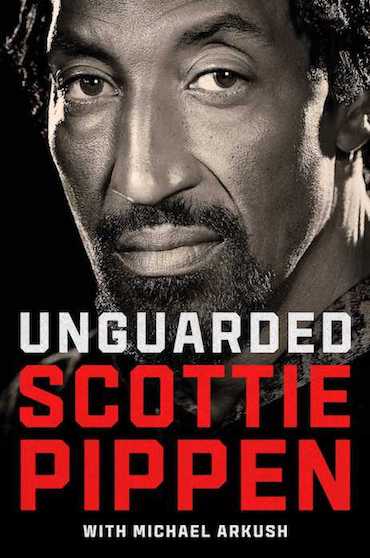
FSM First Look: Unguarded by Scottie Pippen

Scottie Pippen has been called one of the greatest NBA players for good reason.

Simply put, without Pippen, there are no championship banners—let alone six—hanging from the United Center rafters. There’s no Last Dance documentary. There’s no “Michael Jordan” as we know him. The 1990s Chicago Bulls teams would not exist as we know them.

So how did the youngest of twelve go from growing up poor in the small town of Hamburg, Arkansas, enduring two family tragedies along the way, to become a revered NBA legend? How did the scrawny teen, overlooked by every major collegiate basketball program, go on to become the fifth overall pick in the 1987 NBA Draft? And, perhaps most compelling, how did Pippen set aside his ego (and his own limitless professional ceiling) in order for the Bulls to become the most dominant basketball dynasty of the last half century?

In Unguarded, the six-time champion and two-time Olympic gold medalist finally opens up to offer pointed and transparent takes on Michael Jordan, Phil Jackson, and Dennis Rodman, among others. Pippen details how he cringed at being labeled Jordan’s sidekick, and discusses how he could have (and should have) received more respect from the Bulls’ management and the media.

Pippen reveals never-before-told stories about some of the most famous games in league history, including the 1994 playoff game against the New York Knicks when he took himself out with 1.8 seconds to go. He discusses what it was like dealing with Jordan on a day-to-day basis, while serving as the facilitator for the offense and the anchor for the defense.

On the 30th anniversary of the Bulls’ first championship, Pippen is finally giving millions of adoring basketball fans what they crave; a raw, unvarnished look into his life, and role within one of the greatest, most popular teams of all time.

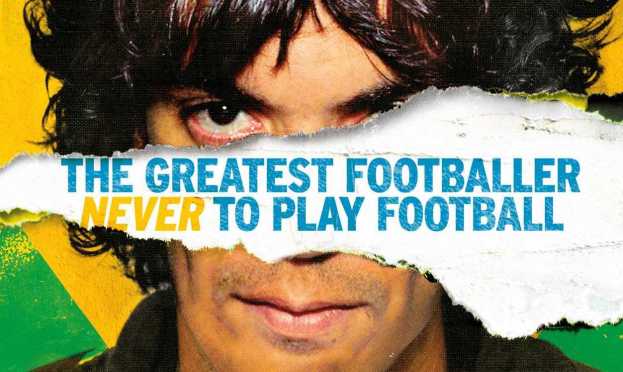
Kaiser! The Greatest Footballer Never to Play Football

Born in Rio Pardo, Brazil, Carlos Henrique Raposo had dreams of becoming a professional soccer (futbol) player. After a youth career at Botafogo and Flamengo, he had his sights set on the future. Whether given the nickname “Kaiser” due to his resemblance of superstar Franz Beckenbauer or a bottle of Kaiser beer, he used his new-found name to begin a career where he “wanted to be a footballer, but did not want to play football.”

Thus began a decade-plus career that spanned across Brazil (Botafogo, Flamengo, Bangu, Fluminense, Vasco da Gama, and America), Mexico (Puebla), France (Gazelec Ajaccio), and the United States (El Paso Sixshooters). Relying on his charm and friends in high places—from fellow footballers Carlos Alberto Torres, Ricardo Rocha, and Renato Gaucho, to reporters willing to write “stories” of his “career”— Carlos Kaiser used his skills of deception to have a storied career without ever stepping foot on the pitch.

Whether faking injuries, having friends lie for him, making up tall tales, or getting thrown out of a match just before taking the field, Kaiser! The Greatest Footballer Never to Play Football is an incredible story of the lengths one man went to have a professional soccer career without every playing a game.

Originally published in the UK, and with a worldrenowned documentary released on his lifeKaiser! shares the lengths taken by one man who wanted all the glitz and glory of being a professional athlete . . . without ever having to be an actual athlete. So whether you’re a fan of soccer, futbol, professional sports, or stories of cunning and deception, Kaiser! is the story you don’t want to miss!

FSM Books: Shoe Dog

To steal an adjective often used by good ole’ Jim Ross (of WWE and AEW fame), Nike creator Phil Knight’s recent memoir Shoe Dog is a “slobberknocker” of an experience. One would have never expected Nike to overcome its somewhat humble beginnings, growing pains, and its lies – oh the many, many lies!

The beginning of Knight’s memoir finds him as a recent graduate of the Stanford School of Business. Unsure of what direction to go in life, he thinks about an assignment he completed in which he came up with his own business concept. He did well on the assignment and, since he is feeling a sense of urgency to figure things out in life (as many people do in their 20s), he decides to turn that assignment into a pursuit. His concept at Stanford was to import and export high quality running shoes. While this doesn’t appear to be a groundbreaking idea in 2020, Knight makes the reader aware just how ridiculous this seemed to others when he started his quest in 1962.

The “whatever it takes” approach is perhaps the most captivating reoccurring theme in Shoe Dog. It’s what sucks the reader in and keeps the pages turning at a somewhat phrenetic pace (don’t be surprised if you finish this book in 3 days or less). Phil Knight writes in a way that makes the reader feel they are a part of his unbelievable journey. By the end of his tale, the reader has jumped every hurdle, navigated every roadblock, and ultimately gets to celebrate the success of Nike alongside Phil Knight and friends. Of course, the reader’s experience comes from a distance and many years after the fact, but the feeling of being present at all times speaks to how well Shoe Dog is written.

Being present at all times means the reader is treated to some of these “whatever it takes” moments. Be prepared to battle a little anxiety as Phil Knight wiggles out of various sticky situations. These moments mostly occur during Nike’s infancy and often involve big fibs told by Knight. The ethics of Knight’s behavior during these situations are definitely up for debate. However, it must be noted that there was never malice in Knight’s actions. In fact, FSM would bet dollars to doughnuts that many entrepreneurs have told the same fibs. Without spoiling too much, get ready to join Phil Knight as he lies or stretches the truth when dealing with banks, suppliers, and manufacturers. Observe him as he travels overseas and secures a shoe contract for his company that doesn’t exist yet.

Sports fans may be surprised that athletes such as Michael Jordan are scarcely discussed in Shoe Dog. We started the memoir thinking a large portion of the story would include Nike’s major athletes and their impact on the company over the years. Aside from begrudgingly admitting these athletes were needed for purposes of advertising, Knight rarely deviates from talking about his own journey and his significance to the creation of Nike. By the end of Shoe Dog, it’s clear that Knight’s self-critical nature and baffling insecurity kept pushing Nike forward amidst seemingly insurmountable odds at times.

For those reading this memoir for guidance about business and/or life, you definitely won’t leave empty handed. Knight’s guidance is not delivered explicitly but found in his actions and self-reflection. For those reading for the purposes of entertainment, lace up your running shoes, take a deep breath, and prepare for the run of your life!

FSM Final Grade: A+


Purchase Shoe Dog Today!

Purchase the Shoe Dog Kids Version

FSM Books: Coach Wooden and Me

People who say that sports don’t matter aren’t paying attention. From a practical standpoint alone, sports on all levels contribute to local, national, and global economies in many ways. But let’s forget about practicality for a moment and let’s talk about magic. Magic is when people who don’t have much in common come together in pursuit of a collective goal. In sports, this pursuit often plays out in front of teammates, classmates, friends, and fans. While the ultimate goal itself may be simple (i.e., “Just win baby”), the highs and lows experienced by participants and onlookers along the way are where the magic lies.

In Coach Wooden and Me: Our 50-Year Friendship On and Off the Court, basketball legend Kareem Abdul-Jabbar recounts a friendship with UCLA coach John Wooden that spanned the course of five decades. His effort is thoughtful and beautiful and is an example of why sports do matter. Abdul-Jabbar details his time in college and the slow-burning friendship that developed with Wooden over the years. It is clear from the onset that these two men would have never met if not for the common goal of winning basketball games. That’s not meant to be negative, just reality. But thanks to sports, they did meet and the masses are better off because of it.

Kareem’s story mostly alternates between old and more current anecdotes. Despite the gap in time between each story, the book still feels like it’s being rolled out in chronological order. Captain Skyhook does a phenomenal job of connecting the past and present. The reader is never left questioning why two events occurring so far apart in time were mentioned as part of the same thought.

In public, Kareem Abdul-Jabbar’s temperament is more Shrek than superstar. That’s what makes much of the material in this book so intriguing. Abdul-Jabbar reveals new information and covers a wide range of topics that influenced him as an individual. Of course, John Wooden is somehow connected to all of it and it’s special to learn how Kareem’s friendship with him evolved over time.

It would be misleading to say this book is only about the friendship between these two men. Kareem also discusses factors in his formative years that led him to move to California and enroll at the University of California Los Angeles. He discusses finding his voice socially, morally, and politically. In fact, one of the greatest stories in Coach Wooden and Me involves Kareem and a teammate talking about religion on a bus ride back from a game. At the end of the discussion, Kareem “comes out” as being Muslim and in short, no one really cares. The magic of sports.

Perhaps the most impactful, if not infuriating anecdote involves a woman calling Kareem Abdul-Jabbar the n-word in front of Coach Wooden. Abdul-Jabbar describes a shell-shocked Wooden who seemed unsure how to react. The lack of a reaction was not because Coach was too afraid to confront the woman but because he was genuinely shocked things like this blatantly occurred. Many adjectives can be used to describe John Wooden but one would never dream that naïve would be on that list. The incident so bothered Coach Wooden that he still felt the need to bring it up to Kareem many years later.

While the unfortunate incident mentioned above happened in the 1960s, it remains relevant today. Think of all the kind, honest, and decent people that exist out there that possess this same naïveté. There is a tendency to believe what we believe until something shatters that belief. When something is so bad that a good person can’t imagine it happening, that person will just assume it doesn’t happen. This incident was perhaps the most heartbreaking part of Coach Wooden and Me. It was tough to see a legend like Wooden be so vulnerable…so human.

Coming in at 279 pages, the hardcover edition of this book should be an easy, enjoyable read for avid and fringe sports fans. Besides talking hoops, Abdul-Jabbar dives into jazz, religion, politics, race, poverty, and many other relevant social issues, all the while connecting them to the legendary coach. This is perhaps Abdul-Jabbar’s greatest accomplishment – writing a book about John Wooden while talking mostly about himself.

FSM Final Grade: A

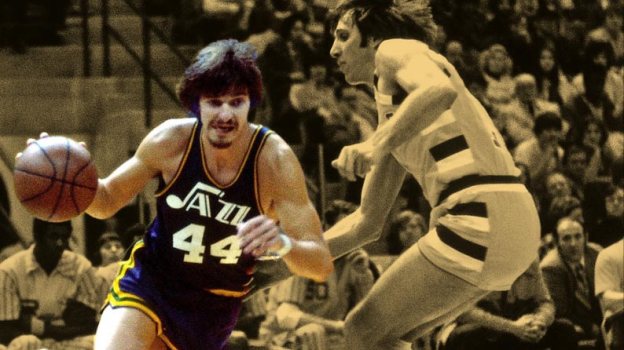
FSM Books: Pistol Pete

Pistol: The Life of Pete Maravich takes the reader on a surprising journey through light and dark while telling the tale of a basketball legend that will not be soon forgotten. Perhaps the quote that appears on the soft cover version of this intriguing biography written by Mark Kriegel summarizes this literary effort best by stating that, “His game was lordly, inimitable, and he should have been the greatest player to ever play the game. This great book will explain why he was not…”

I was excited to read this book for a few reasons. Primarily I wanted to learn a little more about the legendary Pistol Pete as he terrorized opponents in the NBA before my time as a fan (and as a human being). Secondarily, the book’s first couple of pages are lined with nearly 50 quotes from people in the media who are singing its praises. I figured so many experts couldn’t be wrong and delved in to 323 pages of basketball history with high expectations.

Pistol reads more like a chronicle than a biography. Many names and dates are hurled at the reader often times disrupting the flow of the narrative. Kriegel succeeds in providing a highly detailed account of Pete Maravich’s life but it comes at a cost. This is not the typical page turning sports biography which may be unappealing to a less seasoned reader.  It is more of a textbook about the Maravich family beginning with a lengthy background about Pistol’s notorious father Press Maravich and ending with a melancholy update on what the Pistol’s two sons have been up to in the last few years.

It would be impossible to tell the story of Pistol Pete without mention of his hard driving father and the turmoil he was experiencing in his family life. Kriegel documents a number of incidents and relays many tales when only a few would have sufficed. The thesis of Pistol is perfectly clear and its themes reoccur on nearly every page. Before the reader makes it half way through this book, they will have a good understanding of all the demons the Pistol was dealing with. After a while, the stories of demons become overkill. Pistol takes on a dark tone, and maybe rightfully so, but it would have been nice to read more about Maravich’s exploits as a professional basketball player and the magic he created on the hardwood.

Pistol: The Life of Pete Maravich has great historical value for fans of the college and professional game. It answers a multitude of questions including why a guy as talented and skilled as Pete Maravich never won a title or why he will never be considered in the same breath as Michael Jordan or Wilt Chamberlain. But people looking for a quick read or page-turner should try finding their fix elsewhere. Pistol is recommended for avid fans of basketball and sports historians only. The fringe would be better suited to remember Pete Maravich by watching YouTube highlights or the occasional feature on ESPN Classic.