Tag Archives: Free Book Review

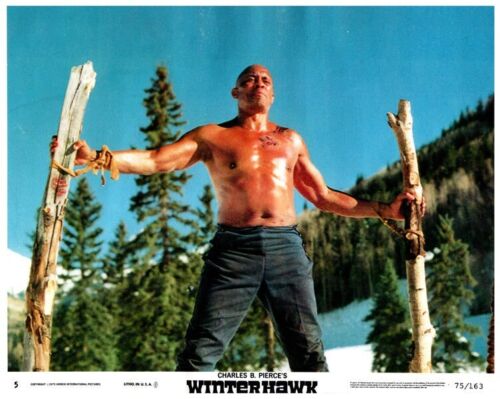
Remember Woody Strode for Breaking Barriers

Woody Strode broke barriers and made significant contributions to society in various aspects of his life and career. While Strode’s impact may not be as widely recognized as some other historical figures, his determination and success in breaking barriers in professional football and Hollywood have made a lasting impact on the sports and entertainment industries, as well as on the fight for racial equality. Free Sports Magazine proudly presents the abridged story of his life.

Western movie fans may not know Woody Strode was a professional American football player before transitioning into acting. Born on July 25, 1914, in Los Angeles, California, Strode attended UCLA (University of California, Los Angeles), where he excelled in athletics, particularly in football and track and field.

Strode played as a standout fullback and defensive lineman for the UCLA Bruins football team during the late 1930s. His performance in college earned him recognition, and he was named to the All-American team in 1939. Making things more interesting, one of Strode’s teammates was THE Jackie Robinson. Yes, you read that correctly. Woody Strode and Jackie Robinson were indeed teammates on the same football team.

In 1939, both Strode and Robinson played for the UCLA Bruins which went undefeated with a record of 8-0-1 that season. During their time at UCLA, Strode played as a standout fullback and defensive lineman, while Robinson played as a running back. Strode’s physicality, strength, and versatility on the field, combined with Robinson’s speed and agility, contributed to the team’s success. Their undefeated season in 1939 remains a notable achievement in UCLA football history to this day.

After college, Strode played professional football in the NFL (National Football League). He signed with the Los Angeles Rams in 1946, becoming one of the first African-American players in the league’s modern era. Strode played for the Rams for two seasons before finishing his football career in Canada, where he played for the Calgary Stampeders in the Canadian Football League (CFL).

Following his football career, Strode transitioned into acting and appeared in numerous films and television shows. Strode’s athletic background often played a role in the types of characters he portrayed on screen, bringing a physicality and presence to his performances. The football star turned thespian delivered several outstanding performances throughout his acting career. While opinions may vary on his best movie performances, there were some notable ones that garnered critical acclaim and showcased his talent. Each film showcased different facets of his skillset, making it difficult to pinpoint a single best performance:

1. Spartacus (1960) – Strode portrayed the character of Draba, a gladiator in this epic historical drama. His memorable fight scene with Kirk Douglas’s character remains one of the film’s highlights.

2. The Man Who Shot Liberty Valance (1962) – Strode’s role as Pompey, a loyal ranch hand, in this classic Western showcased his strength and stoic presence. His chemistry with John Wayne’s character added depth to the film.

3. Sergeant Rutledge (1960) – Strode played the title role of Sergeant Braxton Rutledge, a Buffalo Soldier accused of rape and murder. His portrayal of Rutledge’s dignity and strength in the face of injustice was highly praised.

4. Once Upon a Time in the West (1968) – In this Sergio Leone spaghetti Western, Strode portrayed Stony, one of the gunmen hired to intimidate the protagonist. He showcased his physicality and intensity in a standout performance.

5. The Professionals (1966) – Strode’s role as Jake Sharp, a member of a group of mercenaries, displayed his versatility as an actor. He brought depth to the character and shared excellent chemistry with his co-stars.

While Woody Strode had a successful and exciting career, he should be most remembered for the multiple barriers he broke on the field, in front of the camera, and in real life.

He was one of the first African-American players in the modern era of the National Football League (NFL). He signed with the Los Angeles Rams in 1946, paving the way for future generations of Black athletes in professional football.

As an actor, he faced challenges and racial barriers in the film industry. However, he managed to carve out a successful career in an era when opportunities for Black actors were limited. He played diverse roles that went beyond stereotypes, helping to open doors for other African-American actors in Hollywood. Strode worked alongside Sidney Poitier, another trailblazing African-American actor, in the film “The Defiant Ones” (1958). Their performances in the movie, which addressed racial tensions and prejudice, helped bring attention to issues of racial equality and social justice.

Woody Strode passed away on December 31, 1994 after a battle with lung cancer. His final film was The Quick and the Dead (1995) which was released posthumously and directed by Sam Raimi of Evil Dead and Spiderman fame. In the movie, Strode finds himself in the Wild West yet again and is surrounded by an all-star ensemble cast for one last time. And while it is easy to watch Strode portray a wandering gunfighter named Charlie Moonlight, it is easier to forget his achievements and contributions as an athlete and actor were made in the face of many racial barriers. Strode’s courage and talent is not be forgotten and should continue to serve as a source of inspiration for aspiring athletes, actors, and other professionals.

FSM Retro Reviews: The Craps Underground

FSM takes a looks back at Thomas “Irshsetter” Morgan’s classic scorched earth review of the controversial 2004 book The Craps Underground – The Inside Story of How Dice Controllers Are Winning Millions from the Casinos.

“Scoblete’s new book depicts the real world of dice influencing about as accurately as Hogan’s Heroes depicted life in a World War II German POW camp.”

That was my initial impression of Scoblete’s new book which I posted on the message board a few weeks back. Now I’ve had a chance to re-read the book a couple of times and fully digest it. Fortunately, I acquired one of the pre-release copies of the book, gratis. I would have had a SERIOUS case of buyers remorse had I actually paid $24.95 for this 315 page hard cover dog.

My complete review follows.

I read a lot. I spend an hour and a half each work day on a train, so I go through books quickly. In my library, I have probably 40 to 50 books on craps specifically or gambling in general. In all the gambling books I’ve read, I can unequivocally say that no matter how poorly written or conceived the book was, I’ve always found some redeeming quality in the book. The Craps Underground is the exception. If a good gambling book is like a delicious filet mignon, this book is more akin to the stuff they feed people on the TV show, Fear Factor.

Let’s start with the ENTIRE title of the book. The Craps Underground – The Inside Story of How Dice Controllers Are Winning Millions from the Casinos. Pure, unadulterated hype. For arguments sake, we’ll assume that “Millions” means something more than one or two million, ten million would be a reasonable starting point, and it’s at least implied that it also means millions in net profit. Last spring, Frank Scoblete estimated that there are fewer than 200 skilled “dice controllers” operating in the US. By doing a little division, that would mean on average, those 200 dice “controllers” are taking down $50,000 in profits, each. Except for a few rather well bankrolled shooters, there is no evidence that the average dice controller is showing that kind of profit. Yes, many dice influencers are consistently profitable but the title alone, and I’ll repeat myself here, is unadulterated hype.

So, now let’s get into the book a bit. Chapter one opens with Scoblete having a marathon winning session with the dicecoach, Beau Parker. Here’s how Scoblete describes the session with the dicecoach,

“…seven glorious hours shooting dice with a fellow dice controller and newfound friend known as the ‘Bodacious One,’ Beau Parker.”

This session, and these warm expressions of friendship for the dicecoach occurred just a few months prior to the formation of GTC. I’ll get back to that later.

Let’s dive a little further into this drivel. In the early chapters, we get to hear Scoblete wax poetically about “the Captain,” again. Yawn…. hasn’t he beaten that horse to death yet? Then he introduces various future members of the GTC organization. Apparently, these guys never lose! Or if they do happen to have a poor session, it is quickly followed by a miraculous comeback. AMAZING! There are a couple of chapters on “The Lee Brothers.” These two chapters are almost engaging. Except for one thing. OF COURSE “The Lee Brothers” coincidentally have read all of Scoblete’s books, and religiously play like the captain. Subtle as a freight train, that Scoblete.

There’s a chapter on the Las Vegas Craps Festival which I participated in. Scoblete briefly mentions me here, and he certainly had the opportunity to take some shots at me if he wanted to. Surprisingly he didn’t though, for whatever reason. However, he did misrepresent what I discussed that day. Here’s what he had to say about me.

“Irishsetter has strong opinions.”

Well, he got THAT part right but later went on to say,

“In fact, Irishsetter made a strong pitch that people shouldn’t be paying or charging to learn dice control, that all the information should be free.”

In all actuality, I said nothing of the sort. The gist of my discussion was twofold. One, that aspiring dice influencers should learn as much as possible for free, or as cheaply as they can, and two, that there is no one single correct philosophy on how to set, grip and throw the dice. My opinion today is no different. If you’re interested, I have an article on dicesetter.com which goes further into my discussion that day called, The “Missing” Tape – The Article. My guess is that given the opportunity, Scoblete didn’t want to take any obvious shots at me, but instead chose to misrepresent my discussion in an attempt to embarrass me since I do occasionally participate in seminars. What IS missing in the book, is what Scoblete talked about that day. One of the major points of his discussion was that dice influencers would soon begin to experience the kind of heat that card counters get if they didn’t go “underground.” It seems Scoblete had a change of heart. Either that, or his definition of going “underground” is hyping dice influencing in books, holding seminars in casinos, and advertising dice control on the radio and in newspapers and magazines.

Blah, blah, blah. Several chapters not even worth mentioning.

OK, what’s next. Scoblete raids Jerry Patterson’s PARR organization of most of the coaching staff and Golden Touch Craps is born. Despite the fact that I’m intimately knowledgeable about many of the personalities involved here, these chapters are about as interesting as watching hibernating bears. I have to give Scoblete credit though. He mentions his GTC staff and as many hangers on in the GTC periphery as often as possible. Why? Because the average Joe will think it’s really “neat” that Frank Scoblete put them in his book. Pathetic? Yes. But, those folks in the periphery will go out on amazon.com, buy multiple copies of the book, and write a glowing review so their friends will buy it and see their names in print. Oh Boy!

Now we get to the “A and E Special.” It’s my opinion that the truth lies somewhere between what was broadcast by A and E, what has been written on the various web sites, and what is written in this book about the special. What Scoblete wants you to believe is that A and E decided not to broadcast the footage of all the winning sessions that actually occurred. This despite the fact that the A and E special was basically a feel-good piece. The funny thing about the A and E special is that the dicecoach, who was the main focus, invited Frank Scoblete to join him. (Scoblete then invited several other folks. What a guy!) Remember how they’d become “friends” during their marathon craps shoot several months earlier? It seems that ‘ole Scoblete is beginning to have a change of heart again. You see, Scoblete in the A and E chapter elaborates these wonderful stories about the GTC folks involved, but basically trashes everyone else who is not involved with GTC like the dicecoach, Soft Touch, and Hardways.

Blah, blah, blah. A couple more chapters not even worth mentioning.

Ah…finally we’re heading to the conclusion of the book. Scoblete closes the book with his Las Vegas Diary. This portion of the book was published on his site several months back, so I was familiar with this part already. I’ll give you the long and short of his 15 day diary here. Frank wins. Frank says wonderful things about the various GTC folks he plays with. Frank says nasty things about various other people he comes across. They lament that Treasure Island isn’t as friendly as it used to be. Boo-hoo-hoo. Frank and his playing partners lose, but miraculously have a comeback! Heard this before? What is really interesting about the diary is how Scoblete trashes dicecoach, again. Remember, in the opening of the book, Frank and Beau are “newfound friends.” Now, just a year later, here are just a few things that Scoblete now has to say about dicecoach. When asked if Frank knew the dicecoach, he replied,

“No, no” and “I barely know him.”

Apparently he doesn’t even have the cojones to refer to Beau by his name or his moniker at this point. Throughout the diary he refers to him now as “Crapsguy” and basically lays blame on Beau for whatever heat they experience in the casino. Frank writes,

“Some GTC members had a theory that the Crapsguy, the freelance dice-control instructor, had been too public, aggressive and up-front at the tables about what he was doing…”

This coming from the Scoblete is a hoot! He goes on to say,

“even when GTC did our course at Sam’s Town in Tunica we were laid back at the tables and never talked about dice control or handed our business cards across the table to drum up new business as the Crapsguy is wont to do.”

Again, from Scoblete’s pen, this is a riot. I mean, he’s holding a seminar in a casino for Pete’s sake and he complaining about the dicecoach handing out his business card? Besides, just a few pages earlier in the book, Scoblete had elaborated the following story which occurred at the Green Valley Ranch crap tables.

“..a dealer at Sunset Station, who likes to play at Green Valley Ranch, complimented me on my style. I gave him one of our Craps Club Black Chips with our phone number, and whispered to him if he was interested in learning how to roll like that give us a call.”

So, Frank will deride you for behavior that he himself exhibits. Hmmm. What’s that saying? Oh yeah. Pot – Kettle – Black.

I wonder how Beau the dicecoach would have been portrayed in the The Craps Underground had he accepted GTC’s invitation to join their organization. You think perhaps THAT had something to do with Frank’s change of heart, from “friend” to “the Crapsguy?”

Basically, the book in a nutshell is this. 70% of the book is an infomercial for GTC. 20% of the book is various trip reports. Don’t worry. The few sessions which aren’t profitable for Scoblete? Just read on, a miraculous comeback is in store. The final 10% of the book is the subtle trashing of anyone who is not involved with GTC or a member of the GTC flock.

If you read the jacket cover of the book, and anything else Scoblete writes for that matter, it says,

“Frank Scoblete is the number-one best-selling gaming author in America..”

If that’s true, and people really do think Scoblete has something to say, well, then, my mother was right when she said,

“Never underestimate the power of stupid people in large groups.”

About the Author: Thomas Morgan aka Irishsetter is the webmaster of http://www.dicesetter.com and is widely recognized in the gambling community as an expert in dice influencing.

FSM Scouting Report: All-American Murder

Book/Movie Title: All-American Murder: The Rise and Fall of Aaron Hernandez

Total Pages/Duration: 375 (paperback version)

Author/Director: James Patterson w/ Alex Abramoivch & Mike Harvkey

Pace of Play: Short chapters and lack of descriptive, flowery language make for a quick read. Some will finish this in one sitting while most will take 2-3 days.

Strengths: The authors stick to the facts and provide many direct quotes from individuals involved in the case. Information is easy to follow as it’s presented in a straight line. There are some flashbacks when necessary but you’ll never get confused. The authors bring the reader up to speed rather quickly in regard to Hernandez’s home life and his days in high school and college.  

Weaknesses: The book relies on direct quotes a little too much at times (sometimes quotes go on for an entire page). It just comes off as lazy. Also, some of the rumors of Hernandez being gay or bisexual are briefly mentioned. I’m assuming there weren’t enough facts to back any of it up, but the authors could have at least tried to disprove some of the rumors by showing what evidence exists. After all, true or not, the rumors were a big part of the story. Again, it comes off a little lazy.

Unique Attributes: The authors maintain a matter-of-fact tone and avoid the use of SAT vocabulary words. Except for the description of Hernandez’s jail cell, don’t expect some of that descriptive writing James Patterson is known for.

All-American Murder contains some interesting side stories involving Tim Tebow, Urban Meyer, and the Pouncey twins. You’ll also read about the lesser-known double-murder that Hernandez allegedly committed.  

Scout’s Recommendations: At this point, the story of Aaron Hernandez has been told across many mediums and probably doesn’t deserve any more of our time. But how often does James Patterson write about sports stuff? That being said, I’m skeptical Patterson did anything more than supervise on this project. All-American-Murder is worthy of a pickup if you’re about to go on a long flight or plan on lounging by the pool on a cruise ship. Other than that, it should be used as a “first stop” for people getting into the Aaron Hernandez saga for the first time.